In the high-volume hospitality sector, takeaway packaging is not merely a consumable — it is the critical final touchpoint of the W5 Service and W6 Display workflows. It is the vessel that dictates whether your culinary execution reaches the customer exactly as intended. Whether you operate a bustling café, a premium restaurant offering delivery, a quick-service restaurant (QSR), or a large-scale catering service, the right packaging solutions must balance temperature retention, leak prevention, structural integrity, and strict environmental compliance.
1. Understanding Packaging in the Kitchen Workflow
Packaging is the bridge between your kitchen and the customer's dining table. Its performance directly impacts food quality and brand perception:
- W4 Cookline to W5 Service: Speed of assembly is paramount. Lids must snap on securely and quickly; boxes must fold or close intuitively without slowing down the pass.
- Thermal Retention: The packaging must insulate hot foods to maintain safe serving temperatures while allowing steam to escape (breathability) to prevent fried items from becoming soggy.
- Transit Integrity: Containers must withstand the rigors of delivery platforms (UberEats, DoorDash), resisting crushing and preventing spillages of liquids like soups or curries.
2. Navigating Australian Single-Use Plastic Bans (Compliance)
Australia is undergoing a rapid transition away from single-use plastics. Compliance is not optional; it is a regulatory requirement that varies slightly across states (VIC, NSW, QLD, WA, SA, etc.). Ignorance can lead to significant fines. Our catalog is strictly curated to ensure compliance:
- Banned Items: Traditional expanded polystyrene (EPS) clamshells, single-use plastic straws, plastic cutlery, and oxo-degradable plastics are broadly banned.
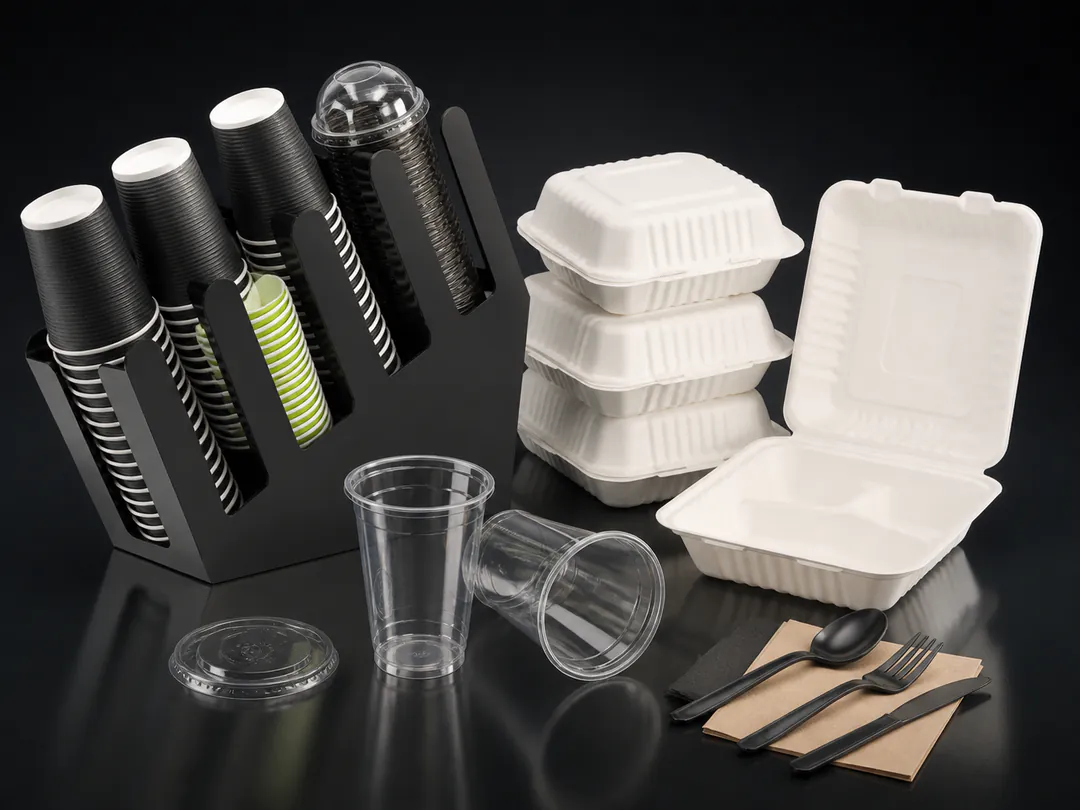
- Compliant Alternatives: We focus on highly functional alternatives, including Bagasse (sugarcane pulp), PLA (Polylactic Acid) bioplastics, Kraft paper, and responsibly sourced wood and bamboo.
3. Material Engineering & Selection Guide
Choosing the right material is an engineering decision based on the food's thermal load, moisture content, and acidity:
- Kraft Paper & Corrugated Cardboard: Engineered for breathability. Essential for fried foods, burgers, and baked goods. The micro-fluting in corrugated boxes provides excellent thermal insulation while wicking away condensation, keeping food crispy.
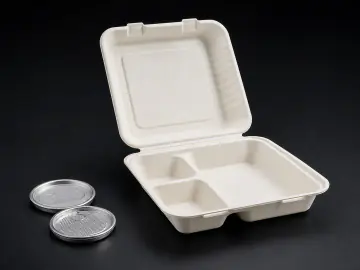
- Bagasse (Sugarcane Pulp): A highly versatile, compostable material. It is naturally grease and water-resistant, making it excellent for heavy meals, curries, and salads. It is microwave-safe and retains heat efficiently.
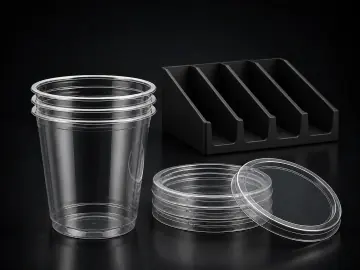
- PET (Polyethylene Terephthalate): Ultra-clear, fully recyclable plastic. Strictly for cold applications. Ideal for smoothies, iced coffees, and salads where visual merchandising is key. PET will warp and melt if exposed to hot liquids.
- PP (Polypropylene): The industry standard for heavy, hot liquids. Use our PP food containers for safe microwave reheating. It can withstand temperatures up to 100°C without compromising structural integrity.
- PLA (Polylactic Acid): A bioplastic derived from renewable resources like corn starch. It looks and feels like standard plastic but is commercially compostable. Used primarily for cold cups and clear deli bowls. Note: Standard PLA is heat-sensitive (melts above 40°C), while CPLA (Crystallised PLA) is heat-resistant and used for coffee cup lids and hot cutlery.
4. Storage Footprint & Logistics (BOH Management)
Packaging volume dictates storage requirements. In premium commercial real estate, storage space is expensive. We prioritize high-density, stackable designs:
- Nesting Efficiency: Containers and cups must nest deeply to minimize the footprint on shelves.
- Inventory Turnover: Consistent supply is guaranteed with our national freight network, allowing venues to operate on leaner inventory models without fear of stockouts.
5. Application Scenarios
- Cafés & Bakeries: Focus on branded or clean-look Kraft paper bags, PLA-lined coffee cups, and crystal-clear PET/PLA cups for iced drinks to maximize visual appeal.
- Restaurants (Delivery-Heavy): Prioritize spill-proof PP containers for wet dishes, and ventilated corrugated boxes for fried items. Secure, tamper-evident seals are increasingly important.
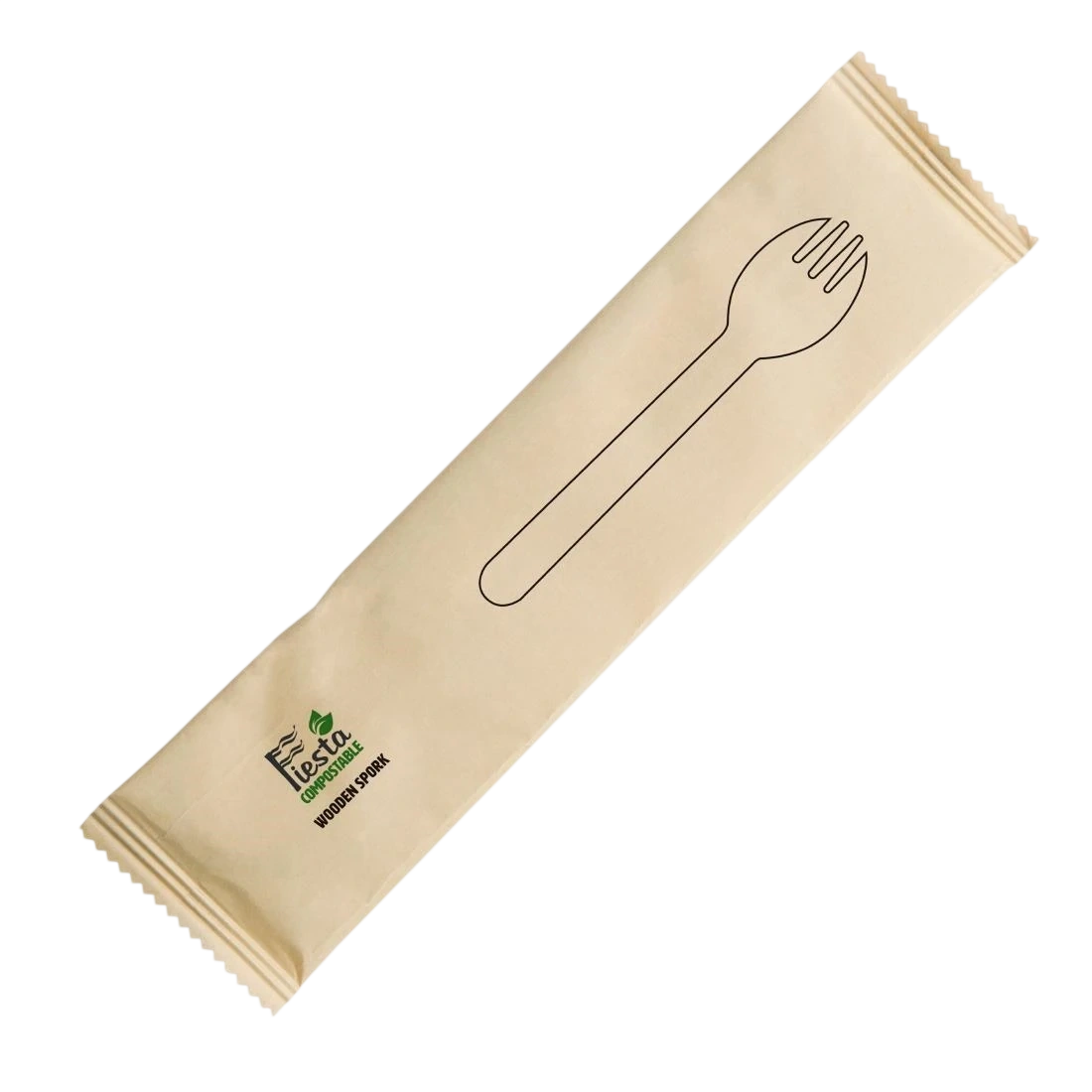
- Catering & Events: Demand high-volume, elegant Bagasse plates and bowls, paired with high-quality wooden or bamboo cutlery that won't splinter.
FAQ
Are your Kraft paper products lined with plastic?
Many of our Kraft paper containers feature a thin, compliant PLA (bioplastic) or aqueous coating to ensure they are leak-proof and grease-resistant, making them suitable for saucy dishes while remaining environmentally friendly.
Can Bagasse (sugarcane) containers go in the microwave?
Yes, Bagasse is highly durable, microwave-safe, and can even withstand low-temperature oven warming for short periods. It will not melt or release harmful chemicals.
What is the difference between PET and PLA clear cups?
Both are crystal clear and designed for cold drinks. PET is a traditional, highly recyclable plastic (widely accepted in kerbside recycling). PLA is a bioplastic made from plants and requires commercial composting facilities to break down. Neither should be used for hot liquids.
Common Mistakes
- Using PET for hot foods: The container will warp, melt, and potentially contaminate the food.
- Sealing fried food in airtight plastic: Condensation will form immediately, turning crispy food soggy. Always use ventilated paper or cardboard.
- Ignoring local compliance laws: Stockpiling cheap, non-compliant plastic packaging can result in severe fines from local councils.
Need Help Optimising Your Packaging?
Call 1300 001 366 for expert advice on material selection, compliance, and bulk volume pricing for your venue.