Brand / United States
The benchmark American manufacturer of commercial refrigeration, family-owned since 1945 and trusted in more than 100 countries.
299
Products
1945
Established
United States
Origin
Products
01 / OVERVIEW
BEST FOR
Venues that treat refrigeration as core infrastructure — busy kitchens, QSR chains, bars and food retail where uptime matters more than the lowest sticker price.
NOT IDEAL FOR
Tight budgets or light-duty settings where a value import covers the load.
PRICE POSITION
Premium — priced above value imports, competitive with other premium majors, and offset by a 5-year parts and labour warranty.
KEY STRENGTHS
Oversized balanced systems, R290 hydrocarbon refrigerant, stainless build and a 5-year parts and labour warranty.
02 / PHILOSOPHY
Oversized balanced systems, R290 hydrocarbon refrigerant, stainless build and a 5-year parts and labour warranty.
Origin: United States
03 / PROBLEMS IT SOLVES
04 / AUDIENCE
05 / RANGE
06 / SELECTED
07 / TRADE-OFFS
| Aspect | Strength | Practical limitation |
|---|---|---|
| Build quality | Cabinets use heavier stainless, foamed-in-place insulation and factory-balanced systems made for constant commercial duty. | That construction carries a real price premium over entry-level imports.. |
| Durability | Oversized compressors run inside their limits, which is why the brand is a benchmark for uptime in hot, busy kitchens. | Heavier cabinets need more careful site access planning at delivery and installation.. |
| Running cost | R290 hydrocarbon refrigerant and efficient system architecture keep energy draw low for the performance class. | Savings still depend on installation clearances and regular condenser cleaning.. |
| Serviceability | Bottom-mount, front-serviceable systems and a national service partner network keep repairs fast. |
08 / SUITABILITY
09 / ROI
010 / BENCHMARK
| Aspect | True | Typical entry-level | Notes |
|---|---|---|---|
| Durability | True systems are oversized for their load and carried on heavier stainless | Typical value cabinets run closer to their limits and age faster in hot kitchens | The gap shows up after the first summer, not in the showroom. |
| Serviceability | True uses bottom-mount, front-serviceable platforms with national parts support | Typical imports can need rear access or wait on offshore parts | Downtime, not price, is usually the deciding cost. |
| Efficiency | True pairs R290 refrigerant with balanced components for low draw at full duty | Typical budget cabinets meet spec on paper but drift under real door traffic | Compare energy figures at your actual duty cycle, not the label. |
011 / ALTERNATIVES

Turbo Air
premium self-cleaning condenser technology across a wide upright and counter range

Polar
value-focused fridges and freezers covering light and medium duty for less

Thermaster
our largest refrigeration range with strong pricing across uprights, displays and prep

Hoshizaki
Japanese-built ice machines and refrigeration with a reputation to match

Bromic
display and beverage refrigeration widely used in retail and hospitality
012 / FAQ
True cabinets are designed and manufactured in the USA, where the company has been family-owned since 1945, and are sold into more than 100 countries.
The range sold in Australia is covered by a 5-year parts and labour warranty as standard, supported by a national network of accredited service partners.
Yes. Cabinets sold here run on 220–240V single phase power and True's oversized systems are engineered for high ambient kitchens; check each model's rated ambient on its spec sheet.
014 / ENGINEERING
Compressors and evaporators are sized above the cabinet's rated load, so systems cycle less, recover faster after door openings and last longer in hot kitchens.
A natural refrigerant with zero ozone depletion potential and a global warming potential of 0.02, delivering faster pull-down and significantly lower energy consumption than older synthetic refrigerants.
Compressors sit low at the front of the cabinet, away from rising kitchen heat, which improves efficiency and puts routine condenser cleaning at waist height.
Factory-set controllers hold tight food-safe bands with clear displays, reducing operator error and drift.
015 / INSTALLATION
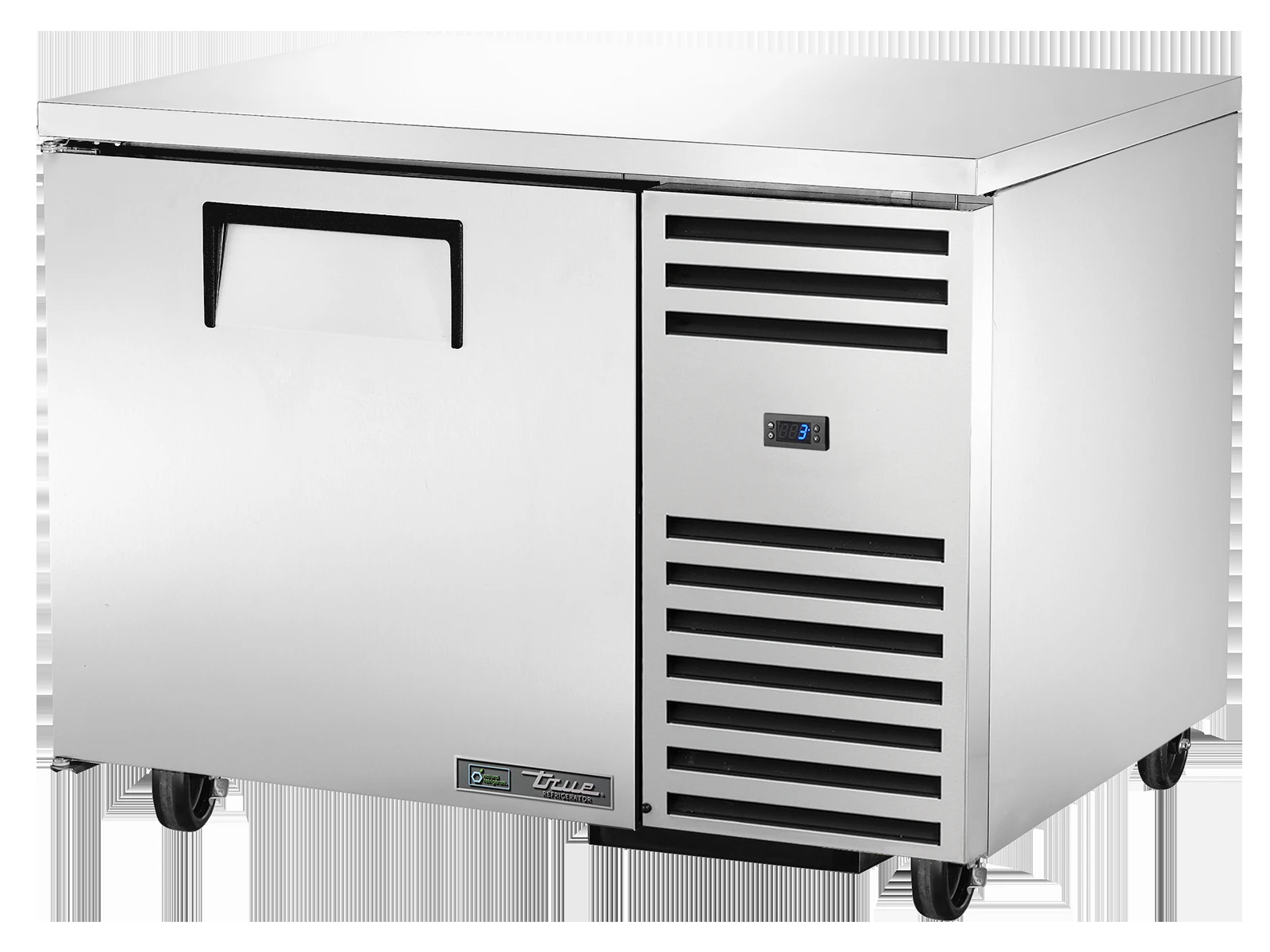
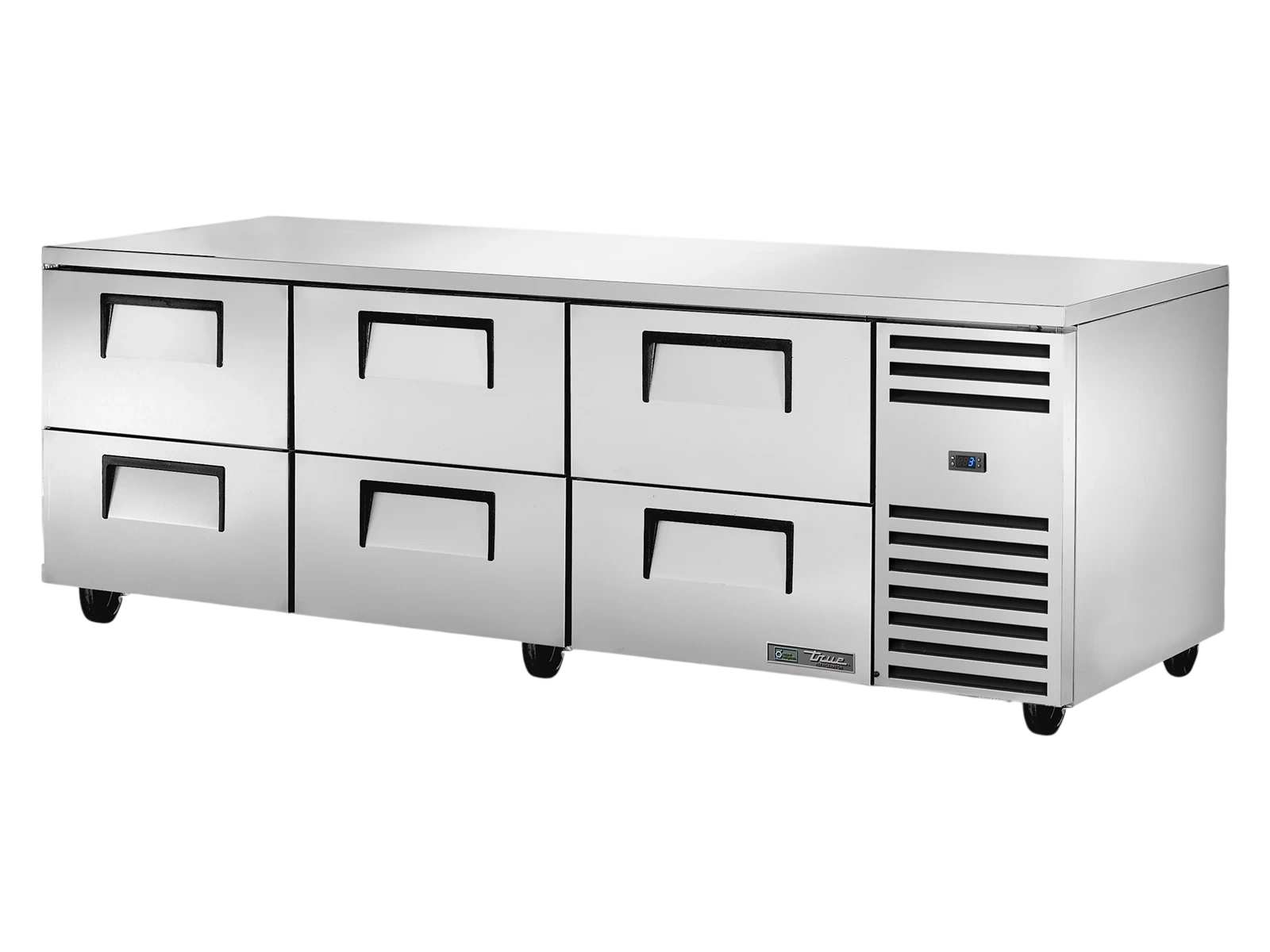
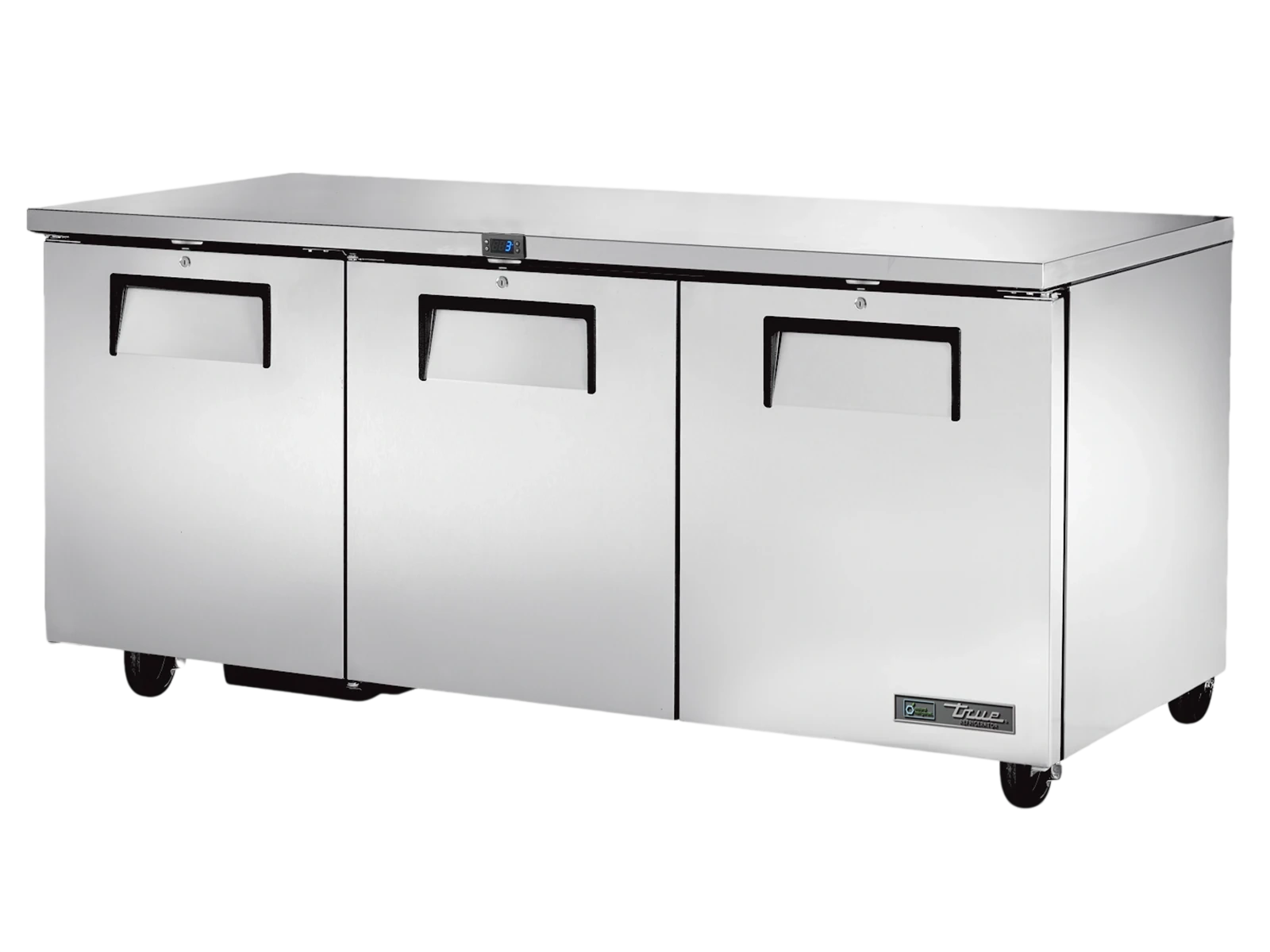
True TUC-44-HC Deep Undercounter Refrigerator, 1 Solid Swing Door
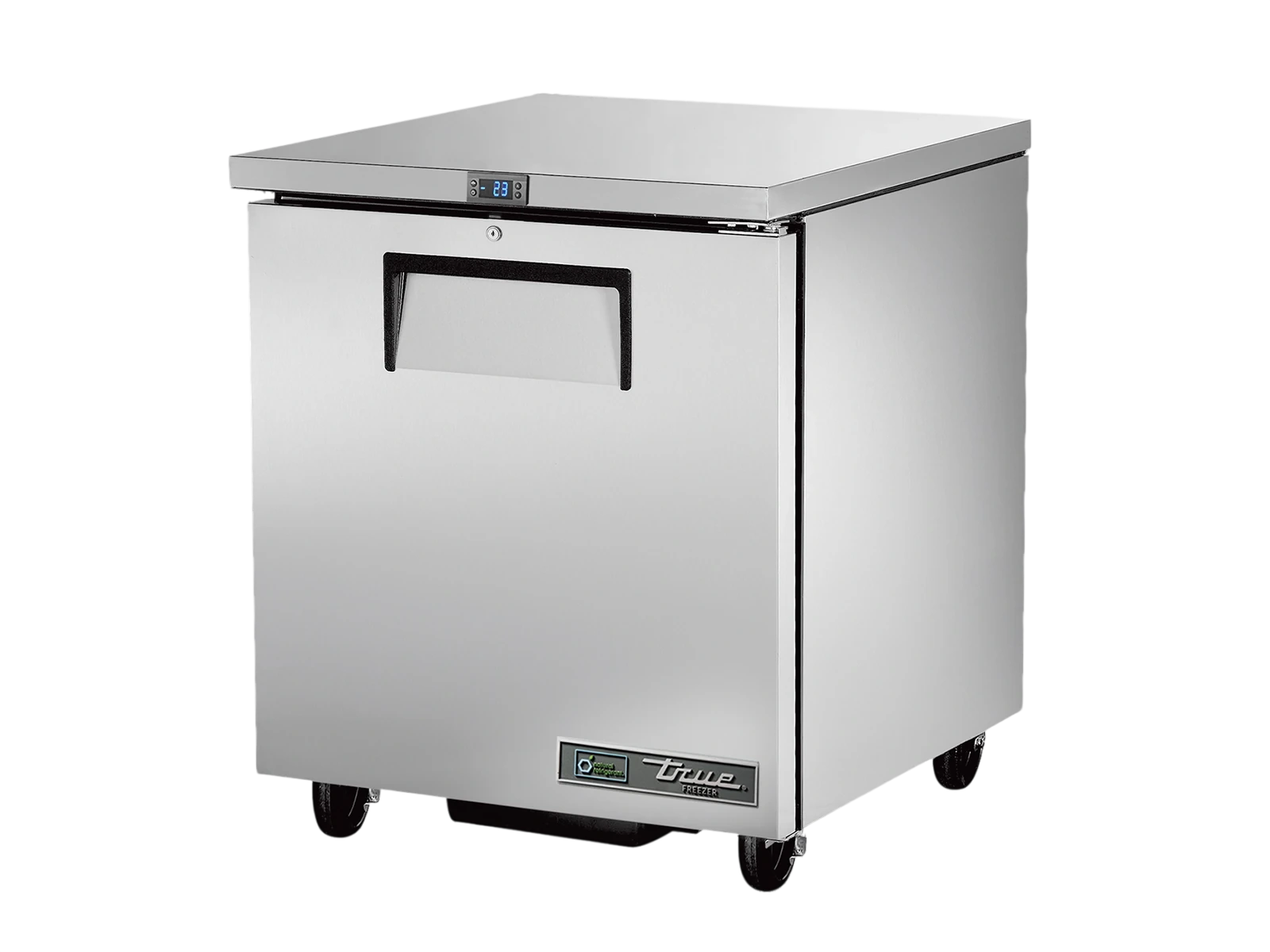
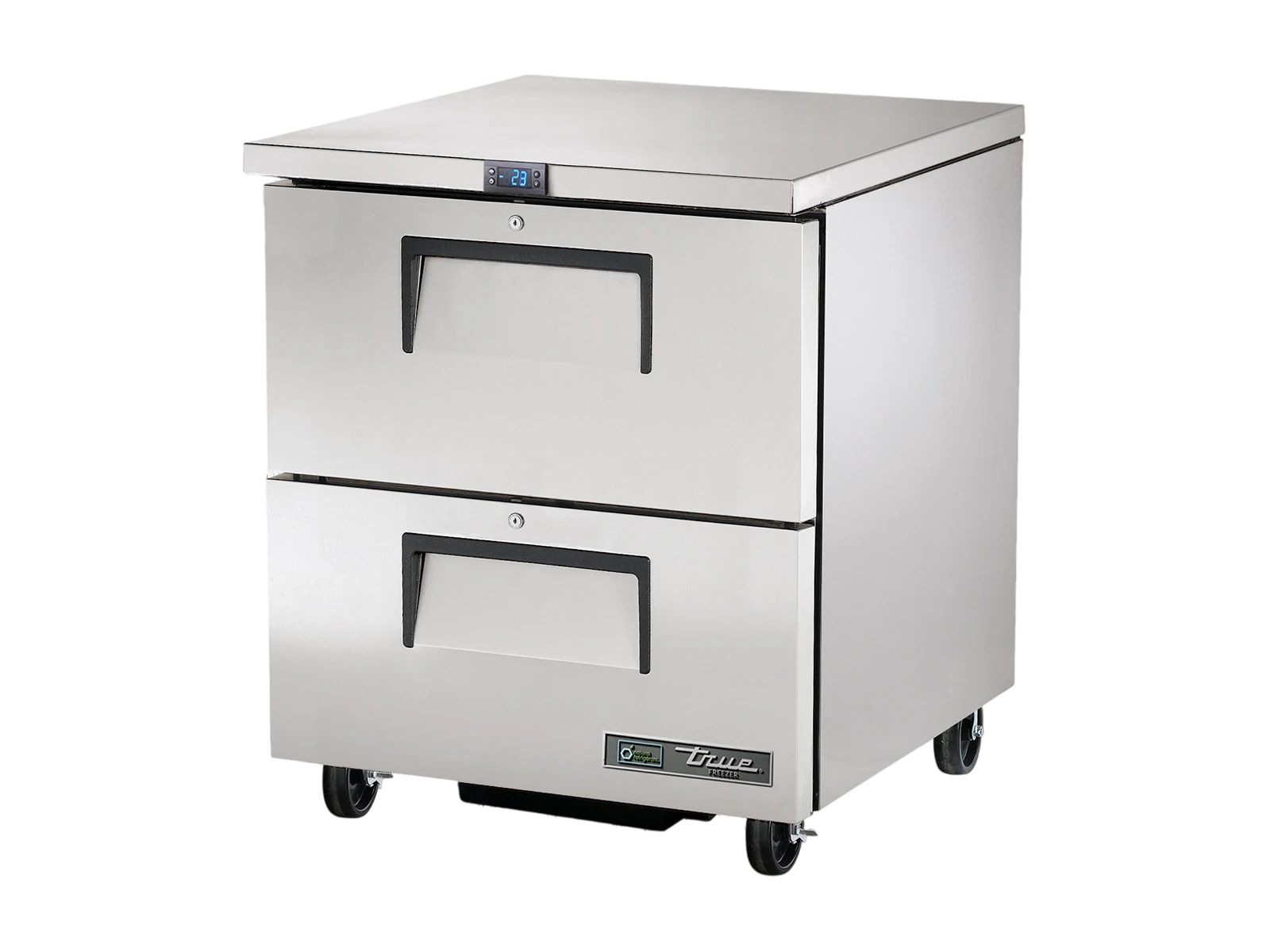
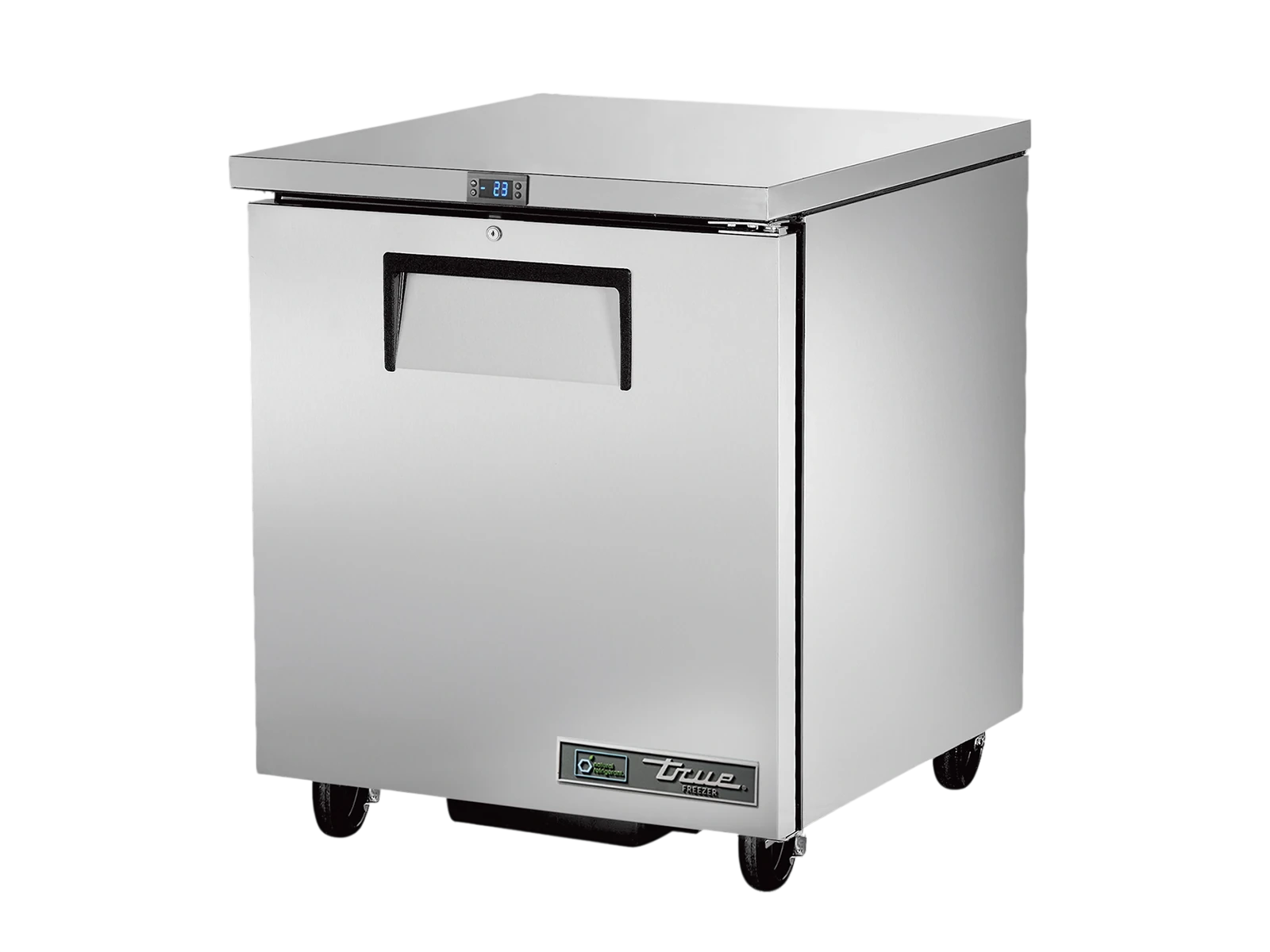
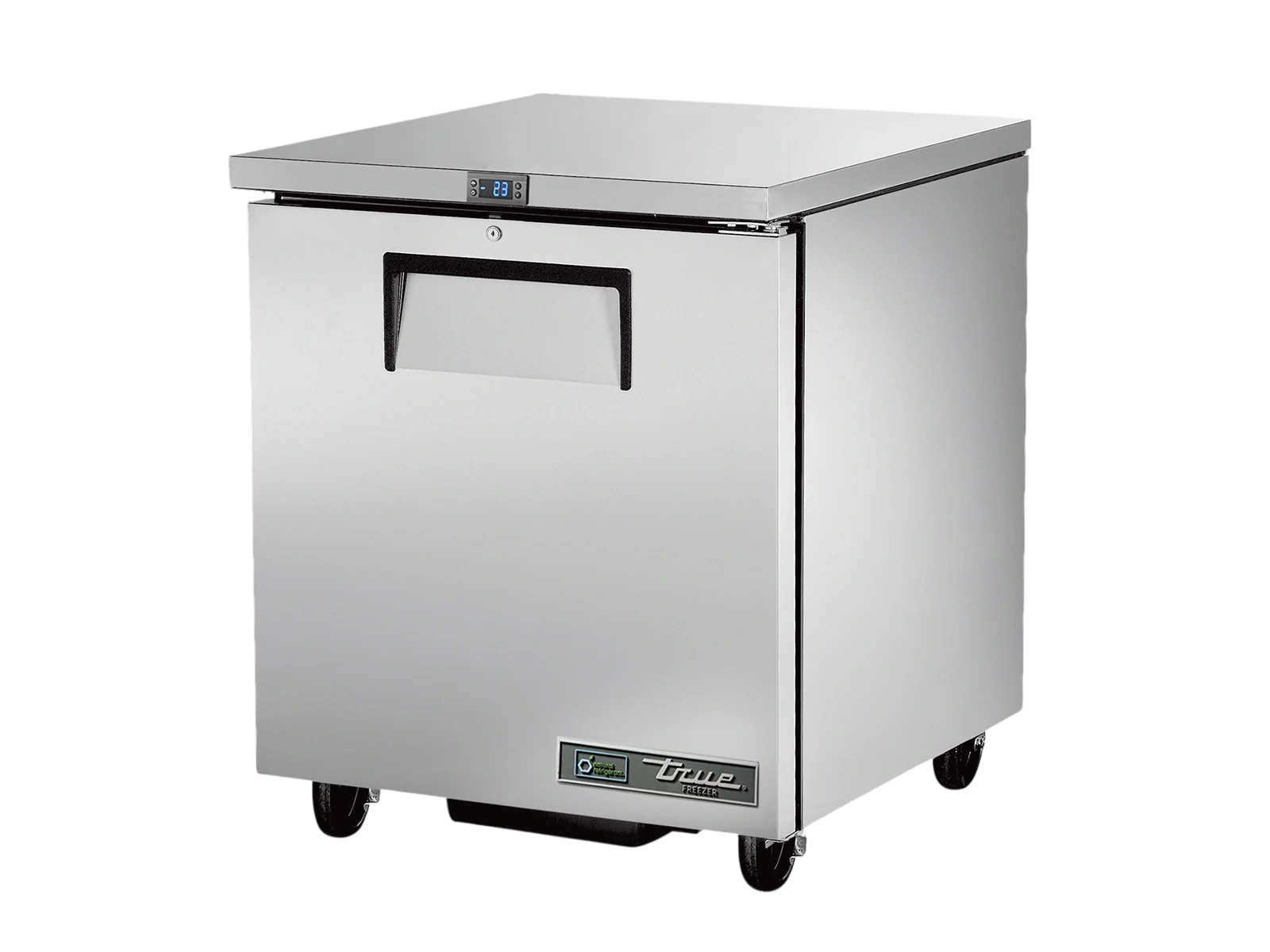
True TUC-27F-HC-LP LH Undercounter Foodservice Freezer, 1 Solid Swing Door
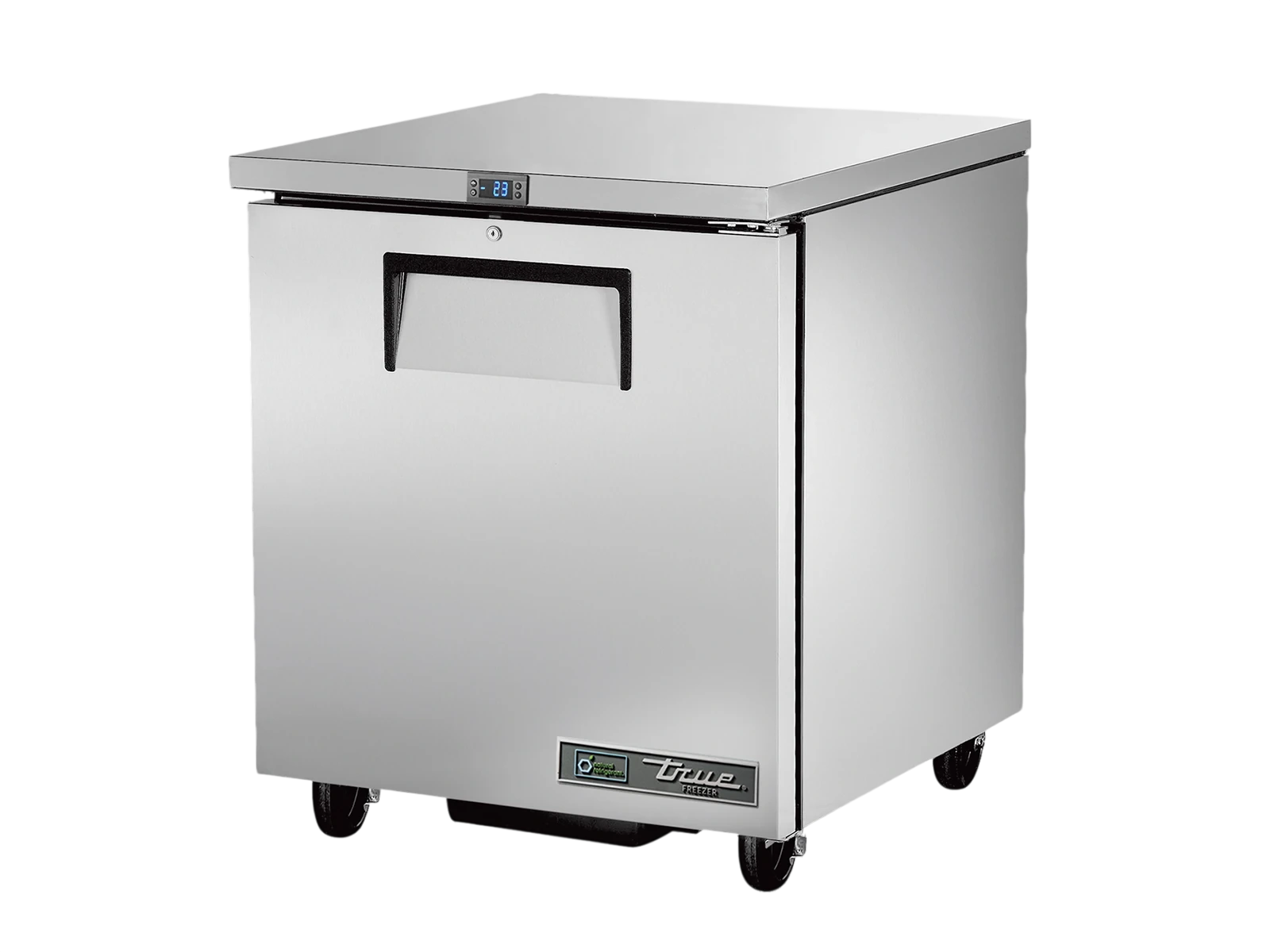
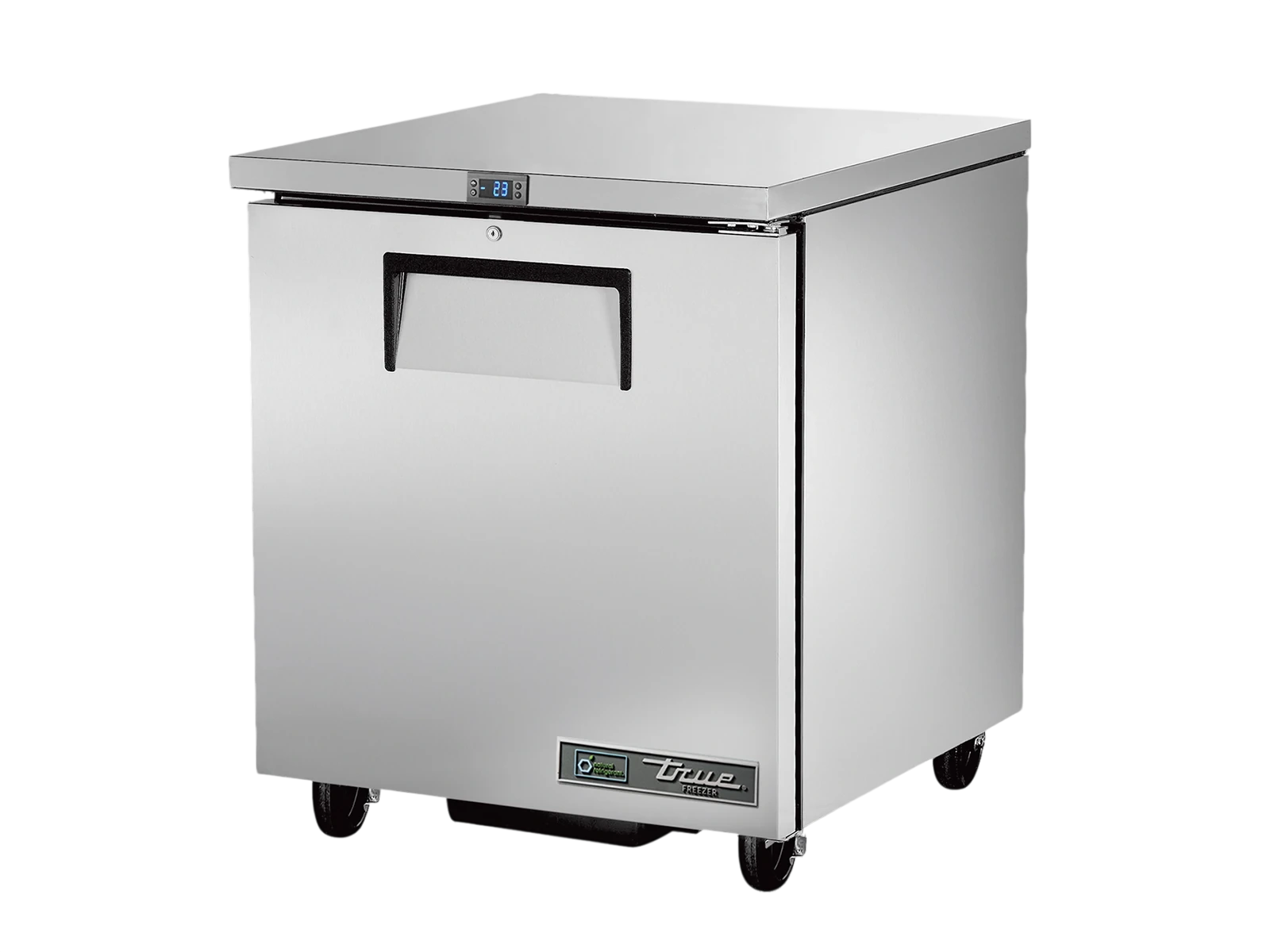
True TUC-27F-HC-LP RH Undercounter Foodservice Freezer, 1 Solid Swing Door
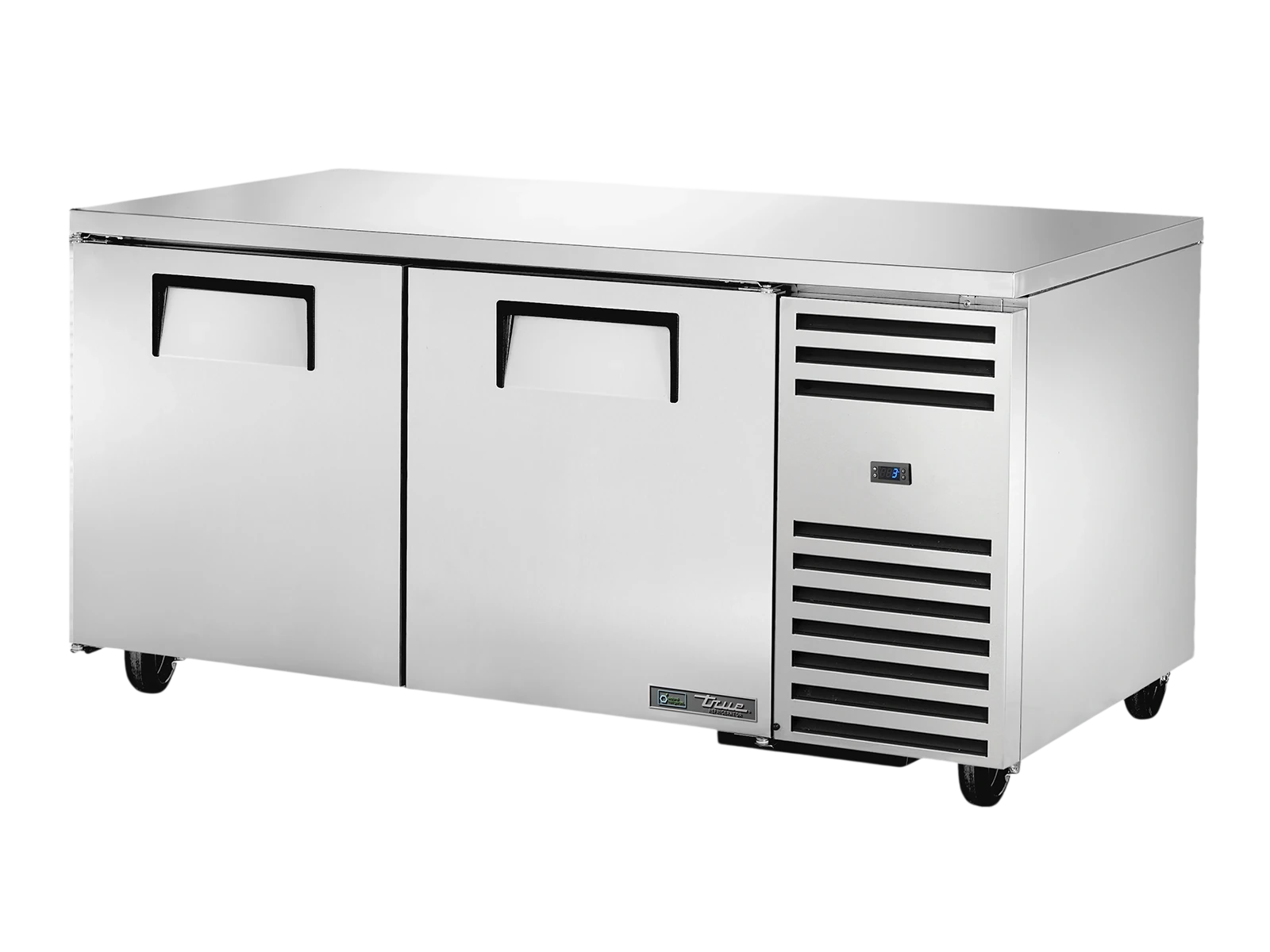
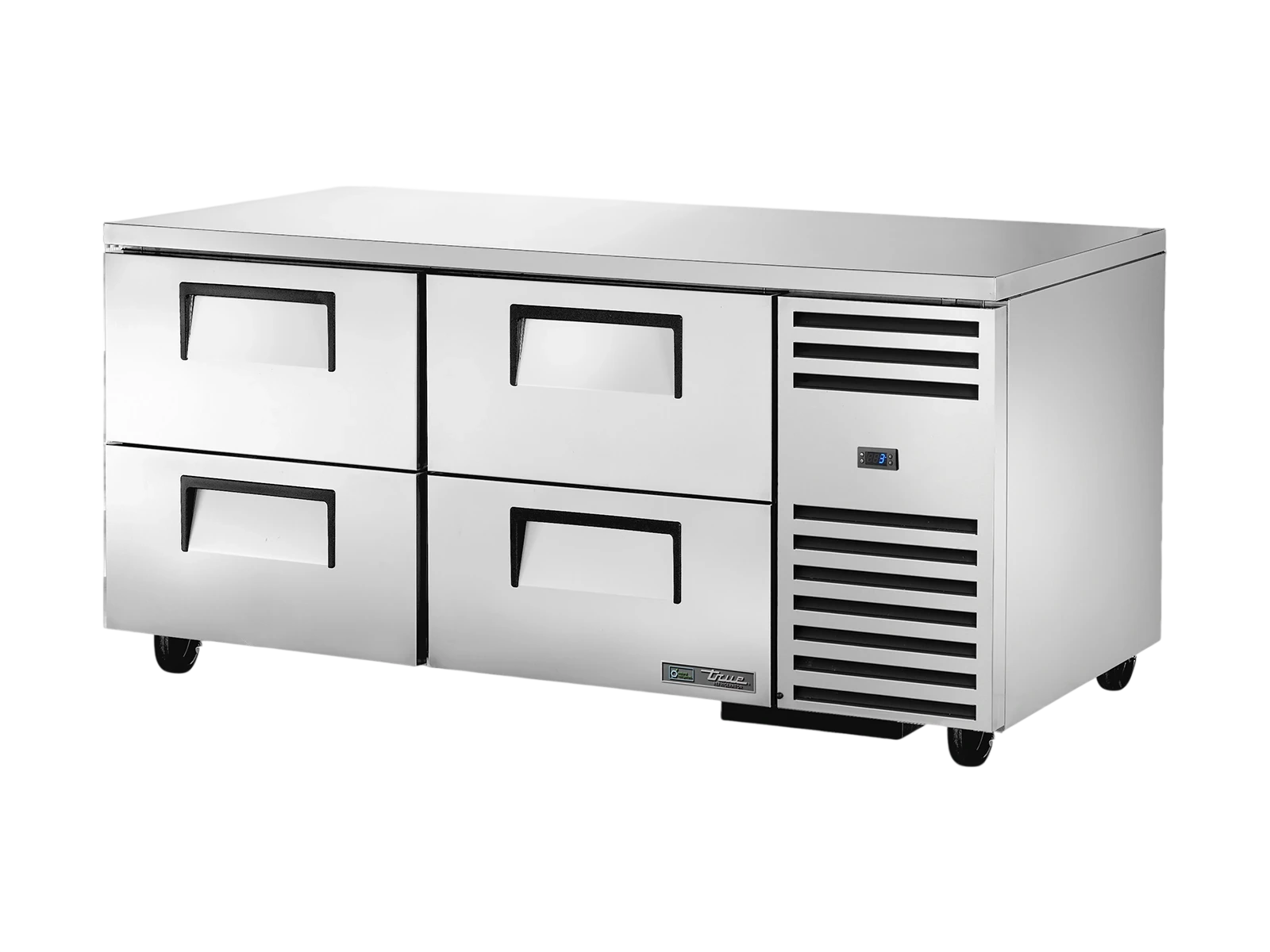
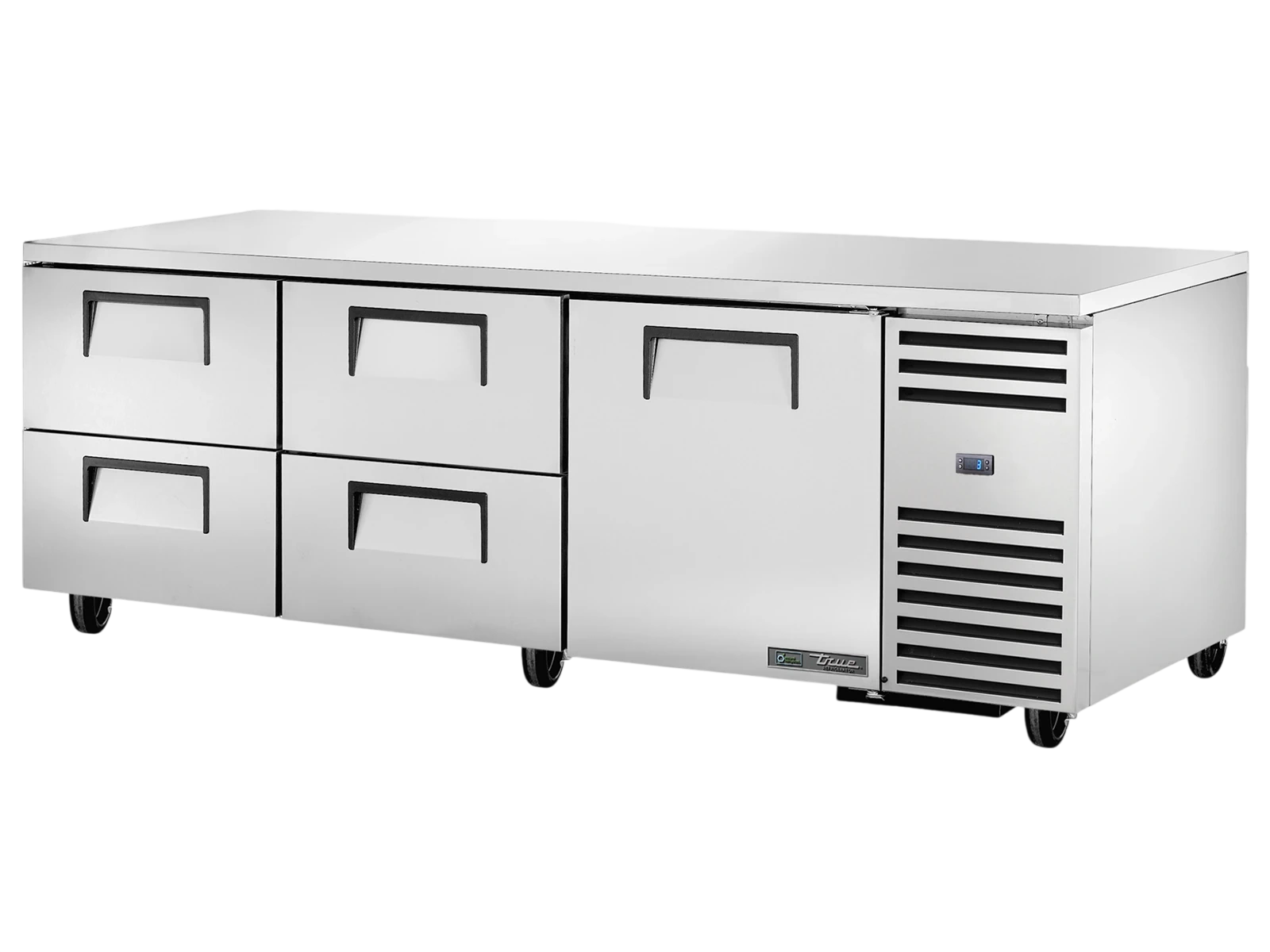
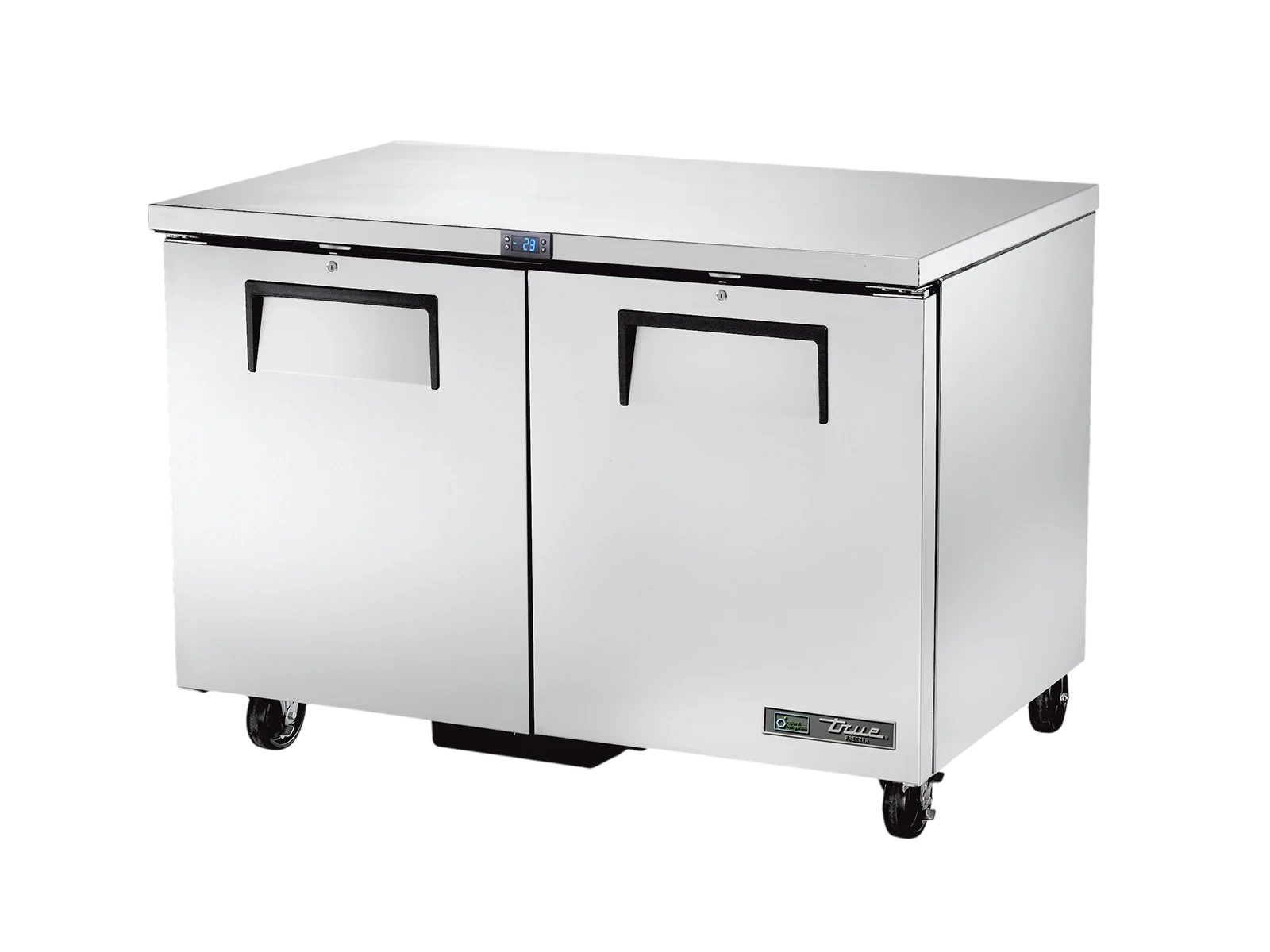
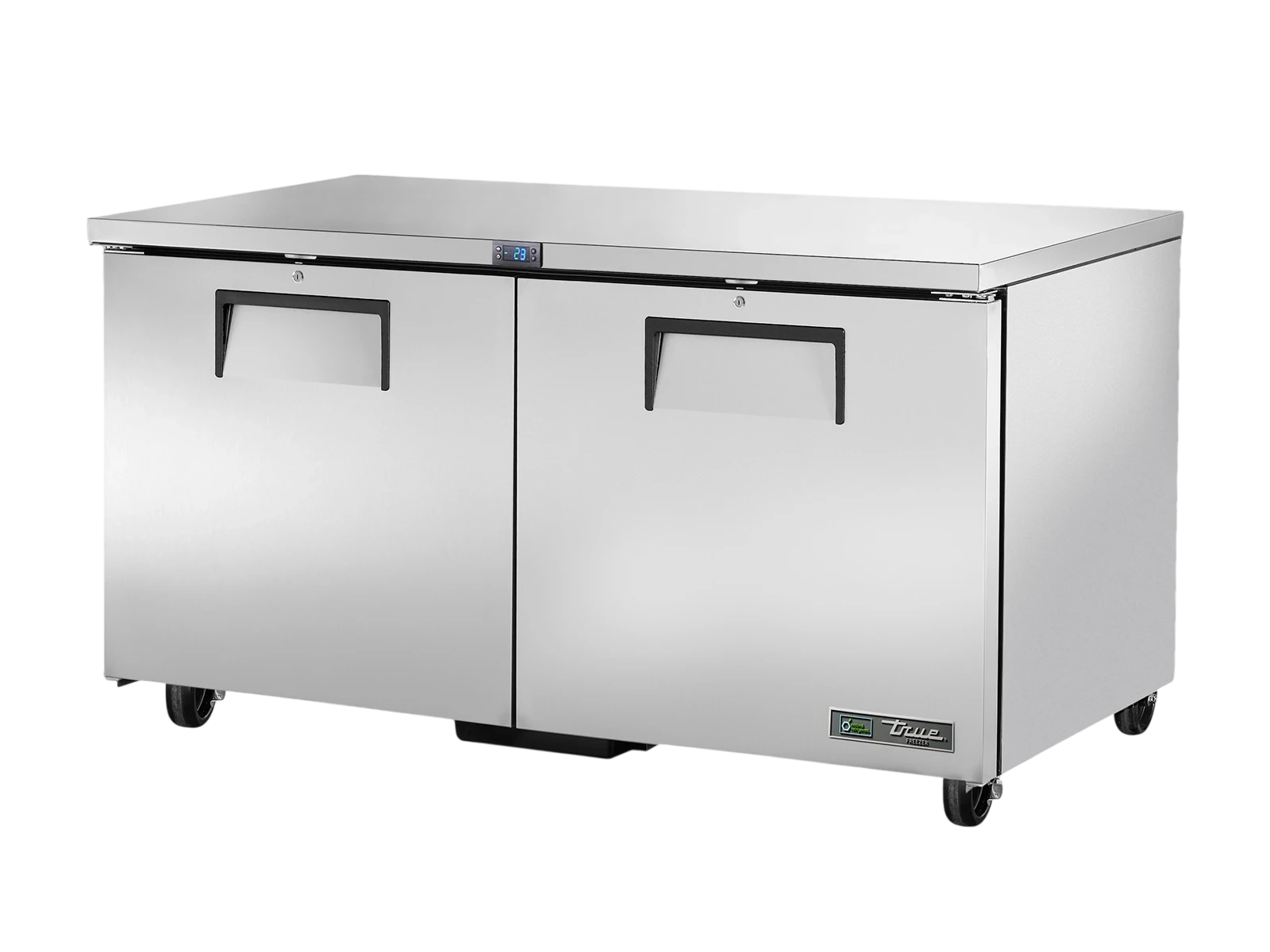
True TUC-67-HC Deep Undercounter Refrigerator, 2 Solid Swing Doors
$9,060.00
| Outside metro areas, response times depend on the nearest accredited partner.. |
The gap shows up after the first summer, not in the showroom.
Downtime, not price, is usually the deciding cost.
Compare energy figures at your actual duty cycle, not the label.
R290 is a natural hydrocarbon refrigerant with zero ozone depletion potential and near-zero global warming potential. It transfers heat more efficiently than legacy refrigerants, which means faster pull-down and lower energy use.
GDM glass door merchandisers are built for display selling with constant customer door traffic. For bulk kitchen storage choose T-Series solid door uprights instead — solid doors hold temperature with less energy.
Display Freezers
Electrical
Most cabinets run on 220–240V single phase; confirm amperage per model on the spec sheet before ordering.
Ventilation and clearance
Respect the spec sheet clearances around condenser intake and exhaust — starved airflow is the leading cause of nuisance faults.
Drainage
Many uprights and merchandisers use self-evaporating condensate systems with no drain connection; prep and counter models can differ, so check the model sheet.
Serviceability
Bottom-mount systems are front-serviceable; keep the condenser accessible and schedule regular cleaning through accredited service partners.
016 / WARRANTY
017 / WARNINGS
Blocking condenser airflow with boxes, mats or tight joinery starves the system and triggers nuisance high-temperature alarms.
Running display merchandisers as bulk storage keeps doors swinging beyond their duty cycle and drags holding temperature.
Ignoring condenser cleaning lets dust build until energy draw rises and components run hot.
Installing hard against fryers or ovens pushes ambient beyond rating and shortens compressor life.
Overriding factory temperature settings to run colder than needed wastes energy without improving food safety..
014 / ENGINEERING
Compressors and evaporators are sized above the cabinet's rated load, so systems cycle less, recover faster after door openings and last longer in hot kitchens.
A natural refrigerant with zero ozone depletion potential and a global warming potential of 0.02, delivering faster pull-down and significantly lower energy consumption than older synthetic refrigerants.
Compressors sit low at the front of the cabinet, away from rising kitchen heat, which improves efficiency and puts routine condenser cleaning at waist height.
Factory-set controllers hold tight food-safe bands with clear displays, reducing operator error and drift.
015 / INSTALLATION
Electrical
Most cabinets run on 220–240V single phase; confirm amperage per model on the spec sheet before ordering.
Ventilation and clearance
Respect the spec sheet clearances around condenser intake and exhaust — starved airflow is the leading cause of nuisance faults.
Drainage
Many uprights and merchandisers use self-evaporating condensate systems with no drain connection; prep and counter models can differ, so check the model sheet.
Serviceability
Bottom-mount systems are front-serviceable; keep the condenser accessible and schedule regular cleaning through accredited service partners.
016 / WARRANTY
017 / WARNINGS
Blocking condenser airflow with boxes, mats or tight joinery starves the system and triggers nuisance high-temperature alarms.
Running display merchandisers as bulk storage keeps doors swinging beyond their duty cycle and drags holding temperature.
Ignoring condenser cleaning lets dust build until energy draw rises and components run hot.
Installing hard against fryers or ovens pushes ambient beyond rating and shortens compressor life.
Overriding factory temperature settings to run colder than needed wastes energy without improving food safety..