
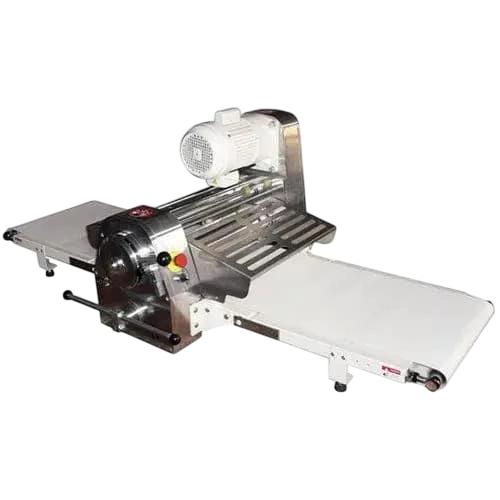
Yasaki
Yasaki JDR-520B Bench Dough Sheeter – 2080 × 880 × 620 mm
2080 × 880 × 620mm
$6,536.50$7,690.00
In Stock
Bakery Equipment
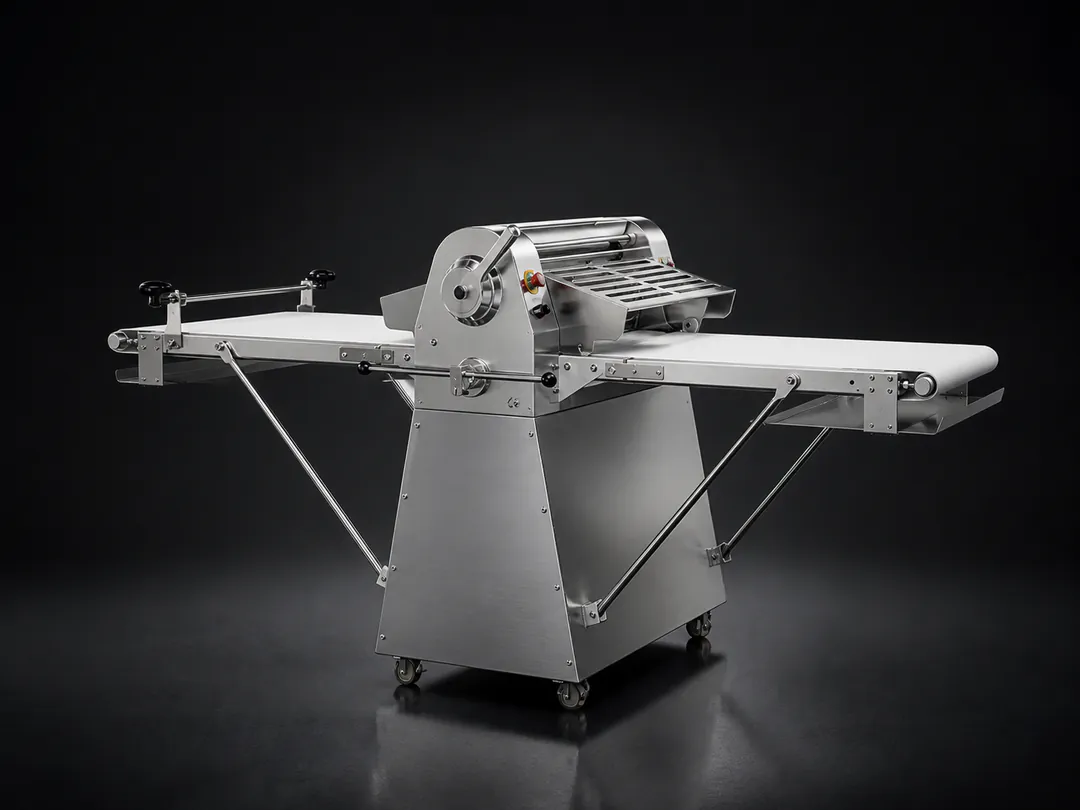
A dough sheeter rolls dough to an even thickness across its whole area, repeatedly and consistently. That is the job hand rolling does slowly and unevenly, and it is why laminated products — croissants, danishes, puff pastry — are where a sheeter earns its place first.
Roller width and the thickness range decide what the machine can make. A pastry sheeter with a narrow gap range suits fine work; one that opens wider handles thicker bases and pizza dough. Check the thinnest setting against the finest product on the menu, since that is the limit that bites.
Format follows the volume and the space. A benchtop unit suits a kitchen making pastry alongside other work; a floor-standing machine with longer belts suits continuous production. Both need clear space on each side for the dough to travel, which is often more than the machine's own footprint.
Where a commercial pastry sheeter is bought for occasional production, consider how quickly it is set up, cleaned and put away, because a machine that takes twenty minutes to make ready gets used less than the plan assumed.
Key factors to consider before purchasing. Our team can help you find the right fit — call or get a quote anytime.
Match capacity to your daily output. Consider the bench or floor space available and the access route for delivery.
Check the power supply at the installed position — phase, amperage and circuit capacity — before ordering.
Confirm electrical compliance, levelling and the clearance needed for cleaning and service access. We can help with kitchen planning.
Submit your kitchen requirements — our equipment specialists will send you a tailored shortlist of commercial dough sheeters that fits your budget, venue type and compliance needs.
Standards & Compliance
Before comparing dough sheeters, confirm the products to be made, the finest and thickest settings needed, and the batch size in one session. Measure the space each side of the machine for dough travel, not just the machine footprint.
Look at how the rollers and belts are cleaned, whether the scrapers are removable, and how flour is contained. Check the guarding and how the machine stops, since a sheeter is one of the few bakery machines an operator works close to while it runs.
FAQ
Dough requires relaxation time. Without a 10–20 minute rest, gluten tightens and the dough contracts.
Likely due to excessive roller pressure, too-thin early passes or dough exceeding 18°C.
No. Sheeters create even thickness, but lamination still requires folding and chilling cycles.
Rolling dough to an even thickness across its whole area, repeatedly. Laminated products such as croissants, danishes and puff pastry are where it earns its place first, because hand rolling those consistently is slow.
Why KW
KW can help match roller width, thickness range and format to the products a bakery actually makes and the space available each side. For practical advice on dough and pastry sheeters, call KW on 1300 001 366.
Deep Dive
Technical depth from KW's commercial kitchen specialists.
A dough sheeter compresses dough between two powered rollers. Operators select a roller gap (clearance), feed the dough and perform step-down sheeting: progressively reducing thickness across multiple passes (e.g. 12mm → 9mm → 6mm → 3mm). This prevents tearing, controls gluten alignment and avoids over-pressurising delicate doughs such as croissant or puff pastry.
Each pass through a sheeter increases dough temperature by approximately 0.5–1°C. Laminated doughs must stay below 18°C to prevent butter from melting—otherwise layers collapse, producing greasy or uneven pastries. Professional workflows alternate between sheeting and chilling cycles to stabilise temperatures.
Tight gluten causes dough to shrink back after rolling. A 10–20 minute relaxation period improves extensibility and reduces tearing, particularly for pizza bases and laminated doughs.
Correct pressure protects dough elasticity while keeping layers intact for pastries requiring lamination.
Misaligned rollers cause one side of the dough sheet to be thinner than the other, producing inconsistent bakes and asymmetrical pastry lift. Parallel roller calibration is essential in commercial settings.
Smooth rollers produce gentle compression, while micro-textured rollers improve grip on softer or higher-hydration doughs. Roller finish selection depends on your menu and dough hydration profile.
Different hydration levels impact sheeting performance:
Butter must remain between 15–18°C for proper lamination. Below 12°C it fractures; above 20°C it smears—destroying layers and affecting oven lift. Sheeters help control thickness but cannot compensate for incorrect butter temperature.
Over-sheeting overstresses gluten, producing tough, leathery dough. This reduces oven spring and affects pastry texture and crumb structure.
From the finest and thickest products on the menu. The thin end is usually the limit that bites, because a sheeter that cannot reach it forces hand finishing on the delicate work it was bought for.
More than its footprint. Dough travels out both sides, so a clear run either side is required and is often longer than the machine. Installing without it halves the working speed.
Benchtop suits pastry made alongside other work and can be stored between sessions. Floor-standing with longer belts suits continuous production but commits the space. Volume and frequency decide it.
Sheeters improve speed and uniformity for pizza bases, though operators should avoid excessive rolling which can toughen dough. Multi-pass, low-pressure sheeting provides the best results.
Conveyor dough sheeters require substantial workspace—typically 1.4–1.8 metres of bench depth plus operator clearance. This is one of the most common purchasing oversights in bakery kitchens.
Feeding angle, pass speed, flour dusting and dough rotation significantly affect sheeting uniformity. Even automated sheeters require skilled handling for best results.
Dough sheeters must be cleaned frequently because butter, flour and dough residue accumulate around rollers and scrapers. Commercial-grade sheeters support hygiene through:
HACCP audits commonly target scraper assemblies, belt undersides and roller ends where residue is most likely to collect.
Perfect sheeting is just one step. See how to integrate this into a full lamination workflow in our Tier 0 Bakery Fitout Guide
Specs validated by KW Commercial Kitchen.Check the finest setting against the most delicate product and the widest against the thickest base. A sheeter that cannot reach the thin end of the range forces hand finishing on exactly the products it was bought to speed up.
Dough travels out both sides as it is sheeted. The clear run needed either side is often longer than the machine itself, and a sheeter installed without it is worked at half its speed.
A benchtop sheeter suits a kitchen making pastry among other work and can be stored between sessions. A floor-standing machine with longer belts suits continuous production but commits the space permanently. Volume and frequency decide this rather than product type.
For occasional production, how quickly the machine is made ready, cleaned and put away decides how often it is used. Check how rollers, belts and scrapers come apart and how flour is contained before assuming a machine will be used as planned.
6 results
2080 × 880 × 620mm
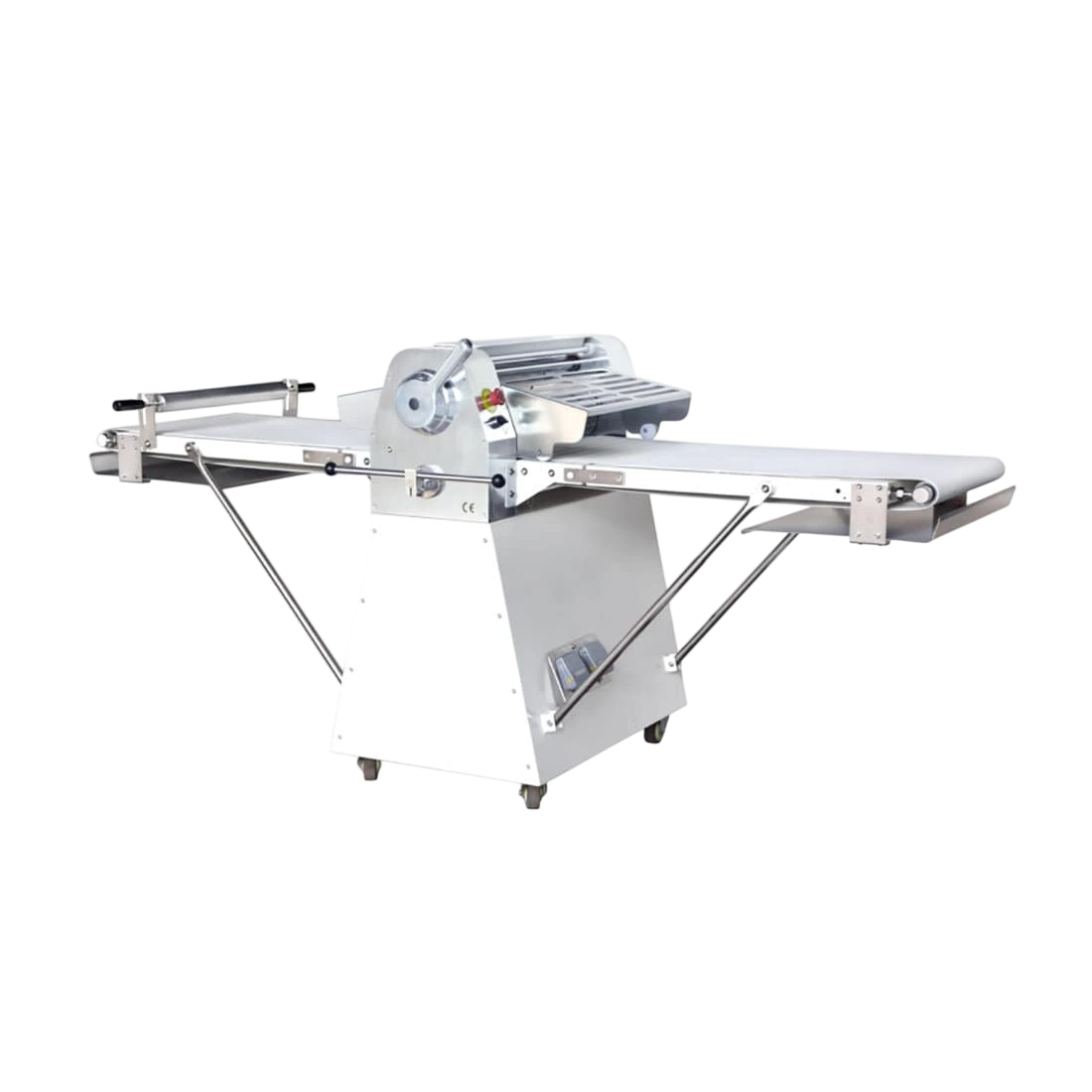
2550 × 880 × 1180mm
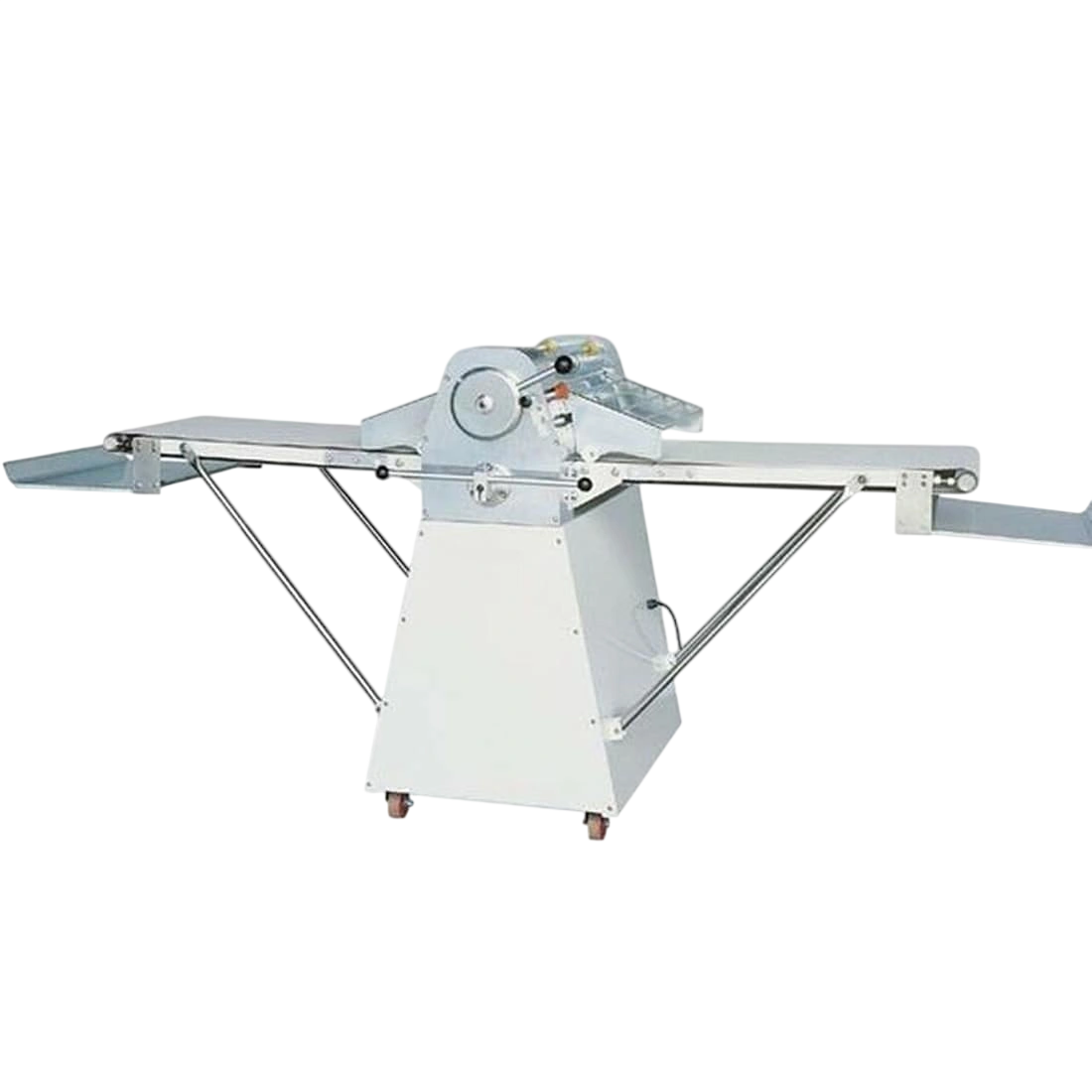
2950 × 1100 × 1180mm
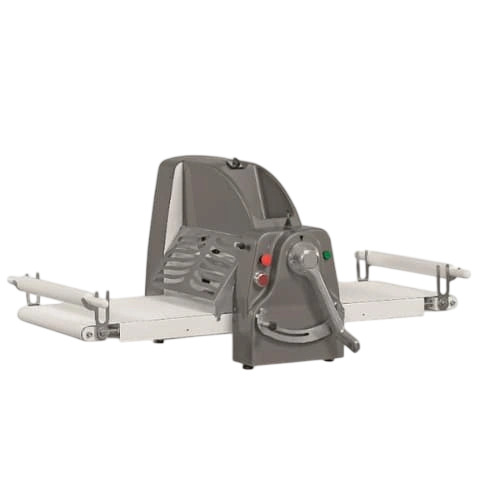
1520 × 920 × 700mm
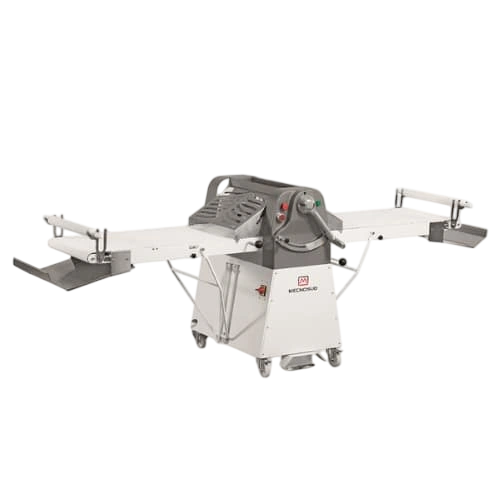
3290 × 1170 × 1060mm
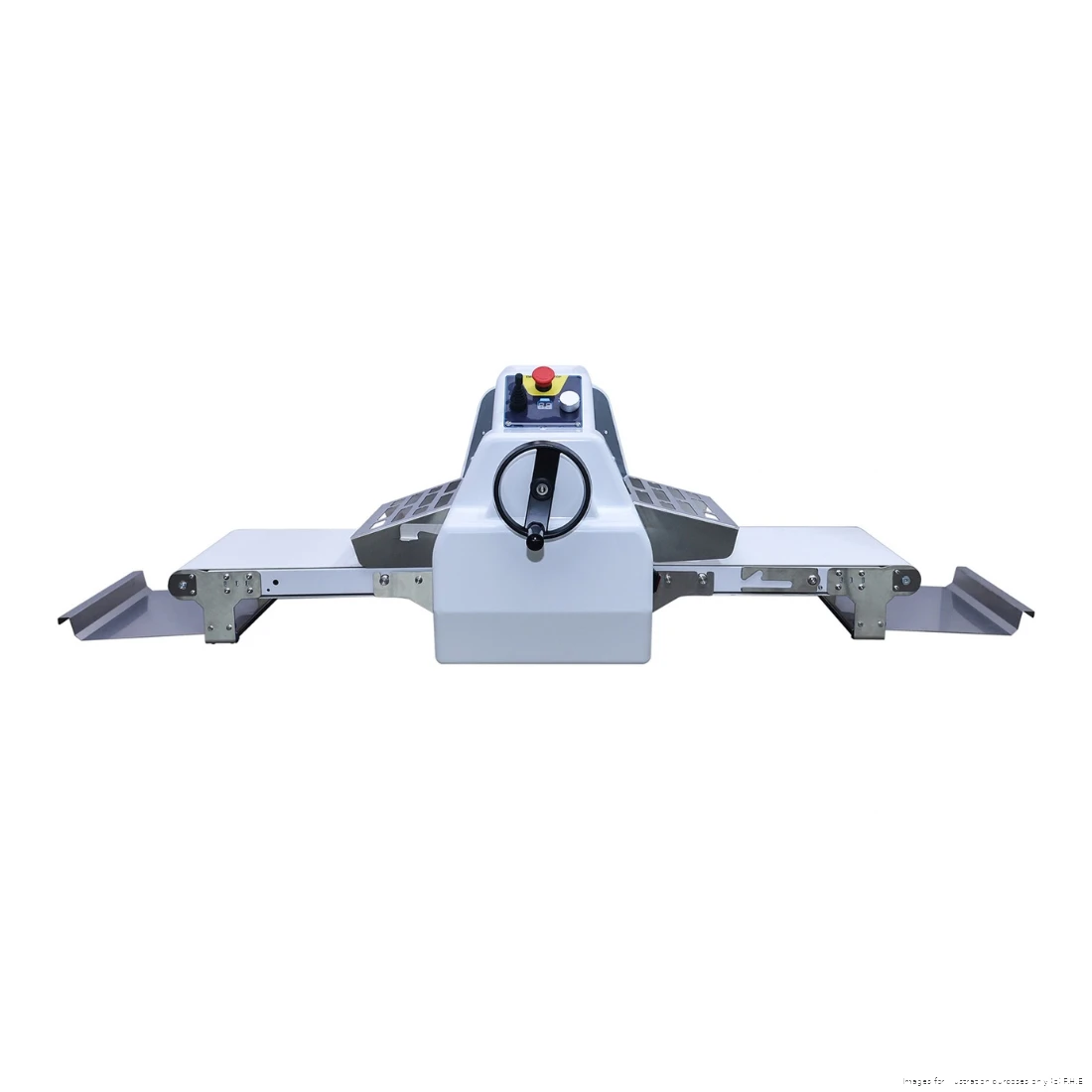
597 × 728 × 514mm