
Vogue
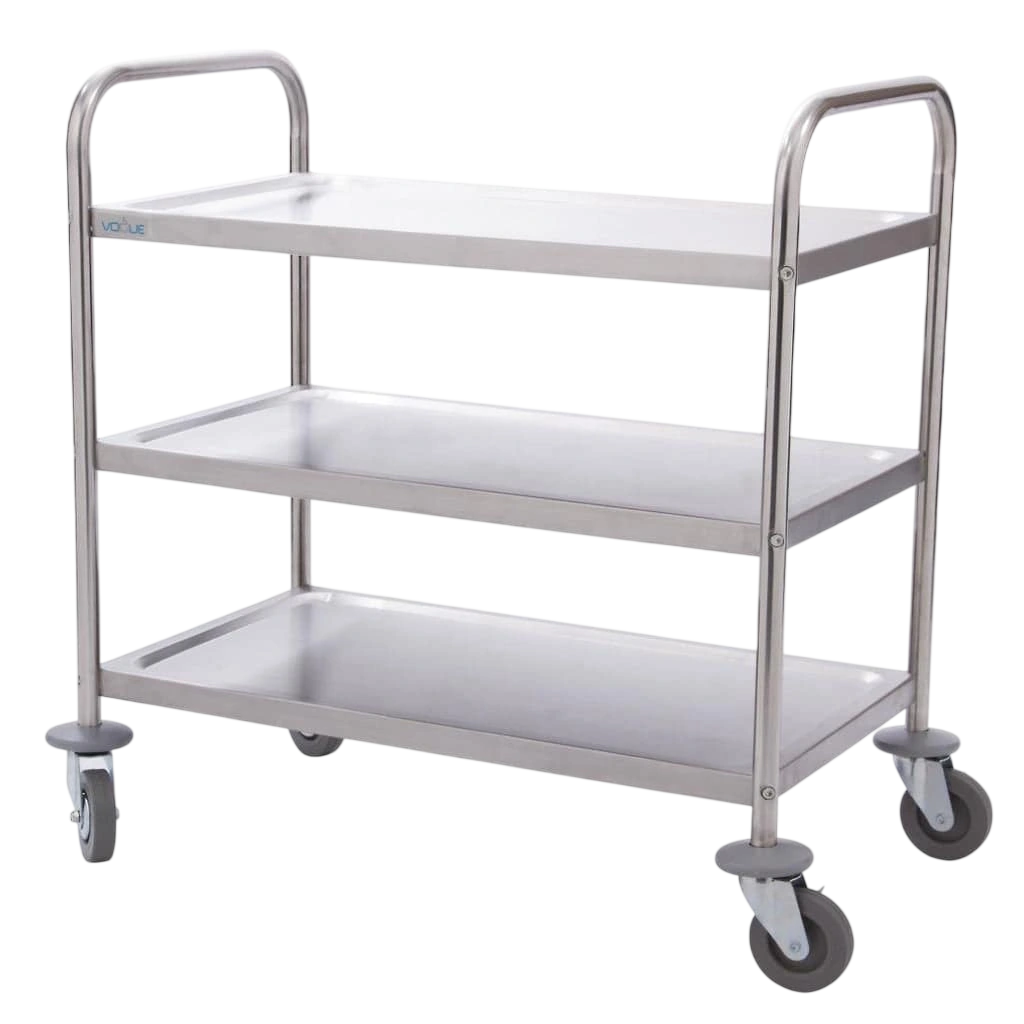
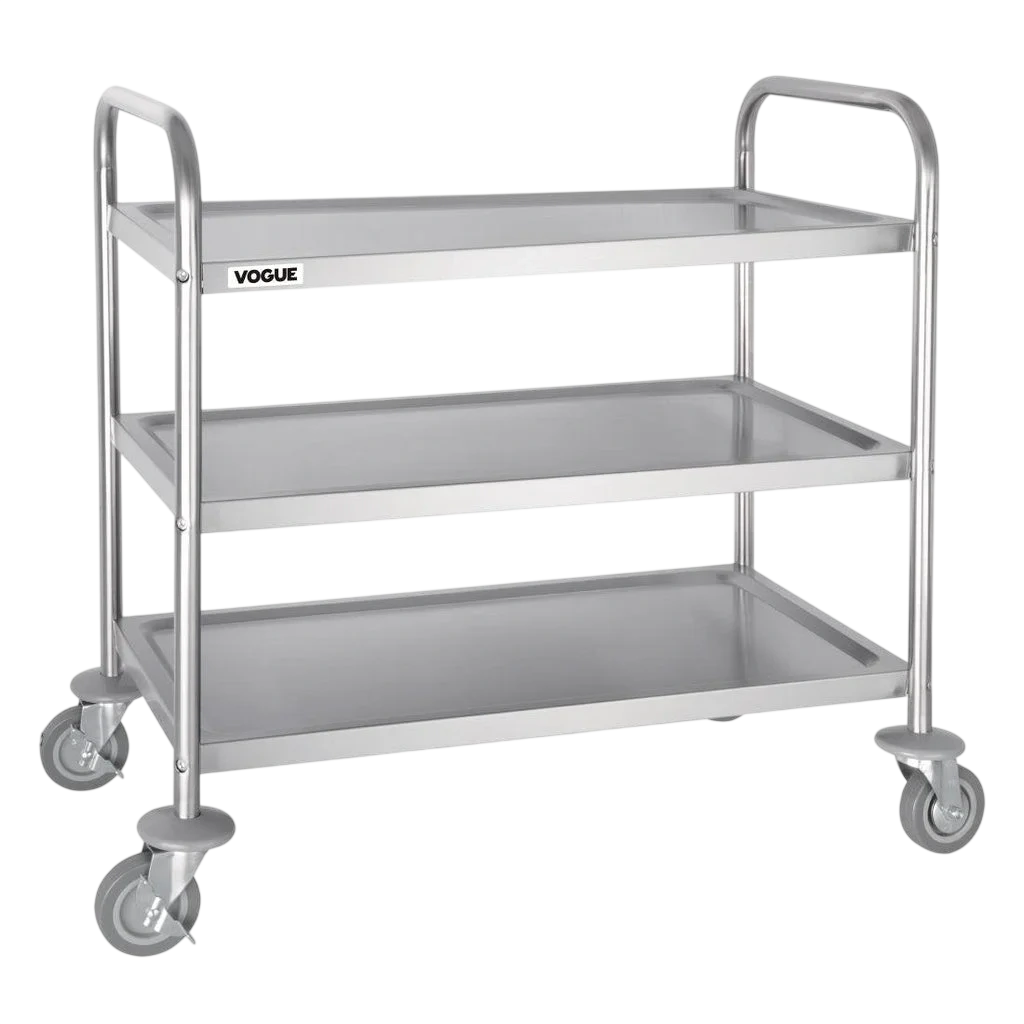
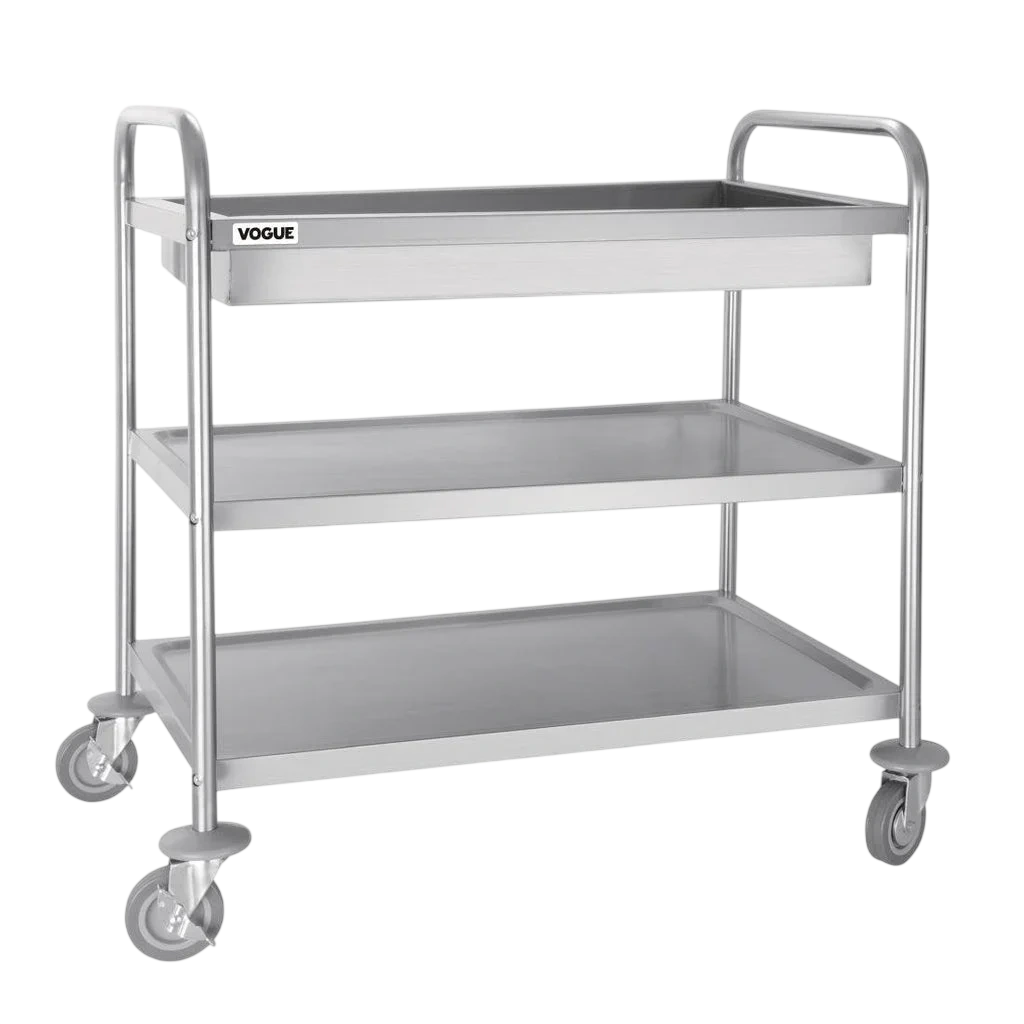
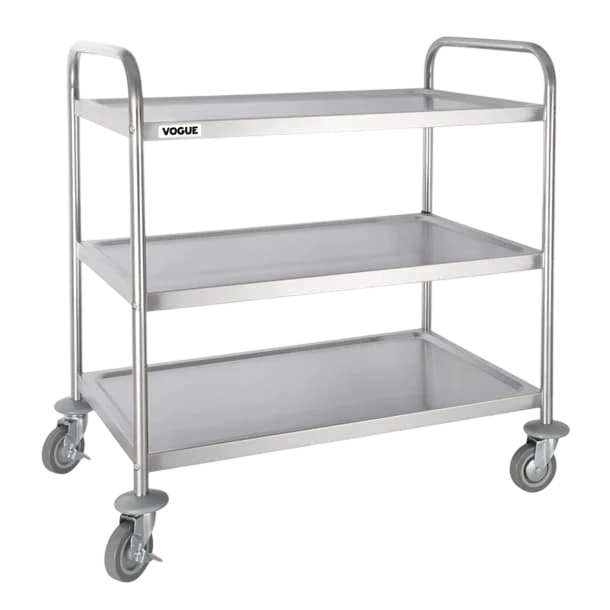
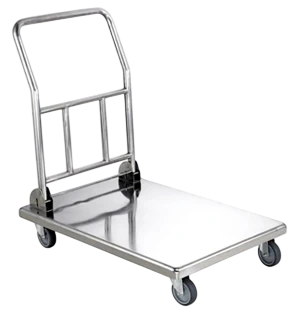
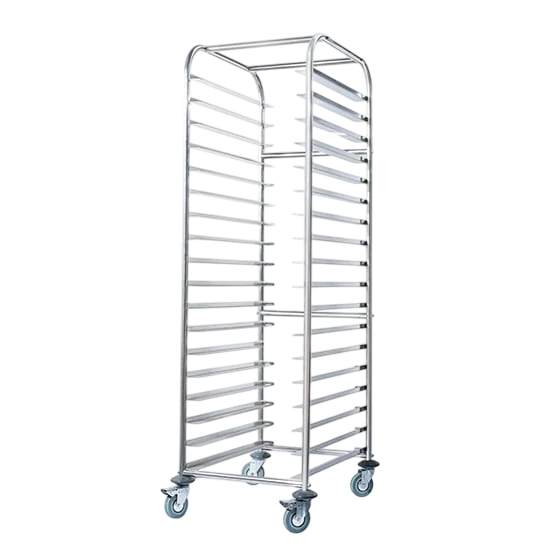
Vogue F993 3 Tier Flat Pack Trolley St/St - 825x710x405mm
710 × 405 × 825mm
$202.31$219.90
In Stock
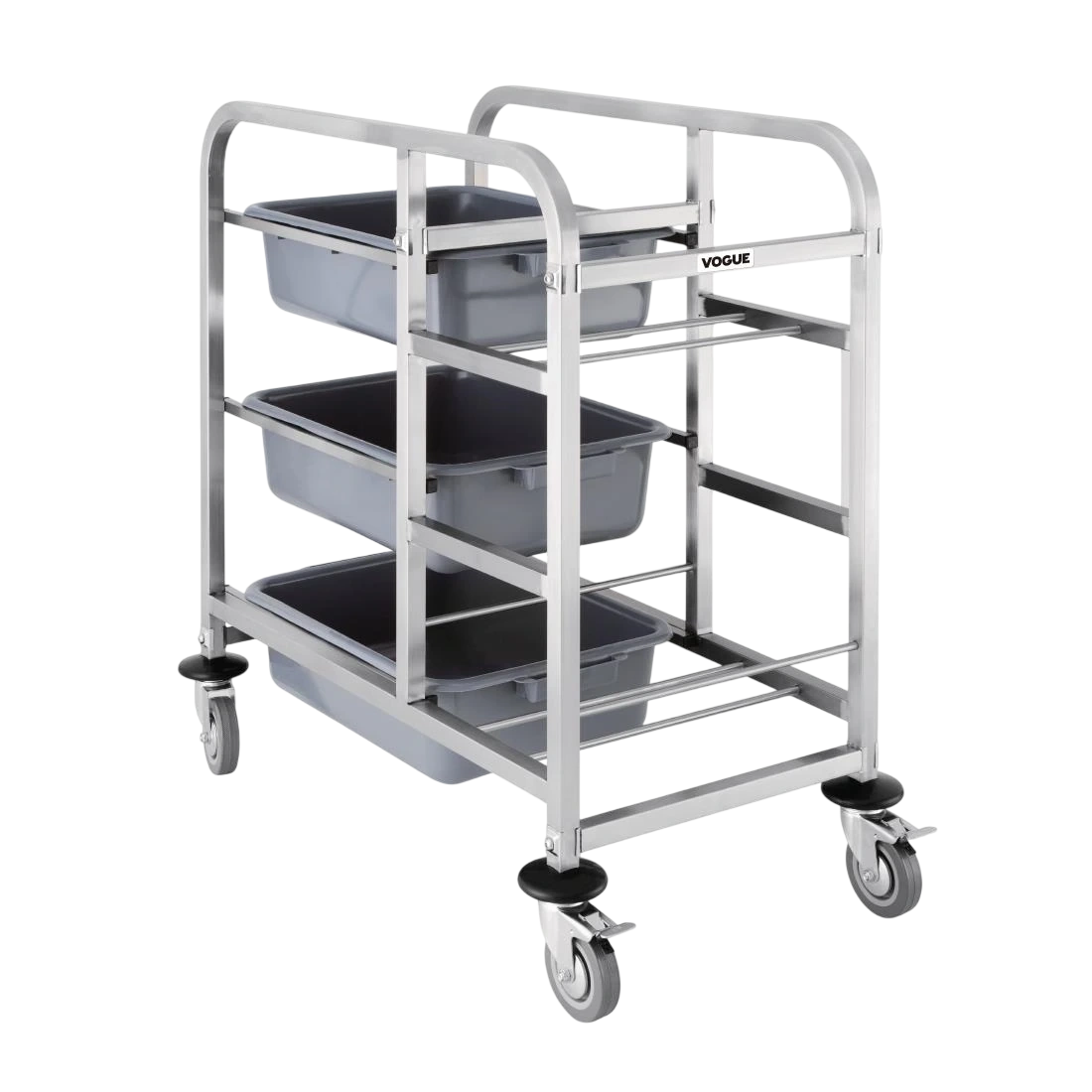
Trolley & Bins
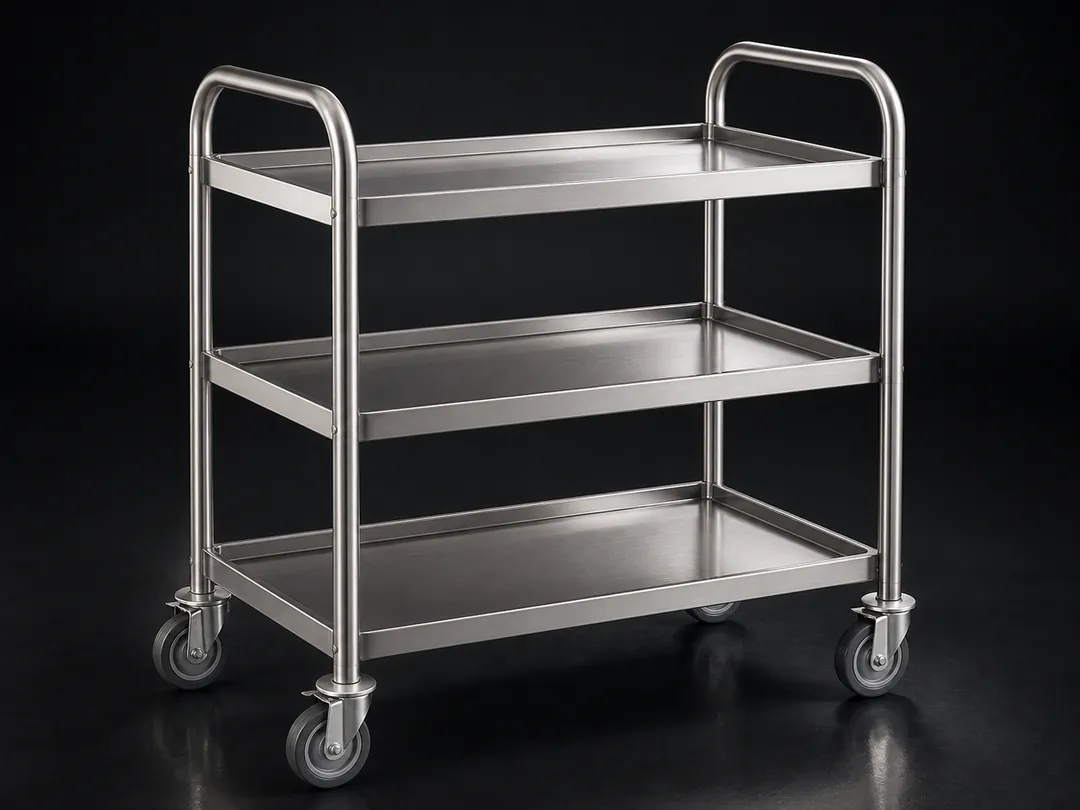
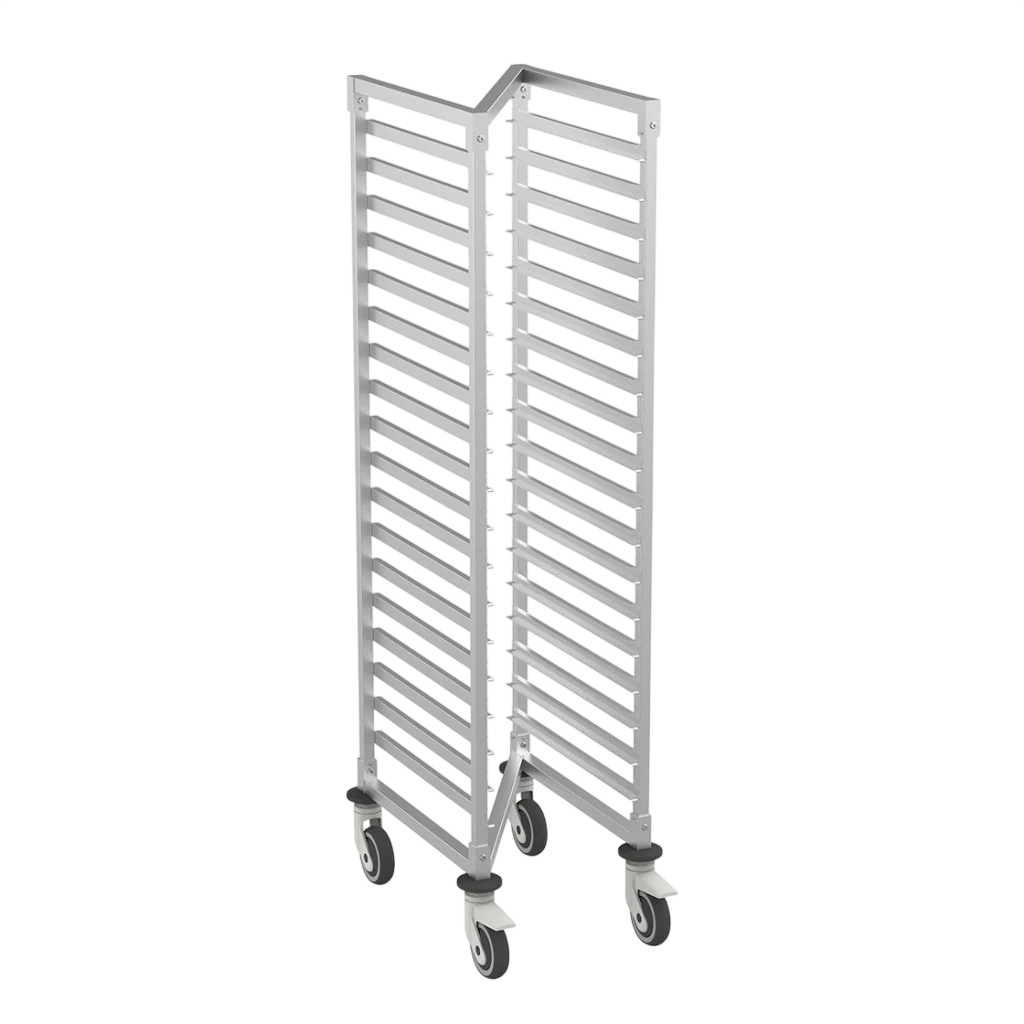
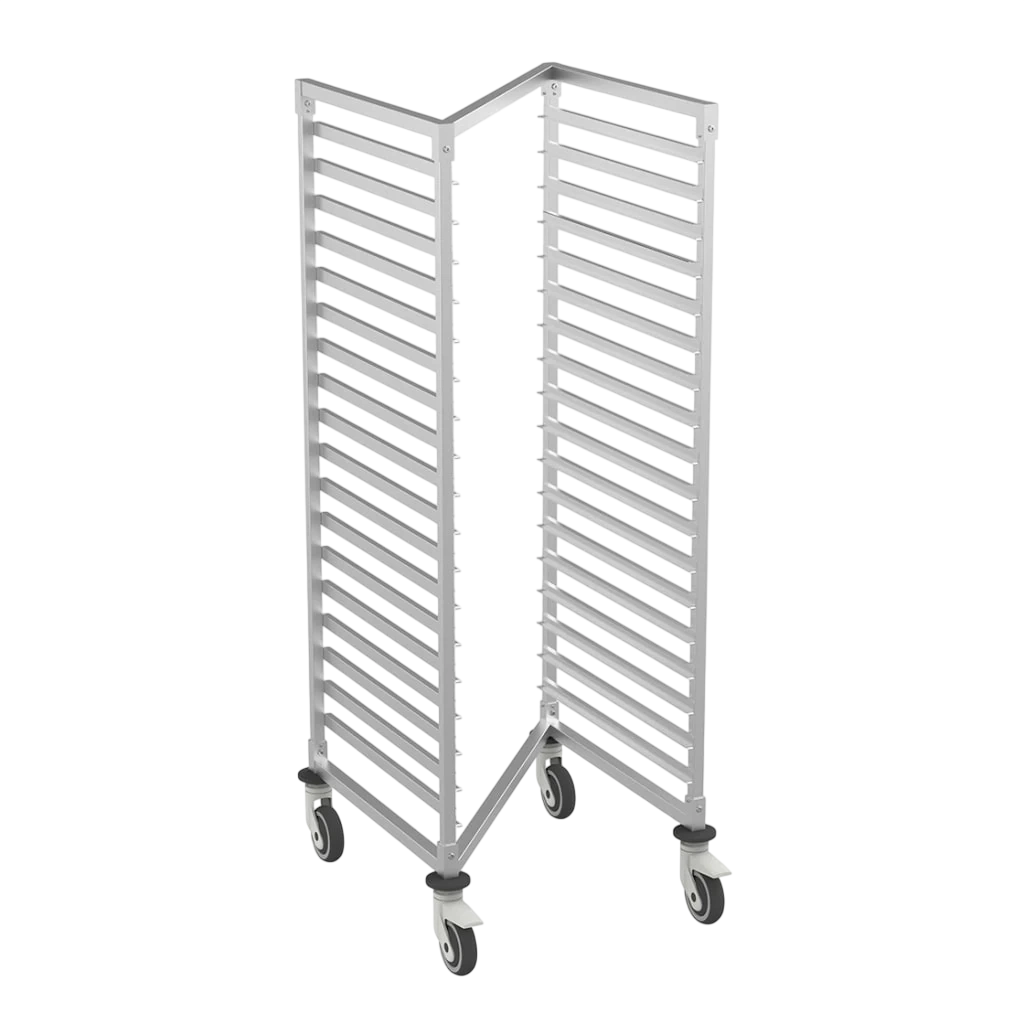
A stainless steel trolley moves plates, produce and equipment through the kitchen without double-handling. The range centres on two and three tier clearing trolleys, with GN pan trolleys for moving loaded pans between prep, cool room and service. Check shelf clearance against what you actually carry, look at the castors for your floor surface, and work to each model's stated load rating.
Key factors to consider before purchasing. Our team can help you find the right fit — call or get a quote anytime.
Match equipment capacity to your daily output. Consider available floor space and door clearances.
Confirm levelling, wall clearance and the access needed for cleaning and service. We can help with kitchen planning.
Submit your kitchen requirements — our equipment specialists will send you a tailored shortlist of stainless steel trolley that fits your budget, venue type and compliance needs.
Standards & Compliance
Before comparing trolleys, confirm the loaded weight the trolley will actually carry, the narrowest point on its route and the floor surface it crosses. Check the shelf clearance against the tallest item to be carried, and whether the handle position suits the staff who will push it.
Stainless steel grade and finish affect how the trolley survives cleaning chemicals and repeated wash-down. Ask how the shelves are joined to the frame, whether the welds are accessible for cleaning, and how the castor housings are protected where they sit closest to the floor.
FAQ
Yes. Many units support 100kg–200kg and are designed for heavy transport tasks.
Absolutely. Stainless steel is heat-resistant and ideal for holding hot pans or equipment.
High-grade 304 stainless steel resists corrosion, even in wet or dishroom environments.
Plastic is lighter and quieter, but stainless steel offers superior durability and hygiene for heavy-duty tasks.
It depends on what moves and how far. Flat shelves are quicker to load and suit boxes, equipment and anything lifted straight off. Sides or lipped edges hold trays, containers and loose items in place through turns, over thresholds and on any part of the route that slopes.
Why KW
KW can help match shelf format, castor specification and overall dimensions to the route a trolley will travel, then consider how the loaded weight and floor surface affect the choice. For practical advice on specifying a stainless steel trolley, call KW on 1300 001 366.
Deep Dive
Technical depth from KW's commercial kitchen specialists.
Stainless steel trolleys are preferred in professional kitchens because they meet strict hygiene requirements. Key engineering advantages include:
Explore our range of commercial stainless steel trolleys designed for heavy-duty transport and daily hospitality operations. Perfect for restaurants, hotels, cafés and catering services.
Flat shelves load and unload fastest and suit boxed stock, equipment and anything lifted straight off. Raised sides or lipped edges are worth the slower loading where the trolley carries trays, loose containers or plated food, or where the route includes a slope, a threshold or a turn tight enough to shift a load.
Small hard castors run easily on level sealed floors but catch on drain covers and door thresholds. Larger castors roll over those transitions with less effort from the operator. Where the trolley is loaded or unloaded on a slope, or on a floor that is regularly wet, brakes on more than one corner are the practical requirement rather than an option.
Count the items carried in one trip and the tallest of them. More tiers increase capacity but reduce the clearance between shelves, so a three-tier trolley may not accept the containers a two-tier version handles comfortably. Match tier spacing to the tallest item before counting shelves.
They matter most where a loaded trolley is parked on a slope, on a wet floor, or beside a bench where staff lean on it while working. On level dry floors with light loads brakes are less critical, but a trolley that is loaded and unloaded while stationary is easier and safer to work from when it can be held still.
The narrowest doorway, the tightest corner, any threshold or drain cover, and any change in floor level. Measure the clear opening rather than the door frame, and compare it against the trolley footprint including handles and castor swing.
Walk the route the trolley will take and record the narrowest doorway, the tightest corner and any threshold or ramp. Compare those measurements against the trolley footprint including handles and castor swing, which extend beyond the shelf dimensions. A trolley that fits the storage bay but not the corner into service will be worked around rather than used. Where stock stays inside chilled storage, compare fixed or mobile cool room shelving instead of using a service trolley as permanent racking.
Clean shelf corners, frame joints and castor housings on the same schedule as the surfaces around them, since these are where residue collects unseen. Check castor fixings and brake function periodically, particularly on trolleys that cross thresholds or carry heavier loads, and address a stiff or wobbling castor before it damages the shelf frame.
| Format | Typical use |
|---|---|
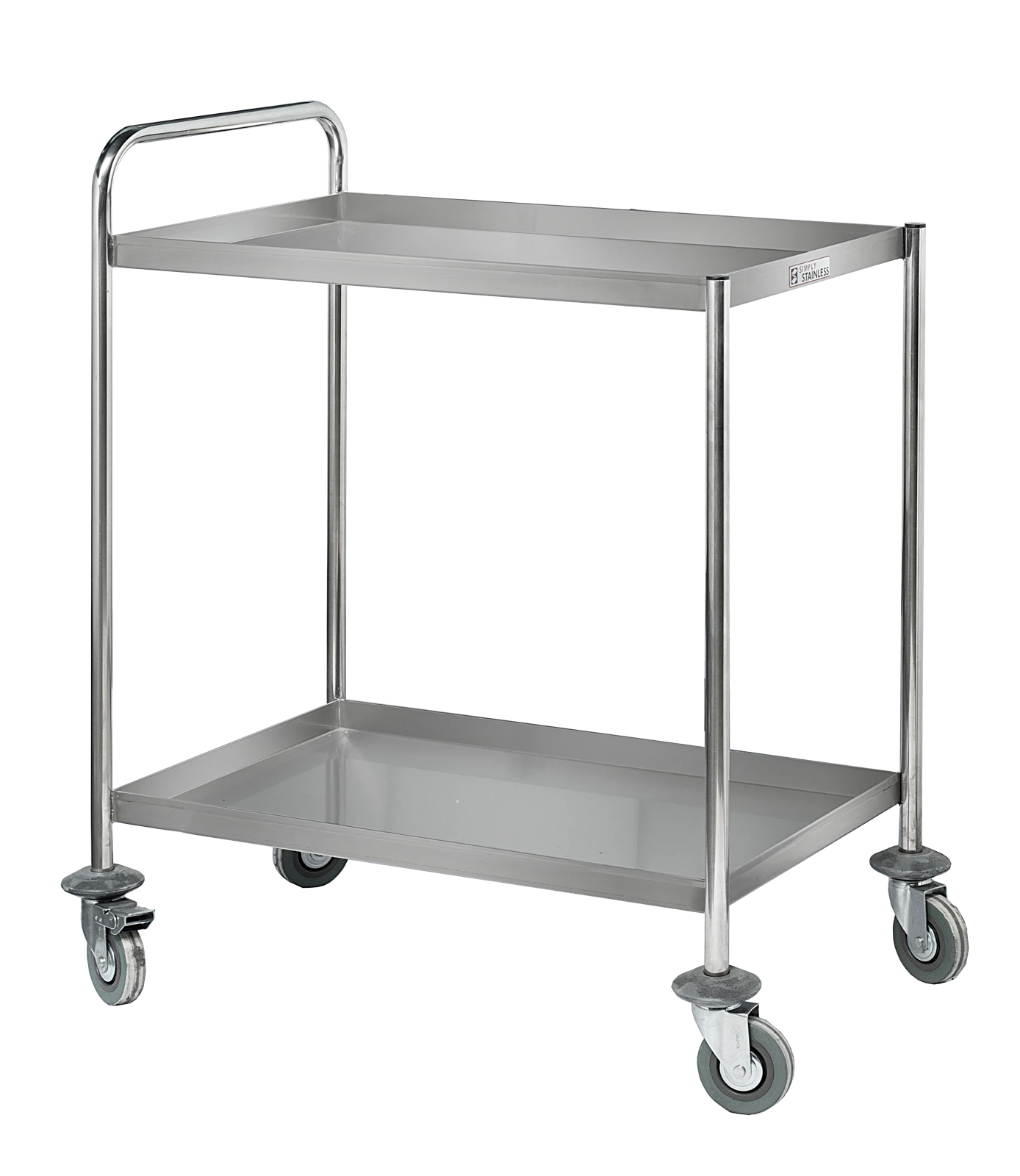
| 2-tier clearing trolley | Clearing tables and moving service items where aisles are tight |
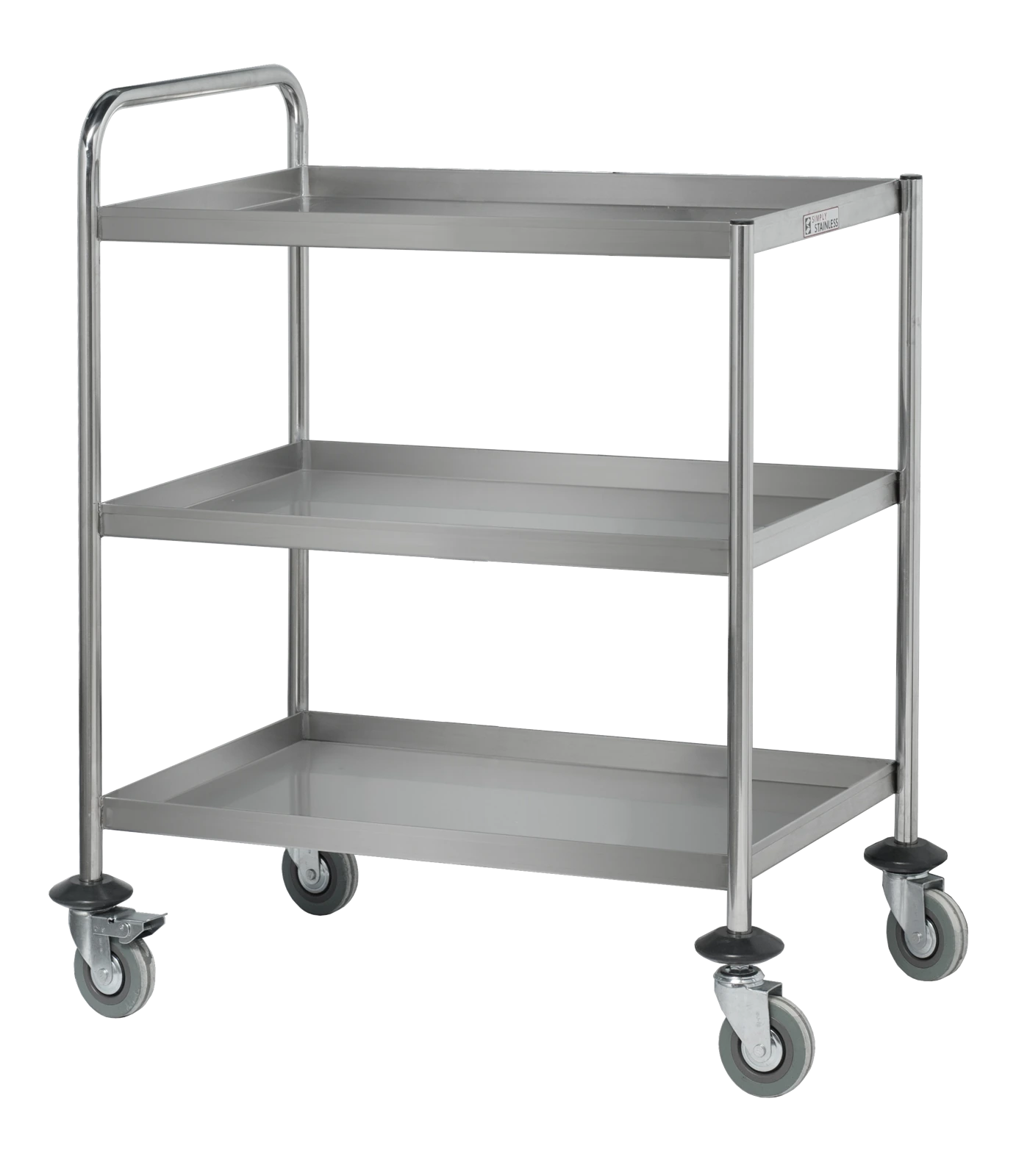
| 3-tier clearing trolley | Larger clearing runs and back-of-house transport in one trip |
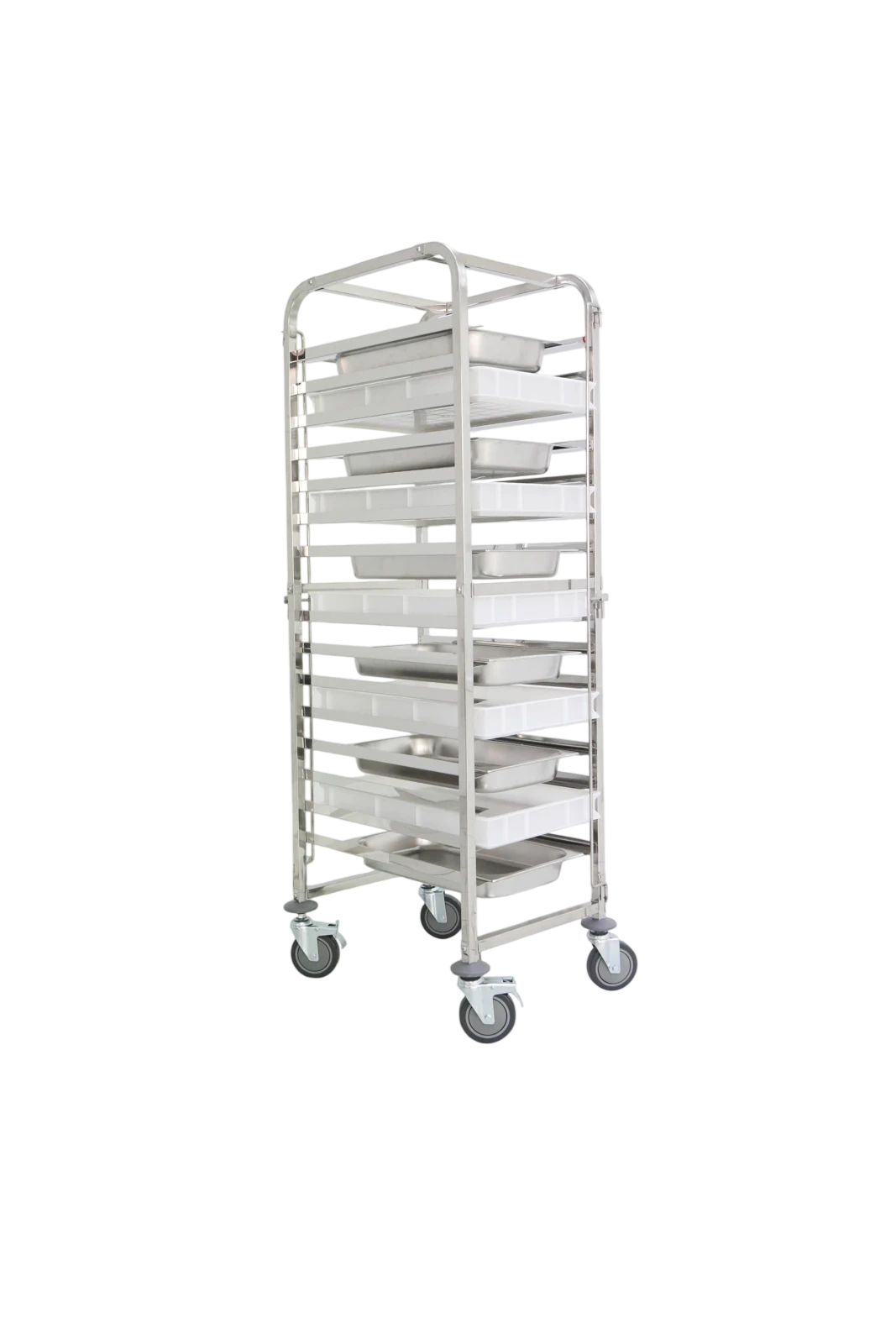
| GN pan trolley | Moving loaded gastronorm pans between prep, storage and the line |
40 results
710 × 405 × 825mm
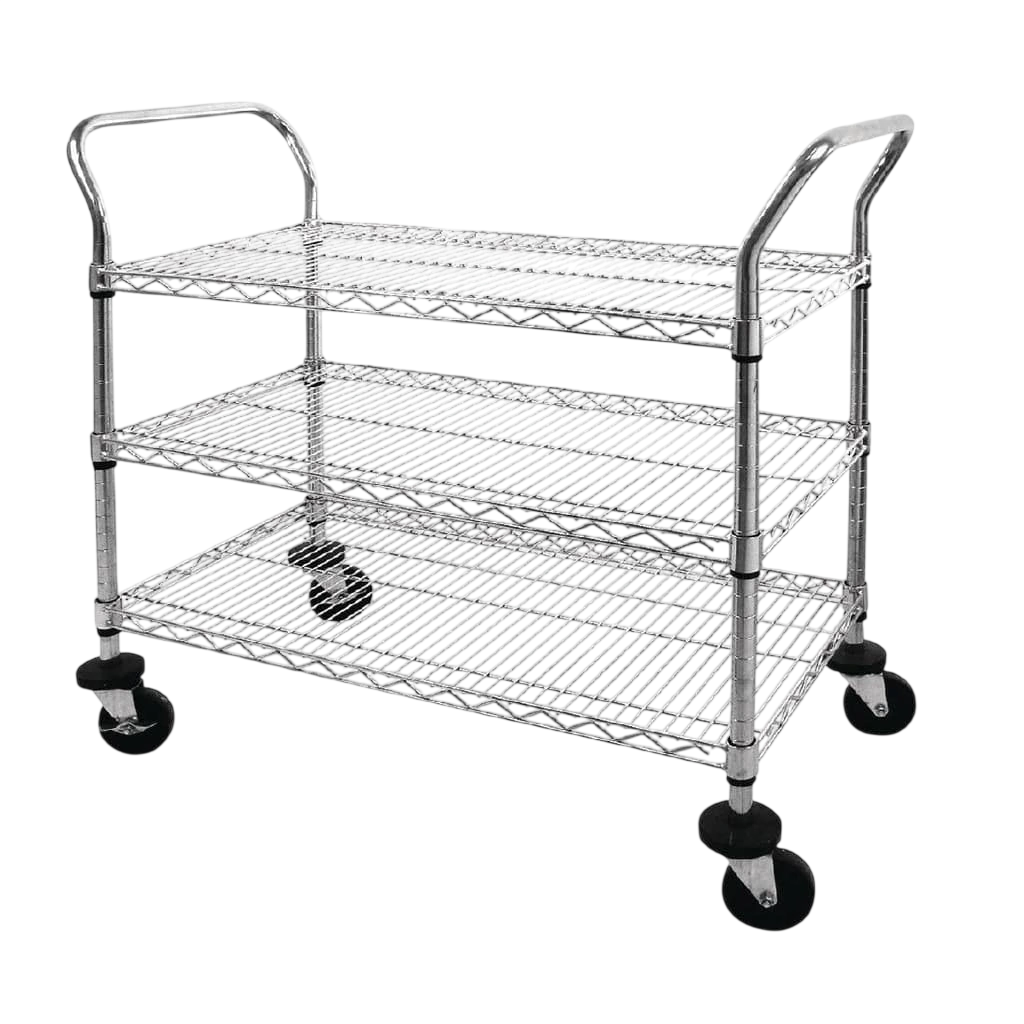
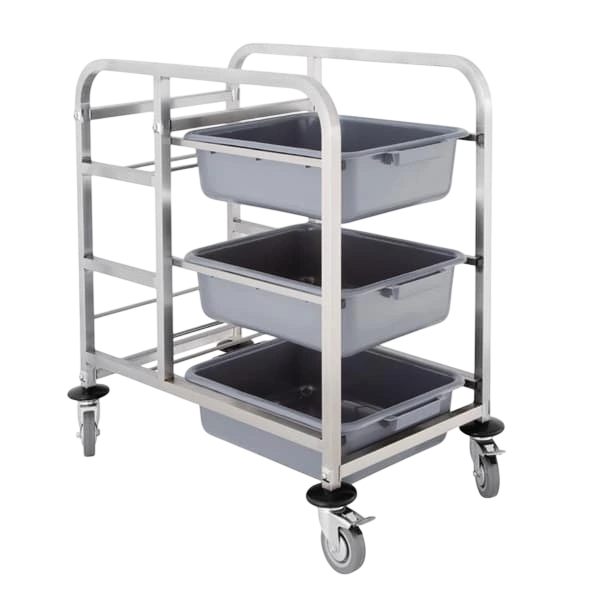
820 × 440 × 900mm
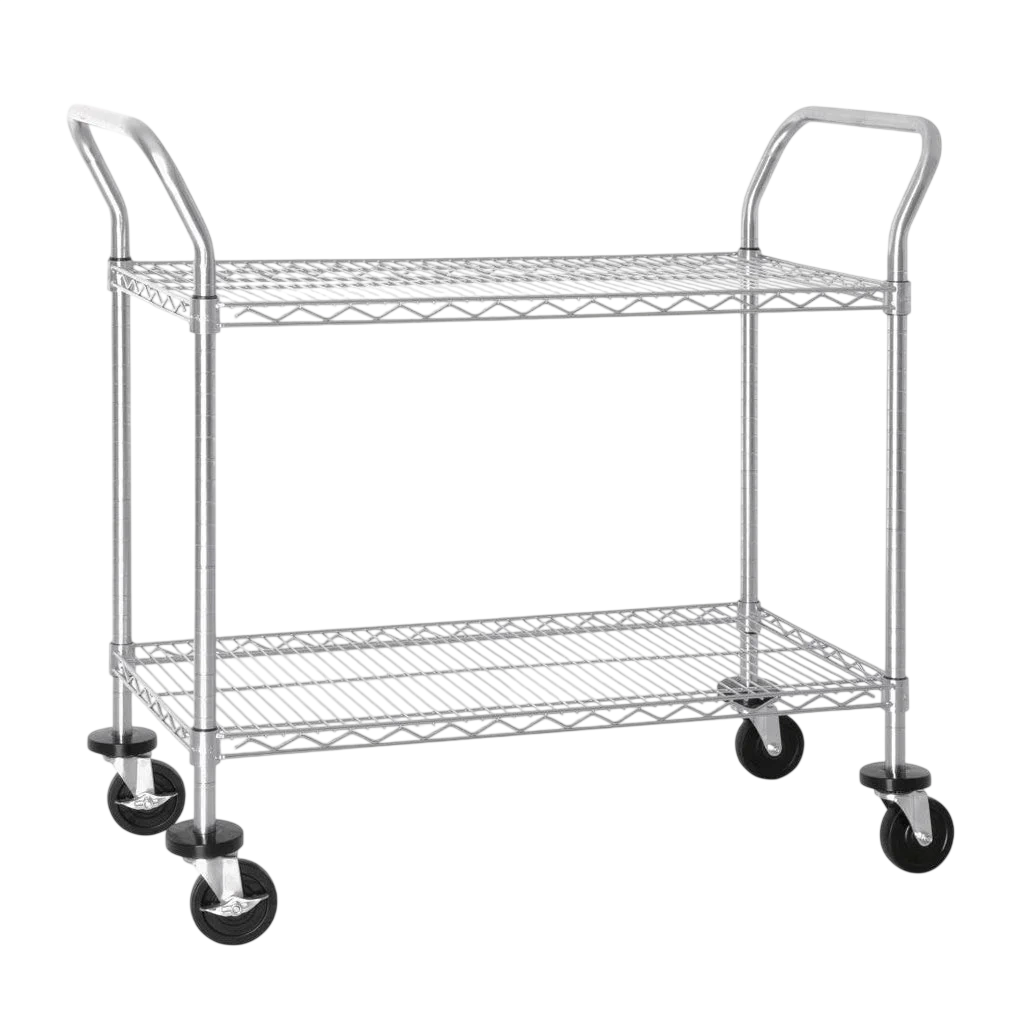
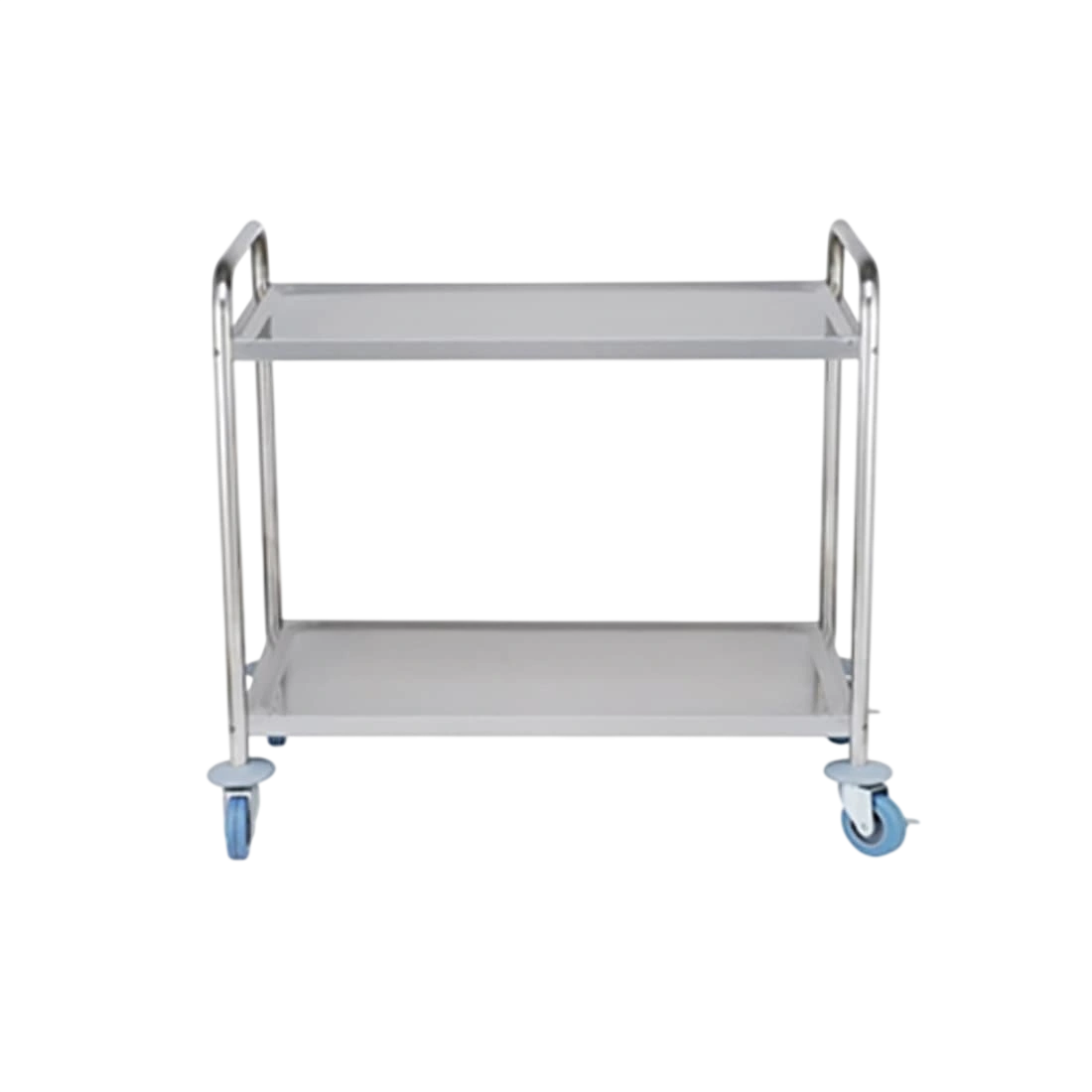
855 × 535 × 940mm
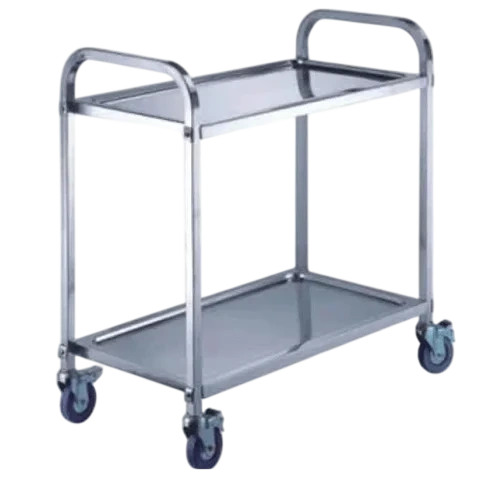
850 × 450 × 900mm
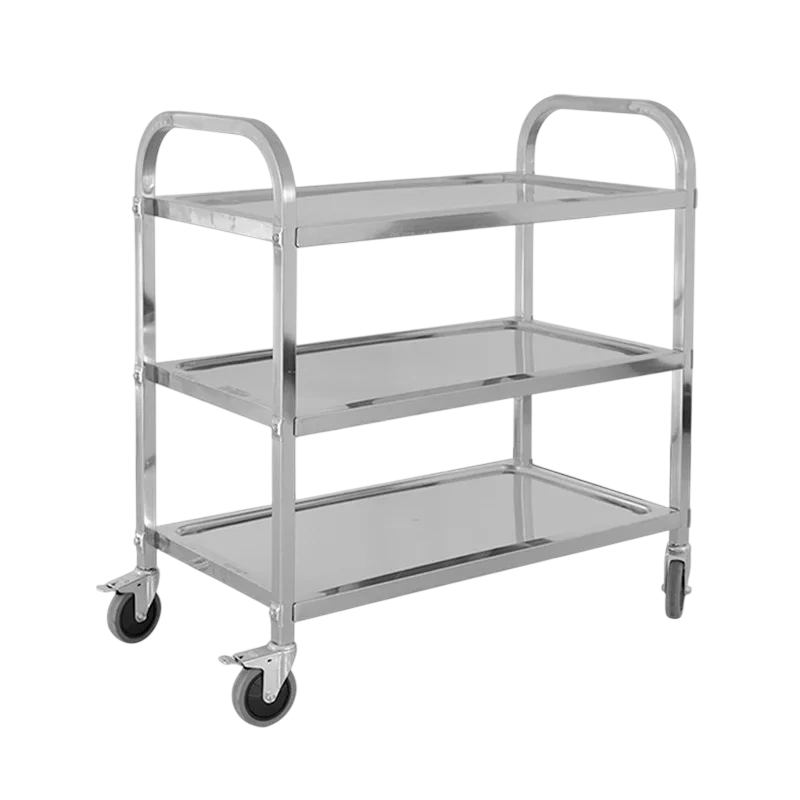
950 × 500 × 950mm
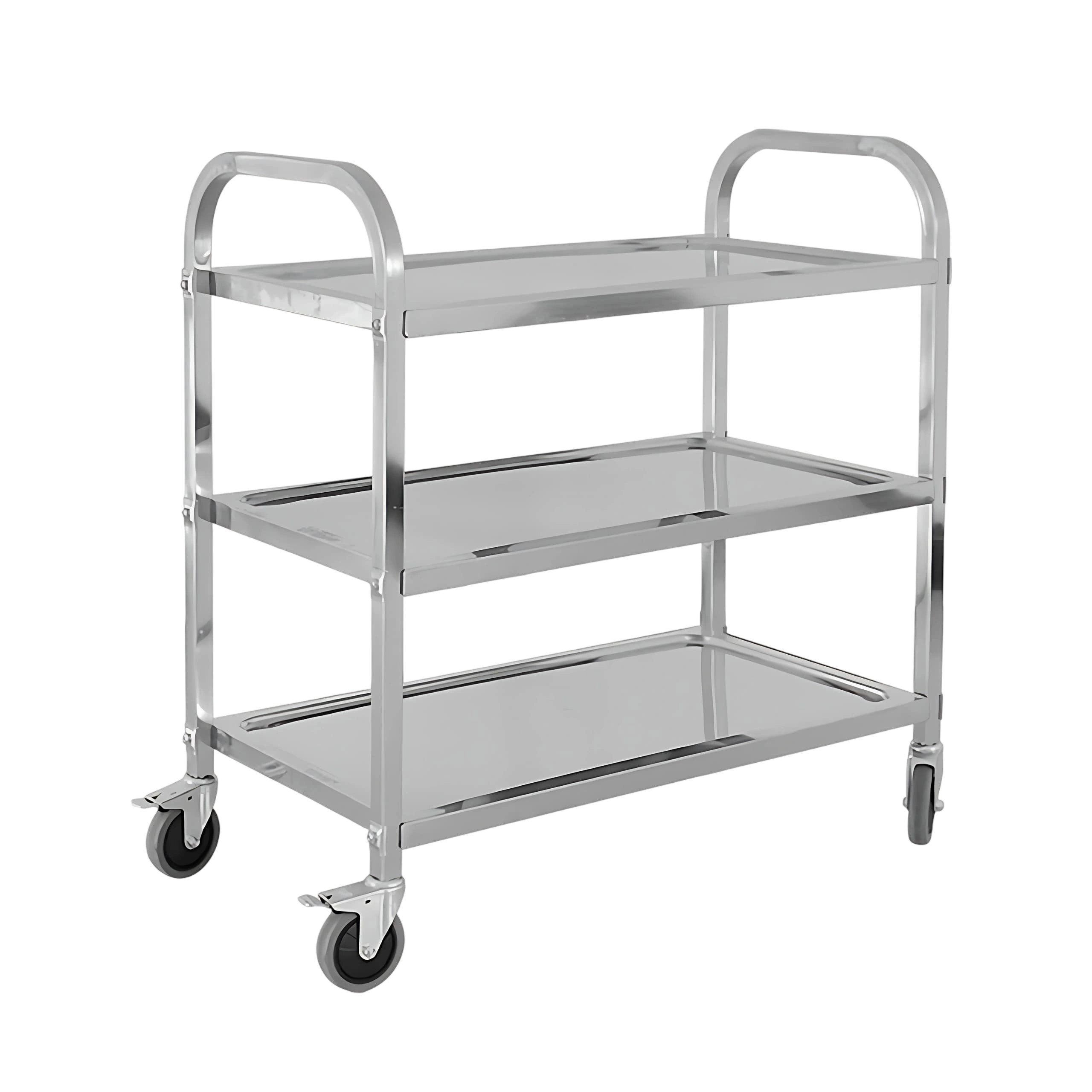
750 × 400 × 835mm
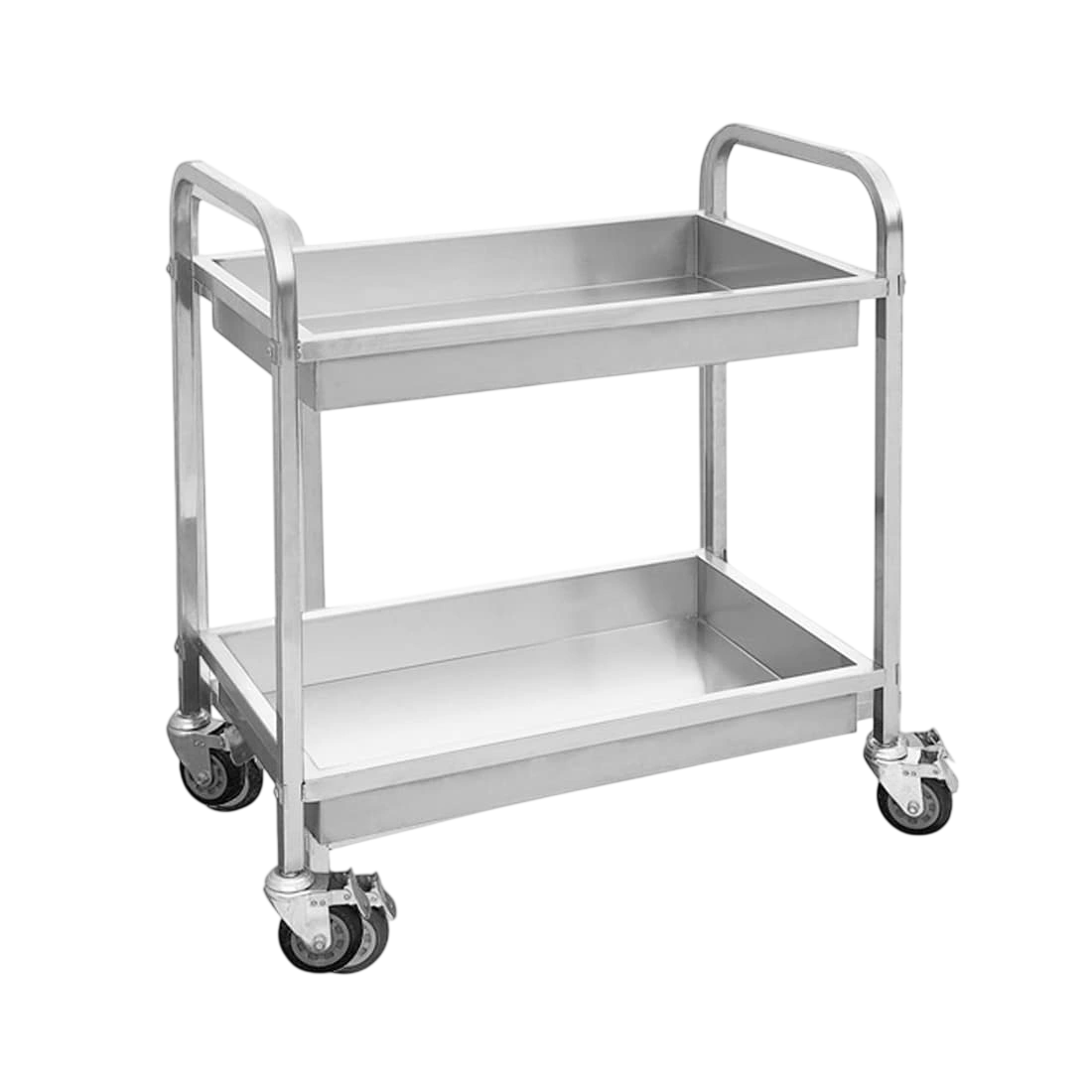
855 × 535 × 940mm
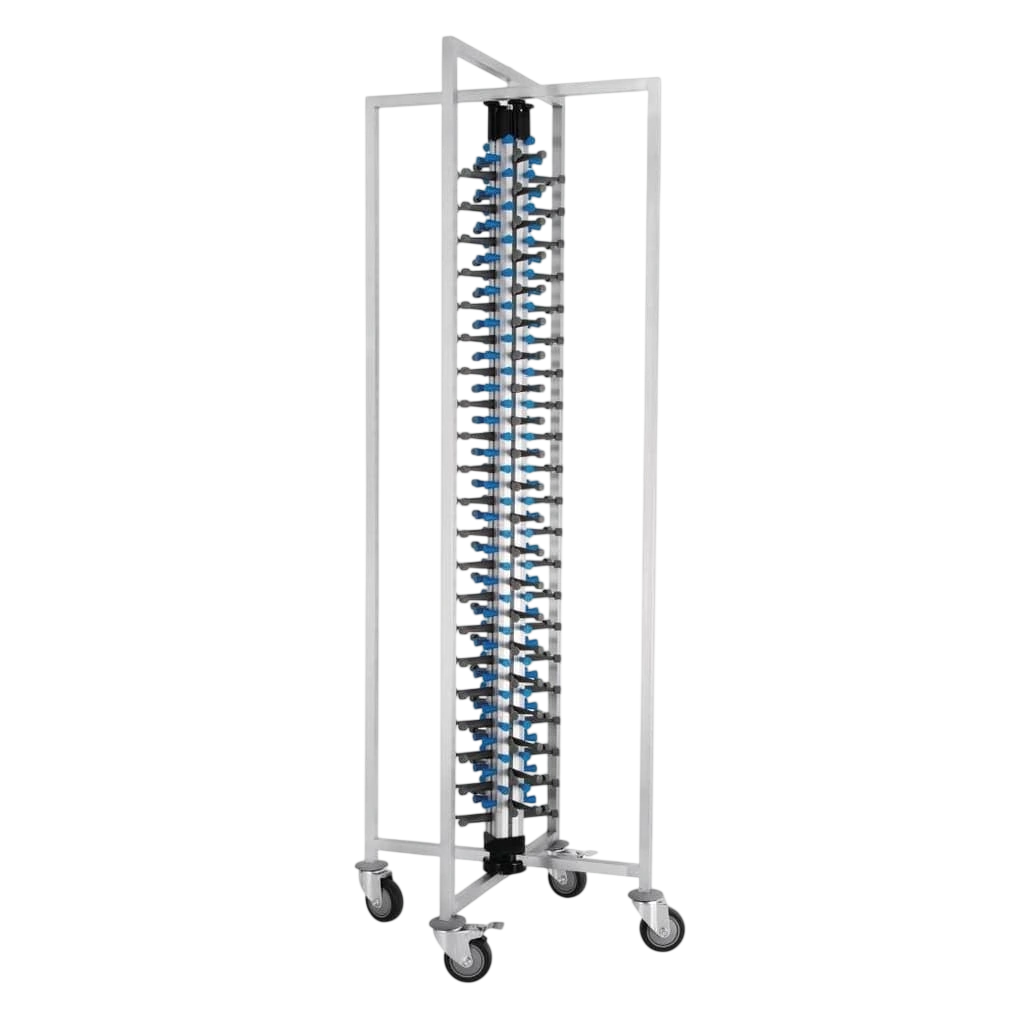
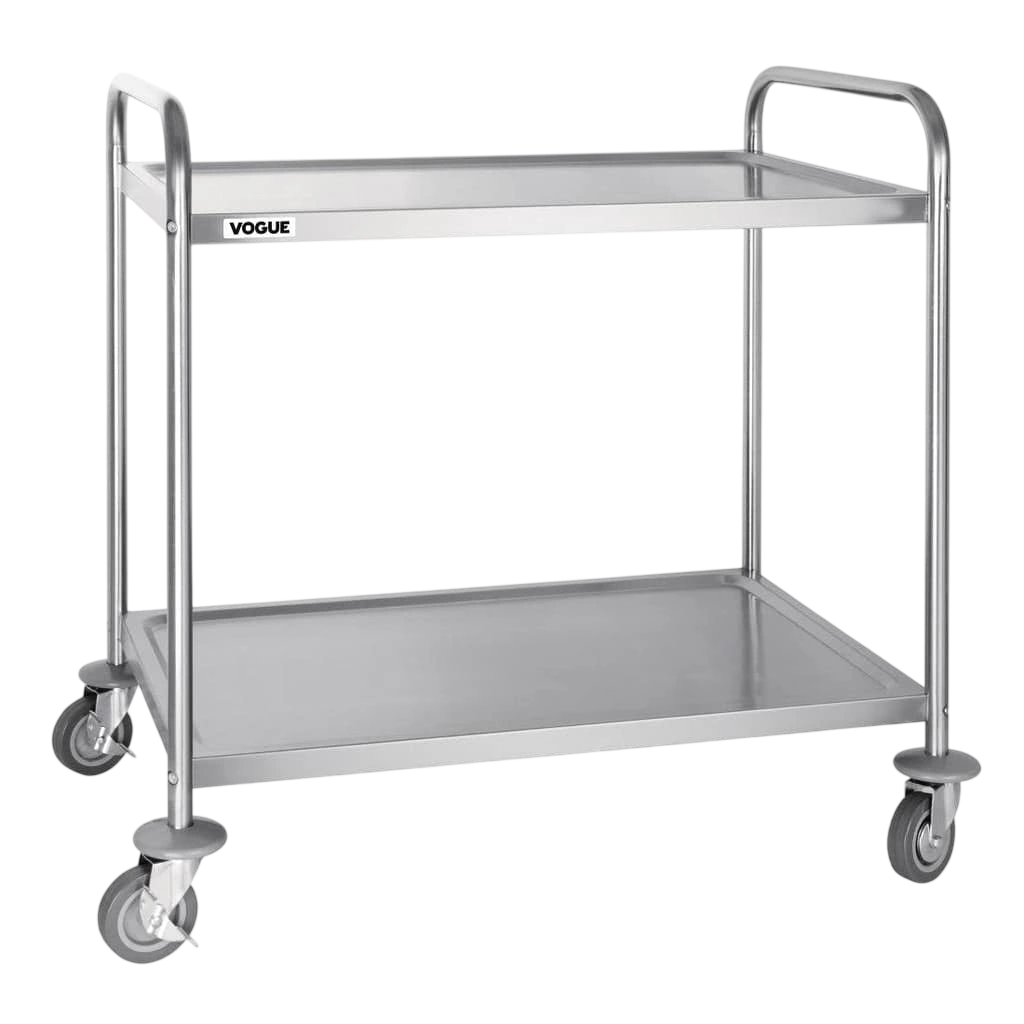
860 × 535 × 930mm
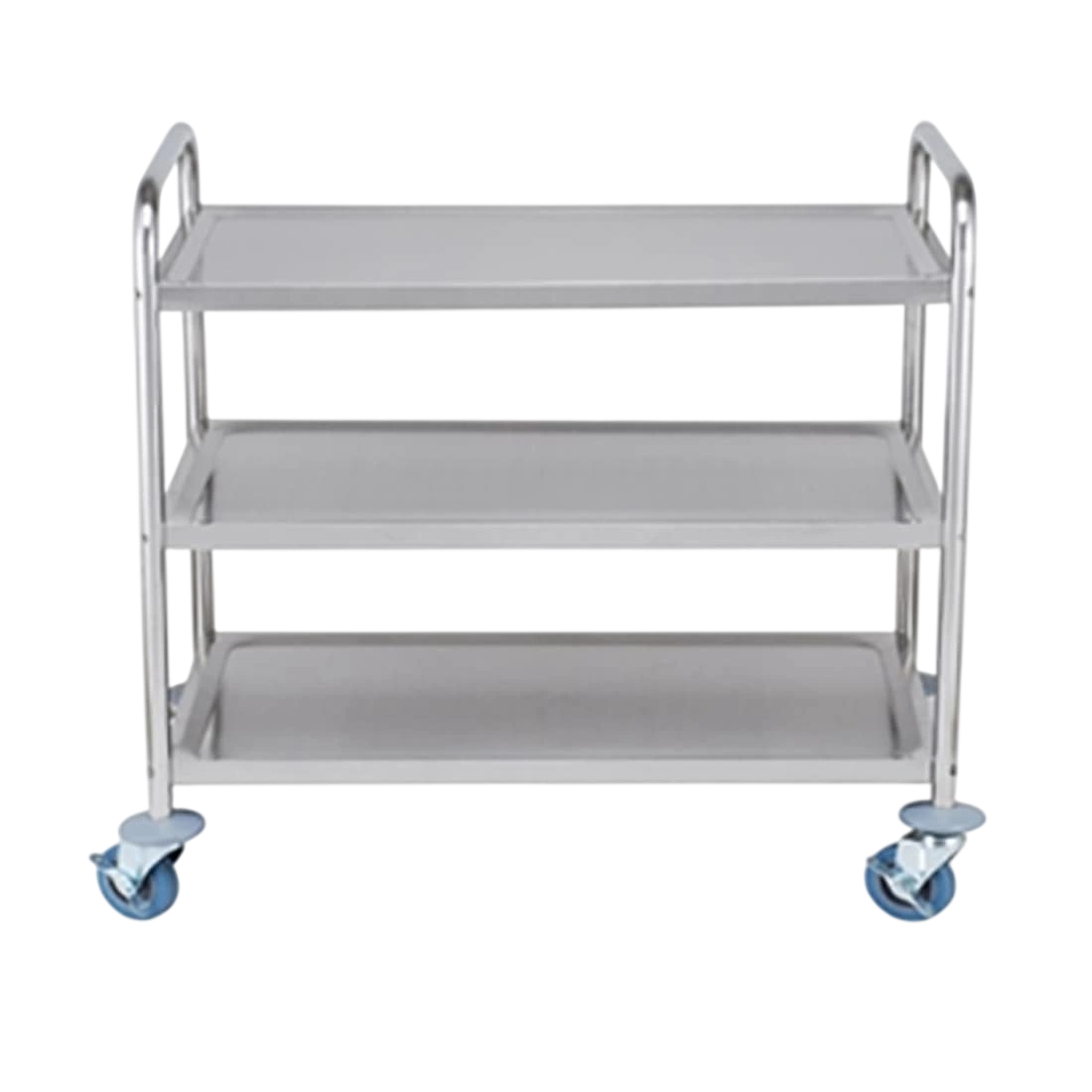
810 × 455 × 855mm
855 × 535 × 940mm
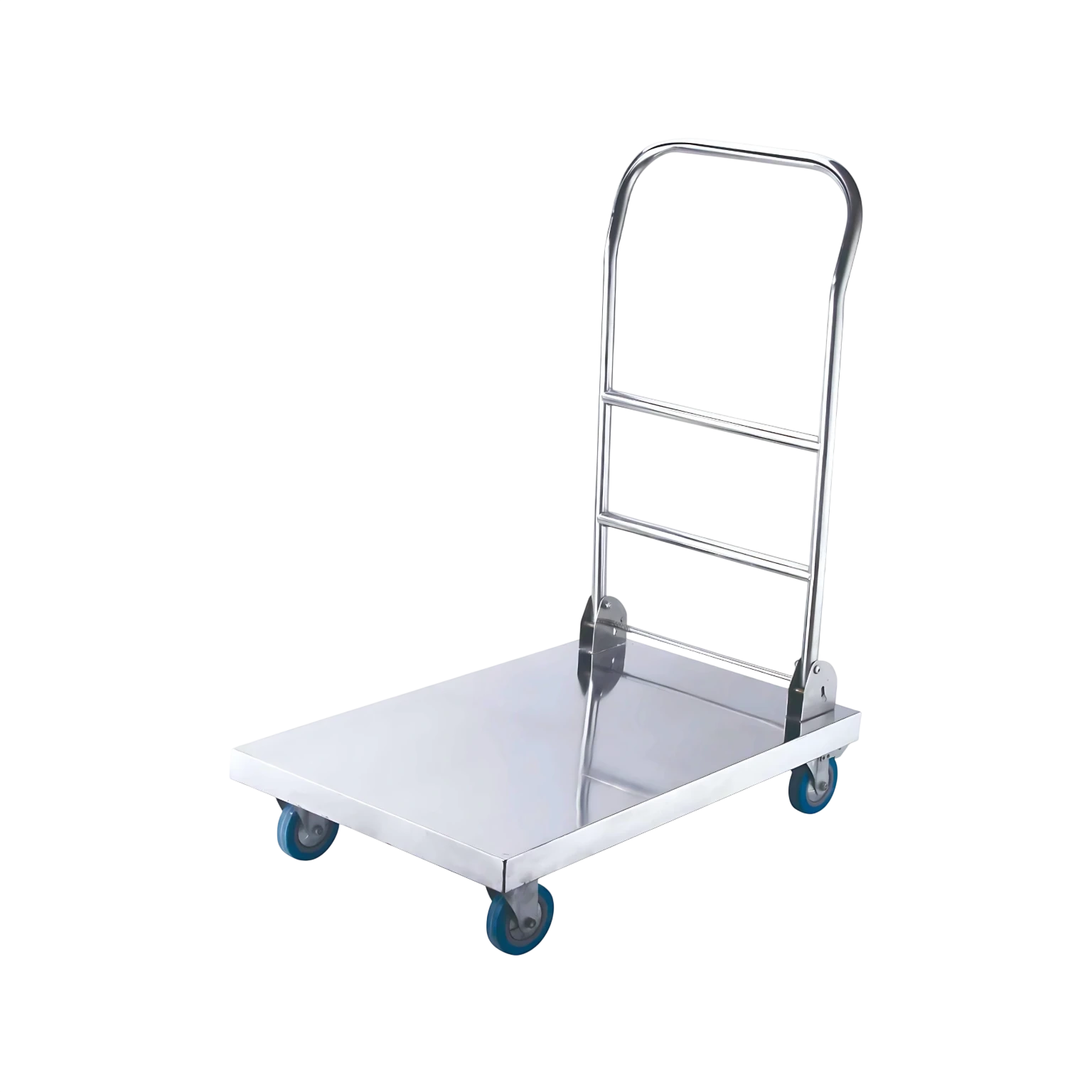
900 × 550 × 870mm
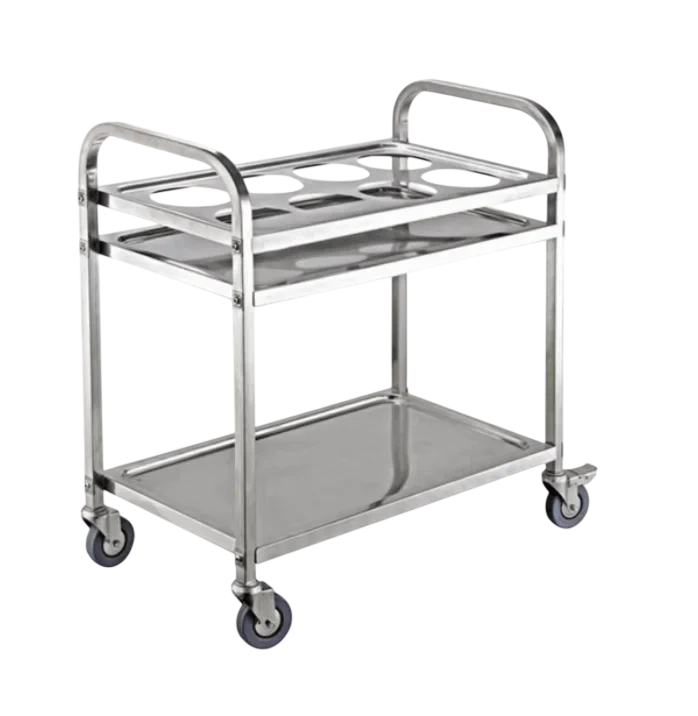
850 × 450 × 900mm
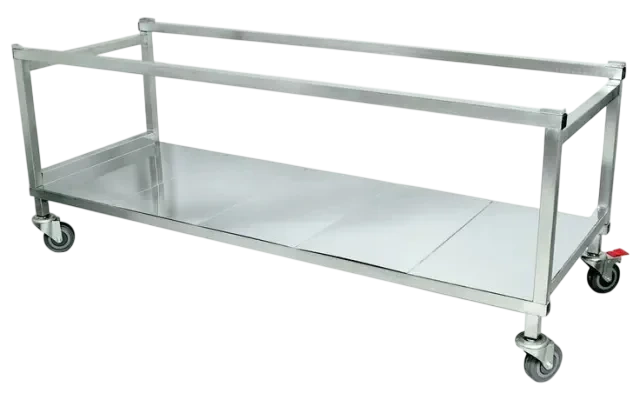
1355 × 605 × 690mm
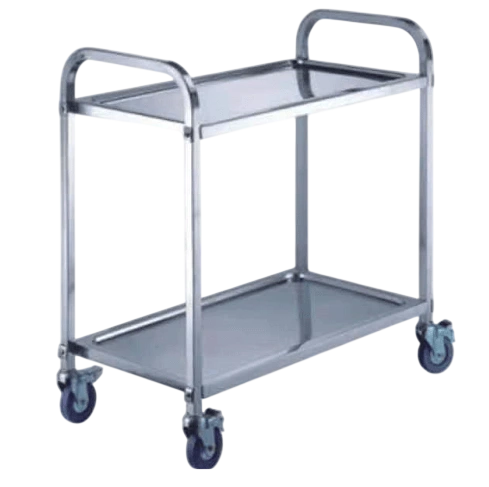
950 × 500 × 950mm
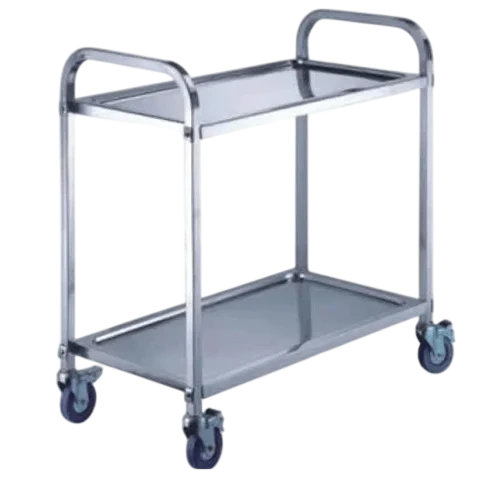
750 × 400 × 835mm
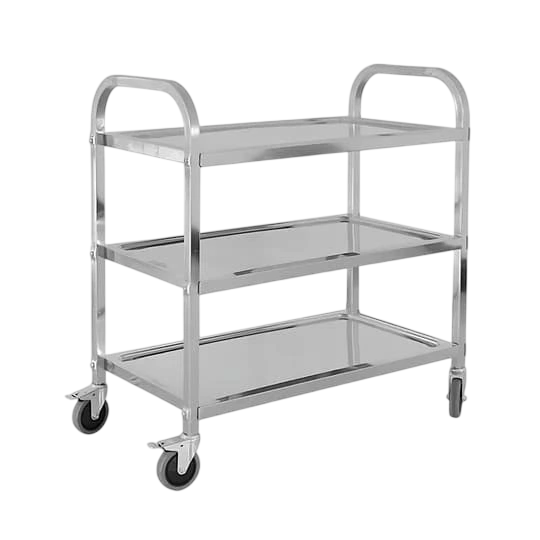
850 × 450 × 900mm
855 × 535 × 940mm
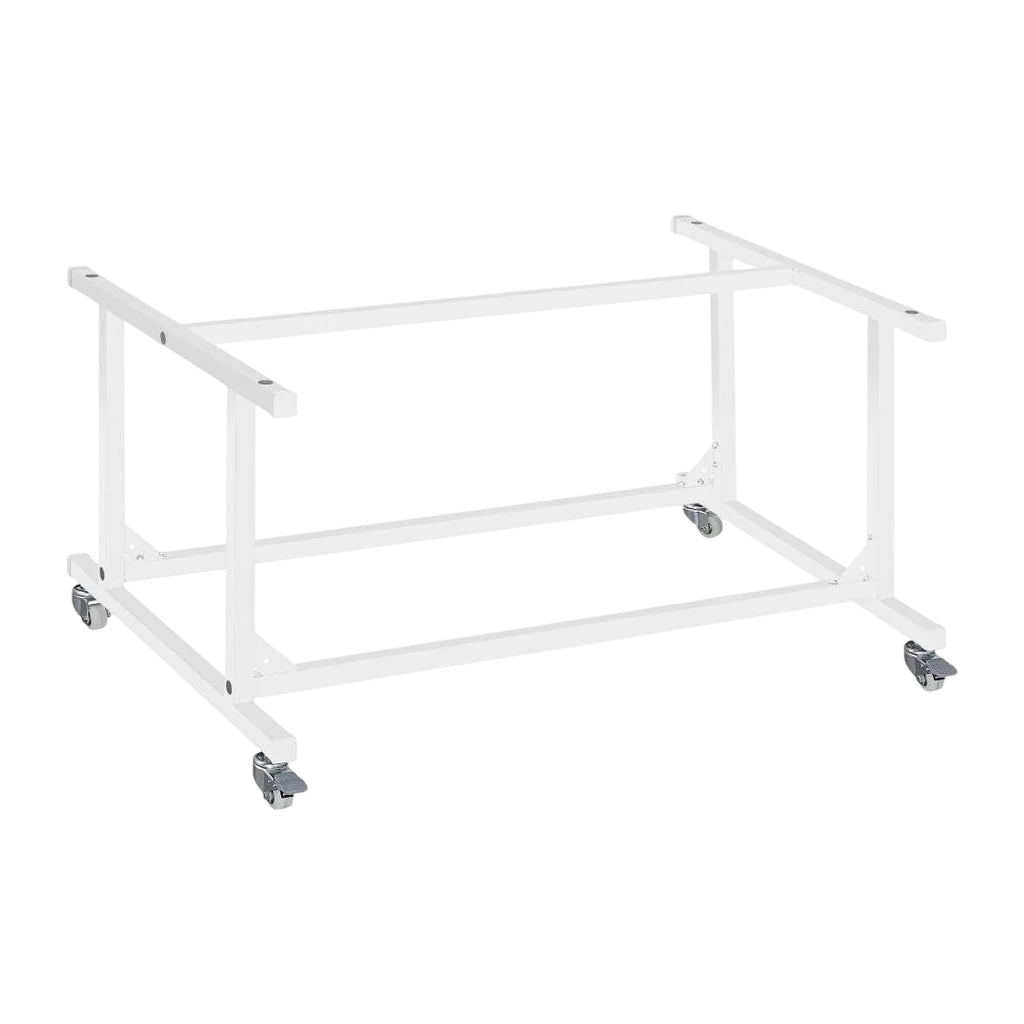
970 × 750 × 560mm
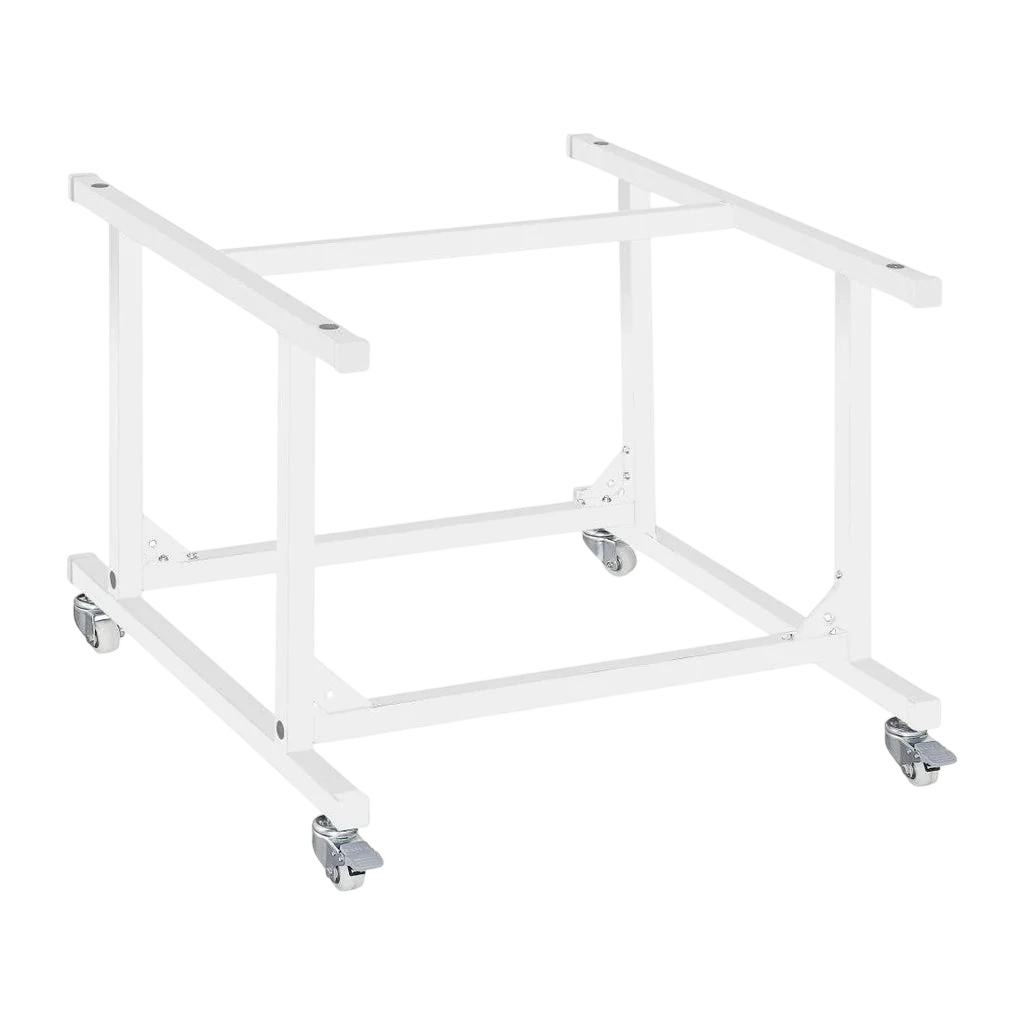
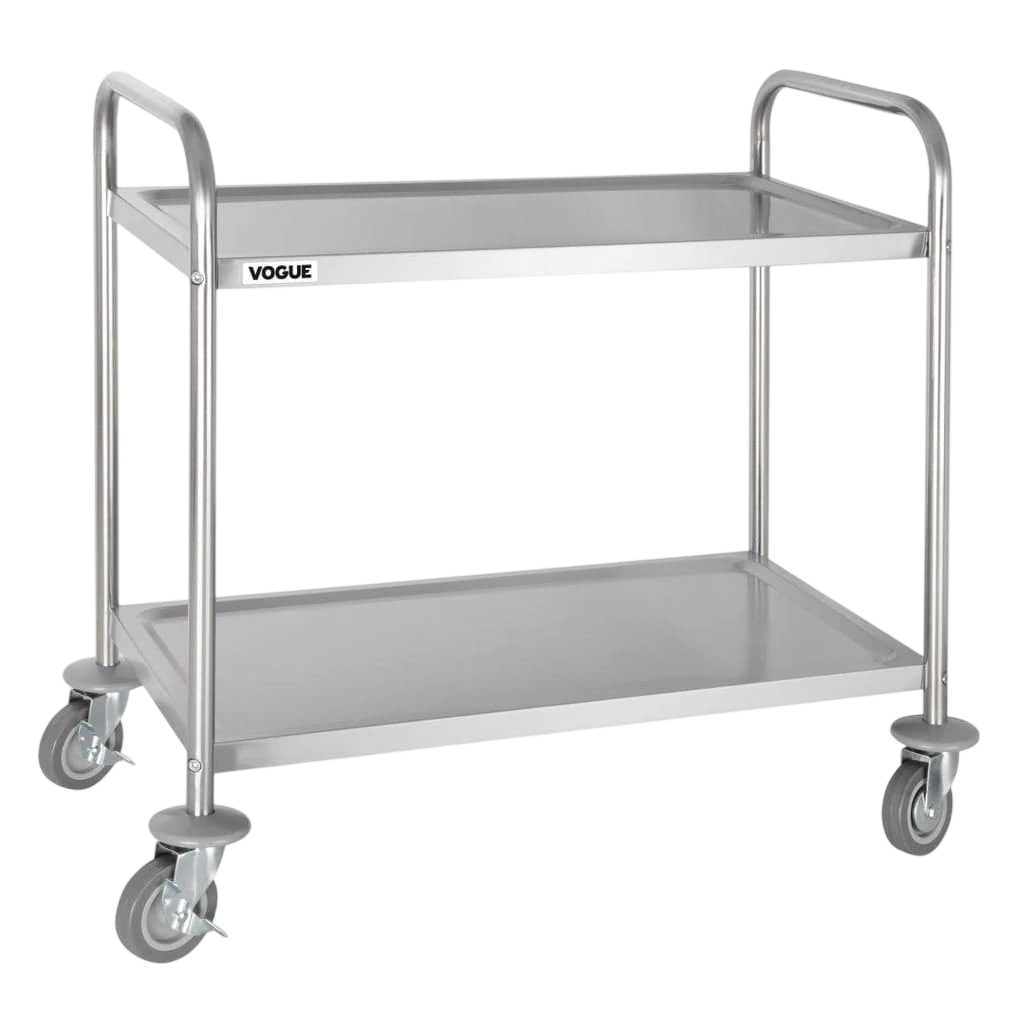
813 × 457 × 850mm
855 × 535 × 930mm
820 × 440 × 900mm
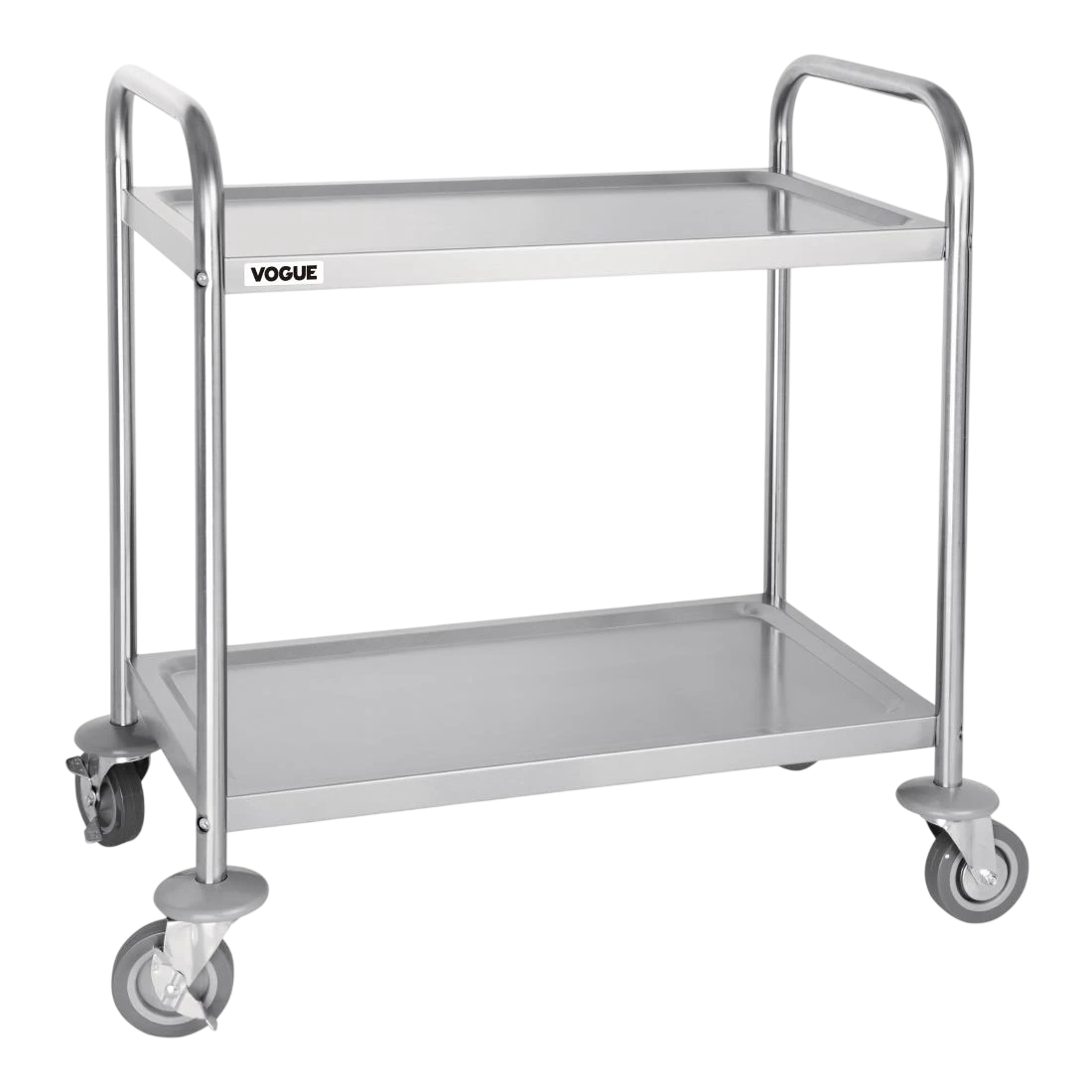
710 × 405 × 830mm
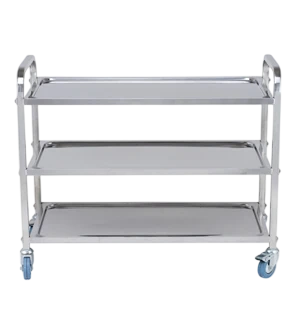
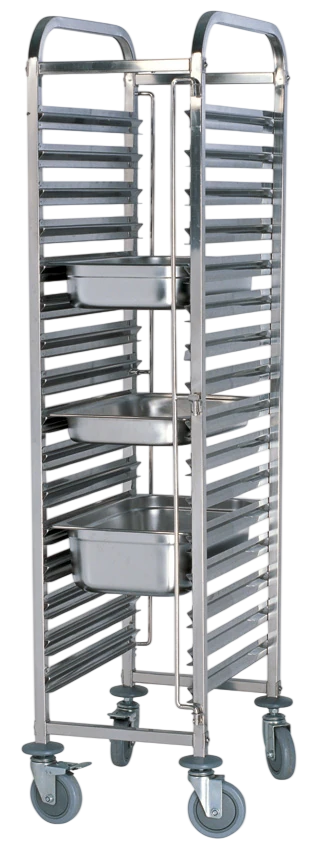
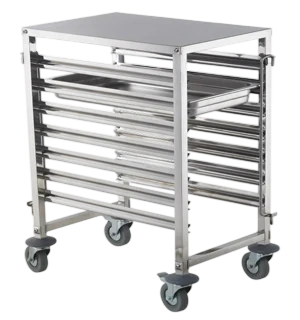
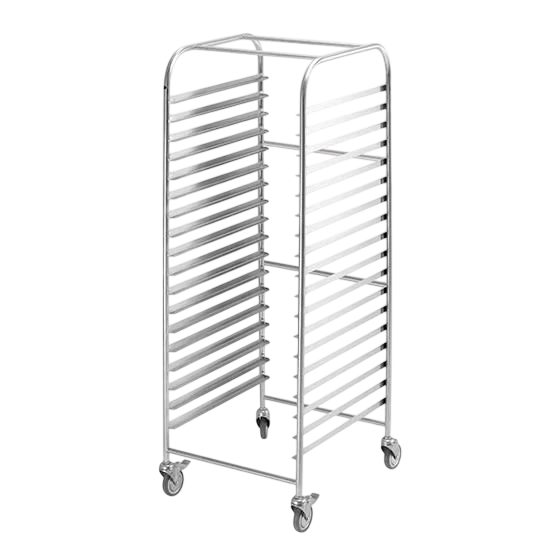
377 × 570 × 1650mm
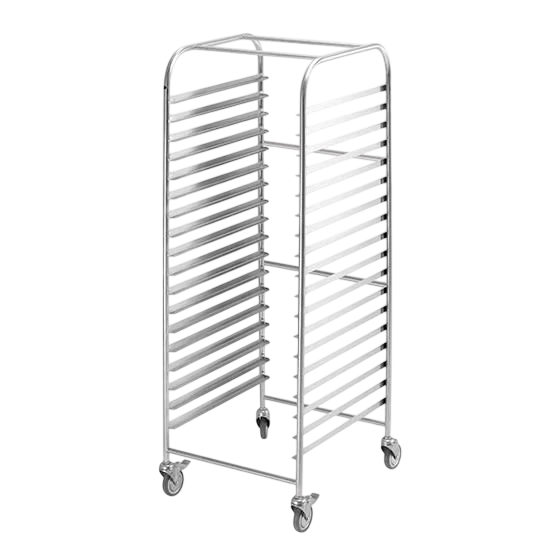
581 × 680 × 1650mm
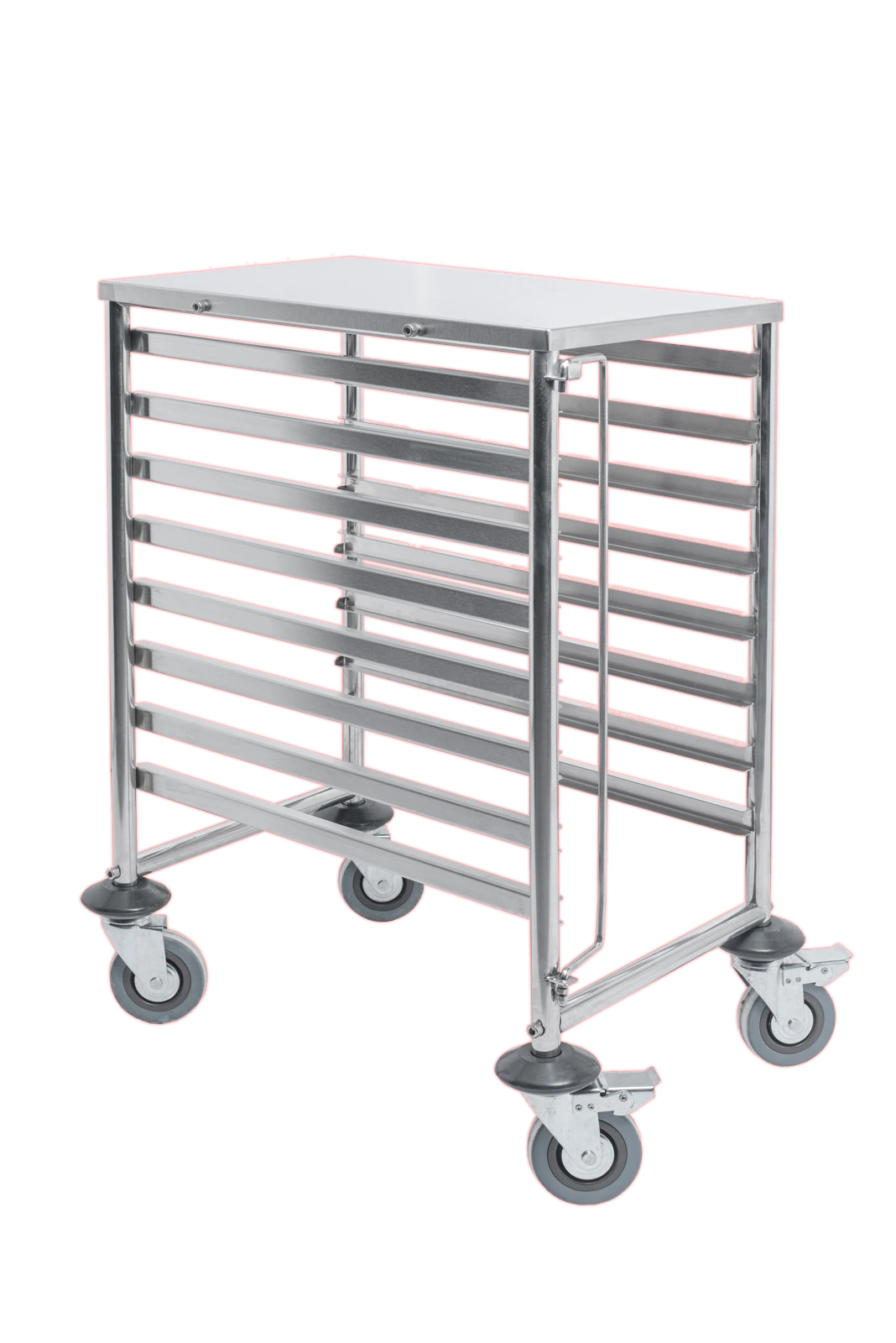
395 × 577 × 830mm
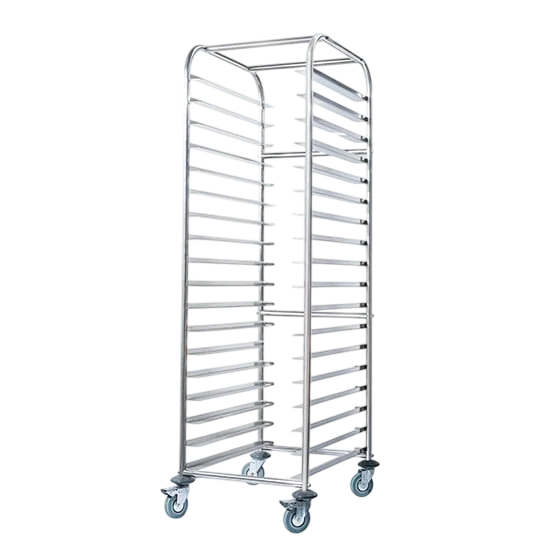
520 × 650 × 1800mm