Brand / Italy
An Italian warewashing specialist focused solely on professional dishwashers and glasswashers, combining high performance with low water and energy use for busy commercial kitchens.
6
Products
1960
Established
Italy
Origin
01 / OVERVIEW
BEST FOR
Cafés, restaurants, bars, hotels and institutional kitchens needing reliable, compact dishwashers and glasswashers with low water use.
NOT IDEAL FOR
Sites that only need very occasional washing or prefer the absolute lowest upfront cost over long-term efficiency.
PRICE POSITION
Mid-to-premium European brand with strong value when you factor in water, power and labour savings.
KEY STRENGTHS
Italian manufacturing, stainless steel construction, low water consumption, intuitive controls and a full range from glasswashers to pass-through units.
02 / PHILOSOPHY
Italian manufacturing, stainless steel construction, low water consumption, intuitive controls and a full range from
Origin: Italy
03 / AUDIENCE
04 / RANGE
05 / SELECTED
06 / TRADE-OFFS
| Aspect | Strength | Practical limitation |
|---|---|---|
| Engineering | Robust stainless build, reliable pumps and low water use across many models. | Still requires correct installation, water pressure and regular maintenance to meet spec.. |
| Workflow | Fast cycles and compact footprints integrate well into existing dishrooms and bars. | Basket-based systems require staff discipline for loading to get best results.. |
| Ownership cost | Lower water, power and chemical use can reduce lifetime cost compared with cheaper imports. | Upfront cost is higher than entry-level machines; best suited to venues washing daily.. |
07 / SUITABILITY
| Level | Kitchen type | Overall | Engineering | Workflow | Running Cost | Maintenance | Notes |
|---|---|---|---|---|---|---|---|
| L1 | Small café | Excellent for daily use; may exceed needs of very low-volume sites. | |||||
| L2 | Busy café / brunch | ||||||
| L3 | Restaurant / bistro | ||||||
| L4 | Hotel & function venue | ||||||
| L5 | Institutional / aged care | ||||||
| L6 | Stadium / high-volume event | ||||||
| L7 | Cloud / dark kitchen |
08 / ROI
09 / BENCHMARK
| Aspect | Adler | Typical entry-level | Notes |
|---|---|---|---|
| Durability | High – Italian stainless steel construction | Medium – lighter-duty cabinets and components | Better suited to daily commercial workloads. |
| Serviceability | Strong – commercial design, accessible components | Varies – some units are difficult to service in place | Reduces downtime and call-out time. |
| Efficiency | High – low water/cycle and smart hydraulics | Average – higher water and power use per rack | Better for venues washing many racks each day. |
| Ease of use | Simple controls and clear displays | Can be basic or confusing, depending on model | Training new staff is straightforward. |
Better suited to daily commercial workloads.
Reduces downtime and call-out time.
Better for venues washing many racks each day.
011 / FAQ
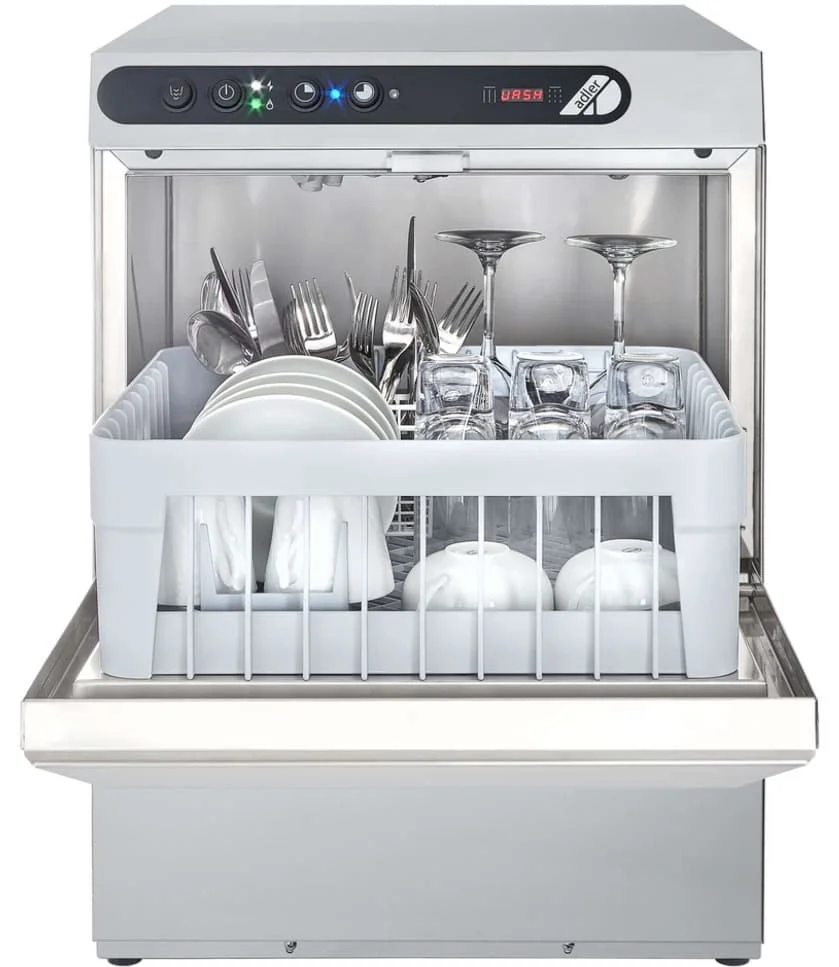
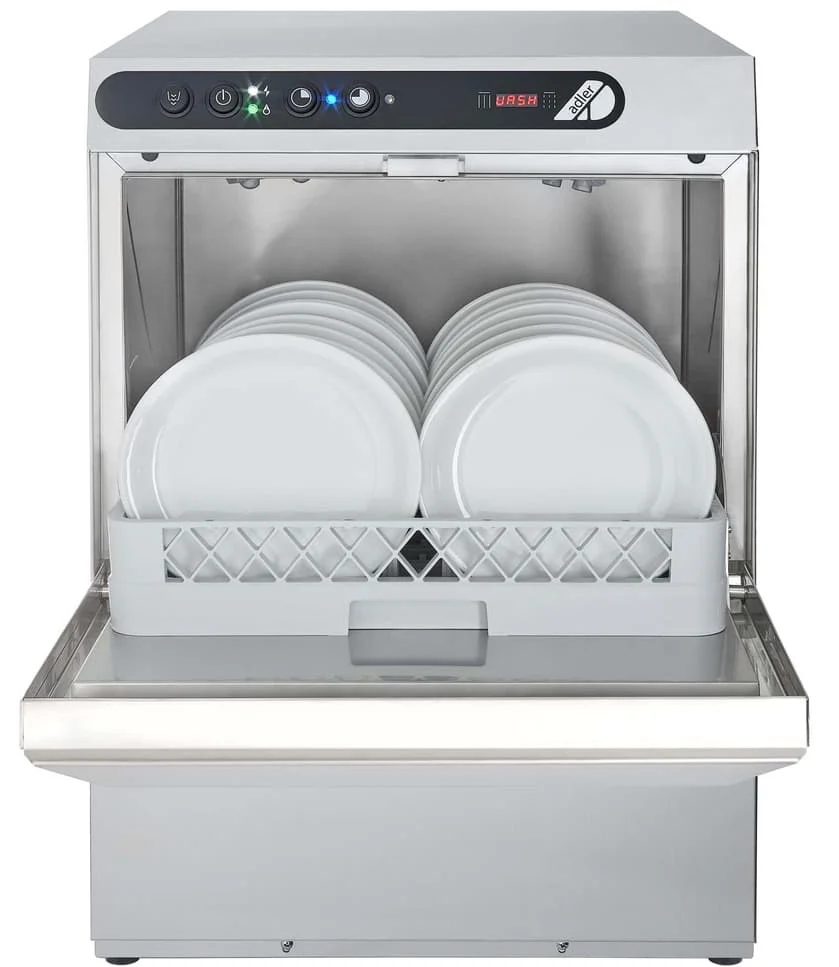
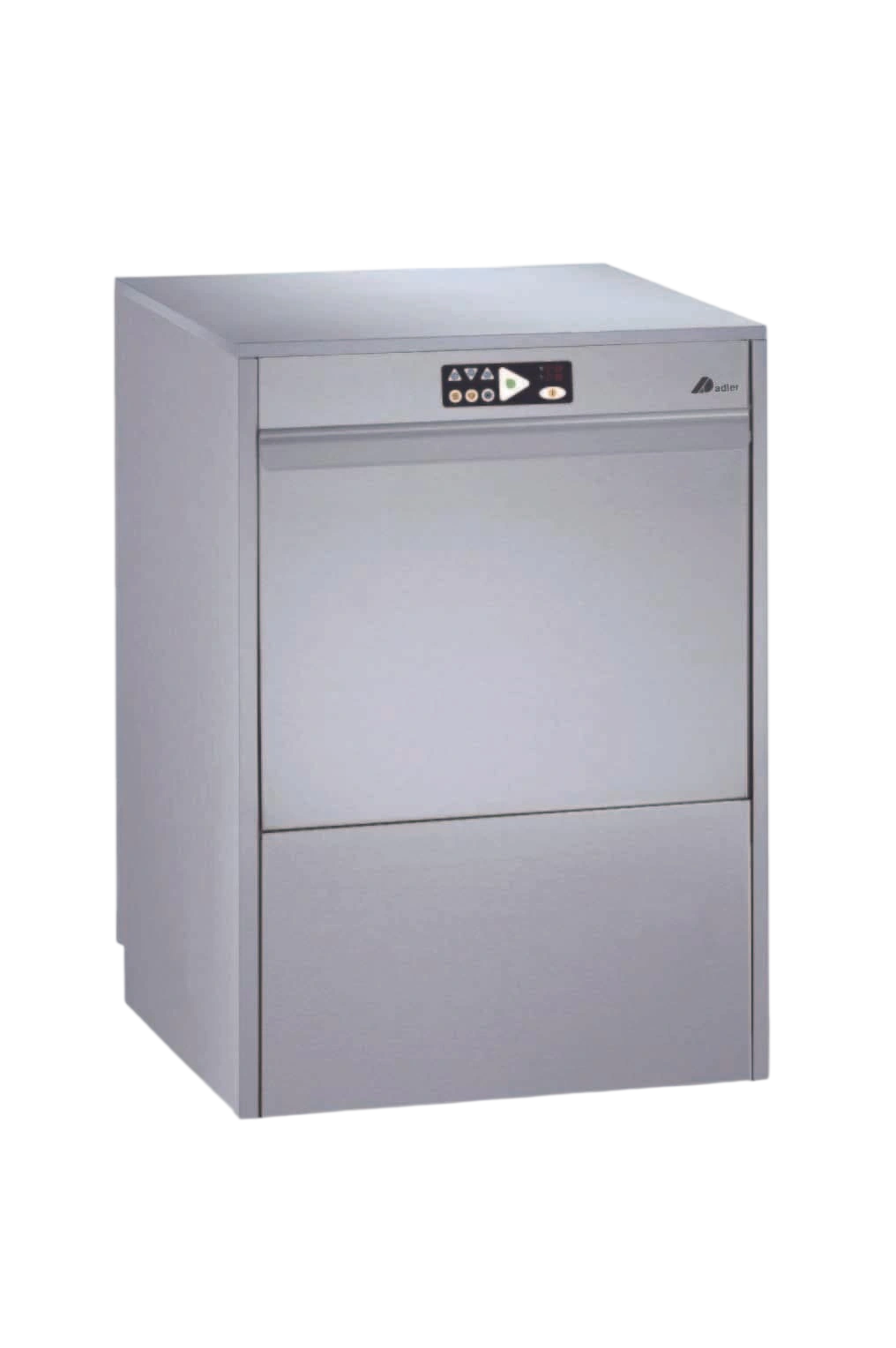
Yes. Compact undercounter Adler models are ideal for cafés and small restaurants that run multiple cycles per day and need a reliable, efficient machine under the bench.
Most Adler commercial machines are designed around 500×500mm baskets and are supplied with compatible racks, keeping them interchangeable with industry-standard accessories.
Water use varies by model, but many ECOLINE undercounter and pass-through machines use roughly 1.5–1.7L per cycle, which can significantly reduce utility and chemical costs compared with older units.
013 / ENGINEERING
AISI 304 stainless steel tanks, wash arms and panels provide durability and corrosion resistance.
Carefully matched wash pumps and arm designs ensure strong mechanical action with low water volumes.
Multi-stage filtration systems, including Adler’s dFilter designs on select models, keep wash water cleaner for longer.
Temperature displays and thermostop functions help maintain correct wash and rinse temperatures for hygiene.
Built-in detergent and rinse-aid pumps, safety door switches and overflow protection are standard on many machines.
014 / INSTALLATION
Typical electrical requirements
240V single-phase on most undercounter and some pass-through models; check amperage and plug requirements per model.
Typical plumbing requirements
Dedicated cold water connection with correct pressure, plus backflow protection where required.
Drainage & pumps
Many Adler dishwashers include an integrated drain pump, allowing connection to floor-level or slightly elevated wastes.
Ventilation / heat
Dishwashers release heat and steam; allow for ventilation and consider canopy requirements in enclosed dishrooms.
015 / WARNINGS
Using domestic detergents instead of commercial-grade chemicals specified for dishwashers.
Running the machine with incorrect water pressure or very hard water without treatment where required.
Skipping routine cleaning of filters, wash arms and strainers.
Overloading racks or stacking plates and glasses so that wash water cannot reach all surfaces..
013 / ENGINEERING
AISI 304 stainless steel tanks, wash arms and panels provide durability and corrosion resistance.
Carefully matched wash pumps and arm designs ensure strong mechanical action with low water volumes.
Multi-stage filtration systems, including Adler’s dFilter designs on select models, keep wash water cleaner for longer.
Temperature displays and thermostop functions help maintain correct wash and rinse temperatures for hygiene.
Built-in detergent and rinse-aid pumps, safety door switches and overflow protection are standard on many machines.
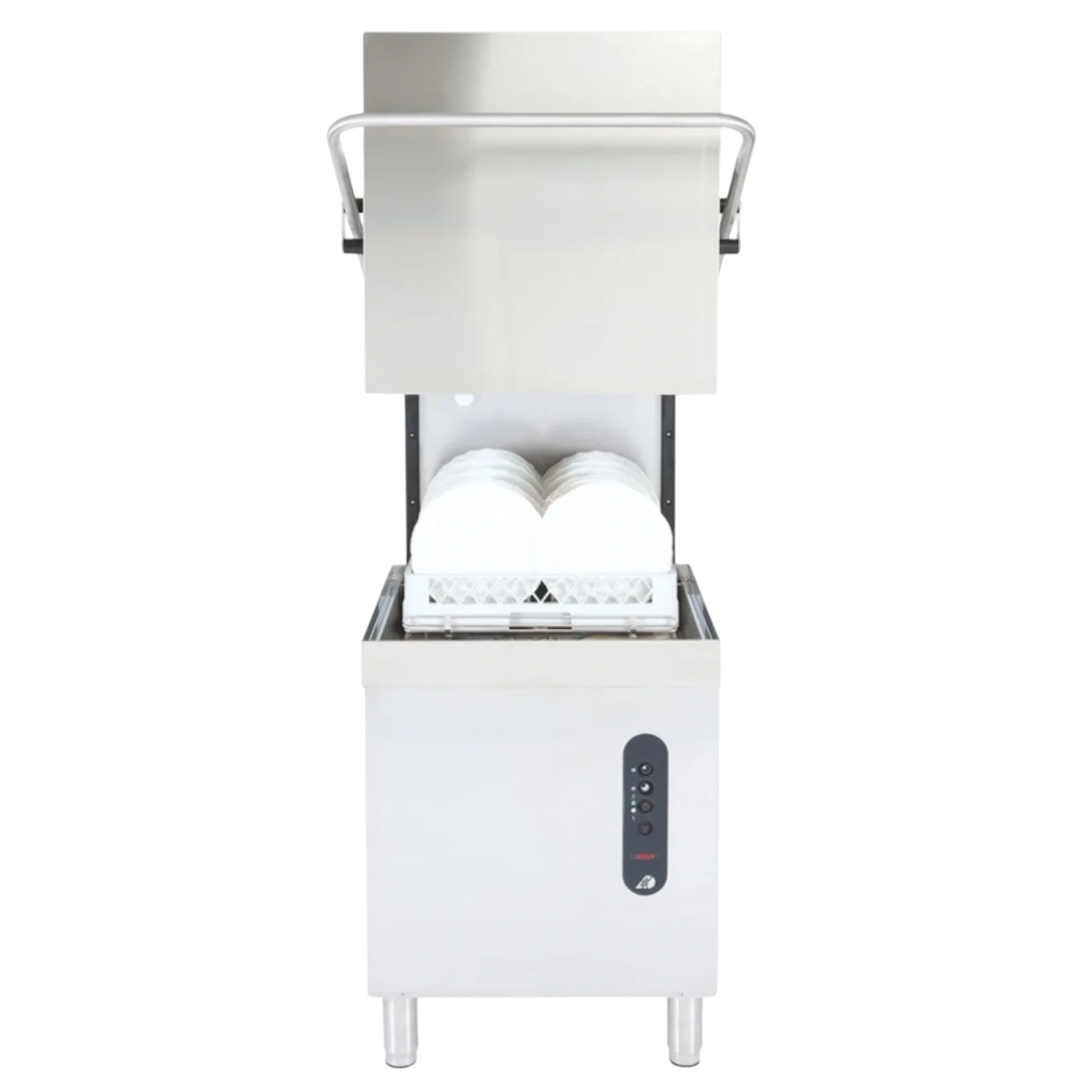
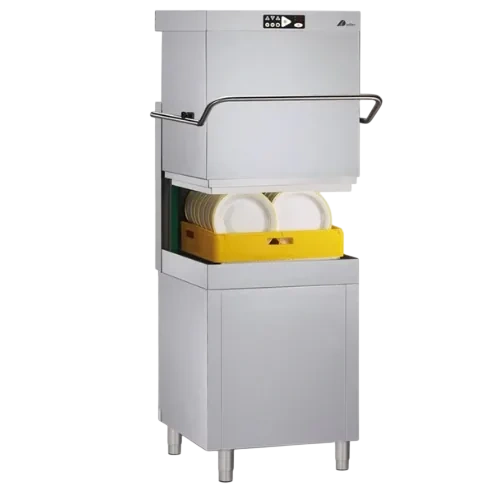
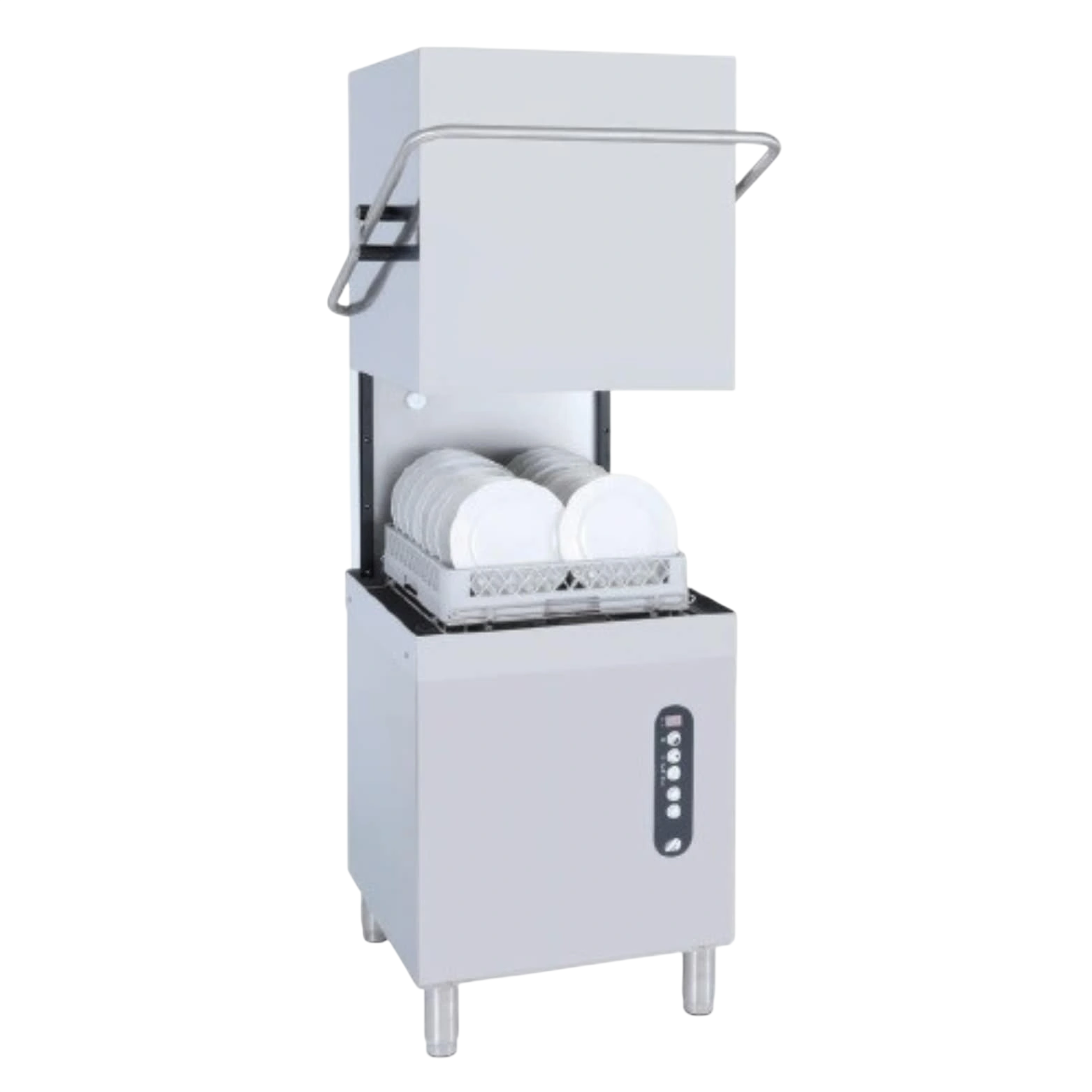
Adler DWA2001 Pass Through Upright Commercial Dishwasher – 1PH, ECOLINE Series
| N/A |
| Fast cycles and compact machines make service smoother. |
| N/A |
| Undercounter + pass-through combinations cover most dishrooms. |
| N/A |
| Works well as the main dishroom solution or in satellite kitchens. |
| N/A |
| Suited to regular, predictable cycles with hygiene focus. |
| N/A |
| Can work well in certain bars and satellite kitchens; rack conveyor systems may be needed for main dishrooms. |
| N/A |
| Good choice where several brands share a compact dish area. At KW Commercial Kitchen, we recommend Adler when you want Italian quality, sensible controls and efficient daily operation without paying for unnecessary complexity.Adler Is a Great Fit ForCafés and restaurants washing multiple racks every service.Bars and pubs needing clear, polish-ready glassware with short cycles.Aged care and healthcare foodservice with strong hygiene requirements.Venues looking to reduce utility bills over the life of the machine.Adler May Not Be Ideal IfYou only run a few wash loads per day and prioritise lowest upfront cost.You do not have the power, water pressure or drainage required for commercial dishwashers.You prefer fully integrated, multi-function systems over dedicated warewashing appliances. Use this checklist to see if Adler aligns with your project.Good for: Daily commercial use in cafés, restaurants, bars, hotels and aged care facilities.Works with common AU power (15A/20A)? Yes on many undercounter and selected pass-through models—always confirm individual specs.Requires water treatment: Recommended in hard-water areas to protect heating elements, pumps and rinse performance.Typical daily operating hours: Designed to handle repeated cycles across long service windows.Lifespan expectation (range): 8–10+ years with correct water quality, operation and maintenance. |
Excellent for daily use; may exceed needs of very low-volume sites.
Fast cycles and compact machines make service smoother.
Undercounter + pass-through combinations cover most dishrooms.
Works well as the main dishroom solution or in satellite kitchens.
Suited to regular, predictable cycles with hygiene focus.
Can work well in certain bars and satellite kitchens; rack conveyor systems may be needed for main dishrooms.
Good choice where several brands share a compact dish area. At KW Commercial Kitchen, we recommend Adler when you want Italian quality, sensible controls and efficient daily operation without paying for unnecessary complexity.Adler Is a Great Fit ForCafés and restaurants washing multiple racks every service.Bars and pubs needing clear, polish-ready glassware with short cycles.Aged care and healthcare foodservice with strong hygiene requirements.Venues looking to reduce utility bills over the life of the machine.Adler May Not Be Ideal IfYou only run a few wash loads per day and prioritise lowest upfront cost.You do not have the power, water pressure or drainage required for commercial dishwashers.You prefer fully integrated, multi-function systems over dedicated warewashing appliances. Use this checklist to see if Adler aligns with your project.Good for: Daily commercial use in cafés, restaurants, bars, hotels and aged care facilities.Works with common AU power (15A/20A)? Yes on many undercounter and selected pass-through models—always confirm individual specs.Requires water treatment: Recommended in hard-water areas to protect heating elements, pumps and rinse performance.Typical daily operating hours: Designed to handle repeated cycles across long service windows.Lifespan expectation (range): 8–10+ years with correct water quality, operation and maintenance.
Training new staff is straightforward.
Serviceability
Regular service and descaling (where needed) extend life and protect wash quality.
014 / INSTALLATION
Typical electrical requirements
240V single-phase on most undercounter and some pass-through models; check amperage and plug requirements per model.
Typical plumbing requirements
Dedicated cold water connection with correct pressure, plus backflow protection where required.
Drainage & pumps
Many Adler dishwashers include an integrated drain pump, allowing connection to floor-level or slightly elevated wastes.
Ventilation / heat
Dishwashers release heat and steam; allow for ventilation and consider canopy requirements in enclosed dishrooms.
Serviceability
Regular service and descaling (where needed) extend life and protect wash quality.
015 / WARNINGS
Using domestic detergents instead of commercial-grade chemicals specified for dishwashers.
Running the machine with incorrect water pressure or very hard water without treatment where required.
Skipping routine cleaning of filters, wash arms and strainers.
Overloading racks or stacking plates and glasses so that wash water cannot reach all surfaces..