Brand / Commercial Kitchen Equipment
Commercial is widely treated as a reference brand for food holding and heat control.
1
Products
01 / PHILOSOPHY
Products
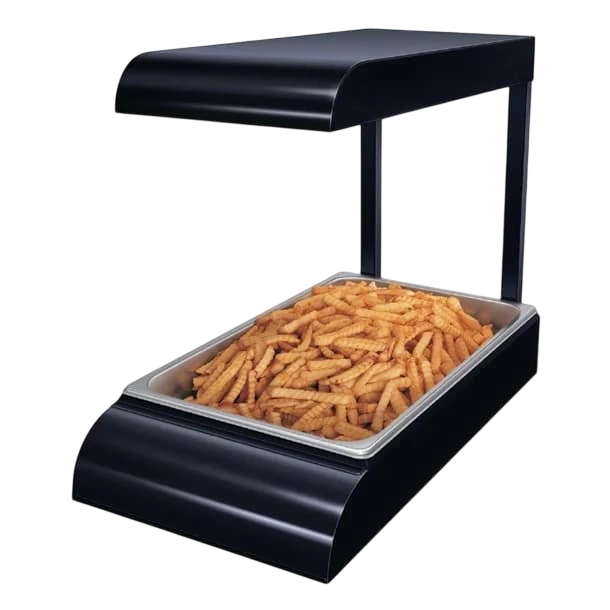
Rather than maximising heat, Hatco designs equipment to control heat exposure over time, therefore reducing drift, drying and inconsistency..
02 / PROBLEMS IT SOLVES
03 / AUDIENCE
04 / RANGE
05 / TRADE-OFFS
06 / ROI
07 / BENCHMARK
Hatco: predictable holding behaviour with known limits.Cheaper alternatives: warmth without stability, therefore higher inconsistency and higher waste at scale.
09 / ENGINEERING
dry foods tolerate radiant holding better than wet foods.
too low dries surfaces fast; too high loses holding effect.
temperature alone cannot prevent texture decay.
010 / INSTALLATION
Clearances
follow safe spacing to prevent heat damage and uneven holding.
Height & alignment
mounting errors are the #1 real-world failure point for heat lamps.
Electrical
circuits must support continuous-duty loads, most importantly in older buildings.
Maintenance
routine cleaning keeps heat output predictable and reduces drift.
011 / WARNINGS
Using holding equipment as a reheating solution therefore increasing waste and complaints.
Ignoring time-based quality decay (especially fries and fried items).
Overloading trays beyond design limits, creating uneven holding.
Self-serve without time/SOP control—operational responsibility remains with the venue..
09 / ENGINEERING
dry foods tolerate radiant holding better than wet foods.
too low dries surfaces fast; too high loses holding effect.
temperature alone cannot prevent texture decay.
010 / INSTALLATION
Clearances
follow safe spacing to prevent heat damage and uneven holding.
Height & alignment
mounting errors are the #1 real-world failure point for heat lamps.
Electrical
circuits must support continuous-duty loads, most importantly in older buildings.
Maintenance
routine cleaning keeps heat output predictable and reduces drift.
011 / WARNINGS
Using holding equipment as a reheating solution therefore increasing waste and complaints.
Ignoring time-based quality decay (especially fries and fried items).
Overloading trays beyond design limits, creating uneven holding.
Self-serve without time/SOP control—operational responsibility remains with the venue..