Benchstar
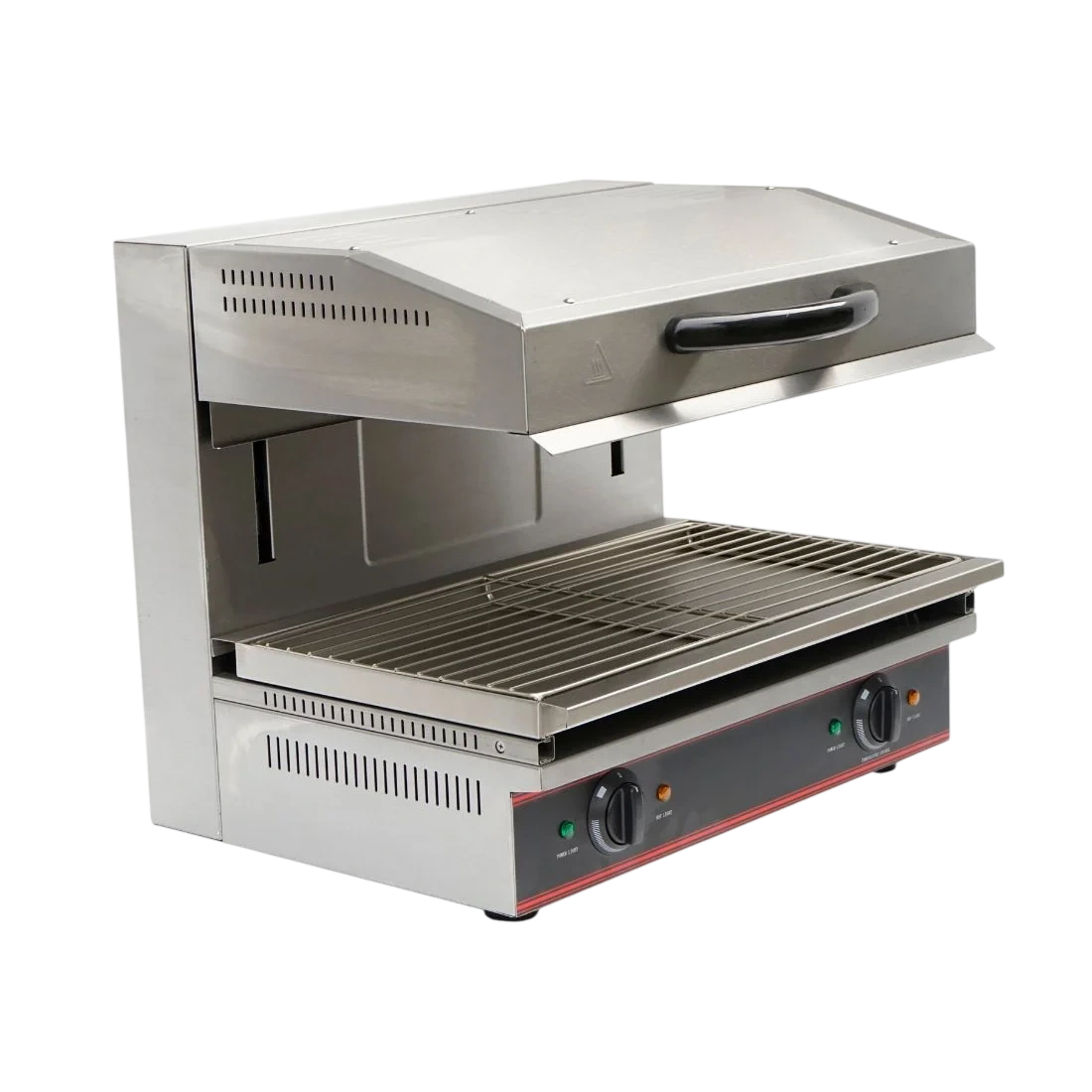
Benchstar ES-4000L Electric Salamander
600 × 450 × 500mm
$1,181.50$1,390.00
Back OrderApprox. 3-4 weeks
Commercial Toasters & Benchtop Grills
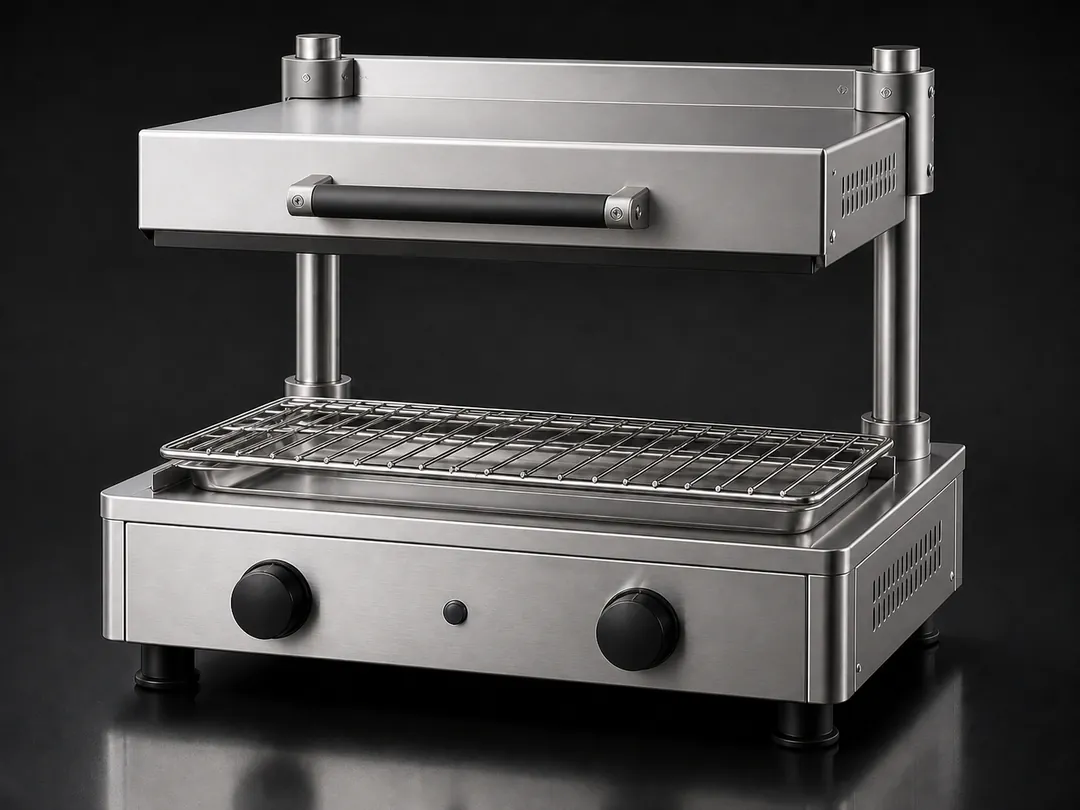
A salamander applies intense heat from above to finish a dish rather than to cook it through. Glazing, browning, melting and crisping the top of something already cooked is the job, and that is what separates salamander cooking equipment from an oven or a grill that cooks from below or all around.
Mounting decides how it is used. An overhead salamander grill mounted above a range keeps the finishing position at the line where plating happens; a benchtop unit takes counter space but can be positioned wherever the finishing step actually occurs. Decide where the dish is finished before deciding the format.
Adjustable height is what separates a usable kitchen salamander from a frustrating one. Different dishes need different distances from the element, and a fixed unit forces the chef to compensate with time instead of position.
Gas and electric versions both exist and behave differently. An electric salamander grill comes up quickly and holds a steady output; a gas salamander grill responds fast to a change and suits a line already plumbed for gas. Site services usually decide this before performance does.
Key factors to consider before purchasing. Our team can help you find the right fit — call or get a quote anytime.
Match equipment capacity to your daily output. Consider available floor space and door clearances.
Confirm levelling, wall clearance and the access needed for cleaning and service. We can help with kitchen planning.
Submit your kitchen requirements — our equipment specialists will send you a tailored shortlist of commercial salamander grills that fits your budget, venue type and compliance needs.
Standards & Compliance
Before comparing commercial salamanders, confirm where dishes are finished, whether the unit will be mounted over a range or stand on a bench, and the height adjustment range needed for the dishes involved. Check clearances above the mounting position.
Look at how the element and the grill rack are cleaned, since both carry splatter from every dish that passes beneath. Check that the rack can be removed and that the surrounding surfaces tolerate the radiant heat, particularly where a bench unit stands close to a wall.
FAQ
Electric = simple installation. Gas = higher continuous heat with ventilation.
Use rise-and-fall height adjustment and zone control to avoid scorching.
Gas models require a hood. Electric models depend on site rules and heat load.
450–600mm for cafés; 700–900mm for restaurants and hotels.
Finishing rather than cooking through — glazing, browning, melting and crisping the top of a dish that is already cooked. Its heat is intense and comes from above, which is exactly wrong for cooking something from raw.
Why KW
KW can help place a salamander at the position where dishes are actually finished, and match mounting, height adjustment and fuel to the line. For practical advice on salamander grills, call KW on 1300 001 366.
Deep Dive
Technical depth from KW's commercial kitchen specialists.
A salamander glazes, browns, melts and crisps the top of something already cooked. Used to cook a dish through it disappoints, because the heat is intense and one-sided by design. Specify it as a finishing station rather than as a small oven.
Different dishes need different distances from the element. A unit with real height adjustment lets the chef set position rather than compensate with time; a fixed unit makes every dish a timing exercise. Check the actual adjustment range against the dishes involved.
An overhead unit above a range keeps finishing at the plating position and frees counter space. A benchtop unit takes space but can go wherever the finishing step happens. Work out where dishes are actually finished before choosing, because moving a mounted unit later is not simple.
An electric salamander grill comes up quickly and holds a steady output. A gas salamander grill responds fast to adjustment and suits a line already plumbed for gas. In most kitchens the services available decide this before any performance difference does.
The terms are used interchangeably, but the equipment is a top-heat finishing unit rather than an enclosed oven. If a dish needs to cook through, an oven is the right choice and a salamander is not.
Overhead keeps finishing at the plating position and frees counter space; benchtop can be placed wherever finishing actually happens. Decide from where dishes are finished, since a mounted unit is not easily moved afterwards.
Electric comes up quickly and holds steady; gas responds fast to adjustment and suits a line already plumbed for it. The services available at the position usually settle this before performance does.
51 results
600 × 450 × 500mm
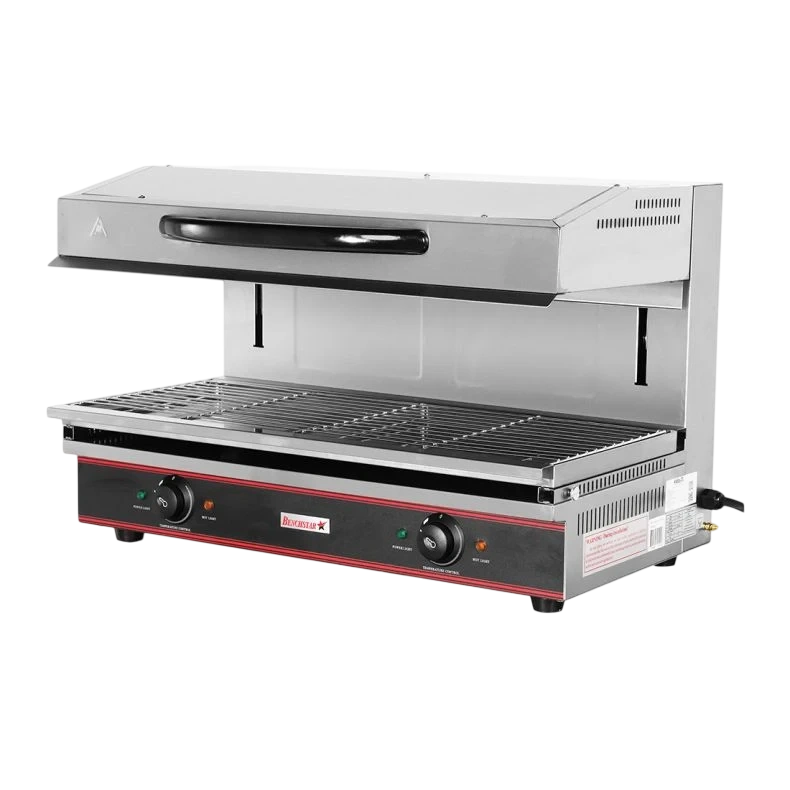
800 × 450 × 500mm