
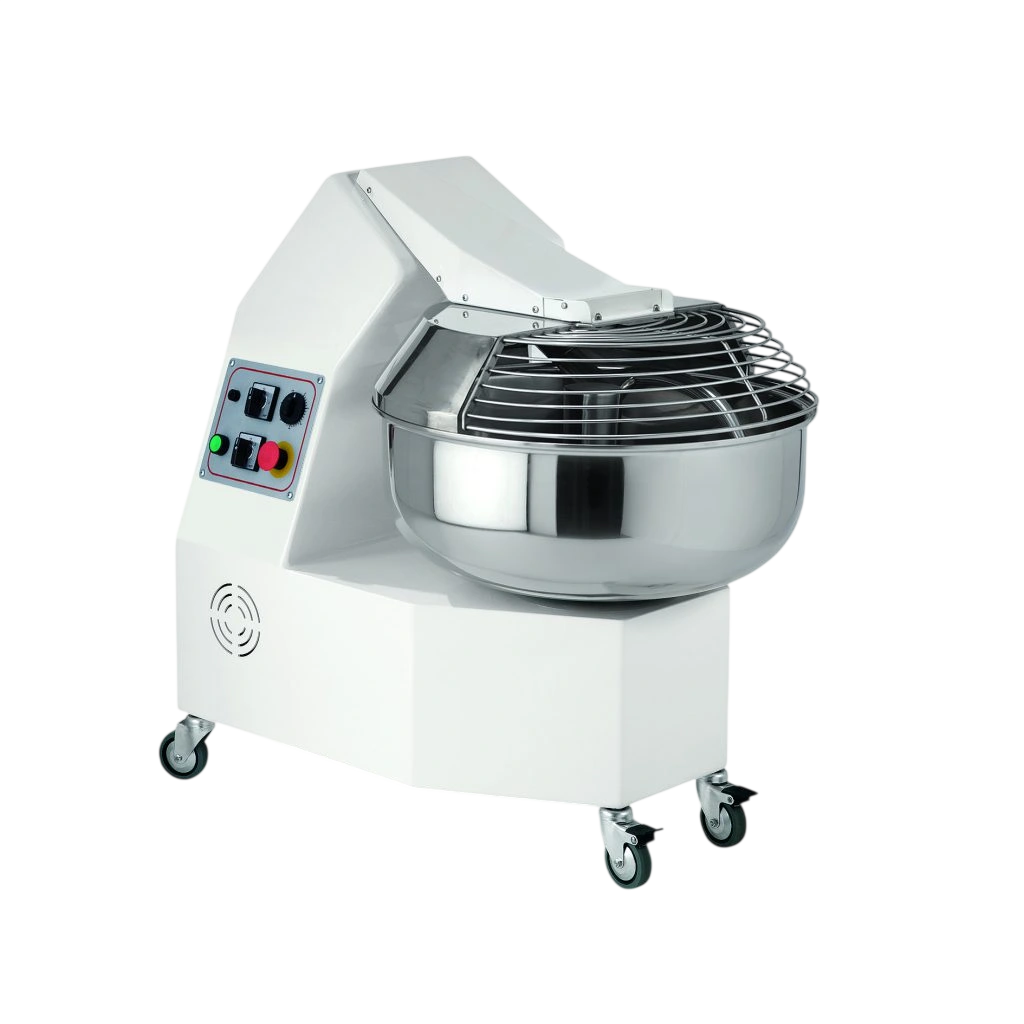
Commercial Baker Mixers
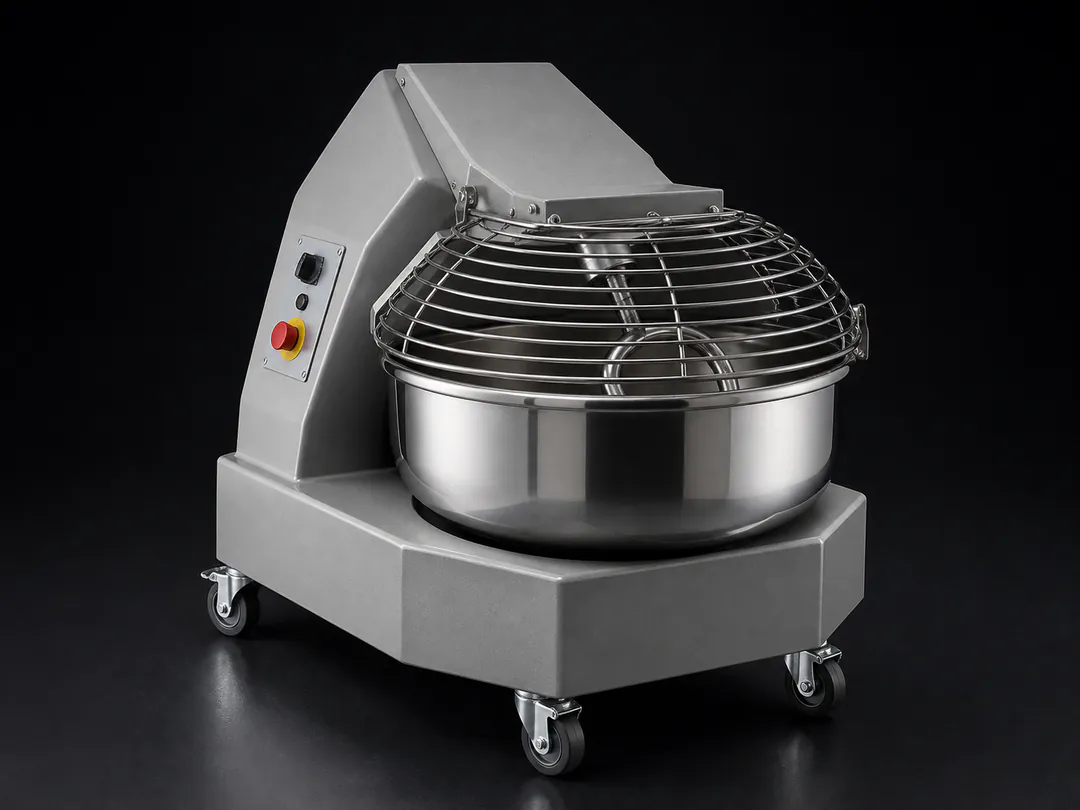
Key factors to consider before purchasing. Our team can help you find the right fit — call or get a quote anytime.
Match equipment capacity to your daily output. Consider available floor space and door clearances.
Confirm levelling, wall clearance and the access needed for cleaning and service. We can help with kitchen planning.
Submit your kitchen requirements — our equipment specialists will send you a tailored shortlist of fork mixers that fits your budget, venue type and compliance needs.
Deep Dive
Technical depth from KW's commercial kitchen specialists.
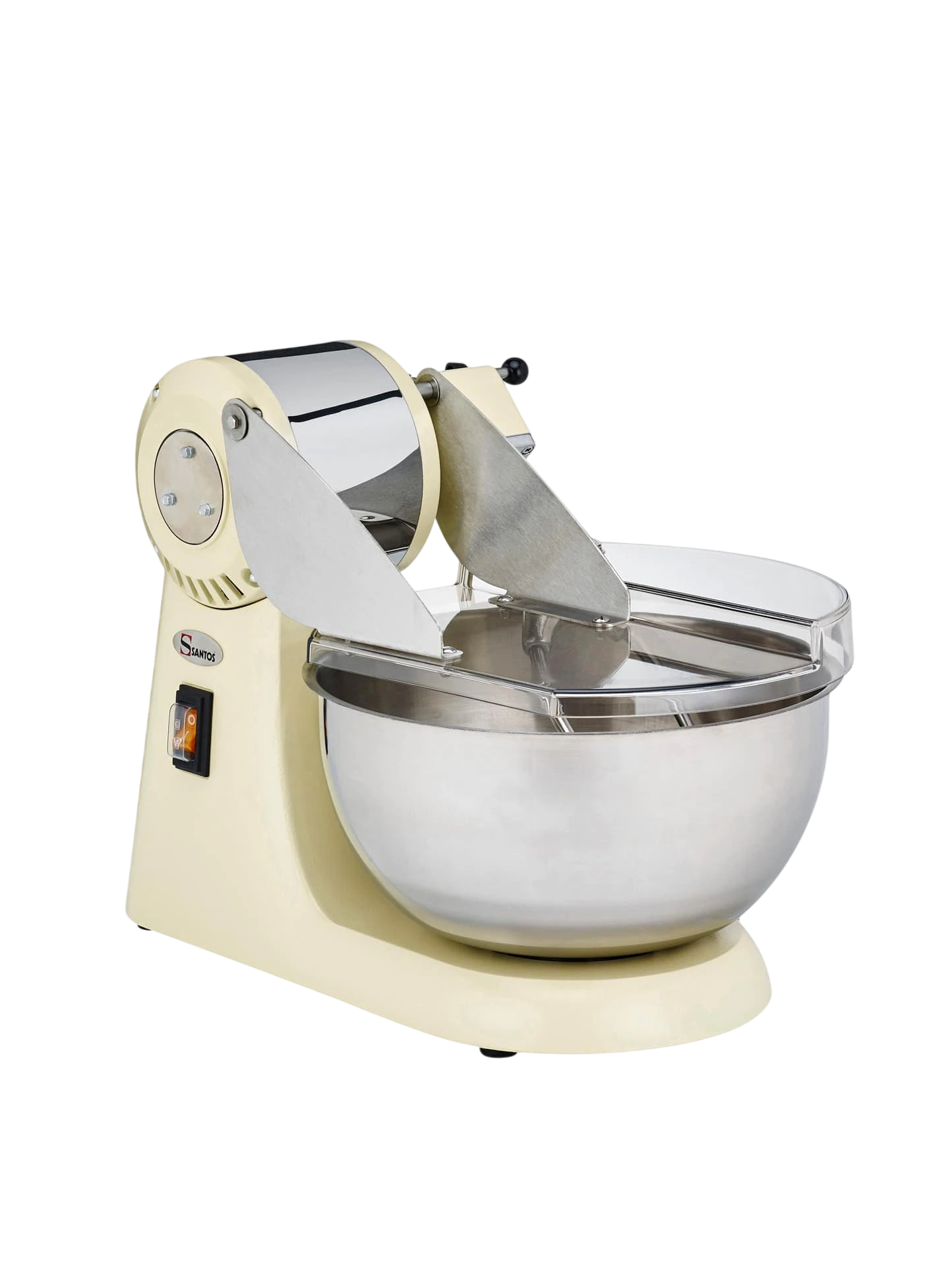
Fork mixers avoid the aggressive shear peaks found in spiral or planetary mixers. This prevents gluten tearing, particularly in enriched or high-hydration doughs. Gas retention improves, producing loftier, more open crumb structures.
Wide, shallow bowls improve dough travel, allowing the dough to fold back onto itself smoothly. Taper angle and bowl diameter affect gluten alignment and hydration efficiency. This is why two fork mixers with identical motor power can produce different dough textures—the geometry governs the physics.
Fork mixers deliver constant torque at low RPM. Spiral mixers, by comparison, use a two-phase torque system that accelerates gluten strengthening. Constant torque makes fork mixers better suited for delicate doughs while avoiding heat spikes.
Low-oxygen mixing preserves carotenoids and aromatic compounds. This is essential for artisan bread, where flavour depth and natural colour are key quality markers. Excessive oxidation bleaches dough and produces muted flavour—fork mixers prevent this naturally.
Fork mixers have specific cleaning points, including:
Models with smooth welds and accessible joints simplify HACCP-compliant cleaning tasks.
If your priority is flavour, lamination integrity, gentle mixing or controlled fermentation → choose a fork mixer.
If your priority is speed, strength or volume → choose a spiral mixer.
Many bakeries run both: fork mixers for delicate, artisan doughs; spiral mixers for high-volume bread lines.
Explore the full baker mixer range to compare fork, spiral and planetary mixers and build the ideal combination for your bakery.
Specs validated by KW Commercial Kitchen.4 results
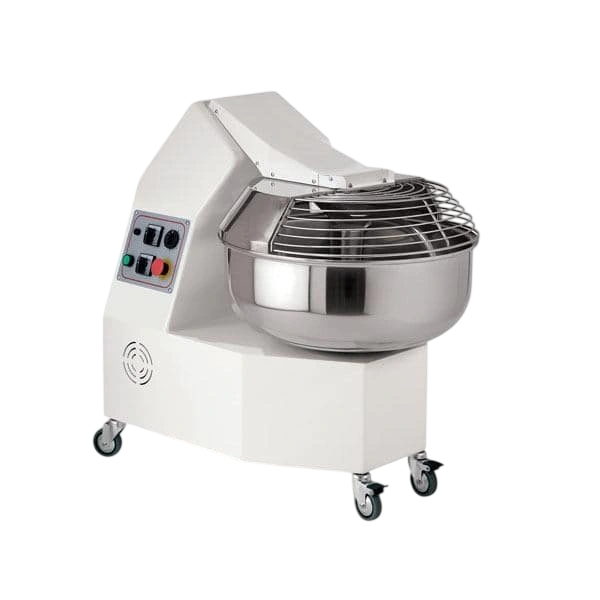
500 × 350 × 420mm