Brice
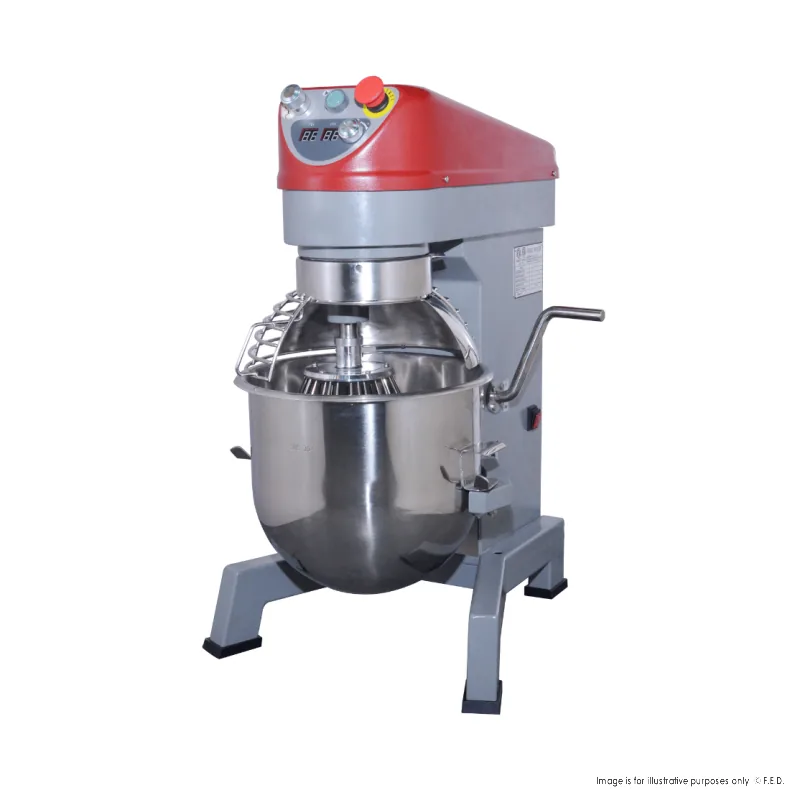
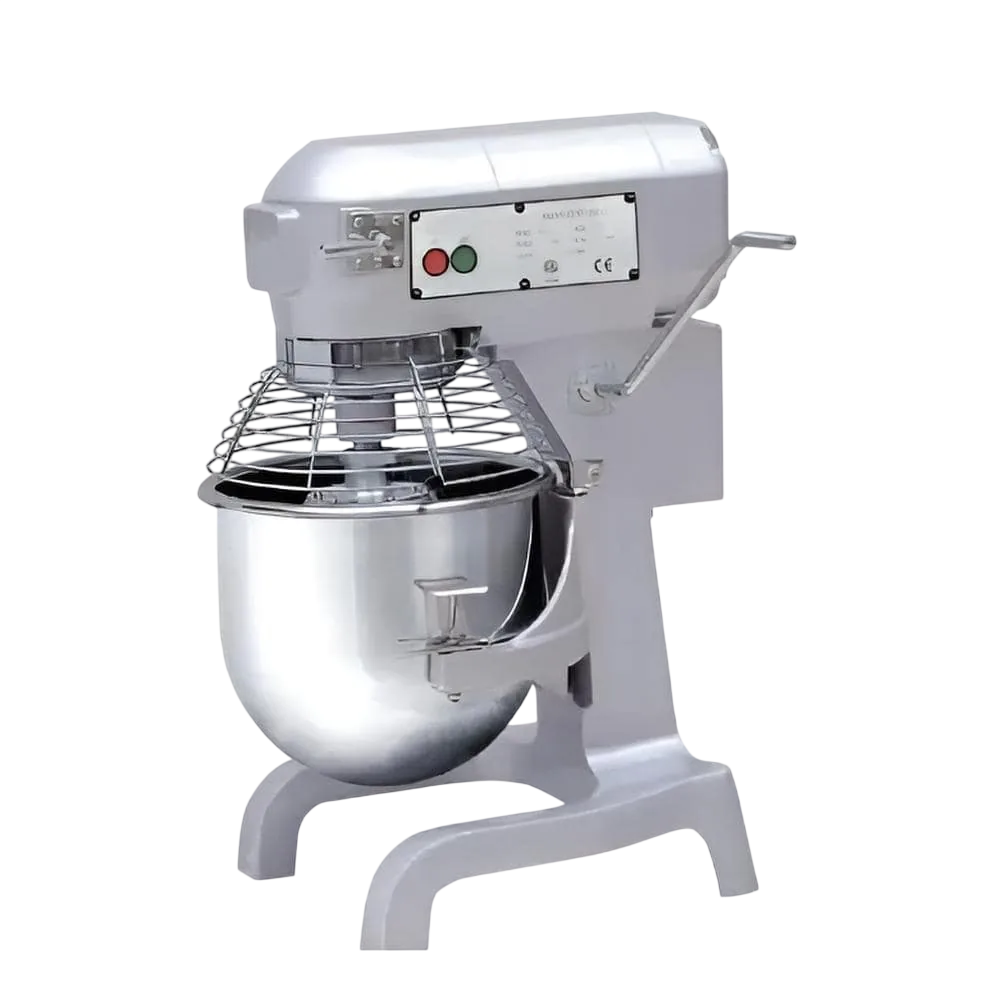
Brice M20A Planetary Mixer – 20L, 750W, 3 Speeds | KW Commercial Kitchen
470 × 540 × 775mm
$2,803.00$3,410.00
In Stock
Commercial Baker Mixers
Key factors to consider before purchasing. Our team can help you find the right fit — call or get a quote anytime.
Match equipment capacity to your daily output. Consider available floor space, door clearances, and whether you need underbench or upright models.
Forced air cooling recovers temperature faster — ideal for busy kitchens. Static cooling suits low-traffic display. Check power supply (single vs three phase).
Ensure adequate ventilation clearance. Check local council requirements for gas connections and electrical compliance. We can help with kitchen planning.
Submit your kitchen requirements — our equipment specialists will send you a tailored shortlist of planetary mixers that fits your budget, venue type and compliance needs.
Deep Dive
Technical depth from KW's commercial kitchen specialists.
Commercial planetary mixers typically use robust gear-driven transmissions or heavy-duty belt-drive systems. Gear-drive models provide strong torque and consistent performance across speeds, while belt systems can offer quieter running at the cost of potential slippage under high load. Continuous heavy dough mixing in a planetary mixer can stress the drive system, which is why it should mainly handle medium-duty dough.
Traditional planetary mixer bowls are deeper than dough-only mixers. This improves capacity for batters and creams but can create scraping challenges if batches are too small. Proper batch sizing ensures the tool passes through the mixture instead of spinning in empty space.
Whisks in planetary mixers create fine bubbles by rapidly pulling liquids through wire gaps. This generates stable foams for meringue, whipped cream and mousse. Paddles generate moderate shear, improving emulsification for fillings and sauces without over-whipping.
Planetary mixers have specific hygiene points:
Models with easy-to-remove guards and smooth surfaces simplify cleaning and support food-safety compliance.
If you need one mixer that can handle batters, creams, fillings and some dough → choose a planetary mixer.
If your primary business is large-volume bread and pizza dough → choose a spiral mixer.
If you focus on delicate, long-fermentation and laminated doughs → consider adding a fork mixer.
Many bakeries use a planetary mixer as their main pastry and general prep mixer, supported by a spiral mixer as the main bread mixer.
Compare planetary mixers with spiral and fork mixers to build a balanced bakery mixer line-up that supports both pastry work and bread production in your commercial kitchen.
Specs validated by KW Commercial Kitchen.34 results