
Best Commercial Fridges for Cafe 2025: The Australian Buyer’s Guide (with Turbo Air picks)
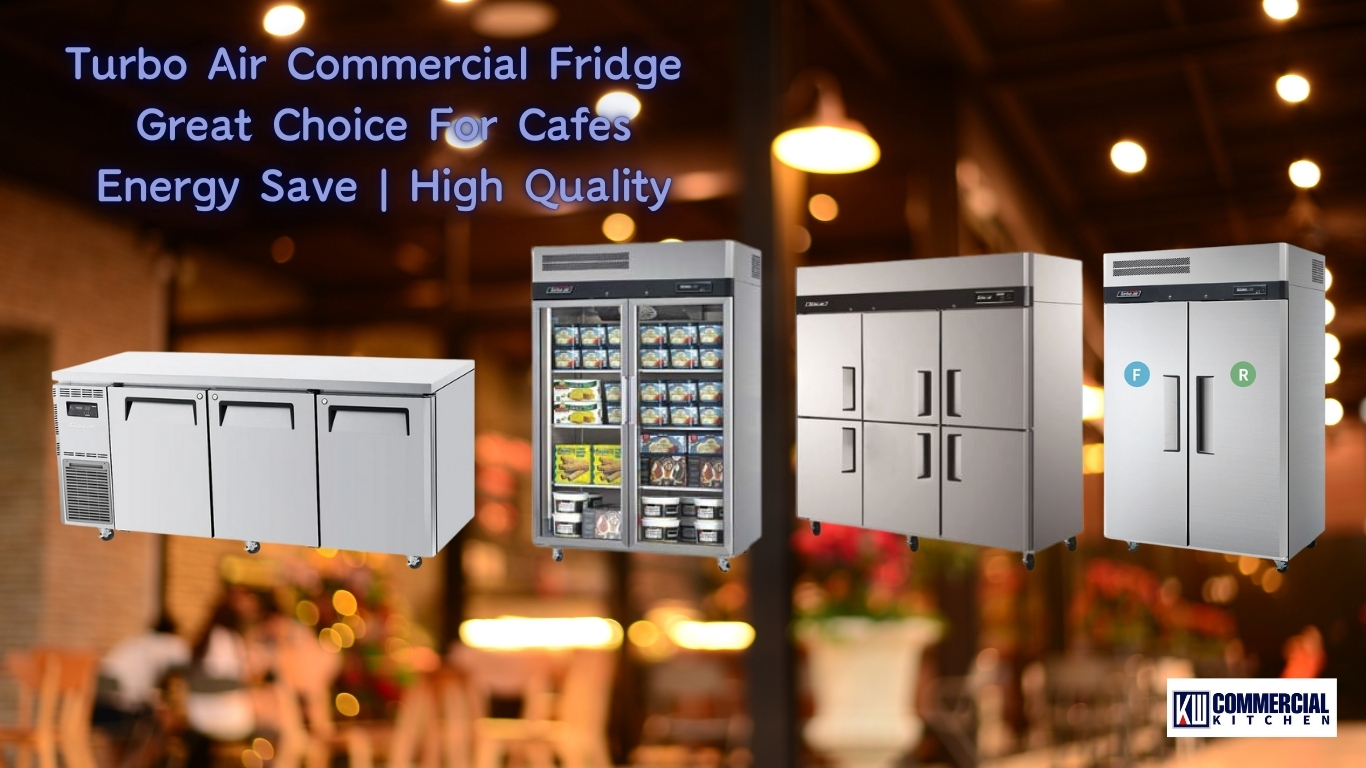
Café Refrigeration 2025: The Australian Buyer’s Guide (with Turbo Air picks)
A practical guide to choosing a commercial fridge for a café or restaurant in Australia: food-safety rules, installation checks, running-cost maths and product dimensions to help match equipment to your workflow.
Executive summary (60–90 seconds)
- Energy regulation: Australia’s updated Greenhouse and Energy Minimum Standards (Refrigerated Cabinets) Determination 2024 commenced on 5 Oct 2024. Check that the cabinet category and climate class suit your application; Energy Rating Labels are not mandatory for refrigerated cabinets.
- Food safety: Keep potentially hazardous food at ≤ 5 °C (or ≥ 60 °C hot). If food leaves temperature control during prep or display, apply the 2-hour/4-hour rule; time is cumulative.
- Running costs: Compare the published energy use for the specific model, then multiply daily use by your electricity tariff and operating days. The estimate is a guide; ambient conditions, setpoints and door openings affect actual use.
- Choosing a fridge: Match the cabinet type to the job, then check its footprint, capacity, temperature range and ventilation needs. Explore Turbo Air at KW Commercial.
What You Must Comply With (Plain English)
Before choosing a café or restaurant commercial fridge in Australia, consider food safety, cabinet category and the conditions where the unit will operate.
| Topic | What the Rule Says | Why It Matters | Official Source |
|---|---|---|---|
| Cold Holding | Keep potentially hazardous food at ≤ 5 °C (or ≥ 60 °C hot). If food is outside temperature control, apply the 2-hour/4-hour rule; time is cumulative. | Maintains food safety and helps staff manage food during service. | FSANZ: 2-hour/4-hour rule |
| Cooling Hot Food | Cool from 60 °C to 21 °C within 2 hours, then from 21 °C to 5 °C within 4 hours. | Helps food pass quickly through the temperature range where bacteria multiply fastest. | FSANZ: Cooling & Reheating Food |
| Energy Regulation | Australia’s GEMS (Refrigerated Cabinets) Determination 2024 commenced 5 Oct 2024. Minimum Energy Performance Standards are assessed via Energy Efficiency Index (EEI). Energy Rating Labels are not mandatory for this product class. | Helps buyers understand the energy rules that apply to refrigerated cabinets. | Energy Rating: Refrigerated Cabinets |
| Product Scope | “Refrigerated cabinets” include refrigerated display, drinks and storage cabinets, ice-cream freezers, and scooping cabinets. | Clarifies which refrigeration products fall within the GEMS requirements. | Energy Rating: Scope & Definitions |
| Refrigerants | Australia uses AR4 Global Warming Potentials (GWP) for HFC reporting. R290 (propane) is a non-HFC refrigerant with very low GWP. | Refrigerant choice is one factor to consider when comparing equipment. | DCCEEW: Refrigerants GWP List |
Brand Advantage in Compliance
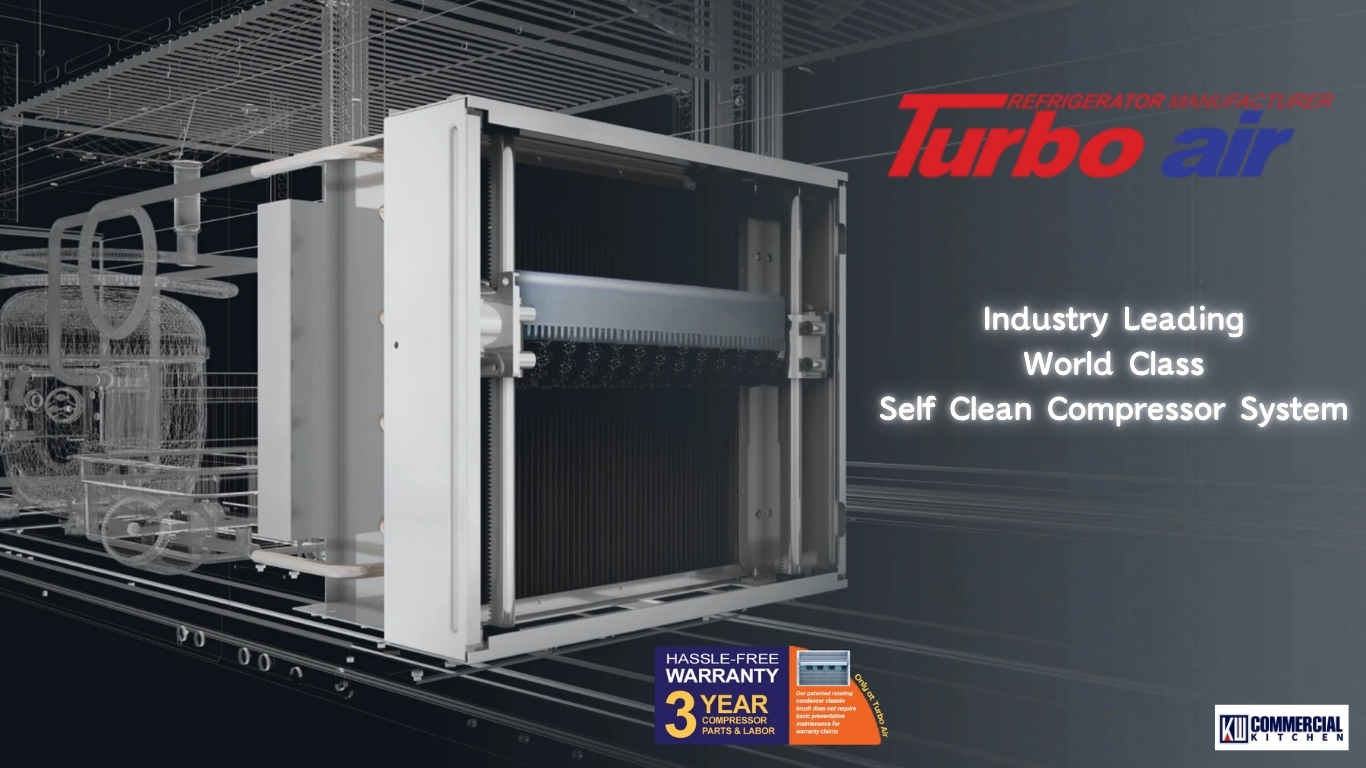
When comparing refrigeration, consider the maintenance routine and the conditions around the cabinet. The Turbo Air range includes models with a Self-Cleaning Condenser. Explore Turbo Air models.
- Check that the model’s temperature range suits the food and operating conditions.
- Compare energy information for the specific cabinet when estimating running costs.
- Keep air intake and ventilation clear, and follow the manufacturer’s maintenance guidance.
- Plan routine cleaning and servicing as part of your equipment care.
Choose a cabinet that fits your workflow, site conditions and service plan. Explore Turbo Air models.
Fridge Types for Cafés – Strengths, Trade-offs & Best Placement
Different café layouts and service styles call for different refrigeration setups. Match the cabinet type, capacity and footprint to your workflow and available space.
Upright Merchandisers (Front of House)
Best for: bottled drinks, grab-and-go desserts, impulse buys.
Strengths: High product visibility and convenient stock checks.
Trade-offs: Frequent door openings during peak service can affect temperature recovery. Allow space for ventilation and compare the model’s temperature range with your requirements.
Turbo Air advantage: Turbo Air KR45-2G-HC Display Fridge has a 1215 L capacity and a temperature range of 1–8 °C. Its dimensions are 1260 mm long, 860 mm wide and 1926 mm high. Check the footprint and operating range against your site and use.
Underbench / Underbar (Espresso & Prep)
Best for: milk storage at the coffee machine, quick-access mise en place.
Strengths: Uses space below the bench and keeps essentials within reach.
Trade-offs: Ventilation is important in tight bays. Follow the manufacturer’s clearance and installation instructions.
Turbo Air advantage: The Turbo Air Undercounter 1-Door 3-Drawer Freezer measures 1200 mm long, 700 mm wide and 860 mm high. Check the dimensions and ventilation requirements against your available underbench space.
Dual-Temperature Reach-ins (One Footprint, Two Jobs)
Best for: small back-of-house areas where you need both chilled and frozen storage in one cabinet.
Example: Turbo Air Upright Dual-Temp Top-Mount is listed with dimensions of 640 mm long, 860 mm wide and 1926 mm high. Check the product page for the configuration that suits your chilled and frozen storage needs.
Strengths: Combines chilled and frozen storage in one footprint.
Trade-offs: Check the internal capacity and shelving plan against your busiest service needs.
Prep Counters (Saladette / Sandwich)
Best for: brunch lines, salad bars, and sandwich prep.
Strengths: Keeps ingredients close to hand during service.
Trade-offs: Keep lids closed when idle and consider how pan placement affects airflow and recovery.
Turbo Air advantage: The Turbo Air KHR18-3 Salad Prep Table measures 1800 mm long, 700 mm wide and 978 mm high. Check that the footprint fits your prep line and allow for suitable ventilation.
Cake & Pastry Displays
Best for: balancing visual merchandising with temperature needs for cakes, pastries, and chilled desserts.
Strengths: Presents products for customers while keeping chilled items accessible.
Trade-offs: Consider humidity control and overnight operation to help maintain product quality.
Back-of-House Storage Cabinets & Freezers
Best for: bulk dairy, frozen stock, and prep back-ups.
Strengths: Keeps reserve stock out of customer areas and supports front-of-house replenishment.
Trade-offs: Measure doorways and the full access route before choosing a large unit.
Turbo Air advantage: Compare upright storage options for your back-of-house needs. See Turbo Air storage cabinets.
Climate Class & Ambient – Match Your Café’s Conditions
Climate class describes the ambient conditions used to assess refrigeration performance. Consider where the cabinet will sit and the heat and airflow around it when selecting a model.
| Climate Class | Test Ambient (°C / RH) | Best Placement | Notes |
|---|---|---|---|
| Class 3 | 25 °C / 60% RH | Air-conditioned FOH or BOH | A common baseline for display cabinets in cooler, stable environments. |
| Class 4 | 30 °C / 55% RH | Warm kitchens or busy FOH with frequent door openings | Consider this class for warmer service areas. |
| Class 5 | 40 °C / 40% RH | Very hot kitchens, non-air-conditioned prep areas | Compare the model’s stated class with the ambient conditions at your site. |
Energy & Running-Costs – Simple Café Calculator
Do commercial fridges use a lot of electricity? Use the published daily energy figures below as a comparison guide, then multiply by your tariff and operating days for an estimate. For an annual illustration, the table uses $0.30/kWh and 365 days. Replace the example tariff with your own; actual use varies with ambient conditions, setpoints and door-opening frequency.
| Model | Capacity | kWh / 24h | Approx. kWh / Year | Est. Annual Cost @ $0.30/kWh |
|---|---|---|---|---|
| Turbo Air KR45-2G-HC Display Fridge | 1215 L | 2.63 | ~960 | ~$288 |
| Turbo Air Undercounter 1-Door 3-Drawer Freezer | 374 L | 1.80 | ~657 | ~$197 |
| Turbo Air Upright Dual-Temp Top-Mount | Fridge 222 L / Freezer 242 L | 3.99 | ~1,456 | ~$437 |
| Turbo Air KHR18-3 Salad Prep Table | 500 L | 2.10 | ~766 | ~$230 |
Editor’s Picks 2025 – Turbo Air Models for Australian Cafés
Compare each model’s role, dimensions, capacity and energy figures with your café’s workflow, available space and operating needs.
Our Scoring Rubric
- Temperature stability (30%) – Suitability for the intended food and service conditions
- Energy & MEPS/EEI compliance (25%) – Energy information and applicable Australian requirements
- Serviceability (15%) – Cleaning and maintenance needs
- Hygiene & build quality (15%) – Materials and ease of cleaning
- Fit-for-purpose in cafés (15%) – Size, layout, and features suited to café workflows
| Category | Model | Capacity | kWh / 24h | Climate Class | Why It Fits Cafés |
|---|---|---|---|---|---|
| Front-of-House Merchandising | Turbo Air KR45-2G-HC Display Fridge | 1215 L | 2.63 | Class 4 | Glass-door display. Its temperature range is 1–8 °C; dimensions are 1260 mm long, 860 mm wide and 1926 mm high. |
| Underbench / Barista Station | Turbo Air Undercounter 1-Door 3-Drawer Freezer | 374 L | 1.80 | Class 4 | Dimensions are 1200 mm long, 700 mm wide and 860 mm high. Check fit and ventilation for your installation. |
| Dual-Temperature Reach-in | Turbo Air Upright Dual-Temp Top-Mount | R 222 L / F 242 L | 3.99 | Class 4 | Dimensions are 640 mm long, 860 mm wide and 1926 mm high. Confirm the configuration and space available for the unit. |
| Prep Counter | Turbo Air KHR18-3 Salad Prep Table | 500 L | 2.10 | Class 4 | Dimensions are 1800 mm long, 700 mm wide and 978 mm high. Compare the footprint with your prep line. |
Installation & Maintenance Checklist
Good commercial fridge installation starts with checking access, footprint, ventilation and the electrical requirements for the selected unit. Follow the product instructions and plan routine care to support reliable operation.
| Category | Key Actions |
|---|---|
| Site & Access |
|
| Electrical & Ventilation |
|
| Food Safety Rhythm |
|
| Care & Cleaning |
|
Frequently Asked Questions (FAQs)
| Question | Answer |
|---|---|
| What temperature should a café fridge run at? | For potentially hazardous food, hold at ≤ 5 °C. If food is outside temperature control, apply the 2-hour/4-hour rule (time is cumulative). |
| Do café display fridges need to meet MEPS? | Refrigerated cabinets are regulated under the GEMS (Refrigerated Cabinets) Determination 2024, which uses the Energy Efficiency Index (EEI) to assess compliance. |
| Is an Energy Rating Label required on my fridge? | Energy Rating Labels are not mandatory for refrigerated cabinets, but the applicable GEMS requirements still matter. |
| What is R290 refrigerant and is it safe? | R290 is propane, a non-HFC refrigerant with very low Global Warming Potential (GWP). Consult the product information and qualified technicians for equipment handling and servicing. See DCCEEW refrigerants GWP list. |
| What is the Self-Cleaning Condenser? | It is a Turbo Air feature described on selected product pages. Check the model details to see whether it is included. |
Sources & Further Reading
- FSANZ: 2-hour/4-hour rule – Guidance on time-temperature control for food safety.
- FSANZ: Cooling & Reheating Food – Guidance on cooling hot food.
- Energy Rating: Refrigerated Cabinets – GEMS compliance details and scope.
- DCCEEW: Global Warming Potential values for refrigerants – Refrigerant information including R290.
- Turbo Air at KW Commercial – Turbo Air commercial refrigeration for Australian cafés.