
2025 Hoshizaki KM Series Ice Makers with Built‑In Drain Pump — Install Anywhere, Drain Cleanly, Save More
2025 Hoshizaki KM Series Ice Makers with Built‑In Drain Pump — Install Anywhere, Drain Cleanly, Save More
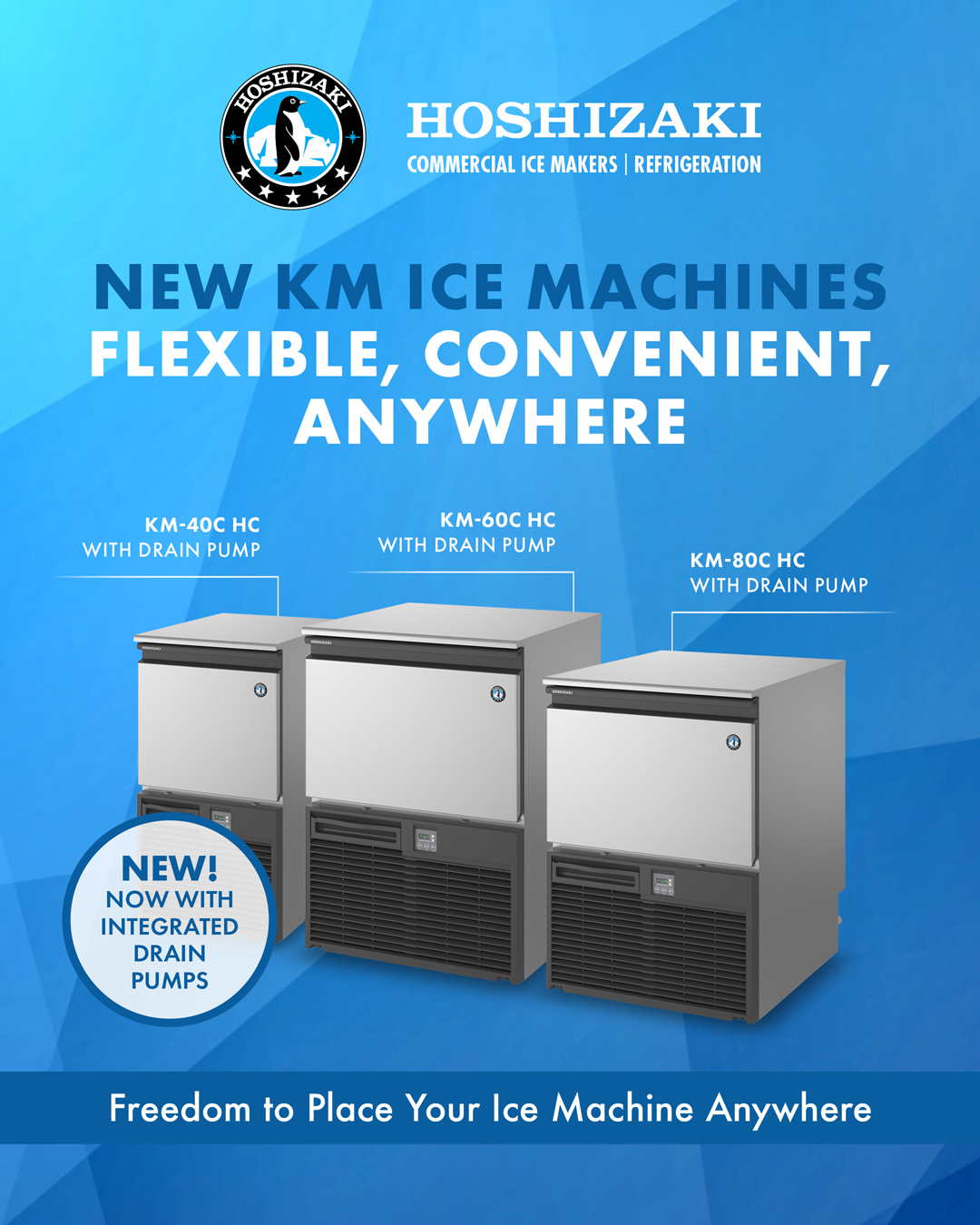
Ice should never dictate your kitchen layout. With a built‑in drain pump, the Hoshizaki KM Series gives Australian venues placement freedom, cleaner drainage and lower total installed cost—without compromising output or the signature crescent‑style ice.
Author: KW Commercial Kitchen — Beverage & Bakery Equipment Team (15+ years) • Australia‑wide
~35.5% promotional pricing — accurate as at 22 Nov 2025 (ex‑GST)Contents
- Search intent & who this guide is for
- Why Hoshizaki KM is trusted globally (and in Australia)
- Built‑in drain pump vs gravity drain — what actually changes
- The three popular KM pump models & transparent promo pricing
- How to choose: output, footprint, ice type, siting and services
- Installation basics: water, drain, power, backflow, documentation
- Cleaning & sanitising workflow (FSANZ‑aligned)
- ROI & total cost: simple formulas you can use on a call
- Operator SOP: open, service, close (copy‑ready)
- Troubleshooting quick‑reference
- Field case study (Sydney bar): from drain constraints to flexible siting
- FAQs
- Next steps, CTAs & internal links
- References & notes
Search intent & who this guide is for
Search intent: commercial investigation (“Which ice maker should we buy for an Australian professional kitchen?”) plus informational (“How do we install, clean and comply?”). Use this as your final read before shortlisting models and placing an order.
Why Hoshizaki KM is trusted globally (and in Australia)
In professional kitchens, the Hoshizaki badge signals reliability, clean design and long duty cycles. The KM Series produces the brand’s signature crescent‑style ice, engineered to melt predictably and pack efficiently in cups and shakers. The “HC” suffix on many current models indicates hydrocarbon refrigerant for energy‑efficient operation when installed and maintained correctly.
Strengths chefs and bar managers care about
- Engineered consistency: batch after batch of crescent‑style ice with stable clarity and melt behaviour.
- Commercial‑grade build: stainless‑forward exteriors and food‑contact parts designed for cleaning and durability.
- Serviceability: access to key components for scheduled maintenance; parts and support from established networks.
- Flexible siting (built‑in pump): place the unit for workflow—not for the only floor waste in the tenancy.
Specifications (refrigerant, electrical rating, dimensions, daily output) vary by model. Check the latest manufacturer datasheet before install.
Built‑in drain pump vs gravity drain — what actually changes
Every ice maker must remove melt water. A gravity drain relies on fall to a floor waste; a built‑in pump moves water to an approved connection even where fall is unavailable.
Side‑by‑side comparison
| Drain approach | Advantages | Trade‑offs |
|---|---|---|
| Gravity drain | Simpler parts; fewer moving components; potentially lower long‑term maintenance | Requires a nearby floor waste and correct fall; often forces sub‑optimal placement for workflow |
| Built‑in pump | Flexible siting; faster installs in tenancies; cleaner drain routes away from service paths | Introduces a pump to inspect/service per the manufacturer’s schedule |
Decision flow
├─► YES → Gravity drain feasible → Is the location ideal for workflow? If NO, consider pump.
└─► NO → Choose built‑in pump → Route to approved connection with licensed plumber → Commission & log.
Installation must be completed by licensed professionals. Include appropriate backflow prevention to protect food safety and warranty.
The three popular KM pump models & transparent promo pricing
Promo prices are shown exclusive of GST and accurate as at 22 Nov 2025. Promotions may change—check live pricing via the links.
| Model (Built‑In Pump) | Regular (AUD) + GST | Promo (AUD) + GST | Approx. discount | Best suited for |
|---|---|---|---|---|
| KM‑40C‑HC | $3,895 | $2,511.25 | ~35.5% off | Compact under‑counter; cafés, kiosks, QSR drinks |
| KM‑60C‑HC | $4,590 | $2,961.20 | ~35.5% off | Busy cafés/bars with steady day‑long demand |
| KM‑80C‑HC | $5,895 | $3,801.90 | ~35.5% off | High‑turnover bars/clubs; shared kitchen sites |
Browse all Hoshizaki See live KM deals
SEO‑ready model snippets (use on category/PDP tiles)
- Undercounter‑friendly footprint (confirm datasheet)
- Commercial stainless build
- HC refrigerant on current spec
- Use: cafés, kiosks, bubble tea, small bars
- Balanced size/output for service
- Crescent‑style ice that packs efficiently
- Service access for scheduled maintenance
- Use: bars, restaurants, hotel cafés
- For venues with continuous peaks
- Stable output when sited & maintained
- Use: clubs, large bars, shared kitchens
Always verify capacity, dimensions and electrical requirements on the latest datasheet before installation.
How to choose: output, footprint, ice type, siting and services
1) Demand modelling (simple and honest)
- Drinks/day: use POS data; separate peak vs steady periods.
- Ice per drink: standardise a fill line per cup size.
- Service factor: more peaks → pick a model that keeps up without staff walking across the venue.
- Buffer: protect quality on hot days and during promos.
2) Footprint & workflow
- Undercounter vs back‑of‑house: put ice where it shortens steps, not where the only floor waste lives.
- Door swing & scoop access: avoid cross‑traffic; keep the bin to the station that needs it.
3) Ice style & menu fit
The KM Series crescent‑style ice stacks neatly, melts predictably and performs well in shakers. For nugget/crushed styles, shortlist alternative series; for large clear cubes, ensure the model matches your glassware and drink profile.
4) Site services that matter
- Water: potable cold supply with filtration recommended to protect valves and help clarity.
- Drain: choose gravity vs built‑in pump; support the line; avoid sharp rises.
- Power: dedicated circuit per datasheet; avoid sharing with high‑draw appliances.
- Ventilation & heat: site away from ovens/dishwashers and direct sun—ambient heat affects output.
Installation basics: water, drain, power, backflow, documentation
Treat ice makers as food‑contact equipment. Installation by licensed trades protects food safety, reduces faults and keeps warranties intact.
- Water: filtered potable supply; fit an appropriate backflow device per local water authority.
- Drain: gravity with fall, or pump to approved connection; support the line, avoid long horizontal runs without support.
- Power: dedicated circuit sized to datasheet; confirm plug type and RCD arrangements.
- Commissioning: verify cycle time, ice clarity, pump operation and leaks; log “as‑commissioned” results.
Non‑compliance risks: missing backflow, poor drainage or unsuitable siting can contaminate food‑contact surfaces, trigger enforcement action and void warranty. Keep install certificates.
Cleaning & sanitising workflow (FSANZ‑aligned)
- Prep: pause service; post wet‑floor signage; move ice to a clean container if needed.
- Wash: clean bin walls, scoop, splash guards and seals with hot water + detergent.
- Rinse: remove residues thoroughly.
- Sanitise: apply an approved sanitiser at the stated contact time; avoid wetting electrics.
- Air‑dry & reassemble: avoid towel contamination; refit parts; verify door/pump/alert operation.
- Record: log who cleaned, when, and any issues (e.g., slow drain, pump noise) for service follow‑up.
This clean → rinse → sanitise sequence aligns with Australian expectations for utensils and food‑contact surfaces. Keep records as evidence.
ROI & total cost: simple formulas you can use on a call
Installation scope saving (one‑off)
If the original plan involved trenching to a floor waste and a separate pump, a built‑in pump model can reduce scope. Real savings depend on tenancy layout and distance to waste; licensed trades will quote the numbers.
Time‑to‑serve (every day)
Placing ice within arm’s reach reduces walking and wait time during peaks. Small gains per drink compound across hundreds of orders.
Two quick equations
Annual value ≈ Daily value × 360 (service days)
Illustrative walk‑through (replace with your numbers)
- Drinks/day: 300; seconds saved/drink: 6; wage: $30/h → Daily ≈ (300×6/3600)×30 ≈ $15 → Annual ≈ $5,400.
- Add any confirmed plumbing scope reduction (quoted) for a one‑off boost to ROI.
Operator SOP: open, service, close
Open (operators)
Service (lead)
Close (close‑shift)
Troubleshooting quick‑reference
| Symptom | Likely cause | What to try |
|---|---|---|
| Slow drainage | Kinked/blocked line; pump service needed | Straighten/clear line; schedule pump inspection |
| Dull/cloudy ice | Water quality; filter overdue; high mineral content | Replace filter per guidance; review water supply quality |
| Reduced output | Hot ambient; poor ventilation; scale; power issues | Improve siting/ventilation; descale per manual; verify power |
| Overflow/alerts | Drain restriction; pump fault; incorrect routing | Check route; service pump; confirm licensed install |
| Bad odour | Standing water; cleaning skipped; dirty scoop | Follow clean → rinse → sanitise; ensure active drainage |
Field case study (Sydney bar): from drain constraints to flexible siting
Written like a technician’s day note—steps your team can reproduce.
Setting
- CBD bar with a single floor waste 5 m behind the station; staff walked back‑and‑forth for ice during peaks.
- Goal: move ice production to the main bar without trenching.
What we did (1 day)
- Mapped drains and power; confirmed no easy fall to the station.
- Shortlisted a KM built‑in pump model sized to drinks/day; undercounter at the bar station.
- Licensed install: plumber routed pump drain to an approved connection; electrician set a dedicated circuit per datasheet.
- Commissioned: verified cycle time, ice clarity, drain flow and leaks; posted a one‑page cleaning log at the station.
- After two service days: staff reported shorter walks and steadier pace; cleaning tasks were recorded nightly.
Observable outcomes
- Peak‑hour walk time reduced; bartenders stayed on station.
- No standing water near bar fridges; drain alerts disappeared.
- Cleaning records consistent; accountability improved.
FAQs
Is a built‑in drain pump noisy?
Pumps cycle briefly; with correct routing and siting, noise remains unobtrusive in most venues.
Do we need filtration?
Strongly recommended. It supports clarity, reduces scale and extends valve life. Replace cartridges on schedule.
How often do we clean?
Run the daily quick clean; schedule deeper internal cleans and descaling per the manual. Always clean first, then sanitise, and log tasks.
Can we move the ice maker later?
Yes—built‑in pump models are easier to relocate. A licensed plumber will re‑route the drain to an approved point if the layout changes.
Do promo prices include GST?
Prices shown are ex‑GST. GST is added at checkout. Promotions may change—check the brand or category page.
Ready to compare models and secure stock?
Explore Hoshizaki (Australia) Shop KM Series (Built‑In Pump)
Pricing and availability may change. Installation by licensed professionals is required. Keep install and cleaning records with your food‑safety documentation.
References & notes
- Cleaning & sanitising: clean → rinse → sanitise; include bin, scoop, splash zones; air‑dry before service; keep records.
- Backflow & plumbing: use licensed trades; comply with local water authority requirements; keep certificates.
- Datasheets matter: confirm dimensions, power, refrigerant and output on the latest manufacturer datasheet before install.
Image SEO when you upload a hero photo — Alt: “Hoshizaki KM Series commercial ice maker with built‑in drain pump installed in an Australian professional kitchen”. Title: “Hoshizaki KM Ice Maker — Built‑In Drain Pump, Commercial Grade”. Caption: “Built‑in pump enables flexible siting away from floor waste; installed by licensed trades with compliant backflow protection.”