
Bakery Tools & Smallwares in Australia (2025): The 1%ers That Protect Consistency, Food Safety & Speed
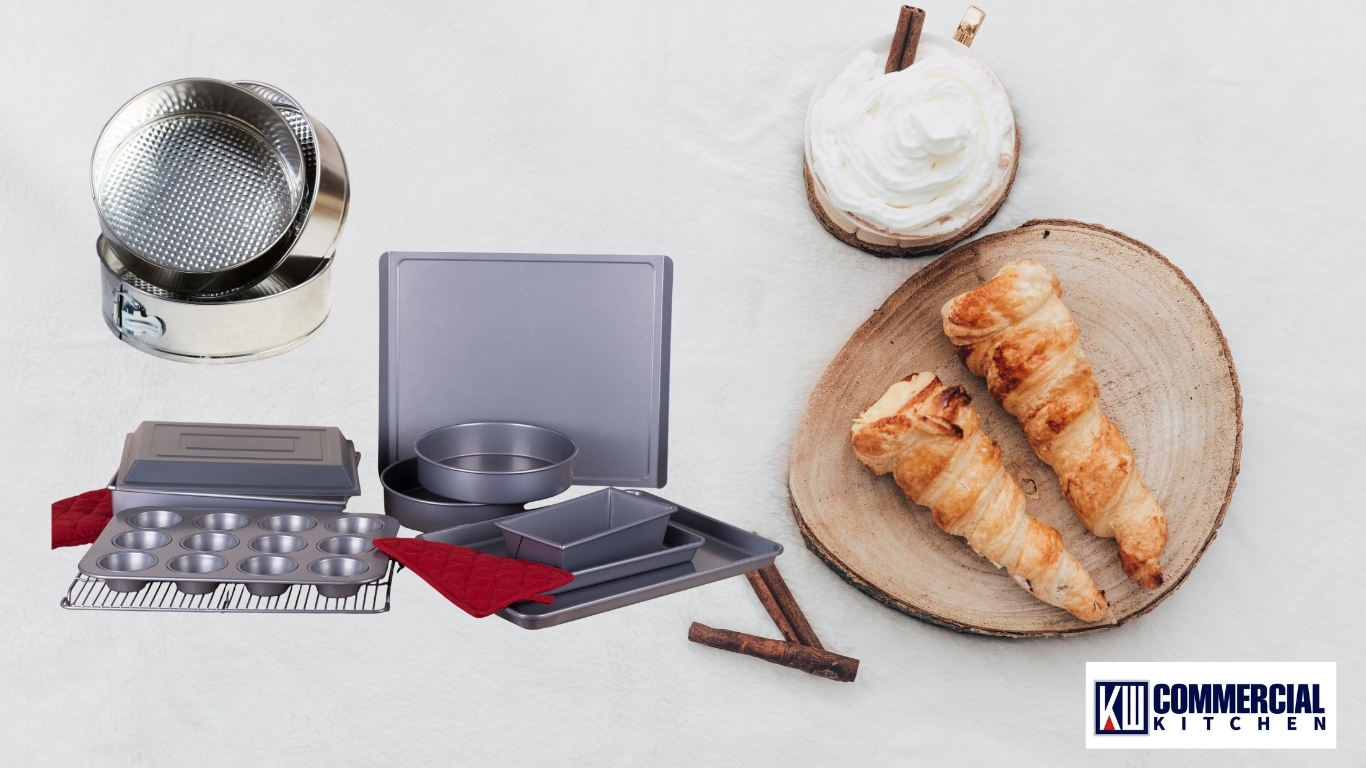
Commercial Bakery Tools & Smallwares in Australia (2025): Select, Set Up, Clean, Calibrate and Comply
From a 4am laminating shift to a lunch‑rush cake finish, tools set your pace and your standard. This guide turns material specs and food‑safety expectations into simple workflows, checklists and decisions your team can follow today.
Search intent & who this is for
Search intent: commercial investigation (“Which professional bakery tools should we buy in Australia?”) plus informational (“How to organise, clean, calibrate and comply?”). This page is your final read before building a purchase list and a training SOP.
Related categories: Bakery tools • Dough sheeters • Dough rollers • Dough mixers • Bakery ovens • Bakery fridges & freezers
What counts as “commercial bakery tools” (scope)
“Tools & smallwares” covers hand tools and non‑powered items used daily at the bench and in display. Think: scrapers, cutters, spatulas, whisks, spatulas and spoons, piping bags and tips, pastry brushes, rings and cutters, thermometers and scales, cooling racks, sheet trays and mats, bowls and measuring sets, cake turntables, palette knives, zesters, peelers and decorating tools, storage containers and scoops, tongs and serving implements. Choose **commercial grade** designs that clean well, resist heat and last in a professional kitchen.
Tool‑by‑task matrix (what to buy for each bench)
| Bench/task | Must‑have tools | Why they matter |
|---|---|---|
| Bread & dough | Bench and bowl scrapers; dough cutters; scoring blades; bannetons; flour duster; digital timer; probe thermometer | Portion accurately; control dough handling; check core temps for cooling and bake validation |
| Lamination & pastry | Heavy rolling pin (backup), rulers, pastry wheel, pastry brush (steam‑proof), silicone mats, offset spatulas | Uniform sheets and cuts; clean transfer; non‑stick work surfaces |
| Finishing & cakes | Piping bags & tips sets; turntable; straight/offset spatulas; scraper combs; digital micro‑scale; bench thermometer | Consistent finishes; precise portioning; temperature‑sensitive glazes and creams |
| Service & display | Tongs/servers; cake knives; allergen‑dedicated serving utensils; label kit; wipes | Protects ready‑to‑eat foods; supports allergen separation and labelling |
Materials: stainless, silicone, plastic, wood (how to choose)
- Stainless (304/18‑8): durable, inert, heat‑tolerant; ideal for scrapers, rings, palette knives and whisks.
- Food‑grade silicone: heat‑resistant and flexible; great for spatulas and mats; check temperature ratings on the datasheet.
- Food‑contact plastics: lightweight and economical; replace when scored or stained; avoid deep cuts that trap soil.
- Wood/wood‑handled items: permitted in many contexts if well maintained and cleanable; retire if cracked or split. Always follow your local council and food‑safety plan expectations on suitability and condition.
Allergen & cross‑contact controls (tools & storage)
Customers rely on clear allergen handling. For tools this means:
- Dedicated, colour‑coded utensils for common allergens (e.g., nuts, milk, gluten). Store away from general tools.
- Clean → rinse → sanitise before switching tasks; log the clean as evidence.
- Labels and covers for containers and trays; keep allergen ingredients sealed and segregated.
- Training and quick reference at the bench: which tools are dedicated, where they live, and what to do if cross‑contact is suspected.
- For packaged items: follow the national Plain English Allergen Labelling (PEAL) requirements on labels and keep supplier specs accessible.
Thermometers & scales: accuracy and calibration
Carry at least one reliable food thermometer accurate to ±1 °C and a calibrated set of scales. Build a simple routine:
MONTHLY: boiling‑point check (local altitude considered) → adjust/record
DAILY: quick verification before critical checks (cooling, display, delivery)
- Sanitise the probe before/after use; store dry in a clean sheath.
- Record verification results and any offsets on a visible log.
- Replace damaged probes; verify micro‑scales with known weights.
Cleaning & sanitising SOP (copy‑ready)
- Prep: separate raw from ready‑to‑eat tools; bring out dedicated allergen kits.
- Wash: hot water + detergent; use non‑scratch pads; avoid damaging edges.
- Rinse then sanitise: follow label contact time for chemicals or use heat methods where specified.
- Air‑dry: no towel‑drying that could re‑contaminate; store covered, labelled and segregated.
- Record: include who cleaned, when, which bench/kit, and any issues found (e.g., cracked scraper to be retired).
Open / service / close workflows
Open (operators)
Service (lead)
Close (close‑shift)
Planning tables: tool kits, frequencies, calibration
Table 1 — Minimum tool kits by bench
| Bench | Kit | Spare/notes |
|---|---|---|
| Bread | Bench & bowl scrapers; dough cutters; scoring blades; timer; probe | Spare blades; glove for scoring hand |
| Pastry | Offset & straight spatulas; pastry wheels; rulers; silicone mats; brush | Heat‑proof spare spatulas |
| Finishing | Piping bags & tips; turntable; combs; micro‑scale; scraper set | Dedicated allergen piping kit |
| Service | Tongs; cake knives; serving spatulas; label kit | Dedicated allergen tongs/servers |
Table 2 — Cleaning & inspection frequencies
| Frequency | Tasks | Retire/repair when… |
|---|---|---|
| Each use | Clean → rinse → sanitise; air‑dry; return | Edges chip; deep grooves; loose handles |
| Daily | Probe sanitise; visual checks; segregate allergen tools | Probe sheath cracked or loose |
| Weekly | Thermometer ice test; brush kit refresh | Readings inconsistent |
| Monthly | Boiling check; scale verification; retire worn mats | Mats torn; scale drift persists |
Table 3 — Calibration references (quick)
| Device | Target | Method | Record |
|---|---|---|---|
| Food thermometer | ±1 °C accuracy | Ice slurry ~0 °C; boiling water ~100 °C (site altitude adjusted) | Date, offset, action |
| Bench scale | Within stated tolerance | Check with known weights | Date, result, action |
Troubleshooting: quick reference
| Symptom | Likely cause | What to try |
|---|---|---|
| Sticky residue after “cleaning” | Skipped rinse; worn pads | Rinse between wash/sanitise; replace pads/cloths |
| Thermometer readouts vary 2–3 °C | No verification routine; damaged probe | Run ice test; replace probe; set weekly checks |
| Allergen tools mixed into general bin | Storage not dedicated | Colour‑coded bins; label; staff refresh |
| Cutting edges dull | Harsh pads; wrong storage | Use non‑scratch pads; edge guards; replace on schedule |
WHS basics for smallwares (plant, manual tasks)
- Sharps discipline: store blades safely; use proper gloves when scoring or trimming; brief new staff.
- Manual tasks: plan heavy‑tray lifts; use racks and bench heights that reduce strain; rotate tasks.
- Risk management: document hazards, controls and training; keep inspection and repair logs for tools with moving parts or edges.
Case study: a Sydney pastry team tool‑wall refresh
This reads like a technician’s field note—observable steps your team can reproduce. No hype, just what was seen and done.
Setting
- CBD patisserie; morning lamination and lunchtime finishes.
- Mixed brand tools; some duplicate, some worn; allergen kit stored with general tools.
What we did (one day, reproducible)
- Inventory & retirements: laid out all tools; retired cracked spatulas, scored plastics and loose‑handled spreaders.
- Zones & labels: mounted a simple tool wall by bench (lamination/finishing/service); labelled hooks and outline shapes for quick return.
- Allergen set: created a colour‑coded kit (piping bags, tips, spatula, tongs, scraper) and a dedicated sealed bin, labelled and stored away from general tools.
- Cleaning station: set a wash → rinse → sanitise → air‑dry flow with racks; added a single‑page SOP above the sink.
- Thermometer routine: added a weekly ice‑slurry check and a monthly boiling check card; placed a log next to the probe cradle.
- Close‑down habit: after service, tools back to labelled hooks; damaged items listed for replacement before the next shift.
What the team noticed
- Less hunting for gear during a rush—each bench had its own kit.
- Probe checks felt easier; the log and cradle were in one place.
- Allergen kit stayed clean and available; no more “where did that tip go?” moments.
FAQs
Do we need a probe thermometer if the cabinet shows temperature?
Yes. Measure food temperature with a reliable probe. Air readings are not enough to verify product safety.
How often should tools be sanitised?
After each use and between tasks, especially when switching between raw and ready‑to‑eat or when allergens are involved. Clean first, then sanitise.
Can we use wooden tools?
Wooden items may be acceptable if cleanable and in good condition. Retire cracked or split items and follow your council’s suitability expectations.
What is 3.2.2A in practice for tools?
Training, supervision and evidence that your controls work—clean tools, temperature verification, allergen separation and logs to show it.
How do we start a calibration routine?
Post a one‑page card: weekly ice check, monthly boiling check, record offsets and replace damaged probes or unreliable scales.
Next steps (CTAs & internal links)
Browse commercial bakery tools (Australia)
Book a quick consult. We’ll match tools to your menu, set a cleaning and calibration routine, and list replacements by priority.
Dough sheeters • Dough rollers • Dough mixers • Bakery ovens • Bakery fridges & freezers
Standards & references (Australia)
- FSANZ — Cleaning & sanitising (clean → rinse → sanitise)
- FSANZ — Thermometers (food should be 5 °C or colder, or 60 °C or hotter unless shown safe otherwise)
- NSW Food Authority — Thermometer accuracy ±1 °C and calibration guidance
- FSANZ — Standard 3.2.2A Food Safety Management Tools (training, supervisor, evidence)
- FSANZ — Allergen labelling (PEAL)
- Safe Work Australia — Managing the risks of plant in the workplace (approved Code of Practice)
- Safe Work Australia — Hazardous Manual Tasks (approved Code of Practice)
- FSANZ — The 2‑hour/4‑hour rule (time as a safety control)
- FSANZ — Appendix: Cleaning & sanitising surfaces and utensils (PDF)