
The 60°C Illusion Bain Marie: Why Most Hot Holding Systems Meet Compliance and Still Destroy Your Food
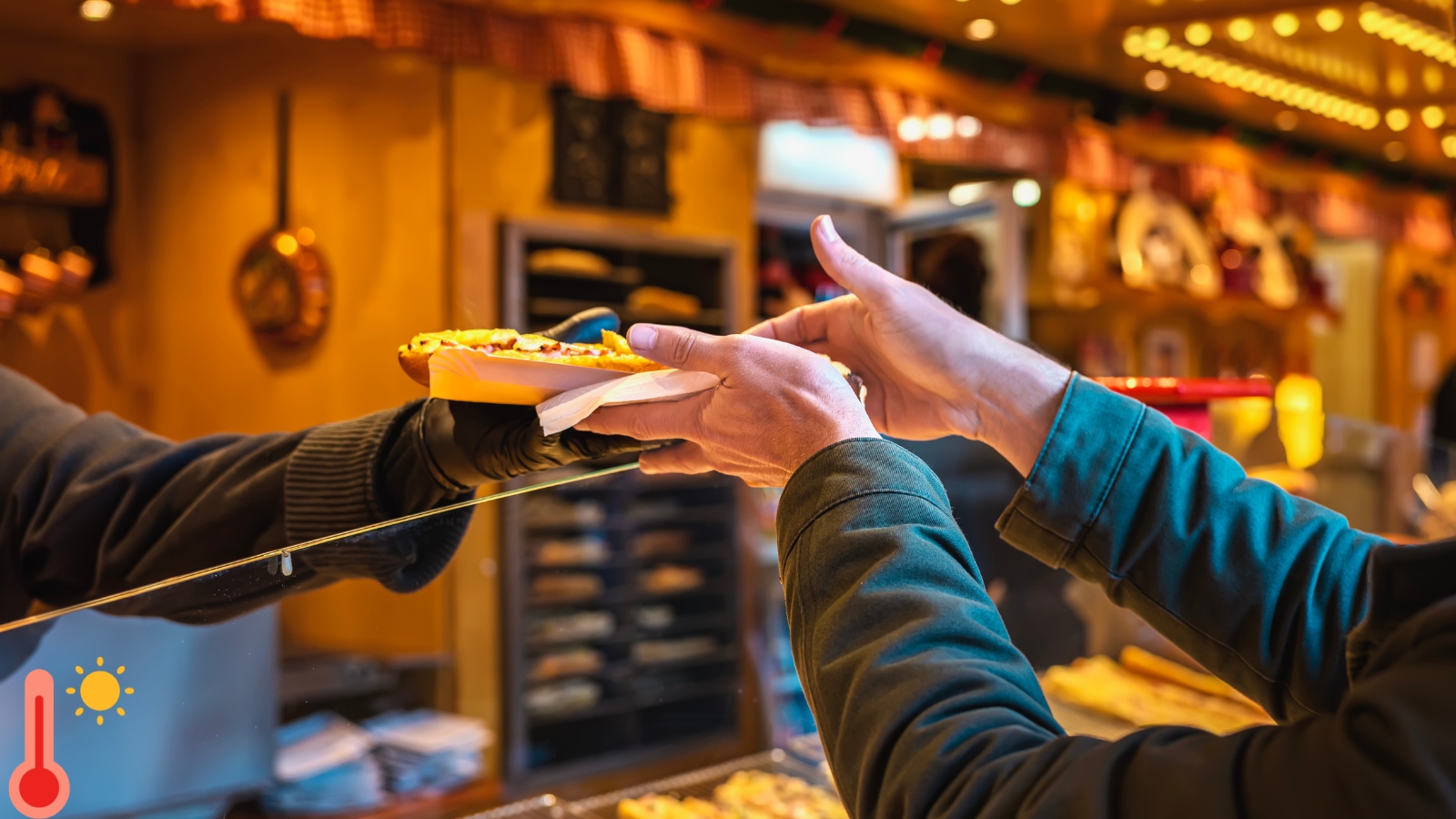
The 60°C Illusion: Why Most Hot Holding Systems Meet Compliance and Still Destroy Your Food (Woodson W.BMS11 vs Bonvue BM11SC vs Woodson W.HFHSQ24)
The owner of a takeaway chicken shop in Box Hill called us last spring to complain that his new hot display was “broken.” When our tech got there, the cabinet was running flawlessly — holding steady at 65°C, pans full, temperature probes all reading correctly, no faults logged anywhere. The problem was that the chicken coming out of it at 6pm was the same chicken that went in at 2pm, and after four hours in a wet-steam environment it had the texture of a rubber glove. He’d been binning around $200 of product a night for six weeks and blaming the machine. The machine wasn’t broken. The architecture was wrong. FSANZ says 60°C keeps food safe. Nothing in the law says it keeps food sellable.
Reading time: 15 minutes · For: takeaway owners, café operators, chicken shop owners, caterers, canteen managers, front-of-house merchandisers · Covers: Woodson W.BMS11, Bonvue BM11SC, Woodson W.HFHSQ24, wet vs dry physics, water activity, FSANZ 60°C compliance, moisture migration, FAQ.
1. The Three Hot Holding Architectures — They Are Not Substitutes For Each Other
Walk into any commercial hot bar supplier and you’ll be shown a row of shiny stainless boxes that all appear to do the same thing: keep food hot. They do not. Each of these three units solves a fundamentally different food-preservation problem, and putting the wrong food in the wrong unit is one of the most expensive mistakes a foodservice operator can make — because the food will still be legally safe to serve, and you will still try to serve it, and your customers will quietly stop coming back.
The single variable that should drive your choice is not temperature. It is water activity — the free moisture content of the food, the thing that determines whether your product wants humidity (curry, soup, rice) or fears it (fried chicken, roast meat, pastry). Match the architecture to water activity, and you keep what you cooked. Mismatch it, and your kitchen quietly turns expensive ingredients into bin waste.
Woodson W.BMS11
THE STEAM BATH
The Woodson W.BMS11 is a 1/1 GN benchtop wet bain marie — a dual-skin insulated tank, a welded 20mm drain cock, a mechanical thermostat, and nothing clever. You fill it with water, you switch it on, you drop your pan in. The steam rising from the water bath wraps your food in an 80%+ RH environment. This is the oldest architecture in professional cooking, and for the right food it is still unbeaten.
Power: 0.75kW / 10A. Design operating temp: 70–80°C (the tank runs above 60°C legal minimum to compensate for surface cooling). Pan depth: up to 150mm. Made in: Brisbane, Australia — Woodson has been at it since 1954. Price band: around $650–$800 ex GST.
Bonvue BM11SC
THE FLEXIBLE HYBRID
The Bonvue BM11SC is a square countertop display that holds 3 × 1/1 GN pans. It can operate wet or dry. Italian heating elements. Overhead heat lamps. Rear 5mm tempered glass sliding door. 8mm tempered glass cover. Temperature range 35°C to 85°C, analogue control. This is the cabinet operators buy when they want flexibility — today curry, tomorrow roast, Saturday mixed.
Power: 2194W / 10A. External dimensions: 1055 × 624 × 720mm. Heating: Italian-made elements. Pan depth: up to 100mm. The catch: flexibility is only useful if you commit to one mode per service. Mid-shift switching is where operators get hurt.
Woodson W.HFHSQ24
THE MICRO-CLIMATE
The Woodson W.HFHSQ24 is a square-profile heated display engineered specifically for chicken and roast meats. This is not a “better bain marie.” It’s a different category entirely: fan-forced heat circulation, an engineered humidifier, infra-red overhead heat lamps, and a custom-designed rear ventilation system that actively removes excess moisture. Multiple heating elements provide redundancy. The cabinet doesn’t just hold food — it simulates a specific micro-climate that keeps fried and roasted surfaces crispy while stopping the interior from drying out.
Capacity: 3 × 1/1 GN pans up to 100mm deep. Heating: forced-air + infra-red quartz lamps + humidifier. Construction: dual-skin insulated bain-marie tank, toughened front glass, rear sliding doors. Price band: around $6,400–$7,800 ex GST. Yes — it costs four to ten times what the other two units cost. There’s a reason.
Before you buy any of these, answer one question honestly: what is the moisture behaviour of your highest-margin menu item? Liquid dishes want humidity. Crispy dishes need it gone. Roast meats need a balance. The wrong cabinet charges you the difference every single hour of every single service.
2. The Physics of Hot Holding — Why Water Activity Matters More Than Temperature
Food scientists use a measure called water activity (aw) — the ratio of the water vapour pressure above a food to the vapour pressure of pure water. Fresh curry sits around 0.97. Cooked rice around 0.90. Roast chicken around 0.85. Fried chicken straight from the fryer, around 0.65–0.80 depending on crumb. These numbers determine one thing: which direction water wants to move when the food meets the holding environment.
Put a food into a holding cabinet where the surrounding humidity is lower than the food’s water activity, and water leaves the food — evaporating into the cabinet air. The food shrinks, the surface dries, and after a couple of hours you’re holding a product that looks tired and tastes stringy. Put the same food into a cabinet where the humidity is higher than its water activity, and water moves the other way — condensing into the food. Crispy things go soft. Batter softens. Skin loses its snap. In both cases, a legal-but-unsellable product is the result.
Wet bain marie (Woodson W.BMS11): high-humidity equilibrium
Submerged heating elements boil a small volume of water in the tank base. Steam rises and fills the pan cavity. Cabinet humidity stabilises around 80–95% RH at operating temperature. Foods with high water activity — curries, stews, rice, soup, steamed vegetables — sit in equilibrium with that environment and hold their character for hours. This is what wet bain maries were designed for and what they do better than anything else.
The trade-off is simple physics. That same humid environment will destroy any food with a lower water activity than the cabinet. Fried chicken will absorb steam through the porous crumb and go limp. A roast pork belly will lose its crackling within 40 minutes. A baked pastry will turn doughy. None of this means the machine is broken. The machine is working correctly; the wrong food is in it.
Dry bain marie / dry mode (Bonvue BM11SC dry): low-humidity with direct conduction
Elements heat a dry tank base, which conducts heat up through the pan and into the food. Cabinet humidity stays close to ambient kitchen air (40–60% RH in most Australian kitchens). Air circulation is minimal. This works for foods that want to lose a little moisture while holding — fried items for very short durations (under 30 minutes), or pastry items being held briefly before service.
The trade-off in dry mode: there is no protection against scorching the pan base. High-sugar sauces, curries, or anything with a reducing liquid will caramelise and then burn along the edge of the pan. Rice dries and crunches on the outer ring. Soups develop a skin. Within two hours, the bottom 10mm of whatever is in the pan is crusted on and unserviceable.
Forced-air + humidifier hybrid (Woodson W.HFHSQ24): engineered micro-climate
Here the physics get deliberate. A fan circulates heated air across the food surface. An integrated humidifier injects controlled moisture — not enough to soak a crumb, but enough to slow water loss from the interior. Overhead infra-red quartz lamps deliver short-wave radiant heat that keeps surface temperature high without adding humidity. A rear ventilation system continuously carries excess moisture away from the front viewing glass.
The result is a cabinet that actively maintains roughly 40–60% RH at 70°C with constant air movement — a set of conditions that no simple bain marie can produce. Fried chicken’s crumb stays crispy because surface moisture evaporates under the IR lamps; the interior stays juicy because controlled humidity slows internal water migration. This is the only architecture that can hold a whole roast chicken for three hours and still sell it at full price.
The machine is complicated and it is expensive. That cost is not a premium for appearance. It is the cost of actively managing a three-variable environment (air movement, humidity, radiant heat) instead of passively defaulting to one.
3. The Three-Layer Operational Tax — Where the Money Actually Goes
Hot holding equipment fails operators in three distinct ways. Electricity is a small one. The real damage is inventory destruction and lost repeat business.
Layer 1 — Hardware damage
The single most preventable cost in a wet bain marie is running it dry. The elements are designed to heat water, not air. When the water level drops below the element, the element overheats, the internal insulation degrades, and within minutes you have a $300 to $500 repair bill plus a day or two of downtime waiting for the technician. Woodson W.BMS11 units fail this way more often than any other reason.
The second preventable cost is calcium scale. In the parts of Australia where tap water runs hard — Adelaide, Perth, most of regional inland New South Wales and Queensland — minerals precipitate onto the element during operation. Over six to twelve months, the scale builds a thermal barrier between the element and the water. The element has to run hotter to achieve the same water temperature. It ages faster. The cabinet takes longer to recover after a pan change. By year two the heating curve has drifted noticeably and the same unit that was recovering in 10 minutes is now taking 20. A $30 inline water filter or a weekly descaling routine prevents all of this. Most operators do neither.
For the BM11SC operator, the failure mode is different: thermal stabilisation during mode switching. If staff decide mid-service to switch from wet to dry (because someone put a tray of chips in the wet pan and complained it went soggy), the cabinet’s sensors will take 20 to 40 minutes to stabilise the new environment. During that window, cabinet temperature wanders. Food drifts. Some items cross the 60°C safety line briefly and have to be restarted on the 2/4-hour clock. The unit isn’t broken — it’s doing what it was designed to do, and the design just isn’t a real-time toggle.
Layer 2 — Yield loss through evaporation
Put a 10kg tray of roast pork in a dry bain marie and come back two hours later. The tray will weigh approximately 9.4–9.5kg. You have evaporated 5–6% of your sellable weight directly into the cabinet air. You paid for 10kg of pork; you can portion 9.4kg. Multiply that loss across a daily holding volume: a roast meat counter turning over 30kg per service day is effectively throwing away 1.5–1.8kg of sellable protein per day to evaporation alone. At $25/kg wholesale and $45/kg sale value, that’s roughly $30–$50 in lost sales per day, or $10,000–$18,000 per year.
This is why the Woodson W.HFHSQ24 humidifier earns its cost. By actively maintaining cabinet humidity close to the food’s water activity, it drops evaporative yield loss from 5–6% down to roughly 1–2% — the same protein, the same temperature, the same safety, but two to three times the sellable weight at the end of service.
Layer 3 — Texture death and the repeat customer problem
This is the layer no one puts on a spreadsheet, because it doesn’t show up as a line item. It shows up as a gradual decline in repeat customers over six to twelve months — a drop nobody connects to the holding cabinet.
Here’s how it actually works. A customer walks into a chicken shop at 2:30pm. The chicken in the display has been there since the 1pm cook. It looks OK behind the glass. Staff bag it up. Customer gets home, opens the bag, bites into soggy batter. Customer doesn’t come back. Customer doesn’t explain why. Customer just finds a different chicken shop, and the original owner spends the next twelve months wondering why foot traffic is drifting down when “everything looks fine.”
The operator who spent $800 on a wet bain marie for their chicken shop just saved $5,800 in capital expenditure compared to buying a proper W.HFHSQ24 — and will lose 20–30% of their repeat customer base over the following year because the product is no longer worth coming back for. Conservative estimate: a chicken shop doing $2,500 a day revenue loses $500 a day (20%) once the word spreads. That’s $150,000 a year in attrition. The cabinet “saved” them $5,800 in year one and cost them $150,000 in year two.
Nobody ever frames it that way. But that’s the arithmetic.
Total annual cost of the wrong hot holding architecture:
- Preventable hardware damage (dry-run, scale, mode-switch fatigue): $300–$1,200 per year
- Evaporative yield loss (dry holding of moist food): $6,000–$18,000 per year
- Repeat-customer attrition from texture degradation: $20,000–$150,000+ per year depending on venue type
A $7,000 premium hot display that prevents all three is not an indulgence. It’s the correction to a $30,000 per year bleeding wound most operators don’t know they have.
4. Three Failure Patterns We See Every Month
These are the patterns KW’s service team logs on real post-sale visits:
❌ Pattern 1 — Wet bain marie used for fried chicken
Why it was bought: “A bain marie is a bain marie.” Owner saw the Woodson name, saw the Australian-made tag, saw the $700 price, and bought it for a takeaway chicken operation.
How it fails: By day three the chicken coming out at lunch service (cooked 10am, held through 1pm rush) has limp batter and visibly steamed skin. Regulars notice. The owner blames the oil, the flour blend, the supplier. Tries new batter recipes. Waste climbs. By month two, 20% of holding-tray chicken is being discounted to avoid bin loss.
Root cause: High-humidity cabinet holding a food that fears humidity. Physics doesn’t care about brand loyalty. The W.BMS11 is a perfect cabinet for the wrong job.
❌ Pattern 2 — Dry bain marie mode used for curry during a service rush
Why it was bought: Owner bought a Bonvue wet/dry convertible for a café that does both dry-held sausage rolls AND butter chicken. “We’ll switch it as needed.”
How it fails: Wednesday lunch — curry in wet mode, sausage rolls on the side under the heat lamps. All good. Thursday — owner decides to switch to dry mode for the morning pastry push, plans to switch back at 11am for curry. The switch doesn’t stabilise until 11:35. The 11:15 curry pan goes in with cabinet humidity still dropping. By 12:30 the top of the curry has skinned over and split. The base is scorched. Twenty portions have to be reworked or discarded.
Root cause: The “flexibility” feature was treated as a real-time toggle. It isn’t. It’s a daily commitment. Operators who use Bonvue convertibles correctly set the mode before service starts and commit for the day.
❌ Pattern 3 — W.HFHSQ24 specialised chicken cabinet used as general “premium” display
Why it was bought: Upmarket café owner wanted the “best” hot display on the market. Spent $7,200. Loaded it with mixed items — a tray of lasagne, a tray of curry, a tray of roast potatoes, and yes, some chicken.
How it fails: The forced-air circulation that keeps chicken crispy dries out the surface of the curry within 90 minutes. The humidifier setting that works for roast chicken is suboptimal for the potatoes. The owner ends up fighting the machine to get any of the items to behave properly.
Root cause: The W.HFHSQ24 is a specialist tool engineered for one water-activity range. Using it for mixed-menu buffet service is like buying a race car to pull a trailer — you paid for precision, and you’re using it for the wrong job. A café with genuinely mixed holding needs is better served by a multi-zone display or a pair of matched units.
5. Hard Disqualifiers — Don’t Buy If You Hit One of These
Before the quote, the discount, or the finance option — check these. Any single match means the unit is wrong for your operation:
Do not buy the Woodson W.BMS11 (wet bain marie) if:
- More than 30% of your menu is fried, crispy, or pastry-based. Steam will destroy it within 30 minutes.
- Your team has no daily water-check protocol. Running a wet bain marie dry is the #1 killer of these units.
- You operate in a hard-water area and have no intent to install a filter or run a descaling schedule. Scale will halve your element life.
- You need a glass canopy for customer-facing service. The W.BMS11 is open-top — staff access only.
- You need more than a single 1/1 GN pan of holding capacity per shift. Size up to a multi-bay Woodson hot bar instead.
Do not buy the Bonvue BM11SC (wet/dry convertible) if:
- You plan to switch modes during service. The 20–40 minute stabilisation window is a guaranteed food-quality problem.
- Your menu is single-type (all curry, or all crispy). A pure wet or pure dry unit is cheaper, simpler, and better for your use case.
- You need high visual merchandising appeal — the BM11SC is square and functional, not showcase-grade.
- Your core product is fried. The dry mode is not a substitute for a proper forced-air display.
- Your site has limited benchtop width. At 1055mm wide, the BM11SC is not compact.
Do not buy the Woodson W.HFHSQ24 (chicken display) if:
- Your menu is genuinely mixed (curry, pastry, roast, fried all in one display). This cabinet is tuned for one narrow use case.
- You do less than $1,500 per day in roast/fried protein sales. The capital investment won’t pay back at that throughput.
- Your back-of-house has no dedicated 15A circuit. The cabinet is typically 15A supplied for good reason.
- You treat it as a “premium holding box” rather than a specialist tool. You’ll be fighting it for everything that isn’t chicken or roast.
- You can’t commit to the humidity reservoir maintenance routine. The humidifier is the single component that separates this cabinet from a regular hot display.
6. The Decision Matrix — Match Your Menu to the Right Architecture
Cross-reference your menu’s water activity against this matrix. The correct answer is the row where your highest-margin item fits every column — not the row with the lowest sticker price.
| Your Menu Profile | Architecture Required | KW Match + Alternatives |
|---|---|---|
|
High water activity — single type Curry house, Asian restaurant, Indian takeaway, soup bar, stew-focused café. Food aw above 0.90. |
Pure wet bain marie. 70–80°C operating range. Reliable water-level protocol required. |
👉 Woodson W.BMS11 (single 1/1 GN) Multi-bay: Woodson W.HFS24 (4 bay) or W.HFS26 (6 bay) Alt brands: Roband wet bain marie range, Anvil counter bain marie. |
|
Mixed wet/dry — single commitment per service Café with rotating menu (Wed: curry lunch, Thu: pastry brunch), canteen with alternating wet/dry days, catering venue. |
Wet/dry convertible display. Clear SOP to set mode before service and commit for the day. Overhead heat lamps for surface assist. |
👉 Bonvue BM11SC (3 × 1/1 GN) — also available in BM14SC (4 bay) and BM17SC (7 bay) configurations Alt brands: Thermaster hot food display, Apuro heated merchandiser. |
|
Low water activity — premium fried / roast Chicken shop, rotisserie counter, roast meat takeaway, premium BBQ, fried chicken concept. aw below 0.85 and customer pays for texture. |
Forced-air + humidifier + IR lamp micro-climate. Rear ventilation for glass clarity. Dedicated 15A circuit. |
👉 Woodson W.HFHSQ24 (square glass chicken display) — or the smaller W.HFHSQ23 (3-module) for lower volume Alt brands: Henny Penny HMR display (+80%), Fri-Jado rotisserie display (+100%). |
|
Mixed-menu self-service buffet Hotel buffet, canteen, pub carvery, food court. 6+ pan positions, multiple food types, long service windows. |
Multi-bay square-profile hot bar. Typically wet operation with overhead heat lamps. 4–6 modules. |
👉 Woodson W.HFSQ24 (4 bay, 3.0kW) or W.HFSQ26 (6 bay, 3.6kW) — Australian made Alt brands: Roband multi-bay hot bar, Apuro carvery station. |
|
Front-of-house merchandising priority Mall chicken shop, airport grab-and-go, impulse takeaway counter. Visual appeal is as important as holding quality. |
Square or curved-glass display with premium LED lighting, clear sightlines from customer side, and active humidity/heat management. | 👉 Woodson W.HFHSQ24 for chicken-led display, Bonvue BM11SC or BM17SC for mixed display with merchandising lighting. |
7. Operational Reality — What Doesn’t Appear On The Spec Sheet
Half of the “my hot display isn’t working properly” service calls KW receives come back to installation or operating routine — not the cabinet itself. Six things to check before and after delivery:
Water quality and the element-life question
If you’re in Adelaide, Perth, or any regional area with water hardness above 150mg/L calcium carbonate, install an inline filter on the supply side of any wet bain marie. The one-time $150–$300 cost delivers three to five years of extended element life. Operators who skip this routinely replace elements every 18 months instead of every 4–5 years. The sums are obvious.
Water-level SOP (standard operating procedure)
The most damaging thing a barista or prep cook can do to a wet bain marie is forget about it. Set a physical water-level check at the start of every shift and every two hours during service. Mark the maximum fill line on the tank in permanent marker so new staff can see it. A $500 element replacement from a dry-run incident is entirely preventable with a 30-second check that should be on every handover checklist.
Thermometer calibration
FSANZ compliance requires the ability to demonstrate food has been held at or above 60°C. The internal thermostat in a bain marie measures the tank, not the food. Keep a calibrated probe thermometer on-hand and spot-check core food temperature at the start and middle of each service window. Log it. If you ever have a food-safety incident, the log is the difference between a mild council warning and a serious penalty.
Electrical supply
The W.BMS11 runs on a 10A plug — easy. The BM11SC is also 10A. The W.HFHSQ24 and the multi-bay Woodson W.HFSQ24 are 15A — and that 15A plug will not fit a standard 10A outlet. Verify the outlet rating before the truck arrives. A 15A outlet install costs $150–$250 from a licensed electrician and takes about an hour; discovering you need it on delivery day costs you a truck re-delivery fee and a day of productivity.
Ventilation around the cabinet
All three cabinets reject heat into the surrounding kitchen. Position them away from heat-sensitive equipment, allow at least 150mm at the rear for ventilation, and keep the rear sliding doors in the display units clear of storage. A Woodson square-glass display with its rear doors boxed in will lose its ability to manage condensation — the rear ventilation relies on clear airflow to function.
Holding time discipline — the 2-hour/4-hour rule
FSANZ Standard 3.2.2 permits potentially hazardous food to spend up to 2 hours above 5°C and below 60°C before it must be reheated back to safety; between 2 and 4 hours it must be used immediately; past 4 hours cumulatively, it must be discarded. In a hot holding context, this means any food that drops below 60°C for even a moment — during a refill, during a mode switch, during an extended power blip — starts the clock. Label every pan with its cook-out time and track cumulative time in the danger zone if anything happens. KW’s FSANZ 2/4-hour rule guide covers the legal detail in full.
The “hold, not reheat” workflow
Hot‑holding equipment (bain maries, hot bars, pie warmers) is designed to keep hot food hot, not to make cold food hot. Reheat rapidly to ≥ 60 °C in an oven, stove or microwave, then transfer to the bain marie, which should run at an operating set-point of 70–80 °C so food stays above the 60 °C safety floor through service. 60 °C is the legal minimum, not the holding target. Reheating in a bain marie is too slow and may never reach safe temperatures uniformly.
Step 1 — Cook/Cool (if batching)
Cook thoroughly. If cook‑cooling for later service, cool from 60 °C → ≤ 21 °C within 2 h, then to ≤ 5 °C within 4 h. Log times/temps.
Step 2 — Rapid reheat
Use oven/stove/microwave to reach ≥ 60 °C quickly. Avoid repeated heat‑cool cycles.
Step 3 — Hot‑hold in bain marie
Transfer to a bain marie or hot bar set to 70–80 °C — professional units run above the 60 °C legal floor to offset surface heat loss and keep food sellable. Probe the deepest point, rotate pans, cover between waves.
Hot-holding records — printable templates
A) Hot‑holding temperature log (A4)
| Item | Location / GN | Target (°C) | Reading (°C) | Time | Action if <60 °C | Initials |
|---|---|---|---|---|---|---|
| Chicken curry | BM well #2 (1/1‑65) | ≥ 60 | 62 | 11:15 | Continue hold | AB |
| Fried rice | Hot bar #1 (1/2‑40) | ≥ 60 | 58 | 12:05 | Stir, cover, increase setpoint; recheck 10 min | CD |
| Lasagne | BM well #3 (1/2‑100) | ≥ 60 | 61 | 13:00 | Continue hold | EF |
A note on set-points: the table target (≥ 60 °C) is the food reading; set the appliance itself to 70–80 °C to hold above the floor.
B) 2‑hour/4‑hour time control label (for items leaving control)
| Item | Leaves control (time) | Back in control / served | Total time out | Apply rule | Action |
|---|---|---|---|---|---|
| Gravy pot (pass) | 12:10 | 12:55 | 0:45 | 0–2 h | Return to hot‑hold |
| Sauce pan (carvery) | 13:20 | 15:35 | 2:15 | 2–4 h | Use immediately; do not re‑store |
| Rice tray (event) | 11:00 | 15:30 | 4:30 | > 4 h | Discard |
8. Compliance Non-Negotiables
Four items must appear on any quote. If a supplier dodges any of them, walk away:
- FSANZ Food Standards Code Standard 3.2.2 compliance. Confirm the cabinet can reliably hold food above 60°C under real operating conditions — not just under empty-cabinet factory testing. Ask for manufacturer documentation on temperature uniformity across the holding well at the stated operating temperature. If missing: you have no proof the cabinet can meet the legal requirement under your actual load.
- Australian electrical compliance (RCM). Every commercial appliance sold in Australia requires Regulatory Compliance Mark certification. Check that both the cabinet and any pan accessories carry the mark. If missing: your venue insurance may not cover a related incident, and councils can order removal during inspection.
- Warranty terms in writing — including element cover. Wet bain marie heating elements are a consumable under warranty rules at many Australian manufacturers. Clarify in writing whether element failure from operator error (dry-run) is covered, excluded, or pro-rated. If missing: your first element failure could be your most expensive one. Woodson’s standard parts and labour is 1 year; Bonvue is 2 + 2 with registration. Register everything within the window — missing the 14-day registration window typically forfeits the extended parts warranty.
- Local spare parts availability. Ask specifically about heating elements, thermostats, switches, glass panels, and lamps. For the W.HFHSQ24, also confirm humidifier components and fan motor parts are stocked in Australia. If missing: a failure during your peak season becomes a 3–6 week replacement wait.
9. Frequently Asked Questions
Is 60°C enough to keep hot food fresh in a bain marie?
60°C is the FSANZ Standard 3.2.2 legal minimum for hot holding of potentially hazardous food. It prevents bacterial growth but does nothing to preserve texture, moisture, or visual appeal. Woodson and most professional hot holding units actually operate between 70°C and 80°C to compensate for surface heat loss and to keep the food’s sellable condition intact. 60°C is the safety floor; it is not the quality target.
Why does fried chicken go soggy in a standard wet bain marie?
Wet bain maries generate continuous steam from a water reservoir, producing a high-humidity environment (80% RH and above). Fried chicken has a brittle, porous batter that absorbs moisture from that steam within 20 to 30 minutes. The crisp surface softens, the coating becomes greasy and limp, and by the one-hour mark the product has lost the core quality that made a customer willing to pay a premium for it. For fried items you need a dedicated hot display cabinet with forced-air circulation, like the Woodson W.HFHSQ24 chicken display, which actively manages humidity instead of flooding the cabinet with steam.
Can I put curry or soup in a dry bain marie?
Technically yes, but operationally no. Direct dry heat applied through the bottom of a gastronorm pan will scorch the base of the pan, causing the sauce to caramelise and eventually burn along the rim. The surface of the curry also loses moisture rapidly, forming a hardened skin and visual oil separation within 90 minutes. Sauces split. Rice turns crunchy at the edges. You will still meet the 60°C legal standard — but the food becomes unsellable. Wet bain maries are specifically engineered for high water-activity foods like curries, stews, and soups.
What is the difference between a bain marie and a hot food display?
A bain marie is a heated well designed to hold prepared food at service temperature, typically used behind the counter by staff. A hot food display adds a glass canopy, front visibility, and often overhead heat lamps — it is designed for customer-facing merchandising. Both can use wet or dry heat. The Woodson W.BMS11 is a pure bain marie (no canopy). The Bonvue BM11SC is a hot food display with full glass surround. The Woodson W.HFHSQ24 is a specialised hot display engineered specifically for chicken and roast meats with humidifier, forced air, and infra-red heat lamps combined.
How often should a wet bain marie be refilled and cleaned?
Refill the water reservoir before every service and monitor water level throughout the shift. Running a wet bain marie dry is the single most common cause of element failure. Drain completely and descale weekly in hard-water areas. In Australian cities with mineral-heavy water (notably Adelaide, Perth, and much of regional inland), calcium buildup on the elements insulates them from the water and shortens element life by 30 to 50 percent. A filtered water supply to the bain marie is cheap insurance.
Is a wet/dry convertible bain marie a good compromise?
Only if you commit to one mode per service. Wet/dry convertible units like the Bonvue BM11SC can physically switch modes, but the thermal stabilisation from wet to dry (or back) takes approximately 20 to 40 minutes — during which the holding environment is unreliable. Switching mid-service is a guaranteed way to push food through the danger zone or degrade texture. Set the mode before service starts, commit for the day, and treat the flexibility as a weekly menu-planning tool rather than a real-time adjustment.
Does FSANZ compliance require humidity control?
No. FSANZ Standard 3.2.2 only specifies temperature requirements — above 60°C for hot holding of potentially hazardous food, with the 2-hour/4-hour rule applying if food leaves temperature control. Humidity control is entirely a quality and commercial decision, not a compliance one. You can be 100% FSANZ compliant and still serve unsellable food if your holding system destroys texture. The regulator cares about safety. Your customer cares about whether the chicken is crispy. Both matter — but only one is enforceable by law.
Do I need paperwork?
Where Standard 3.2.2A applies (food service/retail handling RTE PHF), you’ll need to substantiate your controls (e.g., temperature and time records) for at least three months or as required.