
The Soggy Chip Problem: A Commercial Fryer Engineering Guide
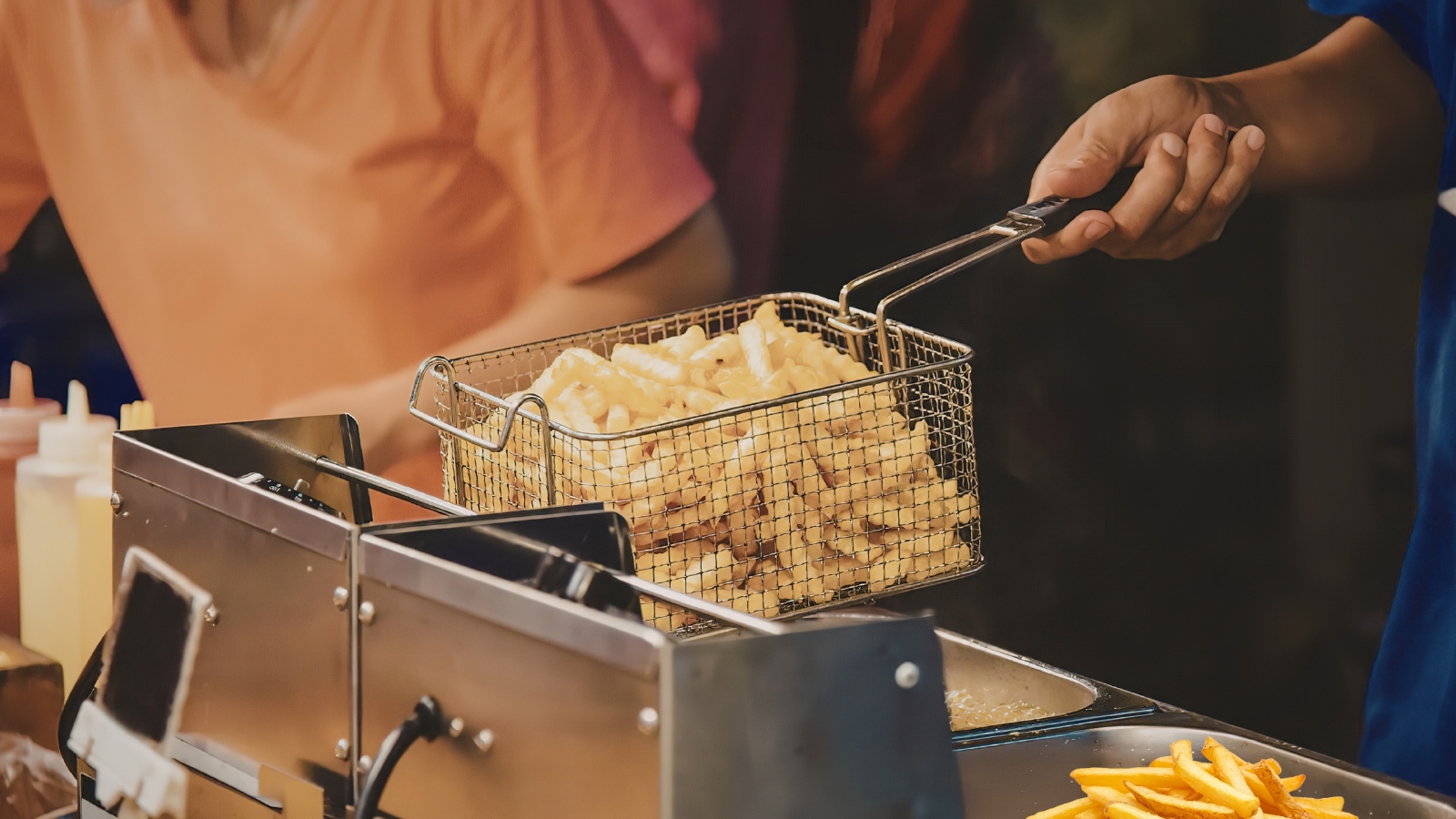
It is Friday night and the docket printer has not stopped. Whether you run a high-volume takeaway, a specialty bakery, or a cloud kitchen, the deep fryer sits at the centre of service, and it is the piece of equipment most operators understand the least.
A commercial fryer is not a metal bucket that heats oil. The difference between two units that look identical sits in the burner, the vat geometry, and how fast the oil recovers after a load goes in. Those three things decide whether your chips come out crisp or soggy. This guide works through the physics of thermal recovery, why frying oil breaks down, and how vat design and filtration affect oil life. For brand and model selection by budget and duty level, see our commercial deep fryer buyers guide.
Burner count and thermal recovery
When you compare commercial gas fryers, you will see a wide price spread between models that look the same on the outside. You are not paying for oil capacity. You are paying for burner power.
Reading MJ ratings
Gas frying power is measured in megajoules per hour (MJ/h). That figure tells you how quickly the burners can drive the oil back up to temperature after cold food drops the vat. As a rough guide:
- 3-burner, around 90 MJ/h. Suited to low-volume sites, hotel bars, and cafes running intermittent service.
- 4-burner, around 110 to 120 MJ/h. The common choice for busy takeaways and fish and chip shops.
- 5-burner, 140 MJ/h and up. Built for sustained high output and cloud kitchens.
Thermal shock and recovery. When you drop a basket of frozen chips at around minus 18°C into oil sitting at 180°C, the vat temperature falls sharply. Recovery time is how long the burners take to climb back to the cooking band. An underpowered fryer takes longer to recover, and during that gap the food sits soaking in cooler oil instead of frying in hot oil. That gap is the difference between a crisp chip and a greasy one.
Why chips come out soggy
If you find yourself topping up oil constantly, it is not only evaporating, it is being absorbed into the food. In a fryer with enough power, the moisture inside the food flashes to steam and pushes outward, which keeps oil from soaking in. When recovery is slow and the oil runs cool, that steam barrier never forms properly, and the food behaves like a sponge.
Why frying oil degrades
Every operator knows the look of a vat on a Thursday: dark, smoking, and sour. The oil is finished. The reason it died so quickly comes down to three things working on it at once.
The three drivers of oil breakdown
Cooking oil does not simply collect crumbs. It breaks down chemically through hydrolysis, oxidation, and the build-up of carbon, which together raise free fatty acid levels and turn the oil dark and bitter.
- Water. Moisture from frozen and wet product reacts with hot oil and splits the oil molecules apart. The wetter the food going in, the faster this happens.
- Oxygen. Oil left uncovered while hot takes on oxygen, which darkens it and turns the flavour bitter.
- Carbon. Loose crumbs that sink and sit on the heat source char into carbon and taint the whole batch.
Topping up with fresh oil does not reverse any of this. It only dilutes oil that is already breaking down.
V-pan versus tube burner: cold zone geometry
Vat geometry is where the wrong choice shows up at the end of a shift. Match the fryer to what you actually cook.
The tube burner
The heating tubes run through the oil, which creates a large cool area, or cold zone, at the bottom of the vat.
- The advantage. Heavy breading and batter, the kind you get with fried chicken or fish, drop into the cool zone and sit there without burning. The oil stays usable for longer.
- The trade-off. Cleaning around the tubes is awkward. You need a cleanout rod to push sludge through to the drain.
The V-pan (open pot)
Here the heat is applied to the outside of the vat, and the inside is a smooth, open V-shape.
- The advantage. Very quick to clean. The open vat wipes down in under a minute.
- The trade-off. A smaller cold zone, so it suits high-volume chips and frozen product that does not shed heavy crumbs.
Three-burner versus four-burner output
Operators often see two fryers with the same 22-litre vat and assume they perform identically. In practice the difference is thermal recovery, not capacity.
- The 3-burner is built for intermittent use. Drop a full basket of frozen fries and the oil temperature crashes, then climbs back slowly. It suits fresh, room-temperature items like spring rolls or dim sims more than heavy frozen loads.
- The 4-burner carries noticeably more MJ output, and that extra headroom is not there to cook more food at once. It is there for recovery, driving the oil back up to temperature quickly so the food seals rather than soaks.
The verdict. If your menu leans on frozen potato products, a 3-burner can work. For a high-turnover takeaway or cloud kitchen, the 4-burner or 5-burner is the sound choice for holding the steam barrier and keeping product crisp.
Turbo tube (baffled tube) burners
In a plain tube-burner fryer, hot gas travels straight through a hollow steel pipe, and much of that heat is lost out the flue at the back. Turbo tubes, also called baffled tubes, change that. Small baffles or heat deflectors are welded inside the pipes, and they do two things:
- Create turbulence. Instead of running straight through, the flame is forced to tumble, which slows the gas down and keeps more heat inside the tube.
- Improve radiant transfer. The baffles glow red-hot and radiate heat into the oil, moving energy across faster than hot gas alone.
The practical result is quicker recovery and less heat wasted up the flue, which means less time waiting between loads and lower running cost.
Ventilation: gas canopy versus ventless electric
If you run a cafe or a front-of-house operation, ventilation is a real cost to weigh.
Commercial gas fryers produce grease-laden vapour and combustion by-products. In Australian commercial kitchens, gas frying equipment runs under a mechanical exhaust canopy. That canopy, with the ducting and make-up air it needs, is a significant fit-out cost.
Some high-output electric fryers integrate carbon and filtration at the unit, capturing grease-laden air rather than venting it through a canopy. Depending on the model's certification and your local council, this can reduce or remove the need for a full extraction canopy. Confirm the requirement with your council and the unit's compliance documentation before you rely on it.
For busy cafes, an automatic basket lift raises the food out of the oil at the end of the cycle on its own, which helps avoid burnt product when the cook is busy plating.
Fryer cleaning and maintenance tools
Cleaning a fryer without the right kit is slow and incomplete. A short list of fryer accessories keeps the vat in good order:
- Boil-out powder. Used weekly to boil out the vat, lifting carbonised grease that scrubbing leaves behind.
- Cleanout rod. Needed on tube-burner fryers to clear blockages in the drain valve without the operator reaching into hot oil.
- Filter paper. Used in built-in and portable filtration to catch the fine particles that turn oil dark.
Built-in filtration and oil life
Many owners baulk at the price step up to a fryer with a built-in oil roller and filtration, and ask why they should pay a premium when several basic units cost the same.
The answer is oil life. Manual filtering through a sieve catches only the large crumbs, while the fine carbon stays behind and keeps turning the oil acidic and dark. Built-in filtration cycles the oil through a finer medium, which removes more of that carbon and extends how long the oil lasts before it has to be dumped and replaced. Over a busy week that means fewer oil changes and lower running cost, which is where the higher purchase price earns back.
Choosing the right fryer for your service
The right fryer follows from your menu and your volume, not from the spec sheet alone. Heavy frozen and battered product wants tube-burner geometry and the recovery headroom of a 4-burner or larger. A lighter cafe menu can run a smaller electric unit. For brand and model options across both, see the buyers guide.
Australia-wide delivery on the full range. Shop the range.