
Best Stainless Steel Benches & Workbenches for Australian Kitchens (2025 Updated)
Your Ultimate Guide to Stainless Steel Benches for Australian Commercial Kitchens
Stainless steel benches and workbenches are practical fixtures in Australian commercial kitchens. Whether you are planning a café, restaurant or food preparation area, the right bench gives staff a durable, easy-to-clean work surface and helps organise the workflow. The best choice depends on available space, the tasks performed at the bench, storage needs and the bench’s construction.
- Durability: Choose a bench suited to the demands of daily food preparation.
- Cleaning: Look for accessible surfaces and undershelves that staff can clean as part of routine kitchen care.
- Layout: Compare sizes and styles to match the available space and work sequence.
This guide explains common stainless steel bench styles, how to choose a suitable size and layout, what to consider when comparing construction, and how to care for your work surface.
- Common stainless steel bench styles and uses.
- Practical factors to consider before purchasing.
- Cleaning and maintenance tips for commercial kitchens.
Start by considering where the bench will sit and what tasks staff will perform there.
Browse the range: Stainless Steel Benches Australia.
Why Australian Kitchens Prefer Stainless Steel Benches
Stainless steel benches are widely used in commercial kitchens because they provide a practical work surface for preparation, plating and cleaning tasks. Selecting a bench for the actual work it will support helps staff use the space efficiently and makes routine cleaning more manageable.
Durability and everyday use
Bench construction varies, so check the materials and design of the specific product you are considering. A suitable bench should match the work, cleaning routine and environment in which it will be used. Consider:
- Daily tasks: Choose a work surface appropriate for the preparation and handling carried out at that station.
- Moisture and cleaning: Consider the materials used across the top, legs and other components, not just the visible work surface.
- Maintenance: Include the bench top, undershelf, legs and feet in regular cleaning.
Construction details differ between models. Check a product’s stated materials and dimensions against your kitchen requirements before choosing.
Cleaning and food safety
Food businesses need to maintain clean food preparation areas and follow the food safety requirements that apply to their operation. Stainless steel benches can provide a smooth work surface, but the material alone does not guarantee compliance. Select equipment that suits your food handling and cleaning procedures, and maintain it accordingly. Food Standards Australia New Zealand (FSANZ) provides information about food standards.
- Plan for cleaning: Choose a layout that allows staff to reach the work surface and surrounding areas.
- Use suitable products: Follow the equipment’s care guidance and your kitchen’s cleaning procedures.
- Match the bench to the task: Consider whether the work surface will be used for food preparation, dishwashing or general storage.
Consider the complete workstation, including joins, splashbacks, undershelves and the area beneath the bench, when planning cleaning access.
Quick tip: Check the stated material for the specific model and component you plan to use, and make sure the bench suits your cleaning routine.
Understanding Your Options: Types of Stainless Steel Benches
Choosing a stainless steel bench starts with understanding the job it needs to do and the space available. These common styles address different kitchen layouts and workflows.
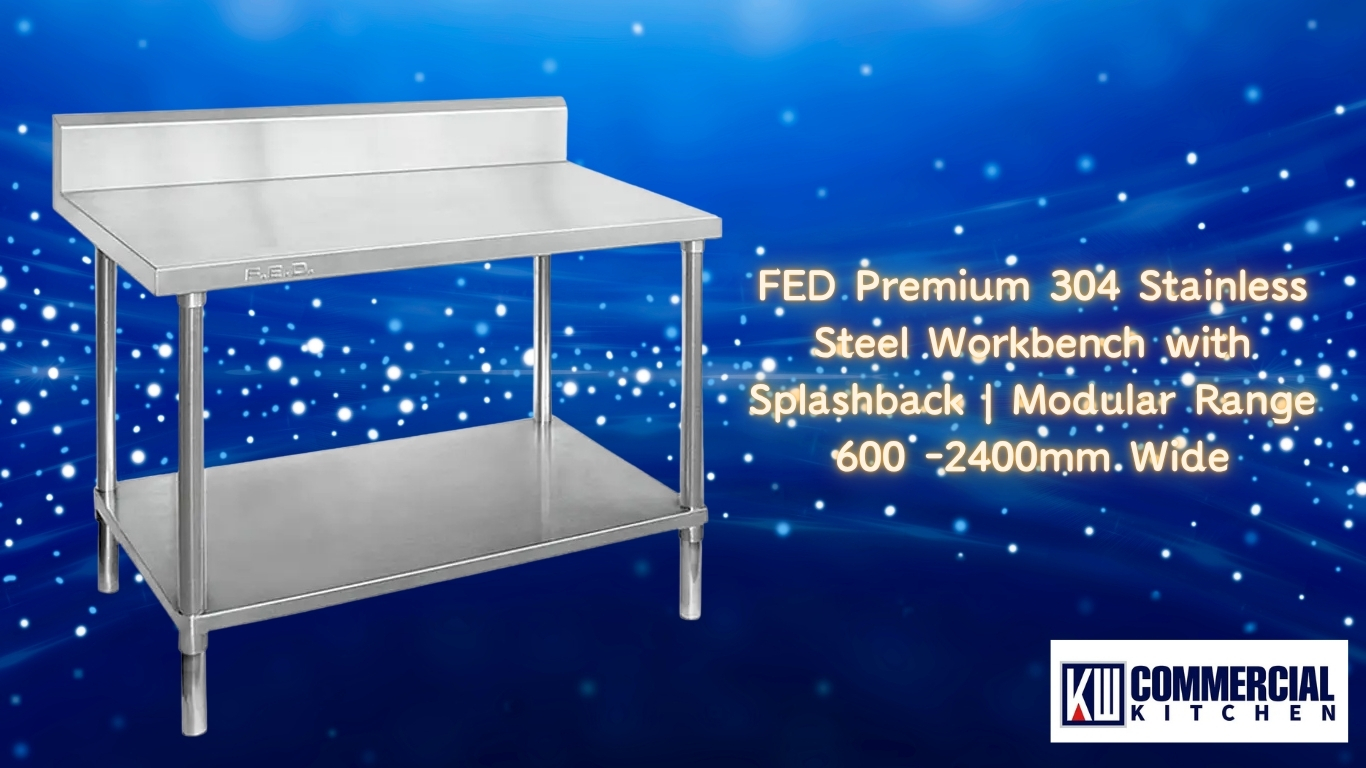
Standard Stainless Steel Benches
Standard stainless steel benches can be used for food preparation, plating and general kitchen tasks. Compare the bench dimensions with your equipment and the space staff need to work around it.
- Flexible use: A general work surface can support a range of kitchen tasks.
- Equipment fit: Check the bench height, depth and length alongside nearby equipment.
- Workspace: Choose a size that provides useful working room without obstructing movement.
A standard bench can be a straightforward choice when the kitchen layout and tasks do not call for a specialist shape or integrated storage.
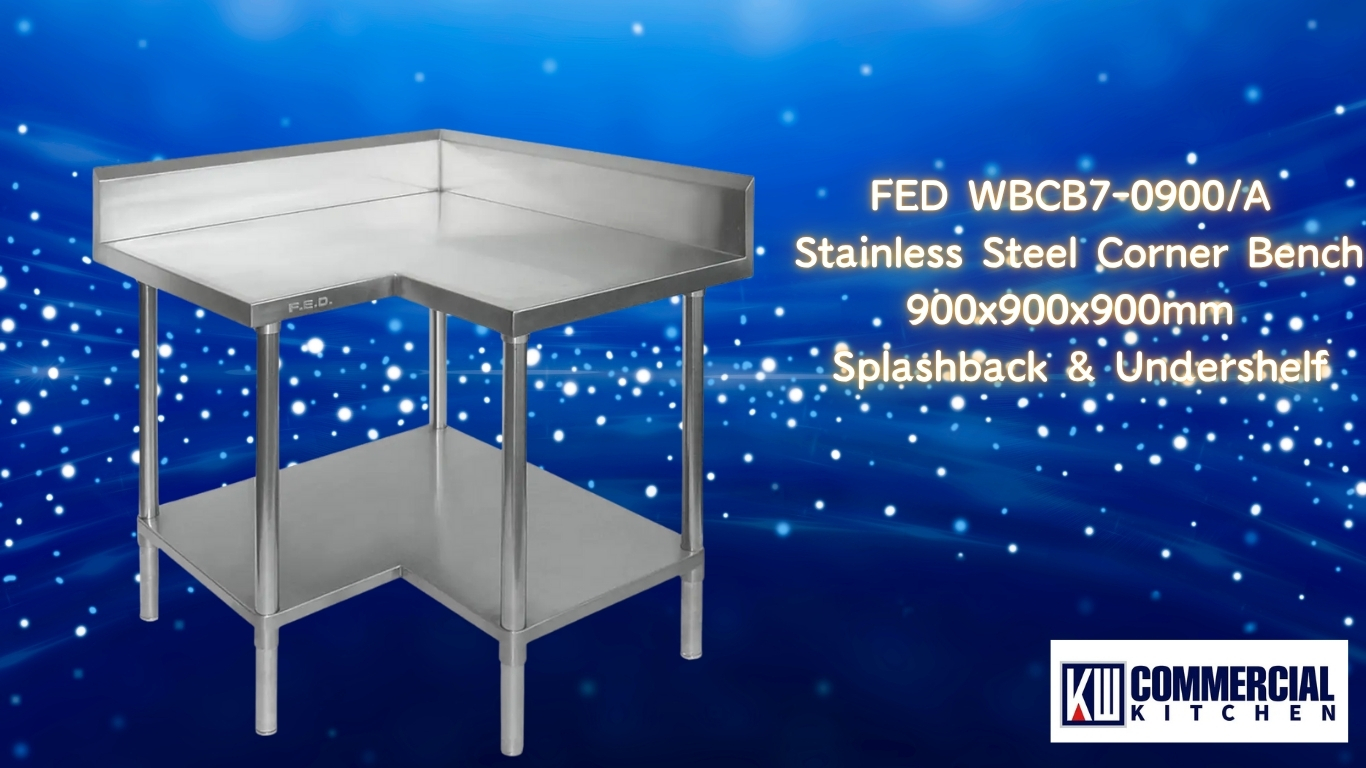
Stainless Steel Corner Benches – For Corner Spaces
Stainless steel corner benches can make use of a corner and connect adjacent work areas. Before choosing one, measure both sides of the space and check how staff will approach and clean the workstation.
- Use the corner: A corner format can provide work surface where a straight bench may not fit the layout.
- Plan the workflow: Position it in relation to the tasks and equipment at the adjoining stations.
- Check access: Make sure the design leaves sufficient room to work and clean around it.
For example, the linked Kitchen Knock corner bench has a stated length of 600 mm, width of 600 mm and height of 900 mm. Compare those dimensions with the available space before selecting a corner unit.
Infill Work Benches – For Gaps in a Kitchen Layout
Infill work benches are intended for spaces between other fixtures or equipment. Measure the gap and consider how the bench will be installed, used and cleaned.
- Use available space: An infill bench can turn a suitable gap into a usable work surface.
- Measure carefully: Allow for the dimensions of surrounding equipment and any access needed for installation.
- Keep cleaning in mind: Consider whether the finished arrangement leaves accessible surfaces and floor areas.
Quick tip: Map the kitchen layout and the movement between workstations before choosing a bench style.
Stainless Steel Workbenches—Finding the Perfect Fit
Bench depth affects how much work surface is available and how the bench fits into a kitchen. Compare the bench dimensions with the tasks, nearby equipment and space staff need to move safely.
600mm Deep Workbenches – For Narrower Spaces
600mm deep stainless steel workbenches may suit layouts where a narrower bench is needed. Consider whether the work surface is large enough for the intended preparation or plating tasks.
- Compact footprint: A narrower bench may suit a restricted layout.
- Task fit: Check that the available surface suits the equipment and items used at the station.
- Access: Allow room for staff to work and move around the bench.
Choose a narrower workbench when its dimensions support the task and fit the planned layout.
700mm Deep Workbenches – A Common Work Surface Size
700mm deep stainless steel workbenches provide a work surface for tasks such as preparation, mixing and plating. Check the overall dimensions and layout rather than relying on depth alone.
- Versatile workspace: Consider the surface area needed for the station’s regular tasks.
- Layout fit: Check how the bench relates to walls, equipment and traffic routes.
- Workstation access: Decide whether staff will work from one side or more than one side.
A 700mm depth may be suitable where the available space and planned tasks call for that work surface.
800mm Deep & Over Workbenches – For Larger Work Areas
For kitchens that need more surface area, 800mm deep and larger stainless steel workbenches may be worth considering. Measure the area first and check that the larger bench will not interfere with access or movement.
- More work surface: A deeper bench can provide space for larger tasks or several items.
- Storage below: Check whether the bench design includes an undershelf and whether it suits the items to be stored.
- Fit the space: Account for nearby equipment and working clearance as well as the bench itself.
Choose a deeper workbench only when the additional surface suits the work and the kitchen can accommodate it.
Work Cabinets & Dishwasher Inlet/Outlet Benches – Storage and Dishwashing
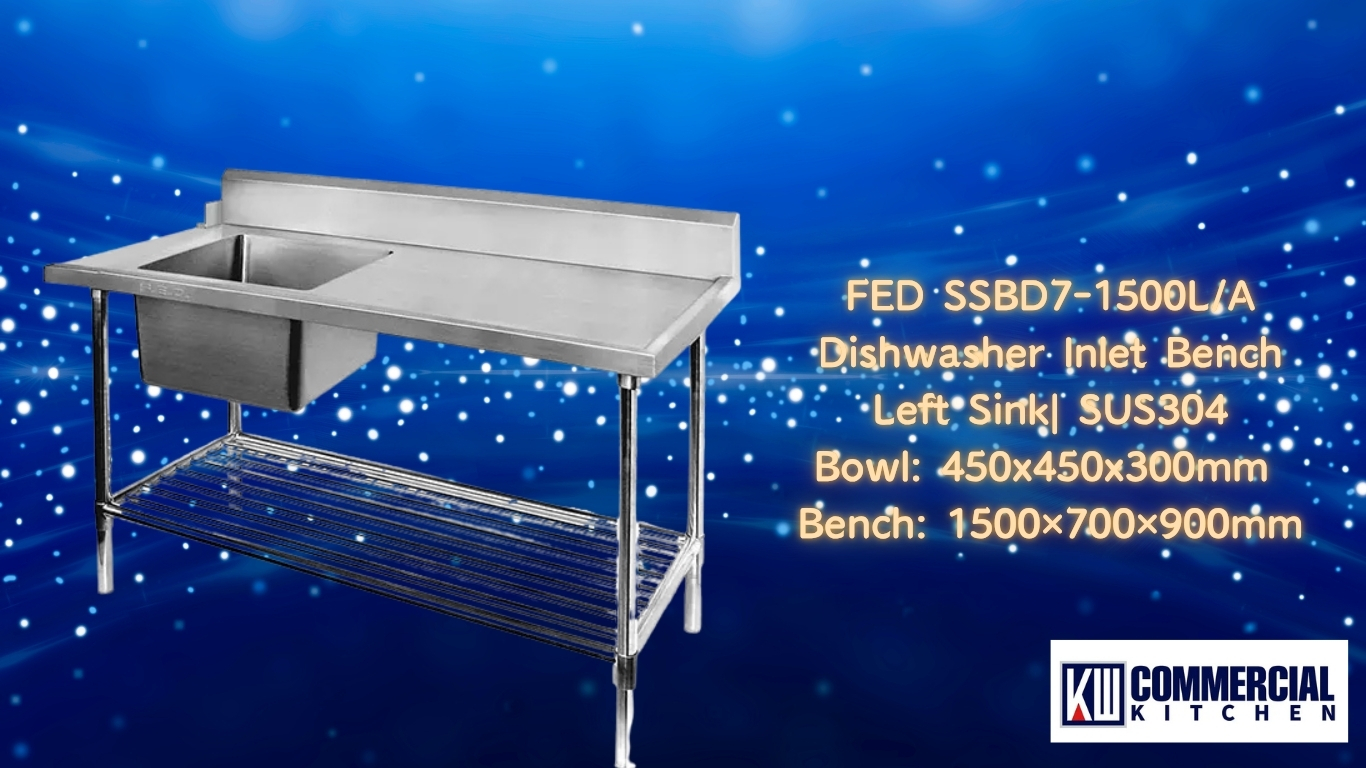
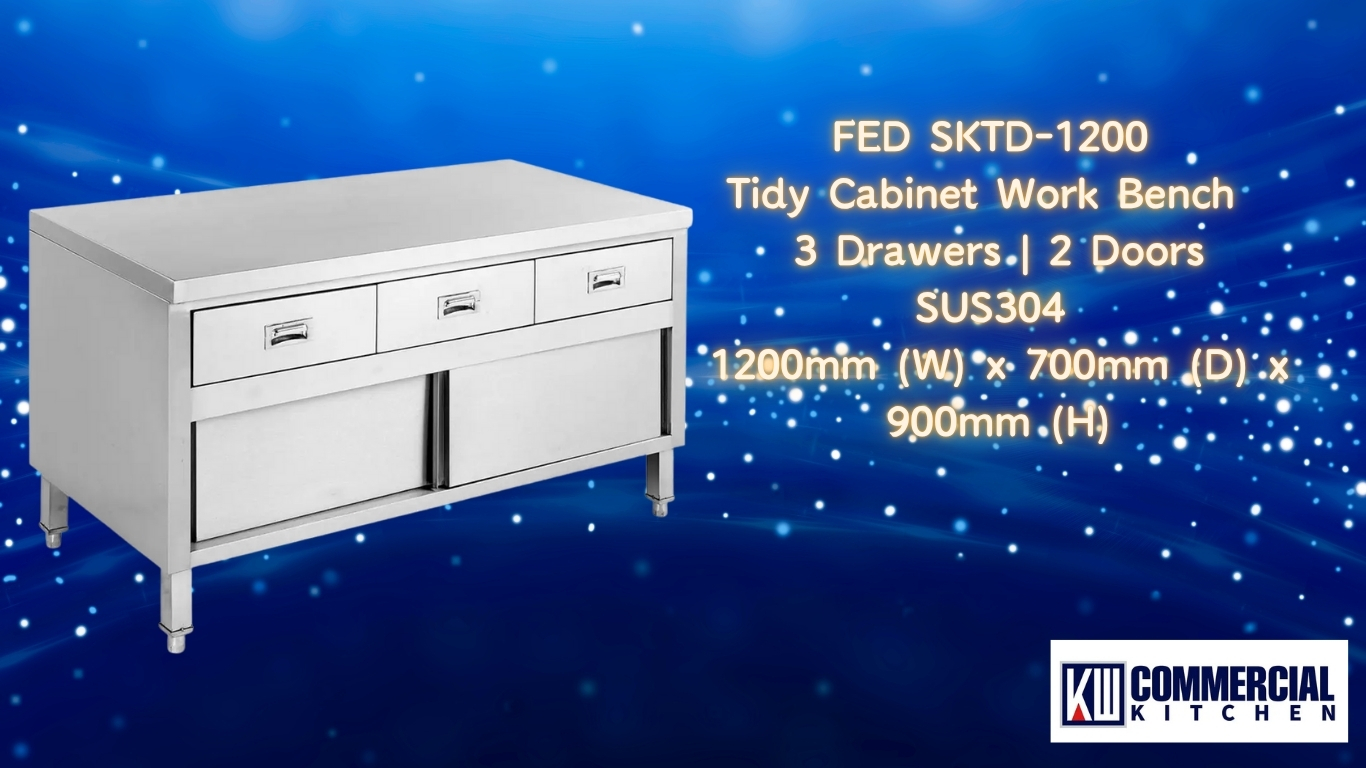
Stainless steel work cabinets and dishwasher inlet/outlet benches are designed for different workstation needs. Cabinets can provide enclosed storage, while dish tables support the flow of items around a dishwasher.
- Storage: Check cabinet and drawer arrangements against the supplies staff need to access.
- Dishwashing sequence: Plan where items will be loaded, washed and unloaded.
- Layout: Confirm that the selected configuration fits the dishwasher and surrounding work area.
The linked CDT-1200L System Clean Dish Table with Splashback has stated product dimensions of 1200 mm long, 700 mm wide and 900 mm high. Its work surface is 1.2 mm 304 stainless steel; its legs are 1.0 mm 201 stainless steel, with stainless-clad adjustable feet. Use the dimensions and component materials when checking fit and construction for your dishwashing area.
Quick tip: Match the bench style and size to the task, then check its stated dimensions and materials against the kitchen plan.
Key Factors to Consider Before Buying Stainless Steel Benches
Before choosing a stainless steel bench, consider the space, the intended use and the details of its construction. This makes it easier to compare products and avoid selecting a bench that does not suit the workstation.
Choosing the Right Size & Layout
Bench size and placement affect how staff use the kitchen. Measure the intended location and consider these layout questions:
- Compact kitchens: Consider a narrower or corner bench if it fits the work and leaves useful access.
- General preparation areas: Compare the available work surface with the tasks performed at the station.
- Larger work areas: Consider a deeper bench where extra surface is useful and the layout allows it.
Tip: Sketch the kitchen and note nearby equipment, doors and staff movement before selecting a bench.
Selecting the Stainless Steel Construction
Check the stated material for each component of a bench. A product may use different materials for the work surface, legs and feet, so look beyond a general description of the product as stainless steel. For example, the linked CDT-1200L lists a 1.2 mm 304 stainless steel work surface and 1.0 mm 201 stainless steel legs. Consider the full construction in light of the intended use and cleaning routine.
| What to compare | Why it matters | What to check |
|---|---|---|
| Work surface | This is the main area used for preparation and other tasks. | Material, dimensions and care guidance. |
| Legs and frame | Construction can differ from the bench top. | Stated material and the design of the support structure. |
| Feet and shelves | These components affect placement, storage and cleaning access. | Adjustment, configuration and cleaning access. |
Choose a bench whose stated materials and design suit your kitchen’s use and cleaning routine.
Evaluating Functionality and Features
Compare benches by how they are built and what the workstation needs. Check the product details rather than assuming that every component uses the same material.
- Support structure: Review the frame and leg design for the intended use.
- Shelves: Consider whether an undershelf or adjustable shelf suits the items staff need to store.
- Cabinets and drawers: Choose enclosed storage when it fits the workflow and cleaning plan.
Consider practical features before deciding:
- Bracing: Check the product design and whether it suits the planned workstation.
- Adjustable shelves: Consider whether the shelf arrangement works for your storage needs.
- Additional storage: Use storage to keep tools and supplies organised without crowding the work surface.
Compare the complete bench, including its configuration and materials, with the requirements of your kitchen.
Proper Care & Maintenance for Stainless Steel Benches
Regular cleaning helps keep a bench ready for use and makes it easier to maintain the surrounding workstation. Follow the care guidance for the specific product and your kitchen’s food safety procedures.
Recommended Cleaning Practices
Build bench cleaning into the kitchen’s routine. A practical approach includes:
- Clean after use: Remove food residue using products and methods suitable for the bench material.
- Clean the complete unit: Include the surface, splashback, undershelf, legs and feet.
- Dry when appropriate: Remove remaining moisture to help prevent marks and residue.
Tip: Avoid abrasive tools that may scratch the surface, and follow the bench’s care instructions.
Maintenance Mistakes to Avoid
Consistent care can help keep the bench in serviceable condition. Take care to avoid common problems:
- Leaving damage unattended: Inspect the surface and address damage in line with the product’s care guidance.
- Using unsuitable cleaners: Select cleaning products appropriate for the bench materials.
- Leaving spills: Clean spills promptly as part of normal kitchen practice.
- Missing less visible areas: Include undershelves, legs and the area around the feet in cleaning routines.
Remember: Cleaning the whole workstation regularly supports a tidy, usable kitchen.
Use care practices that suit the bench’s construction and the tasks performed in your kitchen.
Comparing Stainless Steel Benches
When comparing benches, look at the intended use, dimensions and stated construction. The linked products below have different purposes, so compare each with the requirements of your workstation.
| Product | Type | Dimensions or material stated | Consider it for |
|---|---|---|---|
| Kitchen Knock Corner Bench | Corner bench | 600 mm long × 600 mm wide × 900 mm high; stainless steel | A corner layout where those dimensions fit |
| Simply Stainless Workbench | Standard bench | Check product details for the model’s dimensions and construction | General work where the model’s details suit the task |
| FED Dishwasher Bench | Dish table | 1200 mm long × 700 mm wide × 900 mm high; 1.2 mm 304 stainless steel work surface and 1.0 mm 201 stainless steel legs | A dishwashing area where the dimensions and configuration fit |
Choosing for Your Kitchen
- Corner bench: Compare both sides of the corner with the available space and how staff will reach the workstation.
- Standard workbench: Match the model’s dimensions and construction to the tasks and equipment at the station.
- Dish table: Check its dimensions, work surface and leg materials against the planned dishwashing layout.
Make a shortlist based on the work, layout and cleaning needs of your operation. Confirm that the product configuration suits the surrounding equipment.
Tip: Compare stated dimensions and materials when choosing between different types of stainless steel benches.
Common FAQs from Australian Buyers
These answers cover common considerations when selecting a stainless steel bench for a commercial kitchen.
Can Stainless Steel Benches Rust or Corrode?
Bench construction and care affect how it performs in a kitchen environment. Check the materials stated for each component, follow the product’s care guidance and clean spills as part of routine maintenance.
How Should I Deal with Scratches on a Stainless Steel Workbench?
Follow the manufacturer’s care guidance for the particular finish and material. Avoid abrasive methods that could further mark the surface, and seek appropriate repair advice for damage that cannot be addressed through routine cleaning.
What Thickness Should I Choose for a Commercial Kitchen Bench?
Bench thickness varies by product and component. Compare the stated construction for the model you are considering and choose a design suited to the intended workstation.
Do I Need a Splashback for My Stainless Steel Bench?
A splashback may help protect the wall behind a bench or sink from splashes and make the workstation easier to clean. Consider the bench’s location, the tasks performed there and the cleaning access needed.
How Much Weight Can a Stainless Steel Bench Support?
Load capacity depends on the particular bench design. Check the product details for the model you are considering and make sure it suits the intended use.
Why Does My Stainless Steel Bench Have Watermarks?
Watermarks can be left by water drying on a surface. Follow suitable cleaning and drying practices for the bench materials to help keep the work area presentable.
Tip: Check the product’s construction and care instructions, and choose a bench that suits the space and work.
When comparing options, use the dimensions, materials and configuration stated for the particular bench.
Conclusion—Choose a Bench That Fits Your Kitchen
A well-chosen stainless steel bench can provide a practical work surface and help organise a commercial kitchen. Start with the task and layout, then compare the dimensions, materials and configuration of suitable products.
Whether you are fitting out a café, restaurant or catering kitchen, consider how staff will use the bench and how they will clean the complete workstation.
Use this recap to guide your selection:
- Standard benches provide a general work surface for a range of kitchen tasks.
- Corner benches can suit layouts that need to use a corner.
- Dishwasher inlet and outlet benches can support the flow of work around a dishwasher.
- Check bench dimensions and construction against your kitchen layout and intended use.
Compare the available stainless steel benches and workbenches with your space, tasks and cleaning needs before choosing a model.
Browse the range: Explore stainless steel benches and workbenches for your commercial kitchen.