Benchstar
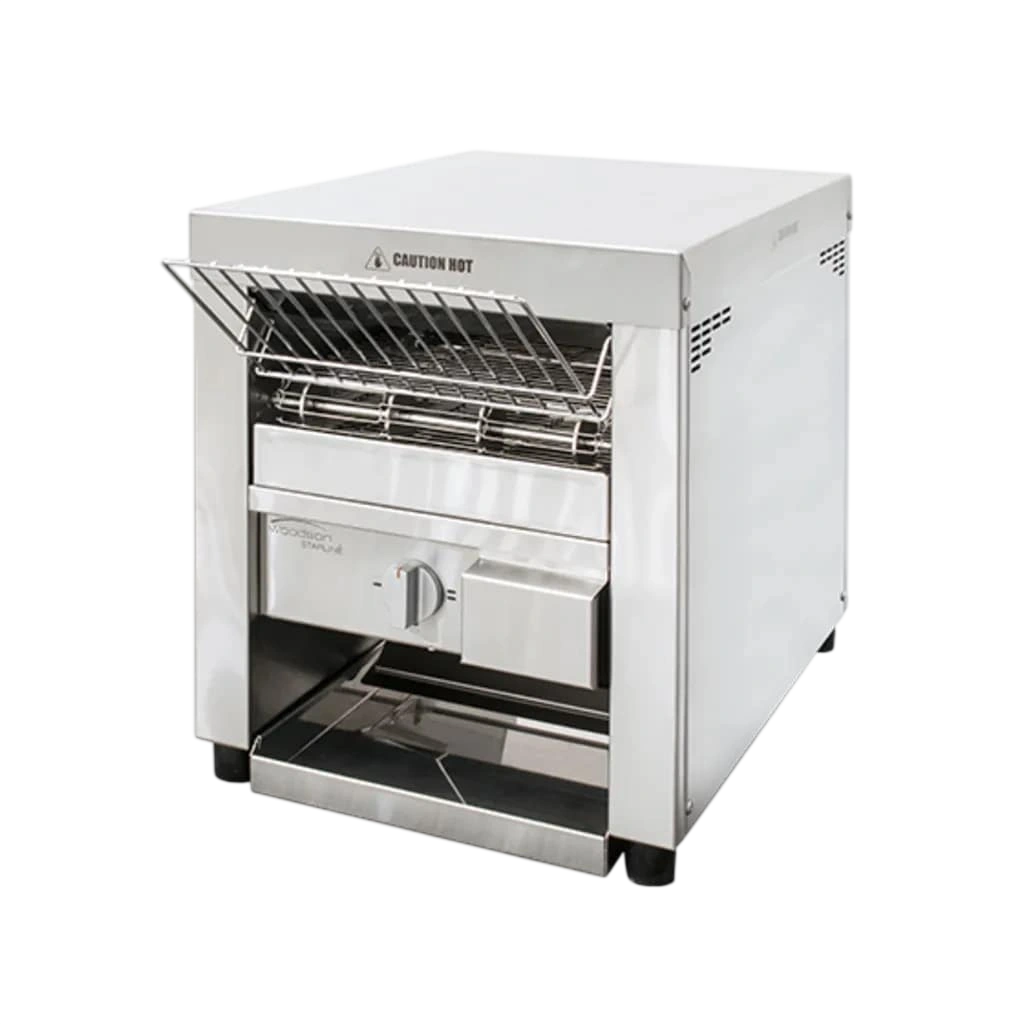
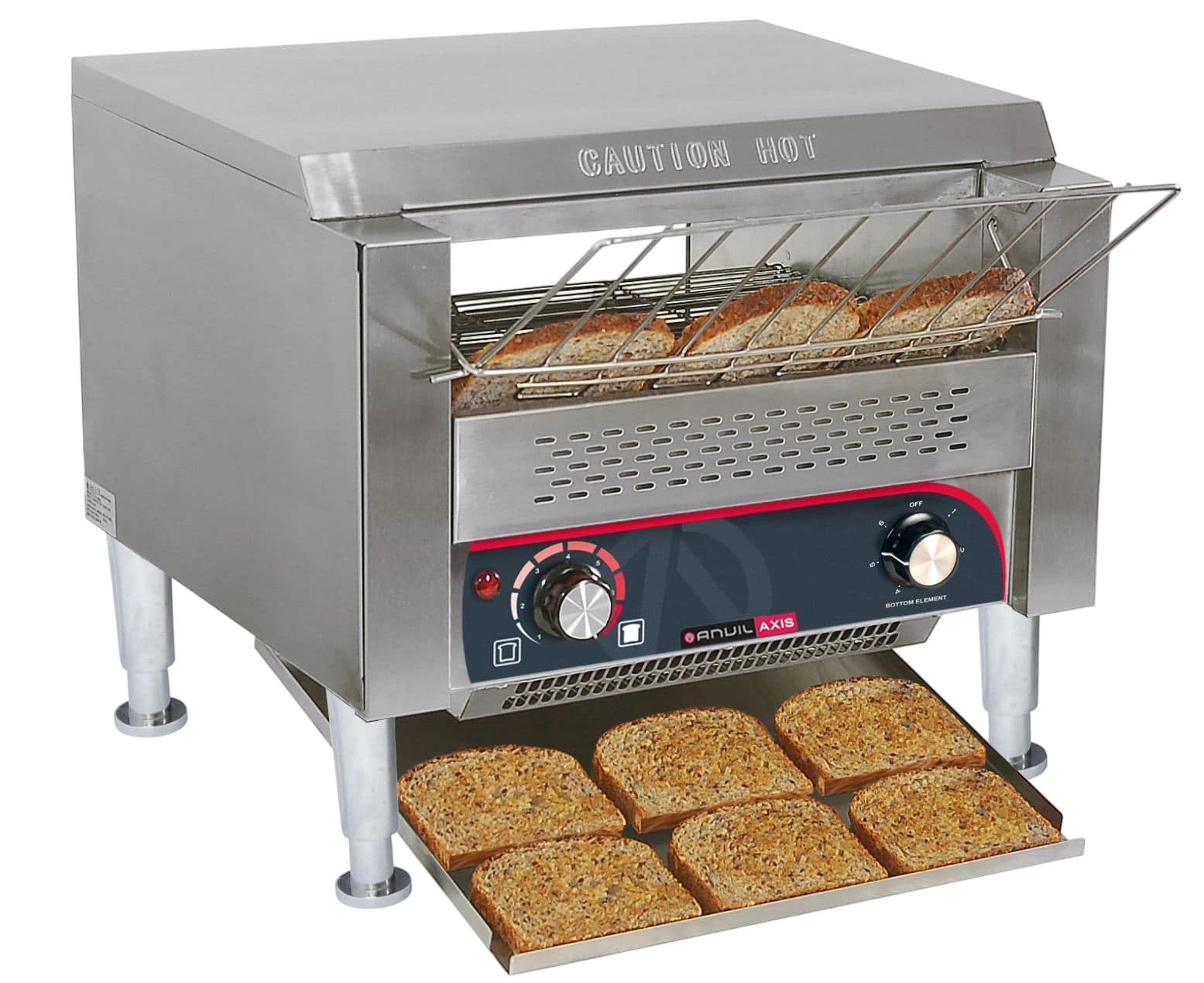
Benchstar TT-300E Conveyor Toaster – Two Slice, 2.4kW
370 × 420 × 390mm
$747.15$879.00
In Stock
Commercial Toasters & Benchtop Grills
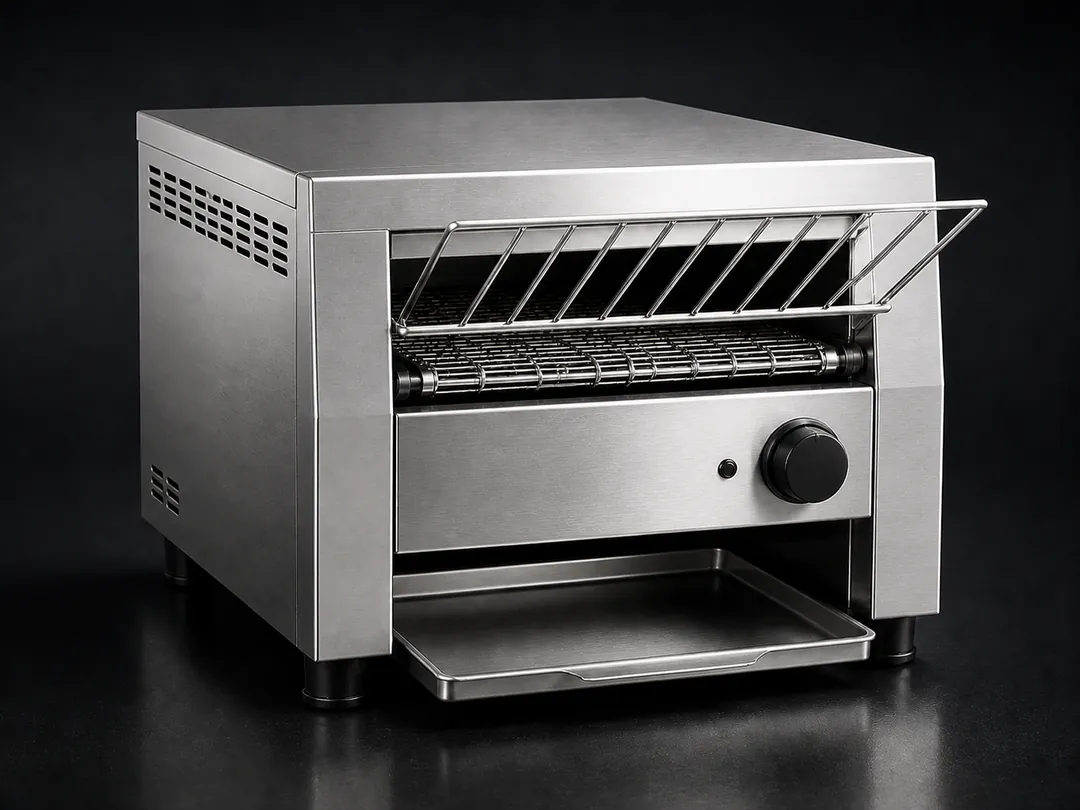
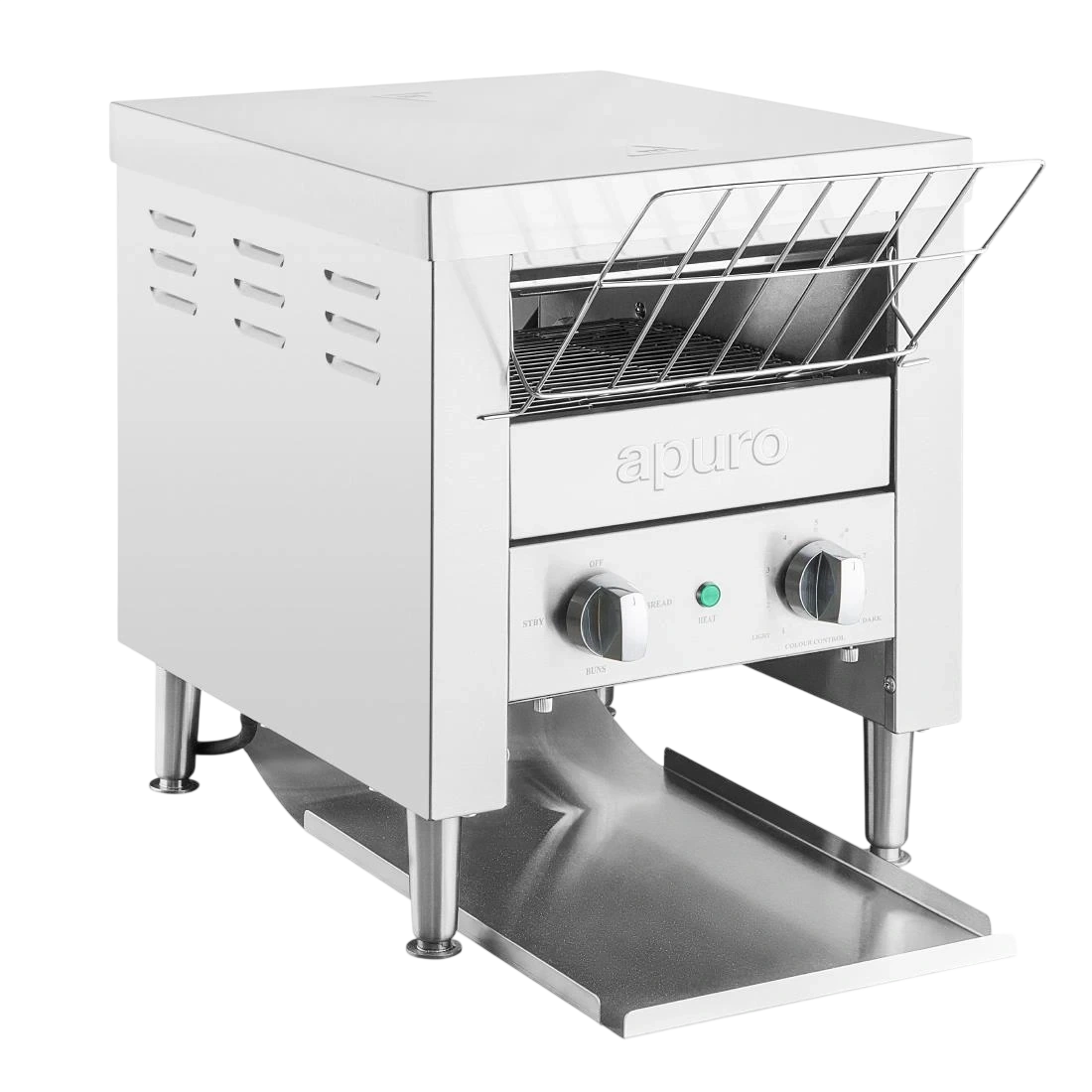
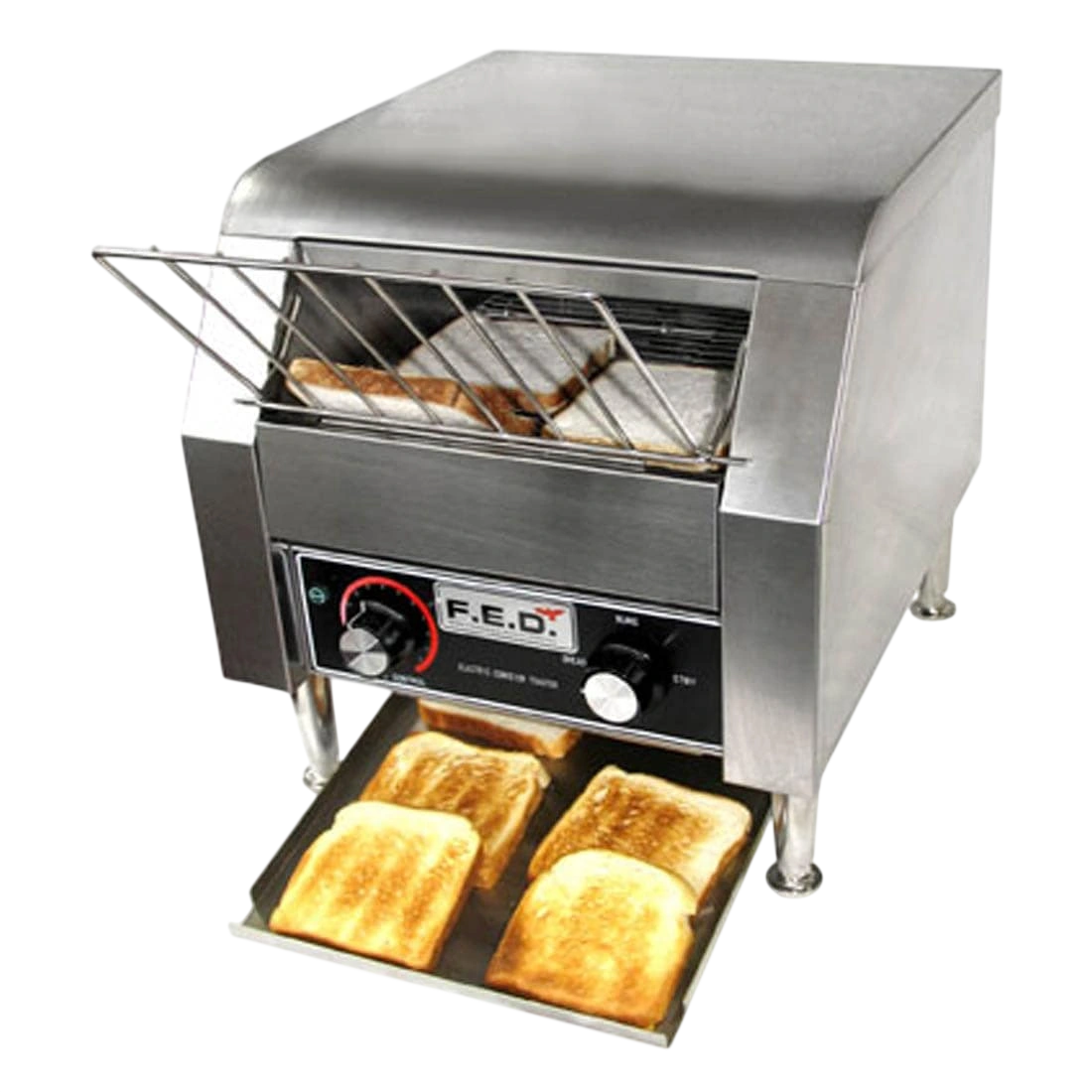
A conveyor toaster exists to produce toast continuously without an operator watching it. Bread goes in one end and comes out the other at a set colour, which is what separates it from a pop-up unit: throughput is steady rather than batched, and the result is consistent regardless of who is working.
Slices per hour is the specification that matters, and it should be compared at the bread actually used. Thicker slices and denser breads travel more slowly, so a rated figure taken on thin white bread overstates what a kitchen serving sourdough will see.
Belt width and opening height set what the machine accepts. Where bagels, thick-cut bread or split rolls are toasted, the opening rather than the throughput is the limit, and a commercial toaster that will not take the product is the wrong machine at any speed.
Heat around the machine is worth planning. A conveyor runs continuously through service and radiates into the space around it, so position it where that heat is tolerable and where the operator is not reaching across it.
Key factors to consider before purchasing. Our team can help you find the right fit — call or get a quote anytime.
Match capacity to your daily output. Consider the bench or floor space available and the access route for delivery.
Check the power supply and circuit capacity at the installed position before ordering.
Confirm electrical compliance, levelling and the clearance needed for cleaning and service access. We can help with kitchen planning.
Submit your kitchen requirements — our equipment specialists will send you a tailored shortlist of conveyor toasters that fits your budget, venue type and compliance needs.
Standards & Compliance
Before comparing commercial toasters, confirm the bread types and thicknesses used, the slices needed in the busiest half hour, and where the machine will stand. Check the opening height against the thickest product rather than a standard slice.
Look at how crumb is collected and emptied, how the belt is cleaned, and whether elements can be replaced individually. A conveyor runs for the whole service, so crumb handling and element access decide the daily work it creates.
FAQ
Faster speeds reduce exposure time to radiant heat, resulting in lighter toast.
High humidity, cold bread and continuous loading slow browning and reduce real throughput.
Yes—rear ejection keeps hot surfaces away from guests and improves flow.
Brioche browns quickly, sourdough and rye require more belt time due to density.
Keep crumb trays, belts and chambers free from burnt sugar and carbonised debris.
Why KW
KW can help match conveyor throughput and opening height to the bread a venue actually toasts and the volume in its busiest period. For practical advice on commercial conveyor toasters, call KW on 1300 001 366.
Deep Dive
Technical depth from KW's commercial kitchen specialists.
| Factor | Impact on Real Output | Reason |
|---|---|---|
| Belt Speed | ↑ Speed = ↓ Colour | Less time under radiant heat |
| Bread Temperature | Cold bread slows throughput by 15–30% | Delayed moisture evaporation |
| Bread Type | Dense loaves reduce belt efficiency | Sourdough & rye absorb heat differently |
| Humidity | Delays browning | High moisture slows Maillard reaction |
| Heat Recovery | Affects peak service consistency | Dependent on heater response |
Slices per hour is quoted on a convenient bread. Thicker slices and denser loaves travel more slowly, so recalculate against what the kitchen serves before comparing machines, or the busiest period will fall short of the figure.
Where bagels, thick-cut bread or split rolls are toasted, the opening height decides whether the machine is usable at all. A conveyor that cannot accept the product is the wrong machine regardless of its throughput rating.
A conveyor runs through the whole service rather than in bursts, and radiates into the space around it. Position it where that heat is tolerable and where staff are not reaching across the belt to work.
For continuous service, yes: output is steady, consistent and does not need an operator watching it. For occasional toast a pop-up costs less and takes less space, and runs only when needed.
On the bread you actually serve. Rated figures are taken on thin standard slices; thicker or denser bread travels more slowly, so a rating measured elsewhere overstates what a kitchen will see.
Only if the opening height allows. Where bagels, thick-cut bread or split rolls are on the menu, check the opening before the throughput, because that is the limit that decides usability.
Daily, because crumb accumulates through continuous running. Check how crumb is collected and emptied and how the belt is accessed, since that is the work the machine creates every service.
Crumb accumulates continuously. Check how it is collected and emptied, how the belt is cleaned, and whether elements can be replaced individually rather than as an assembly, since those decide the daily work and the repair cost.
8 results
370 × 420 × 390mm
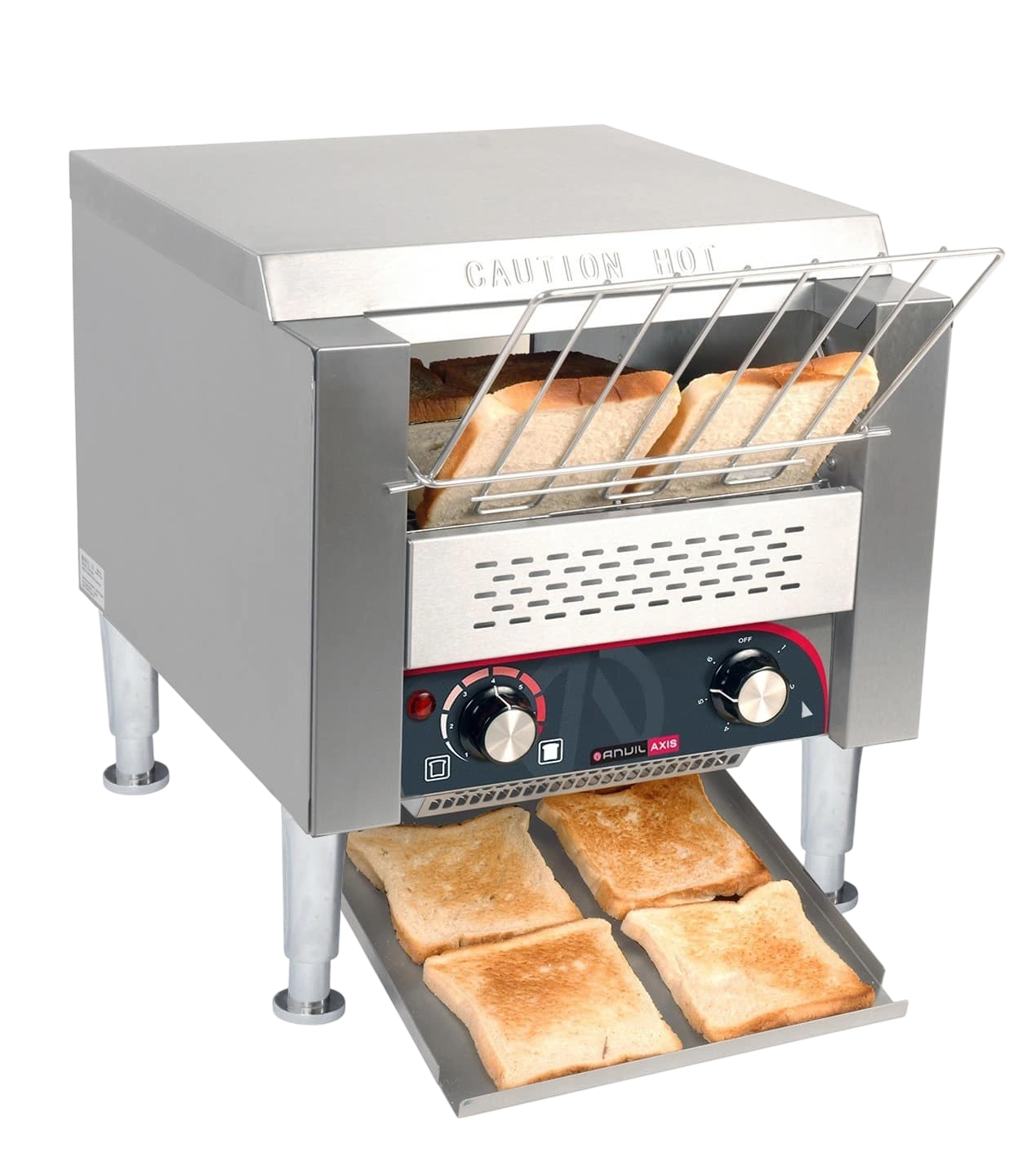
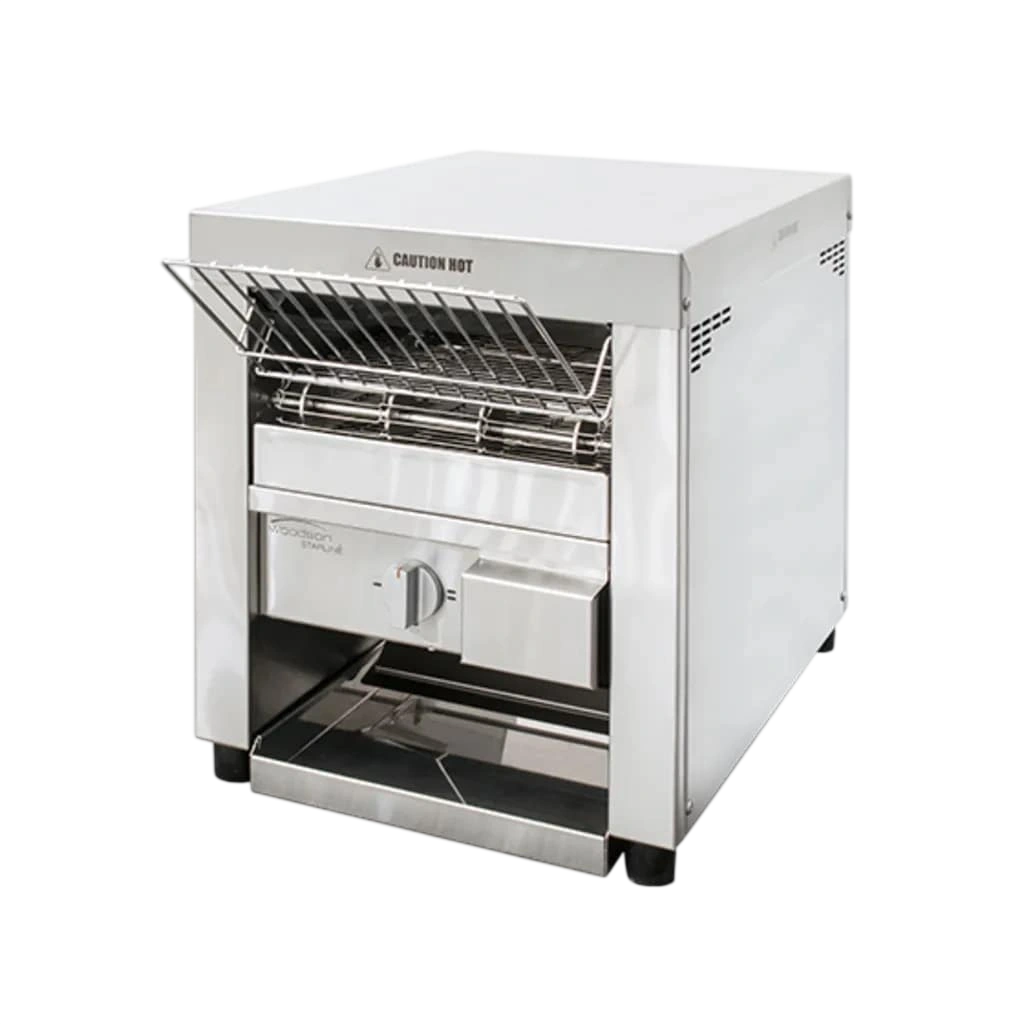
378 × 502 × 446mm
378 × 502 × 446mm
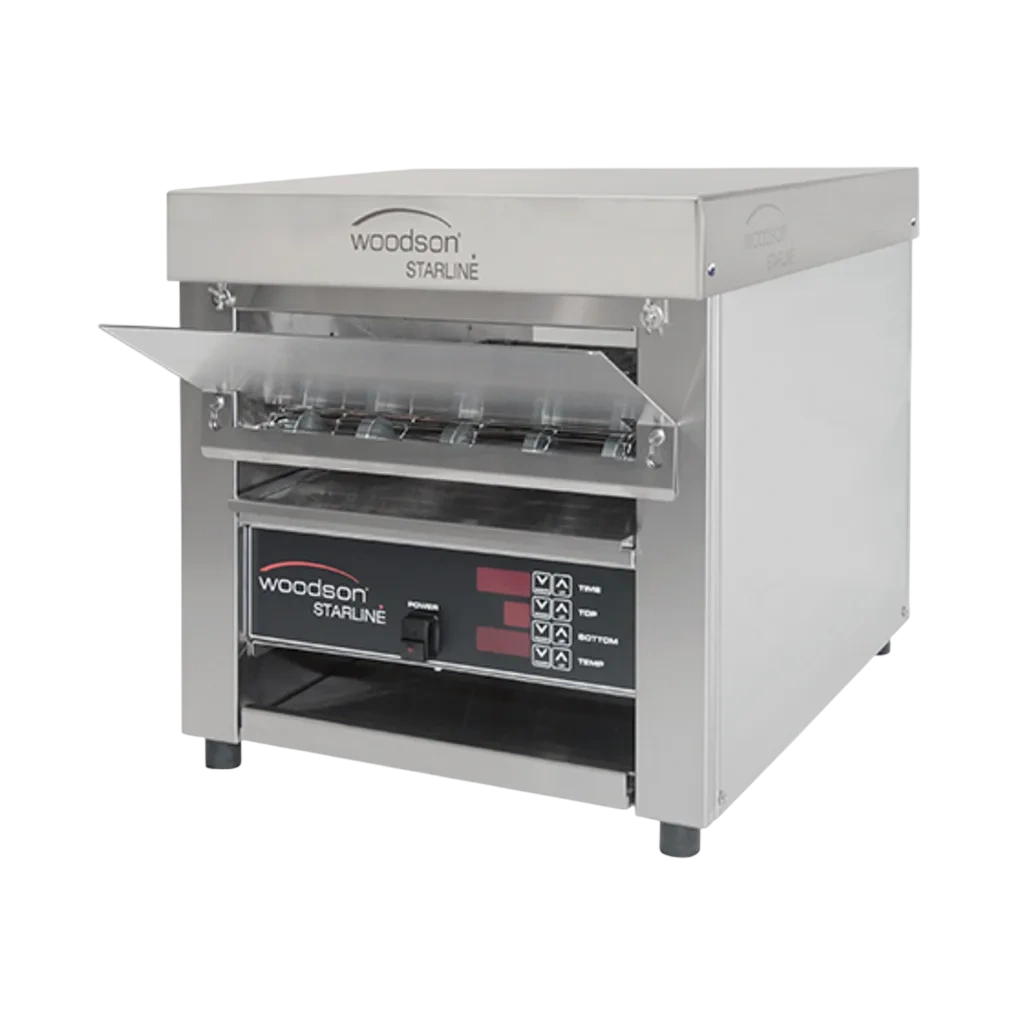
510 × 570 × 485mm
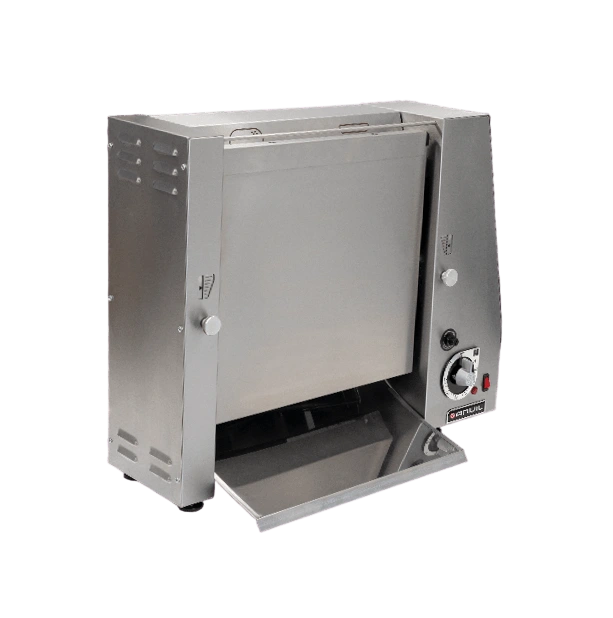
474 × 769 × 428mm