
Why Is My Electricity Bill Higher Than Last Year? The Hidden Profit Drain in Your Commercial Fridge
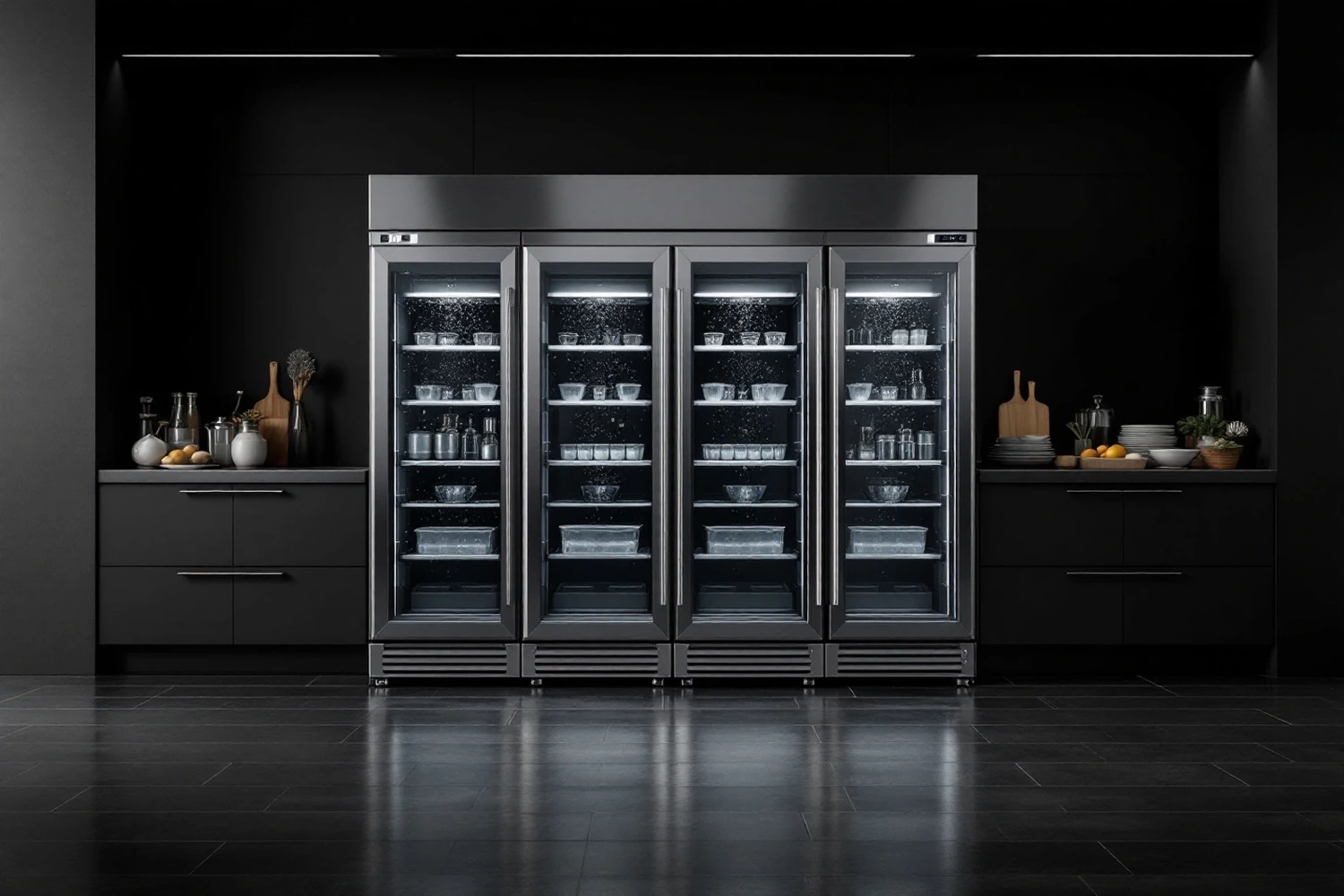
A café owner pulls last winter’s electricity bill and lays it next to the current one. Same premises, same equipment, same menu, the same two people on the roster. Last year the quarter came to around $1,800. This one reads closer to $2,600. Nothing in the business has changed, and yet the bill has climbed by almost half.
The comfortable explanation is that electricity simply costs more now. For many businesses, the figures say otherwise. Under the Australian Energy Regulator’s Default Market Offer determination for 2026–27, the regulated reference price that sits behind standing offers in New South Wales, South East Queensland and South Australia, small business prices fell across all three regions from 1 July 2026. If your rate per kilowatt-hour has held steady or dropped while the bill keeps rising, the extra money is not coming from the grid. It is coming from something inside the building that draws more power than it did a year ago.
In a commercial kitchen, that something is almost always the refrigeration. Every other major appliance earns its keep in bursts. The oven fires for service and cools overnight. The dishwasher runs in cycles. The fridge and the cool room never stop. They hold temperature through the night, through the weekend, through the quiet weeks in winter when the till barely moves. A cabinet that has quietly lost efficiency does not announce itself with a breakdown. It works a little harder every day, and bills you for the difference.
This is a guide to finding that difference. Most of the checks cost nothing and take a torch and ten minutes. A few are worth handing to a licensed technician. All of them are aimed at one question: how much is your refrigeration costing you that it should not, and what can you do about it tonight.
The compressor that never rests
At the heart of every fridge is a compressor, and a healthy one spends a good part of its day switched off. It runs to pull the temperature down, reaches the set point, and rests. On a cabinet in good order you might see it run for ten to fifteen minutes and then sit idle for a similar stretch before the next cycle. The rhythm is unhurried.
A cabinet in trouble loses that rhythm. The compressor runs longer and rests less, until it is cycling almost without pause, labouring to hold a temperature it used to reach easily. The causes vary, and the sections below cover them, but the symptom is the same: a motor that never gets to stop. This matters for the bill because the compressor is where the energy goes. In a refrigeration system it accounts for the large majority of the power drawn, so the share of each hour it spends running maps almost directly onto what you pay.
You can read the rhythm yourself without any tools. Stand by the cabinet during a quiet part of the day and listen. A unit that is forever running, that surges back to life within seconds of switching off, or that hums with a strained, higher note than you remember, is telling you something. So is the cabinet that struggles to recover temperature after the door has been open through a busy service, or the one whose display drifts a degree or two above its set point and stays there. If a cabinet drifts during service and recovers once the kitchen cools, the room may be the cause rather than the unit, which our guide to why fridges fail in hot kitchens walks through.
To turn that impression into a number, fit an inexpensive plug-in energy meter between the cabinet and the wall and leave it for a week. It logs the kilowatt-hours the fridge actually uses, which is the figure every later calculation depends on, and it shows you in plain terms whether the unit is drawing steadily or climbing.
A compressor that never rests is not only expensive. It wears out faster, because it is doing several years of running in one. And it lets the interior temperature drift and swing, which is where food safety enters the picture. Australia’s Food Standards Code requires potentially hazardous food to be held at 5°C or colder, and a cabinet that can no longer hold that line will not only spoil stock, it will put your temperature logs, and any inspection that reads them, on the wrong side of the rule.
Dust on the condenser coils: the silent cost you can fix tonight
If you check one thing after reading this, make it the condenser coils. They are the most common reason a commercial fridge starts drinking power, and they are the easiest to put right.
The condenser is the part of the system that throws heat away. Refrigerant arrives hot, passes through a coil of fine metal fins, and sheds its heat into the surrounding air so it can turn back into a liquid and cool again. The exchange depends on air moving freely across clean metal. Coat those fins in dust, grease and lint and two things happen at once: the dirt acts as a blanket that slows the heat transfer, and it chokes the gaps the air needs to pass through. The refrigerant cannot shed its heat, pressure in the system climbs, and the compressor has to work harder and longer for the same cooling. Every degree the condensing temperature rises costs efficiency; as a rule of thumb the trade reckons two to four per cent for each degree.
The figures from controlled testing are blunt. United States Environmental Protection Agency testing found that a layer of dirt barely a millimetre thick can cut efficiency by around a fifth and lift refrigeration energy use by as much as 35 per cent. The US Department of Energy puts the increase in compressor energy from a dirty condenser at up to 30 per cent. A field study by the Food Service Technology Center, which monitored real units in working restaurants before and after cleaning, recorded annual savings of $300 to $600 per cabinet; one six-year-old two-door glass merchandiser used nearly half as much energy once its coils were clean.
| Source | What the testing found |
|---|---|
| US Environmental Protection Agency | A dust layer about a millimetre thick cut efficiency by roughly 21% and raised refrigeration energy use by up to 35% |
| US Department of Energy | A dirty condenser coil can increase compressor energy use by up to 30% |
| US Federal Energy Management Program | Letting condensing temperature rise from 35°C to 41°C cut capacity 7% and lifted power draw 10%, a 16% net efficiency loss |
| Food Service Technology Center (field study, working restaurants) | Savings of $300–$600 per cabinet a year; one six-year-old two-door merchandiser dropped around 47% after cleaning |
Here is the part worth acting on tonight. The condenser on most commercial cabinets sits at the back or, more often, behind a vented grille at the base. Take a torch and look. In a kitchen the fins are rarely clean, because the air carries flour, oil mist and sugar that settle and bake onto the metal far faster than household dust ever would. A bakery or a busy café can clog a condenser in months. If you see a grey felt of dust across the fins, you have found money.
The remedy is a soft brush and a vacuum. Switch the cabinet off at the wall first. Brush along the direction of the fins rather than across them, since the fins bend easily, and draw the loosened dust away with the vacuum. Hard, greasy buildup, or coils mounted somewhere awkward, are better left to a technician who can clean them properly without damage. Most operators who do this for the first time see a steadier cabinet within days and a lower line on the next bill. It is the rare maintenance job that pays for itself almost immediately. Where the cabinet sits and how much room it has to breathe matters just as much, covered in our ventilation and clearances checklist.
The “just one more tray” problem
The second common drain is one operators create themselves, usually with the best intentions, on a busy day when stock has to go somewhere. A cabinet is rated to hold a certain volume because that is the load its airflow was designed around. Cold air has to circulate around and between what is inside to keep the whole space at temperature. Pack the shelves solid, block the vents at the back, push trays against the air outlet, and that circulation stalls. Pockets of warm air form, the cabinet reads them, and the compressor runs longer trying to drag the average back down.
This is not a matter of opinion. Food Standards Australia New Zealand makes the point directly in its guidance for food businesses: a refrigerator does not work properly when it is overloaded or packed tightly, because the cold air cannot circulate. The cost lands in three places at once. The unit uses more power, for the reasons above. Recovery slows, so after a rush the cabinet takes longer to come back to temperature, which drags on service. And the warm pockets are exactly where stock sits above 5°C, which shortens shelf life and, in a kitchen running on tight margins, becomes a bin full of milk, cream or cut fruit at the end of the week.
The fix is mostly discipline: respect the load line, keep the rear vents clear, and resist the urge to treat a full cabinet as a challenge to be beaten. If you are genuinely short of cold storage during peaks, that is a capacity question worth planning for, not one to solve by overstuffing the unit you have and paying for it twice, in power and in waste.
Is your cabinet running on last decade’s technology?
Two cabinets of the same size, holding the same food, can differ sharply in what they cost to run, and the difference often comes down to age and to what is circulating inside them.
The refrigerant matters. Older commercial units, broadly those from the late 2000s and early 2010s, were commonly built around R404A, a refrigerant with a very high global warming potential that is now being phased down and grows more expensive to top up as supply tightens. A middle generation ran on R134a. Current cabinets increasingly use R290, a hydrocarbon refrigerant with a tiny fraction of the environmental impact and, in a well-designed system, better efficiency. R290 is now common enough that regulators address it directly; in Queensland, for instance, hydrocarbon refrigeration carries its own safety-approval requirement.
Age compounds the refrigerant story. Seals harden, insulation degrades, fans and controls lose their edge, and a unit that left the factory efficient slips year by year. Manufacturers have also simply built better cabinets over the past decade. To take one documented example, SKOPE reports that its ActiveCore merchandiser draws around 35 per cent less energy than the model it replaced. That is a single manufacturer’s figure for a specific comparison rather than a universal saving, which is the honest way to read all such claims, but the direction holds across the market.
You do not have to take any of this on faith, because in Australia the numbers are published. That is the subject of the next two sections.
Is my cabinet normal? Look up the real number
Every commercial refrigerated cabinet sold in Australia has to meet a minimum efficiency standard and be registered to do so. The standard lives in the Greenhouse and Energy Minimum Standards (Refrigerated Cabinets) Determination 2024, the federal instrument (reference F2024L01263) that came into force on 5 October 2024 and sets the rules for refrigerated display and storage cabinets, drinks cabinets and ice-cream freezers. Compliance is measured through an Energy Efficiency Index, and, more usefully for an operator, every registered model carries a tested figure for its total energy consumption, expressed as kilowatt-hours per 24 hours.
That figure is the key, and you can look it up. The federal government’s Energy Rating registration database, run by the Equipment Energy Efficiency program, lets you search by brand and model and read the tested daily energy use of current cabinets. Find a unit of the same size and class as yours and you have a fair benchmark for what an efficient cabinet draws. Set that beside the figure your plug-in meter recorded over its week on your own fridge, and the gap between them is the inefficiency you are paying for.
One caveat makes the comparison sharper rather than weaker. Cabinets are tested in a climate-controlled room, and the temperature of that room is set by the cabinet’s climate class. A unit’s rated energy use assumes the conditions it was tested in; run it somewhere hotter and it works harder and uses more than its label suggests. Which climate class a cabinet needs for the room it actually stands in is the subject of our guide to climate class 3, 4 and 5.
| Climate class | Test room conditions | Where it fits |
|---|---|---|
| Class 3 | 25°C, 60% humidity | An air-conditioned room held at a steady temperature |
| Class 4 | 30°C, 55% humidity | A typical café or shop floor on a warm day |
| Class 5 | 40°C, 40% humidity | A hot kitchen line, or a poorly ventilated or west-facing space in summer |
The practical lesson is to match the cabinet to where it actually stands. Glass-door display fridges lose more heat through the glass, but door type does not cap the climate class — they can be rated to Class 4 or 5. What matters is the single class printed on each unit’s label: a Class 3 cabinet is only tested for a 25°C room, so a Class 3 merchandiser pushed up against a sunny shopfront in a Sydney February is operating well outside the conditions on its label. If your kitchen routinely sits at 32°C and your cabinet was tested at Class 3, the gap on your meter is not so much a fault as physics. The deeper background on climate classes and the running-cost method sits in our guide to GEMS, the Energy Efficiency Index and refrigeration running costs.
How much is your cabinet actually costing you?
Once you have a kilowatt-hour figure, whether read off your meter or taken from the register, the cost is simple arithmetic, and it is worth doing because the annual number tends to be larger than people expect. The method is the one the energy regulator and the manufacturers both use:
Daily energy use (kWh) × 365 × your electricity rate ($ per kWh) = annual running cost
Your rate is on your electricity bill, in the usage charges, measured in cents per kilowatt-hour. Use your own, because commercial rates vary by network, meter and contract, and larger sites also pay demand charges that a flat cents-per-kilowatt-hour sum does not capture. For a worked example, take a working rate of 30 cents.
Say the plug-in meter on your two-door upright logged 9 kilowatt-hours over 24 hours. Nine times 365 is 3,285 kilowatt-hours a year; at 30 cents that cabinet costs about $985 a year to run. Now look up a current cabinet of the same size and class on the register and suppose its rated figure is 5 kilowatt-hours per 24 hours. The same sum gives roughly $548 a year. The difference, around $440, is what the older or struggling unit takes from you every year before you count a cent of spoiled stock. Run three or four cabinets like it across a site and the leak is well into four figures.
This is also why a coil clean or a seal replacement repays itself so quickly. Shaving even two kilowatt-hours a day off that same cabinet is about $220 a year back in your pocket, against a maintenance job that costs a fraction of it.
How we arrived at these figures
Every number in this guide is either something you can measure on your own equipment or something drawn from a published source, and the sources are worth knowing.
- Electricity prices and the direction of bills come from the Australian Energy Regulator’s Default Market Offer determination for 2026–27 and the federal government’s guidance on electricity pricing and tariffs. The worked rate of 30 cents is illustrative; your bill carries your real figure.
- Efficiency standards, tested energy figures and climate classes come from the GEMS (Refrigerated Cabinets) Determination 2024 and the federal Energy Rating program and registration database.
- The cost of dirty condenser coils is drawn from testing by the United States Environmental Protection Agency and Department of Energy, the Federal Energy Management Program, and a before-and-after field study of working restaurants by the Food Service Technology Center (RFMA 2015).
- Food safety temperatures follow Australia’s Food Standards Code as published by Food Standards Australia New Zealand.
Where we describe the patterns behind a struggling cabinet, those reflect what refrigeration technicians and maintenance contractors commonly report rather than a formal survey, and we have said so. The aim throughout is a figure you can stand behind when it lands on your own bill.
Repair or replace, and what to do next
A high bill does not automatically mean a new cabinet. The sensible order is to fix what is cheap to fix, measure again, and only then weigh replacement.
Start tonight with the checks that cost nothing. Clean the condenser coils. Inspect the door seals, since a perished or loose gasket lets warm air in continuously and a seal is inexpensive to replace. Ease the load so air can move. Then refit the plug-in meter for another week and see where the number lands. A surprising share of “failing” cabinets are simply neglected ones, and come back to near their rated efficiency once the basics are addressed.
If the meter is still high after that, bring in a licensed refrigeration technician. Some causes, low refrigerant from a slow leak, a fouled evaporator, a controller drifted out of calibration, a compressor past its prime, need proper diagnosis and are not safe or legal to chase yourself. The technician’s report tells you whether you are looking at a repair or a unit at the end of its life.
When replacement is the answer, judge it on total cost of ownership rather than the sticker price. A cabinet that costs a little more but draws several kilowatt-hours a day less can repay the difference over its life, and the figures to compare are the tested ones on the register. Look for a current unit with a strong Energy Efficiency Index, a climate class suited to where it will actually stand, and a modern refrigerant such as R290. Financing arrangements such as SilverChef can spread the cost so that the saving on power and maintenance does much of the work of covering the repayments, which turns an upgrade from a capital decision into a cash-flow one. It is also worth checking which energy-efficiency incentives currently apply in your state, since these change and vary by jurisdiction.
Choosing the right cabinet, for the right spot, at the right efficiency, is the part we are built to help with. You can shop the range of commercial refrigeration, with Australia-wide delivery, or talk to us about matching a unit to your site and your food before you spend.
The café owner from the opening, faced with that $2,600 bill, found a grey felt of dust across the condenser, a door seal gone hard at one corner, and a cabinet packed to the vents. None of it had failed. All of it was quietly costing money. A torch, an hour and a service call brought the next bill back down. A fridge that never sleeps will keep billing you until you look, and looking is free.
Common questions
Why is my commercial fridge running all the time?
Constant running usually means the cabinet is struggling to reach or hold its set temperature. The most common causes are dirty condenser coils, worn door seals, an overloaded interior blocking airflow, or a high ambient temperature around the unit. Begin with the coils and seals, since both are cheap to address, then have a technician check the refrigerant and compressor if the problem persists.
Does cleaning the condenser coils really cut electricity use, and by how much?
Yes, and the effect can be large. United States Environmental Protection Agency testing found dirty coils can raise refrigeration energy use by as much as 35 per cent, and a field study of working restaurants by the Food Service Technology Center measured savings of $300 to $600 per cabinet a year after cleaning. One six-year-old two-door merchandiser in that study nearly halved its energy use once its coils were clean.
How often should I clean the condenser coils in a busy kitchen?
Roughly every one to three months in a commercial kitchen, and more often in a bakery or a high-volume café. Kitchen air carries flour, grease and sugar that build up on the fins far faster than ordinary dust, so the gap between cleans should be shorter than the annual inspection often quoted for lighter environments. A quick torch check each month tells you when it is due.
How do I know if my fridge’s compressor is failing?
Warning signs include a compressor that runs almost without pause, restarts within seconds of switching off, runs noticeably hotter or louder than it used to, or a cabinet that can no longer hold its set temperature. Fitting a plug-in energy meter for a week shows whether power draw is climbing. A licensed technician can confirm whether the compressor itself is the cause or whether refrigerant or controls are at fault.
Does overloading a fridge increase power use?
Yes. Food Standards Australia New Zealand notes that a refrigerator cannot work properly when it is overloaded or packed tightly, because cold air can no longer circulate. The compressor then runs longer to overcome the warm pockets that form, which raises energy use, slows recovery after busy periods, and leaves stock sitting above safe temperature.
What temperature should a commercial fridge run at?
Australia’s Food Standards Code requires potentially hazardous food to be held at 5°C or colder. A well-functioning commercial fridge holds that reliably without the compressor labouring. If it drifts above 5°C, or can only stay there by running constantly, something is wrong, and both your bill and your food safety records are exposed.
Why has my electricity bill gone up even though I haven’t added equipment?
If your rate per kilowatt-hour has not risen, and under the 2026–27 Default Market Offer small business prices fell across the regulated regions, the extra cost is coming from equipment drawing more power than before. Refrigeration is the usual source, because it runs continuously and loses efficiency gradually as coils foul, seals age and the unit gets older. A plug-in meter on each cabinet will find the culprit.
Is R290 cheaper to run than older R404A?
Generally yes. R290 is a modern, low-impact refrigerant used in current cabinets that are typically more efficient than the R404A units of a decade ago, and R404A is being phased down, which makes topping it up increasingly costly. Efficiency depends on the whole cabinet rather than the refrigerant alone, so compare the tested energy figures of specific models on the Energy Rating register instead of assuming a fixed saving.
How long should a commercial compressor run in a normal cycle?
There is no single correct figure, because it depends on the cabinet, the load and the ambient temperature, but a healthy unit cycles with clear rest periods rather than running continuously. As a guide, runs of the order of ten to fifteen minutes followed by a comparable rest are typical of a cabinet in good order. A compressor that almost never stops is the signal to investigate.
Is it worth replacing an eight-to-ten-year-old commercial fridge to save energy?
Often, but measure first. Clean the coils, replace tired seals and re-check the daily energy use, since many older units recover much of their efficiency once maintained. If the figure stays high, compare it against current models on the Energy Rating register and judge replacement on total cost of ownership: a more efficient cabinet can repay its price difference over its life through lower running and maintenance costs.
How do I find the energy rating of a commercial fridge in Australia?
Search the federal Energy Rating registration database, which lists commercial refrigerated cabinets registered under the GEMS (Refrigerated Cabinets) Determination 2024. You can look up a model by brand and read its tested total energy consumption in kilowatt-hours per 24 hours, along with its Energy Efficiency Index and climate class, which lets you compare like with like before you buy.