
The 43°C Survival Guide: Why Commercial Fridges Die in Australian Summers
The 43°C Survival Guide: Why Commercial Fridges Die in Australian Summers (And How to Stop It)
It happens in hundreds of hospitality venues across Australia every summer. You bought a commercial fridge online because it was $800 cheaper. It looked great in the showroom. But in the middle of a brutal Australian heatwave, the reality of physics—and the local council—takes over.
⚠️ The Friday Night Autopsy: The $3,000 Meltdown
The Scenario: It’s 7:00 PM on a Friday. The restaurant is fully booked. Outside, the Bureau of Meteorology (BOM) confirms a 35°C heatwave. Inside your cramped 10㎡ kitchen, squeezed between a deep fryer and a roaring combi oven, the ambient temperature hits 42°C.
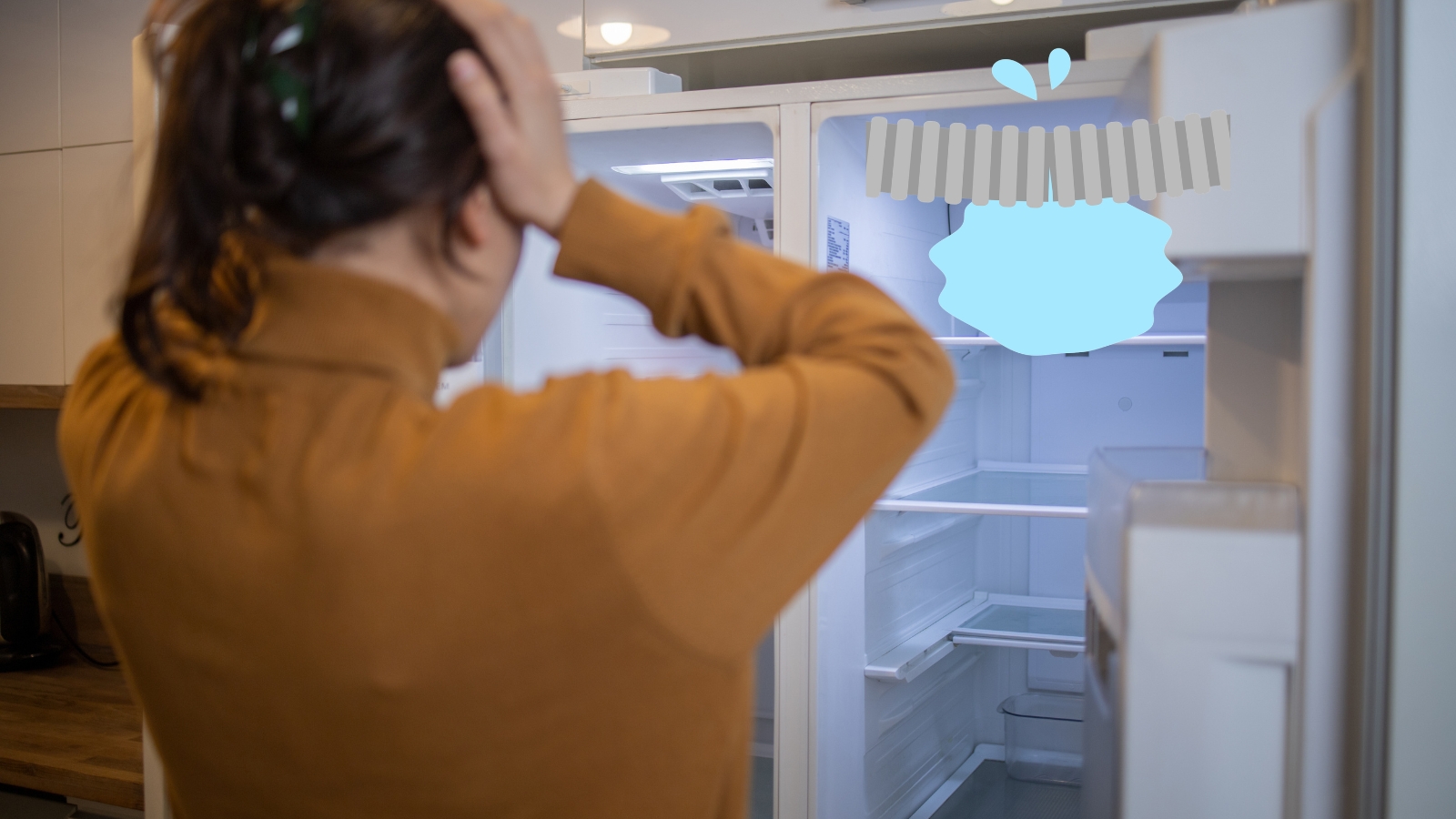
The Failure: The chef opens the fridge door for the 50th time that hour. The digital display flashes, and the compressor suddenly cuts out. Within two hours, $3,000 worth of premium seafood and wagyu beef is sitting in a pool of lukewarm water.
The Engineering Truth: The fridge didn’t “break.” It committed suicide to save itself. It triggered a Thermal Overload Protection sequence because the ambient environment massively exceeded its European “Climate Class 3” design limits.
🚨 The FSANZ 5°C Danger Zone
Losing $3,000 of stock is bad, but losing your license is worse. Under the Food Standards Australia New Zealand (FSANZ) Code, potentially hazardous foods must be strictly maintained at 5°C or below. When your cheap fridge struggles in the heat and drifts to 8°C, you enter the rapid bacterial growth zone. If a Council Health Inspector walks in during this thermal drift, you face immediate fines, product confiscation, or a forced closure.
The biggest refrigeration mistake is not buying a cheap fridge —
it’s placing a good fridge in the wrong environment.
1. Why Temperature Alone Is Misleading — Humidity Is the Real Killer
When venue owners buy food prep fridges, they obsess over the ambient temperature rating. But in a real Australian kitchen, the actual stress factor destroying your equipment is heat combined with extreme humidity.
Moist air forces the compressor to work overtime, and the condenser struggles to release heat. This is devastating for small cafés where heat-generating equipment is tightly packed. In these conditions, internal kitchen temperatures easily exceed the outdoor ambient temperature by 8°C to 12°C.
The 120-Door-Openings Rule
A residential fridge is opened maybe 20 times a day. A commercial prep fridge during a lunch rush is opened 50 to 120 times an hour. Every single time that door opens, a wave of heavy, hot, humid kitchen air replaces the cold air inside. Your fridge is desperately trying to air-condition your entire kitchen.
How Climate Conditions Vary Across Australia
Choosing equipment without considering your state’s meteorological profile guarantees failure. Here is the KW Engineering risk assessment: For venues fitting out in Queensland, the Queensland fit-out guide covers the humidity and compliance traps in detail.
| Region | Typical Summer Conditions | Refrigeration Risk Level |
|---|---|---|
| Queensland (QLD) | High ambient temperature + extreme humidity. | Extreme — needs equipment built for 43°C ambient heat. |
| New South Wales (NSW) | Hot afternoons colliding with peak dinner service. | High — Highly vulnerable in compact kitchens. |
| Victoria (VIC) | Wild temperature swings and sudden humidity spikes. | Moderate to High — Causes inconsistent load stress. |
| Western Australia (WA) | Dry, intense heat with prolonged sun exposure. | High — Forces prolonged compressor operation. |
2. The Physics of Failure: Why Fridges Weep in Summer and Freeze in Winter
Have you ever found a massive puddle of water under your fridge in January? Or opened it in July to find the internal coils frozen into a solid block of ice? This is not bad luck; it is basic thermodynamics reacting to poor equipment selection.
💧 The Summer Leak (Weeping)
During hot, humid summers, every time you open the door, moisture-heavy air rushes in and instantly freezes onto the evaporator coils. When the fridge enters its “Defrost Cycle” to melt this ice, the sheer volume of water overwhelms the drainage tube, overflows the Drip Tray, and floods your floor.
❄️ The Winter Ice Block
When ambient temperatures drop drastically in winter, the condensing pressure falls, and the internal thermostat gets “confused.” It fails to trigger defrost cycles. Ice builds up, blocking airflow. The fan blades hit the ice, cooling stops entirely, and the compressor burns out trying to push refrigerant through a frozen system.
3. The Engineering Divide: Steel, Glass, and the “Blood” of the Machine
Let’s be brutally honest: most owners buy fridges like they buy furniture—based on looks. In a commercial kitchen, that’s how you burn money. You are not buying a cabinet; you are buying a thermal shield and a chemical engine.
Glass is for Selling. Steel is for Surviving.
Solid Stainless Steel (The BOH Armor): Back-of-House (BOH) is a warzone. Solid doors are injected with dense polyurethane insulation. They are literal walls against 42°C ambient heat. If a fridge lives in the kitchen, it must have solid steel doors. End of discussion.
Glass Doors (The FOH Trap): Glass has terrible thermal resistance. It exists purely for Front-of-House (FOH) merchandising so customers can see drinks. I constantly see owners put a glass-door fridge next to a deep fryer because “it was on sale.” It’s an engineering disaster. The radiant heat from the fryer slices right through that glass, the compressor runs at 100% capacity non-stop, and the machine dies in six months.
The Refrigerant Wars: Why We Demand R290
Owners ask about compressor brands, but ignore the actual “blood” pumping through the system. If you don’t know the difference between your refrigerants, you are flying blind.
- ❌ R134a / R404a (The Dead Dinosaurs): Older synthetic gases. They suck power and are being banned globally. If you buy a fridge with this today, good luck finding cheap maintenance in two years.
- ⚠️ R600a (The Lightweight): Eco-friendly, sure. But it lacks the raw volumetric cooling punch for heavy commercial loads. Great for a hotel minibar, terrible for a busy prep line.
- ✅ R290 (High-Purity Propane): This is the W-Zone Standard. R290 absorbs and dumps heat exponentially faster than the old chemicals. When your chef opens the fridge 100 times an hour, R290 provides explosive temperature recovery, slamming the internal temp back to 2°C in minutes.
4. The “Open Display” Trap: Sunlight is a Microwave
This is where I see café owners lose thousands. They drop heavy cash on a stunning Open Display Fridge, put it right next to the front window to catch foot traffic, and then wonder why their $12 artisan sandwiches are sweating and sour by 2:00 PM.
Engineering Truth: Open displays do NOT store cold.
They are “air devices” that constantly generate a fragile, invisible wall of cold airflow.
- The Air Curtain is Fragile: That invisible wall cascading down the front? It is incredibly thin (about 20mm–40mm) and moves at a very weak 0.3 m/s. If you place the unit under an overhead air-con vent, the cross-draft instantly shreds the air curtain. The cold air spills onto the floor, and the fridge is left cooling nothing.
- The Radiant Heat Law: Sunlight does not just “warm the air.” Sunlight is radiant heat load. It completely bypasses the cold air curtain and physically heats the objects inside. Even if your café’s air-con is set to a crisp 22°C, direct sunlight hitting that open display is actively microwaving your food at 40°C+. The compressor will run itself to death trying to fight the literal sun.
The KW Verdict: Never, ever place an open display in direct sunlight or a cross-draft. It is a sales tool, not a miracle worker.
5. The Silent Killer: Why Your $5,000 Fridge Still Died
You did everything right. You bought a premium 43°C Tropical fridge. You placed it away from the fryer. Yet, 18 months later, the mechanic looks at it, shakes his head, and voids your warranty. Why?
Because you choked it to death.
Most refrigeration failures in Australia are not compressor defects. They are Condenser Overloads. Telling a heat-rejection problem apart from the other faults that look like it is its own job, which our guide to why commercial fridges fail in hot kitchens covers.
The condenser coil is the lung of your fridge. It breathes out the heat. But commercial kitchens are full of aerosolized grease and flour dust. Within weeks, this sticky concrete coats the fine aluminum fins of the condenser. Once blocked, the heat cannot escape. The compressor pushes harder and harder until it triggers a fatal thermal overload.
The Fix: Grabbing a stiff brush or vacuum and cleaning the condenser filter once a month isn’t “maintenance”—it is survival. A clean condenser instantly restores cooling efficiency by 50%. And mark my words: a blown compressor caused by a blocked condenser will be universally rejected by every manufacturer’s warranty department in the country.
6. The KW Solution: Tropicalised Cold Chain Defense
The European “Climate Class 3” standard (tested at 25°C) is a death sentence in Australia. At KW Commercial, our Tier-0 architecture requires tropicalised equipment built to hold temperature through 43°C Australian summers. Built for the warzone. The full breakdown of what each climate class means in an Australian kitchen is in our climate class 3, 4 and 5 guide.
The Heavy Infantry: Atosa
Atosa doesn’t mess around with temperate garbage. Their heavy-duty line, especially the massive Upright Freezers, comes standard with a 43°C ambient rating, Embraco compressors, and R290. This is the backbone of a serious kitchen.
The Anvil: Thermaster GN3100TN
You need prep space that doesn’t melt. This Tropicalised 3-Door Bench Fridge is an indestructible stainless steel workstation. It holds strict 2°C to 8°C temps even when shoved right up against the cooking line.
The Frontline: Food Prep Fridges
Sandwich and pizza stations require lids to stay open during the rush. These units use oversized compressors to literally force-feed cold air back into the ingredient pans, fighting off the ambient heat invasion second by second.
7. The Suffocation Trap: Stop Building Coffins for Your Fridges
I see this every week: an owner drops $5,000 on a top-tier Atosa fridge, then shoves it tight into a custom-built cabinet flush against the back wall to “make it look neat.” Congratulations, you just built a $5,000 coffin.
The 50mm Breathing Rule
Refrigeration isn’t about “making cold”; it’s about pumping heat out. If you don’t leave a minimum 50mm to 100mm ventilation gap around the compressor exhaust, that boiling hot air gets sucked straight back into the intake. The machine chokes on its own exhaust and dies of heatstroke.
Stop guessing your layout with masking tape on the floor.
Before you order heavy equipment, you need to know exactly how the airflow moves and if the doors will block your cooking line during a rush.
📐 Map Your Airflow with the Free KW 3D Design Tool →8. Defending Your Cash: The CFO’s Move
Here is the reality check: an imported “Climate Class 3” fridge might cost $1,500. A Tier-1 tropicalised beast built for 43°C summers costs $3,500. But when that cheap fridge dies on a Friday night, you lose $3,000 in meat and another $2,000 in lost weekend sales. Cheap equipment is a liability, not a saving.
But you don’t need to drain your operating cash to get the good stuff. Smart venue owners use financial leverage.
The SilverChef & Shift Advantage
- Opening a new place? Don’t drop $20k cash on cold rooms. Use SilverChef Rent-Try-Buy. The weekly rent is 100% tax-deductible, and if the menu changes in 12 months, you can return or upgrade the fridge without penalties.
- Fridge died today? You need an emergency replacement tomorrow. Shift Equipment Finance gives you 24-hour approval to buy it outright, and your accountant can instantly write off the depreciation.
9. The No-BS FAQ: What Fridge Mechanics Won’t Tell You
These are the real questions venue owners ask us when they are panicking on the phone. Read this before you call a tradie.
“My fridge is beeping and flashing ‘High Temp’. Can I just reset it?”
No. It is screaming for help. Resetting the controller doesn’t fix the physics. It usually means your condenser is totally blocked with grease, or your door seals are split. If you just reset it and ignore the alarm, you will burn out the compressor by midnight.
“A tradie quoted me $300 to just ‘re-gas’ my fridge. Is that a good deal?”
It’s the oldest scam in the industry. A commercial fridge is a completely sealed system. It does not “consume” gas like a car consumes petrol. If it needs gas, there is a leak. If the mechanic doesn’t find and weld the leak before putting new gas in, that $300 gas will leak out again in two weeks.
“It’s really hot today. Should I turn the digital thermostat down to -2°C to make it cool faster?”
Absolutely not. This is a fatal mistake. Your compressor only has one speed—it’s either ON or OFF. Lowering the target temperature does not make the cold air “colder”; it just forces the compressor to skip its mandatory defrost cycle. Within 24 hours, your evaporator coils will turn into a solid block of ice, and the fridge will stop cooling entirely.
“If my fridge dies and food spoils, will my business insurance cover it?”
Don’t bet your business on it. Read the fine print of your policy. Most “Spoilage Cover” claims require proof that the equipment was regularly maintained. If the insurance assessor finds that the compressor died because you haven’t cleaned the condenser filter in a year, they will deny the claim instantly due to negligence.
Don’t Wait for the Compressor to Scream.
Arm your kitchen with 43°C Tropicalised refrigeration today. Protect your stock. Protect your peace of mind.
Deploy Commercial Fridges & FreezersNeed an Engineering Audit? Ask Eva.
Don’t guess your thermal load. Tell our Tier-0 system, Eva, your kitchen dimensions, menu type, and postcode. She will instantly calculate your humidity risk and generate the exact W-Zone refrigeration blueprint you need. Click the chat icon to begin.