
The Tropical Compliance Trap: Why Southern Kitchen Fit-Outs Fail in Queensland (2026)
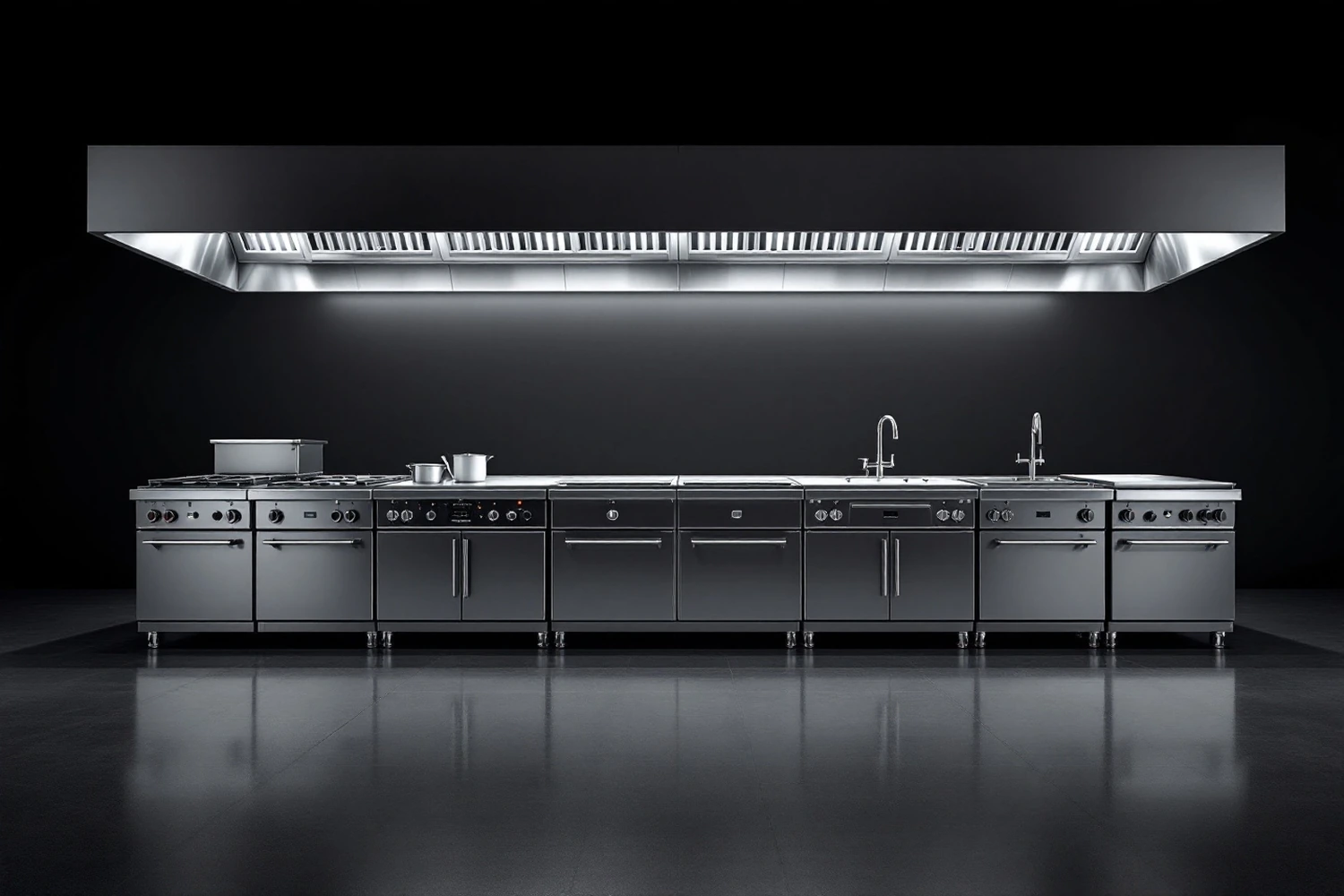
Most interstate hospitality failures are not caused by bad equipment. They are caused by good equipment installed in the wrong climate.
A refrigeration and kitchen layout that runs cleanly for years in Melbourne can begin to fail inside its first Brisbane wet season. The compressors are the same. The brands are the same. The drawings are the same. That is the problem. The drawings were sized for southern air, and southern air is not what a Queensland kitchen breathes. Where an existing cabinet is already struggling, our guide to why commercial fridges fail in hot kitchens covers diagnosing the cause.
With the largest hospitality build-out in the state's history now underway ahead of the 2032 Games, a wave of operators from New South Wales and Victoria are heading north. Most will reuse a fit-out that worked at home. This is the guide to why that copy fails, what it costs, and how to specify equipment that survives a Queensland summer.
The Latitude Verdict
For operators and designers who want the short version before the detail:
- Copy a Melbourne or Sydney refrigeration and HVAC layout straight into Brisbane or the Gold Coast, and thermodynamic problems are close to guaranteed in the first real summer. Not because the gear is faulty, but because the design assumed the wrong conditions.
- Install standard Climate Class 4 refrigeration in a coastal Queensland kitchen, and external condensation creates slip hazards and mould risk while the compressor works far harder than it was built to.
- Run a conventional air-cooled ice machine in a 38 to 40°C unventilated Queensland kitchen during peak service, and output can fall by roughly a third to more than half at the exact moment the bar needs maximum supply.
None of this is theory. It is the predictable result of one combination most southern designs never plan for: high heat and high humidity at the same time.
Why Brisbane 2032 Changes Everything
This is not a fridge buying guide dressed up with an Olympics headline. The scale of what is being built in South East Queensland is the reason the climate problem is about to become an expensive, repeated mistake across the sector.
The Queensland Government's 2032 Delivery Plan commits to a 7.1 billion dollar venue capital works program. That includes a new 63,000-seat stadium at Victoria Park, a new National Aquatic Centre, a major expansion of the Queensland Tennis Centre, and venues spread from the Gold Coast and Sunshine Coast out to Cairns, Townsville and the Mackay–Whitsunday region. The main Athlete Village at the Brisbane Showgrounds will house more than 10,000 athletes and officials, with further villages on the Sunshine Coast and the Gold Coast.
Every one of those precincts needs commercial kitchens. So does the accommodation being built around them, and that is where the demand becomes impossible to ignore. The Property Council of Australia's 2026 Queensland Hotel Market Outlook found the state needs roughly 14,700 additional hotel rooms by 2032, with the current pipeline on track to deliver only about a quarter of them. South East Queensland has around 46,000 hotel rooms today. Los Angeles has about 120,000. Paris has about 133,000. The supply gap is structural, not a short-term dip.
That gap will be filled by new hotels, new bars, new restaurants, central production kitchens and quick-service rollouts. The demand does not switch off when the closing ceremony ends, either. Analysis of past host cities shows hotel room-night demand growing more strongly in the second and third years after a Games than during the event itself. For hospitality operators, this is a decade-long build, not a fortnight.
Here is the part that matters for this article. A large share of the groups scaling into Queensland are established southern operators. They have proven kitchen designs. They have a fit-out partner they trust. And they have every incentive to reuse what already works, which is exactly how a Sydney or Melbourne drawing ends up specified for a tropical kitchen.
The Hundred-Thousand-Dollar Rework Nobody Budgeted For
Why most interstate expansions fail before the equipment itself fails.
The reason this mistake is so costly is that it does not announce itself on opening day. It surfaces slowly, gets misdiagnosed as a maintenance issue, and is only correctly identified as a design fault after real money has already been spent. The figures below are an indicative trajectory rather than a quote for any particular site, but the shape is consistent.
| Timeline | What the operator sees | Indicative spend |
|---|---|---|
| Month 1 | Fit-out complete, venue opens, everything performs as designed. | Nil |
| Month 3 | First wet season hits. Condensation on cold surfaces, water pooling on the floor near the fridges, ice output dropping, staff complaints starting. | Investigation only |
| Month 6 | First round of repairs: replacement door heaters, fan motors, drainage fixes, repeated service callouts. | $3,000 to $8,000 |
| Month 12 | The penny drops. This is not equipment failure, it is a design fault. HVAC changes, ice machine relocation and refrigeration replacement all on the table. | $20,000 to $60,000 |
| Month 18 | Fit-out partly redone. Trading disrupted, customers lost, reviews softening, staff turnover rising. | Compounding |
| Total exposure | Equipment was never the problem. The climate assumption was. | $50,000 to $150,000+ |
The dollar figure is only half of it. During the 2032 window, the worst time to close part of your kitchen for rework is the same window when demand and room rates are at record highs. Lost peak revenue, an Environmental Health Officer's improvement notice, a slide in Google reviews and the cost of replacing staff who walked during the chaos do not appear on the equipment invoice. They are the larger number.
Why Brisbane Air Behaves Differently
The whole problem comes down to one piece of physics, and you do not need an engineering degree to use it. Two kitchens can sit at the same air temperature and behave completely differently, because what drives condensation is not temperature on its own. It is the dew point.
| Location | Air temperature | Relative humidity | Dew point |
|---|---|---|---|
| Sydney | 30°C | 50% | about 18°C |
| Brisbane | 30°C | 80% | about 26°C |
| Brisbane, service peak | 38°C | 75% | past 32°C |
The rule is short. When a surface is colder than the dew point of the surrounding air, the water vapour in that air turns straight into liquid water on the surface.
That is why the same cold fridge door sweats in Brisbane and stays dry in Sydney. At 30°C and 50% humidity, the air in a Sydney kitchen only condenses on surfaces below about 18°C. At 30°C and 80% humidity, a Brisbane kitchen condenses on anything below about 26°C, and a cold cabinet surface sits well under that. During a service rush at 38°C and 75% humidity, the dew point climbs past 32°C, and almost every cold surface in the room becomes a condensation point. Same equipment, different air. That is the entire story, and every section below is a consequence of it.
Queensland Is Not One Climate
One more correction to the southern mental model before the equipment detail. The 2032 venues are not all in Brisbane. Events run from the Gold Coast and the Sunshine Coast out to Cairns, Townsville and the Mackay–Whitsunday region, and operators following that footprint will open across very different conditions. A specification that suits a Brisbane CBD hotel is not automatically right for a beachfront Gold Coast site or a venue in the far north. Broadly, three zones drive three different schedules.
| Zone | Climate | Dominant risk | Specification priority |
|---|---|---|---|
| Brisbane and inner South East | Humid subtropical, wet season roughly November to March | Condensation from combined heat and humidity | Tropicalised refrigeration with anti-sweat glass and frames |
| Gold Coast and Sunshine Coast | Humid plus coastal salt air | Condensation and salt corrosion together | 304 or epoxy throughout, corrosion-rated outdoor condensers |
| Far north, Cairns and Townsville | Genuine tropics, sustained high ambient, long wet season | High ambient load, prolonged humidity, salt on the coast | Class 5 ambient performance plus full anti-condensation plus marine-grade protection |
The practical point for a multi-site rollout across the Games decade: the equipment schedule is not one template that travels. It shifts by latitude and by distance from the coast. A single national drawing can fail twice over up here, once on humidity and again on salt, and the further north the site, the wider the gap from a southern design.
Climate Class 5 Is the Floor, Not the Answer
The natural response is to ask for a higher climate class. That is the right instinct and the wrong place to stop.
Most commercial refrigeration sold in Australia is tested to Climate Class 3 or Class 4 under EN ISO 23953-2, the international standard for refrigerated cabinets. Class 3 is tested at 25°C and 60% humidity. Class 4 is tested at 30°C and 55%. For much of the southern market, that is genuinely enough.
Climate Class 5 is tested at 40°C, but at 40% humidity. Read that again, because it is the trap. Class 5 proves a cabinet can hold food-safe temperatures when the room is very hot. It does not prove the cabinet stays free of condensation when the room is hot and humid, because the test itself runs at low humidity. A Brisbane kitchen at 30°C and 80% has a higher dew point than the Class 5 test condition does. Chasing the class number alone does not solve the moisture problem.
What does solve it is built into the hardware, and the standard gives you the language to demand it. EN ISO 23953-2 requires that transparent doors and lids stay condensate-free at the climate class the manufacturer specifies, and that condensate drainage is sized for those conditions. Staying dry is a testable property, not a marketing claim. Genuinely tropicalised refrigeration carries the features that deliver it:
- Heated, anti-sweat glass and door frames that keep the visible cold surfaces above the dew point.
- A larger-capacity compressor with margin for the higher head pressure that hot, humid air forces on the system.
- Thicker, high-performance insulation built for sustained high ambient loads.
- Condensate management designed for continuous moisture, not the occasional drip.
The warning that matters: "tropical" and "heavy-duty" get used loosely by importers, and a sticker is not a specification. Confirm the rated conditions and the anti-sweat features in writing before you order. Our companion guide on commercial fridge climate classes breaks down where each class genuinely fits, and it is worth reading before you sign off a refrigeration schedule for a Queensland site.
The Ice Machine Crisis: Air-Cooled, Water-Cooled or Remote
Ice is where the climate problem turns into a service problem you can watch from across the bar. Queensland venues tend to burn through more ice than their southern equivalents, simply because drinks warm faster in the heat. The busiest, hottest Saturday night is precisely when a poorly chosen ice machine gives up.
Why air-cooled struggles in a hot kitchen
An air-cooled ice machine rejects its heat into the room and relies on drawing in cooler surrounding air to condense the refrigerant. When the kitchen is already sitting at 38 to 40°C during service, that air is hot to begin with. Head pressure rises, the compressor works much harder, each batch takes longer to freeze, and total output can fall by roughly a third to more than half in hot, poorly ventilated conditions. The machine then dumps its own waste heat back into a room that is already too warm, which makes the refrigeration and the air conditioning around it work harder as well. One bad decision spreads through the whole kitchen.
The two reliable paths
| Configuration | How it rejects heat | Queensland performance | Trade-off |
|---|---|---|---|
| Air-cooled | Into the kitchen | Output drops sharply in hot, unventilated rooms | Cheapest to buy, costly to run in QLD |
| Water-cooled | Into circulating water | Output stays stable regardless of room air temperature | Needs good water quality, a drain and scale management |
| Remote condenser | Outside the building | Holds rated capacity and removes heat and noise from the kitchen | Higher install cost and external space required |
For a high-volume bar, or any kitchen that cannot afford to run short during peak service, water-cooled or a remote condenser is the rational choice in Queensland. The extra cost up front is small next to a Saturday night where the ice runs out and the queue does not.
The Heat Balance: Exhaust and Make-Up Air
The ice machine showed how one appliance dumping heat into the room makes everything around it work harder. The same logic governs the whole kitchen, and the ventilation drawing is where a southern design most often falls short in Queensland.
A commercial kitchen exhausts large volumes of air through the canopy, and that air has to be replaced. This replacement is the make-up air. In a temperate climate, drawing in outside air to balance the exhaust is straightforward, because the outside air is reasonably cool and dry. In Queensland it is neither. The air you are pulling in is hot and heavy with moisture, and if you introduce it raw you have imported the humidity problem straight onto your cold surfaces and into your coolroom seals. The condensation gets worse, not better.
In a humid climate, make-up air has to be treated as a conditioning load, not just a volume to balance. Two things matter. First, tempering or dehumidifying the incoming air so it is not delivering moisture to every cold surface in the room. Second, getting the balance between exhaust and make-up right, so the kitchen is not running at negative pressure that drags humid air in through every door, gap and service penetration. A kitchen under negative pressure in a humid climate is a kitchen that pulls the wet season indoors every time the back door opens.
The exhaust calculation itself also has to account for the higher heat load from equipment that, in a hot room, rejects more heat than the same units would down south. Undersize the canopy and the make-up air, and the room temperature climbs, which feeds straight back into the refrigeration and ice problems already covered. This is the part of the drawing most likely to be carried over verbatim from a southern fit-out, and the part most likely to be wrong. It rarely fails visibly on opening day, which is exactly why it tends to land in the Month 12 column of the rework table.
Coastal Corrosion and the Shelving That Rusts First
On the Gold Coast and the Sunshine Coast, the air carries salt, and salt plus humidity is a corrosion accelerant. The cheapest steel in the building shows it first.
Equipment built from 430-grade stainless, common in budget gear, is the wrong specification for a wet, saline coastal kitchen. It will rust. 304-grade stainless carries the chromium and nickel balance that holds up in these conditions, and it is the grade to insist on for any wet-area bench, splashback or fabrication near the coast. Our breakdown of 304 versus 430 stainless steel covers why the difference is structural rather than cosmetic.
Coolroom shelving is the other quiet failure point. Plain chrome wire shelving flakes and rusts within weeks inside a high-humidity coolroom, and once the chrome lifts, the pitted surface underneath becomes a place for mould and bacteria to settle. Specify 304 stainless or epoxy-coated wire shelving. The epoxy coating resists corrosion and gives a smooth, sealed surface that is far easier to keep clean, which matters for more than appearances, as the next point explains.
The Compliance Line Most Southern Designs Cross
Condensation, pooling water, rust and mould are more than an operational nuisance. They are the kinds of conditions an Environmental Health Officer is empowered to act on.
Standard 3.2.2 (Food Safety Practices and General Requirements) and Standard 3.2.3 (Food Premises and Equipment) of the Australia New Zealand Food Standards Code require that food premises and equipment be suitable for their purpose, kept clean, and not become a source of contamination. In Queensland, those standards are enforced through the Food Act 2006 and policed by local council Environmental Health Officers. Water pooling on the floor near food preparation, rust on or near food-contact surfaces, and mould in a coolroom are exactly the conditions that draw an improvement or compliance notice.
For a brand-new venue, being issued a notice within months of opening is a reputational and financial problem stacked on top of the rework itself. The equipment that prevents condensation and corrosion is also the equipment that keeps you on the right side of the inspection.
Where the Money Actually Goes Over Five Years
The premium for tropicalised refrigeration or a water-cooled ice machine is real, and it is the first line an operator pushes back on. The honest answer is to look at the whole life of the equipment rather than the purchase price, because the purchase price is the one column where the southern specification looks cheapest and the Queensland reality looks most expensive. The factors below are directional rather than a quote, but the direction is what decides it.
| Cost factor | Standard or air-cooled in Queensland | Tropicalised or water-cooled |
|---|---|---|
| Purchase price | Lower | Higher |
| Running cost in a hot kitchen | Higher, the compressor fights high head pressure | Lower, right-sized or heat rejected to water |
| Output reliability at peak | Drops when you need it most | Holds rated capacity |
| Service and callout frequency | Higher, from condensation, strain and corrosion | Lower |
| Service life in humidity and salt | Shorter | Longer |
| Rework and replacement risk | The Month 12 column | Removed from the table |
The purchase premium is a known, one-time number. The cost of the cheaper option is spread across higher power bills, lost peak trade, more callouts, earlier replacement and the rework risk, and it lands during the exact years you most need the kitchen running. Over five years, the equipment that costs more to buy is routinely the cheaper kitchen to own in this climate.
The Interstate Fit-Out Compliance Checklist
Run this before drawings are locked and before a single unit is ordered. Each line is something to confirm in writing, not assume.
- All display and storage refrigeration is specified for sustained high temperature and high humidity, with anti-sweat or heated glass and door frames, not just a high climate-class label.
- Every ice machine is water-cooled, fitted with a remote condenser, or located in a properly air-conditioned and ventilated zone.
- All wet-area benches and coolroom shelving are 304-grade stainless or epoxy-coated. No plain chrome wire or 430-grade steel in high-humidity or coastal zones.
- HVAC design accounts for the high latent, or moisture, load and provides adequate make-up air without creating internal condensation.
- Condensate and drainage are designed to prevent any pooling onto floors or food-contact surfaces.
- Corrosion grade is verified specifically for coastal salt exposure wherever the site is near the coast.
- Every one of the above is confirmed against this site's actual conditions, not carried over from a southern drawing.
Writing the Specification So the Climate Is on the Purchase Order
A compliance checklist only protects you if it survives contact with a quote. The gap most interstate operators fall into is a verbal one. The supplier is told the kitchen is in Brisbane, everyone nods, and the order goes through on a model that was specified for a southern showroom. The protection is to put the climate into the written specification, so the conditions the equipment has to survive are part of the contract rather than an assumption nobody wrote down.
The single most useful habit is to state the ambient conditions the equipment will actually face, not the ones it will be tested under. A refrigeration capacity or an ice yield quoted at a 21°C laboratory ambient, and the same figure quoted at 38°C, are two different machines on paper. Ask for rated performance at the temperature and humidity your kitchen reaches in service. If the supplier can only give you the laboratory figure, treat the gap between the two as your risk to absorb, and price it in before you sign.
For each major item, the specification should name the following in writing:
- The rated climate class, written as a number with its test conditions, rather than the word tropical standing on its own.
- The anti-sweat or heated glass and heated frame features, listed as a line item, not assumed to be included.
- The stainless grade, stated as 304 for any wet-area or coastal fabrication, with 430 explicitly excluded from those zones.
- The ice machine cooling configuration, named as water-cooled, remote condenser, or air-cooled in a confirmed air-conditioned zone.
- The ambient temperature and humidity the equipment is expected to perform at, so that any derating becomes the supplier's figure to disclose rather than yours to discover after install.
None of this asks an operator to become an engineer. It asks the climate to appear in writing, where a supplier has to answer to it. A line in a purchase order is a great deal cheaper than the Month 12 column in the rework table.
Questions Operators Actually Ask
Why is my commercial fridge sweating heavily on the outside?
High humidity in the kitchen has pushed the air's dew point above the temperature of the cold cabinet surface, so water vapour condenses straight onto it. A non-tropicalised unit without heated, anti-sweat glass and frames cannot keep those surfaces above the dew point in a humid room. The fix is equipment specified for the actual humidity, not a colder thermostat setting.
Can I use an air-cooled ice machine in Queensland?
Technically yes, but expect a significant drop in output, often a third to more than half, in hot and poorly ventilated conditions, along with extra strain on the compressor. For reliable supply during peak service, a water-cooled machine or a remote condenser unit is the better choice.
What shelving is best for high-humidity coolrooms?
304-grade stainless or epoxy-coated wire. Both resist corrosion and stay hygienic in moist conditions, where plain chrome wire flakes, rusts and becomes difficult to keep clean.
Is Climate Class 5 enough for a Brisbane kitchen?
It is the minimum for high ambient temperature, but it is not the whole answer. Class 5 is tested at 40°C but only 40% humidity, so it does not prove a cabinet stays condensation-free in a humid room. Specify confirmed anti-sweat features and condensate management alongside the class rating.
Will Melbourne or Sydney kitchen drawings work in Brisbane?
Not without a climate review. The equipment is usually fine; the design assumptions behind it are not. Southern drawings are sized for lower humidity, and reusing them unchanged is the most common cause of expensive interstate fit-out failures.
The Queensland Expansion Readiness Review
You do not need to gamble on unfamiliar suppliers when you expand north, and you do not need to discover the climate problem after opening. The point of this article is that the failure is predictable, which means it is preventable.
KW Commercial Kitchen operates from a Sydney base with Australia-wide delivery and direct experience specifying equipment for high-humidity, high-salt coastal environments. Before you order a single fridge or ice machine, we review the schedule against the conditions your site will actually face:
- Climate suitability for the specific location
- Refrigeration class and anti-condensation features
- Ice machine heat load and configuration
- Corrosion risk and stainless grade
- Ventilation and make-up air assumptions
- Interstate logistics timing against the build schedule
- Site-specific environmental conditions
The goal is simple. The right equipment on site before the first trade arrives, so your fit-out performs in Brisbane the way it did in Melbourne. Australia-wide delivery means the gear reaches a Brisbane, Gold Coast or Sunshine Coast site on the build timeline, not after it.
The real cost of getting this wrong during the 2032 window is not the replacement invoice. It is the lost peak revenue, the compliance notice, the softening reviews and the disruption, at the exact moment a new venue should be capitalising on the biggest hospitality decade Queensland has had. Specify for the climate once, and none of that is on the table.
Talk to us about a Queensland Expansion Readiness Review before your next northern fit-out.