
How to Choose the Right Gas Deep Fryer for Your Commercial Kitchen in Australia

The new fryer arrives before Friday service—and the order says natural gas while the kitchen uses LPG. The oil capacity looked right, but the fuel choice was missed.
Match the exact NG or LPG configuration first. Then check the site with a licensed gasfitter and compare the fryer against your peak batches, menu and cleaning job.
Choose the gas type before adding the fryer to the order
Natural gas and LPG are separate purchase choices, even when the fryers look alike.
Ask your licensed gasfitter to confirm the site's supply and the exact appliance configuration. Don't guess the gas type from a product photo, basket count or a similar model name.
| Product-page format | What to choose before ordering |
|---|---|
| Separate NG page | RC500E — natural gas. Need LPG? Use the separate RC500ELPG page. |
| Separate LPG page | RC500ELPG — LPG. Need NG? Use the separate RC500E page. |
| One page with gas choices | On the CookRite ATFS-40 page, select Natural Gas or LPG in the Gas Type choices, then check that choice on the order. |
| Gas type not selectable or unclear | Ask KW to confirm the exact configuration in writing before ordering. Do not assume a conversion kit or conversion service is included. |
The supplier identifies RC500E as natural gas and RC500ELPG as LPG. These links identify the fuel branches; they do not establish your site's suitability.

Confirm the gas choice on the quote before paying. Have the gasfitter resolve any mismatch or proposed conversion; do not change gas components yourself.
Describe the busiest batches, not just litres of oil
Oil capacity is a fill quantity, not proof that a fryer can clear your peak orders.
Record the food, portion weight and orders arriving in the busiest service period. Note whether products start frozen, chilled or freshly prepared, and which foods must cook at the same time.
Ask the supplier how the proposed fryer handles that sequence: basket load, cooking time, time between batches and the conditions behind any quoted output. A headline kg/h figure without the food and test conditions is not a promise for your menu.
| Option | Job to test and main limit |
|---|---|
| Single vat | Compare for batches that can share the same oil and cooking schedule. Two baskets in one vat still share that oil. |
| Separate vats | Compare when foods need separate oil or different cooking schedules. Confirm actual tank separation and controls; baskets alone do not create it. |
| Filter-drawer system | Compare when oil handling and staff time matter. The Anets FDAGG114R is one exact example; allow for its filter equipment and electrical connection as well as gas. |
| Benchtop format | Check the exact model, bench support, access and installation requirements. A smaller fryer is not automatically cheaper to install, or big enough for your output. |
Separate oil can be one part of a food-control plan. It does not, by itself, justify an allergen-free claim: ingredients, utensils, baskets, handling and cleaning also need controls.
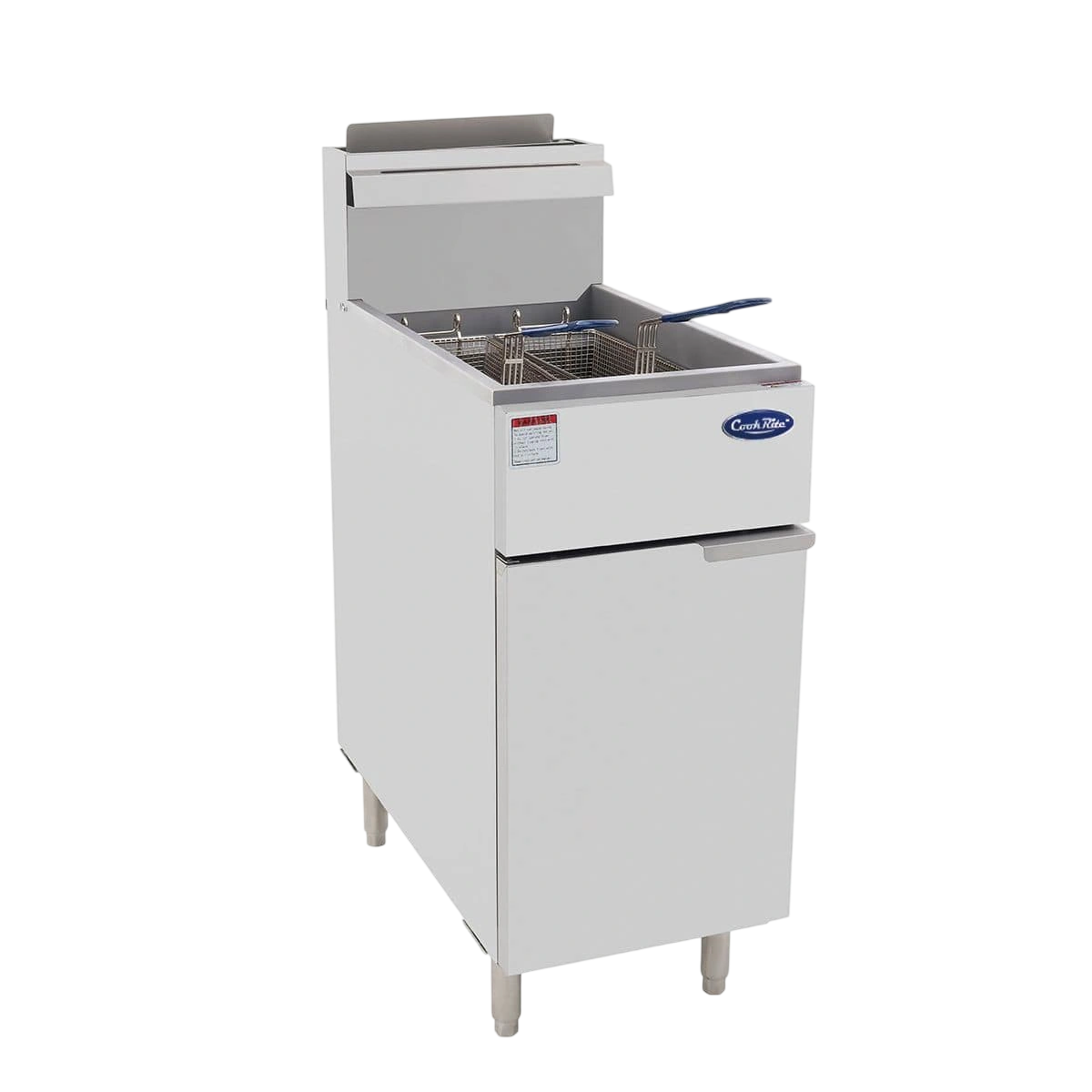
Take your peak batch list to the gas fryer comparison. Ask for an exact-model demonstration or documented explanation of that workload before relying on a capacity claim.
Check the filter's job and its separate connection
A gas fryer with a filter system may also need electricity.
The Stoddart FDAGG114R data sheet describes a single-fryer filter-drawer system with 19–21 L oil capacity per tank and a 30 L/min filter pump. It specifies a 240 V, 10 A connection for the filter system.
That pump figure describes moving oil. It is not a food production rate, an oil-life guarantee or evidence of labour savings at your kitchen. The sheet also says the installing gas plumber must provide suitable supply pressure with all appliances fully on.
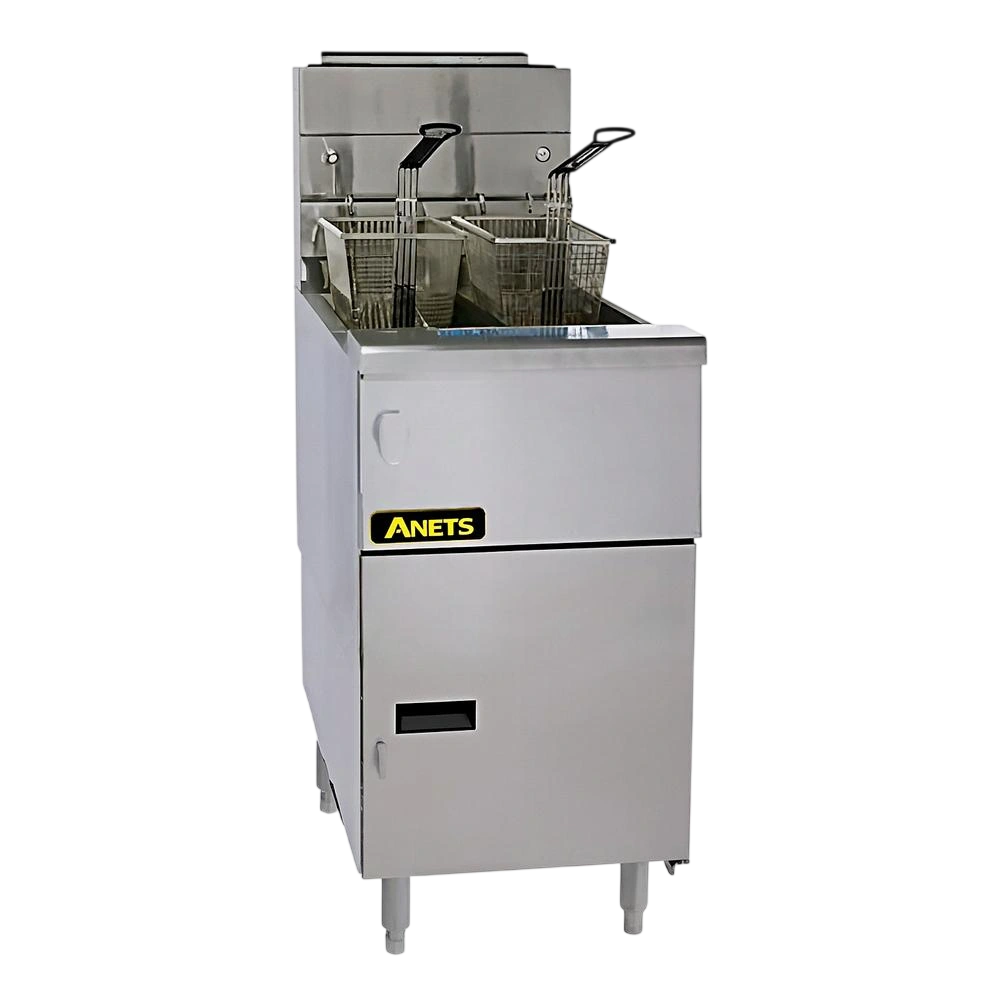
Use the FDAGG114R product page to request the exact quote and documents. Ask for the filtering procedure, consumables and staff training; have the installer confirm both connections and access.
Have the whole cooking line checked before installation
A gas connection at the wall does not mean this fryer can be installed there.
Give the licensed gasfitter the exact model, gas configuration, appliance data and the other equipment sharing the supply. Include the proposed position, ventilation, clearances and service access. Have the relevant installation and ventilation specialists resolve the complete site proposal.
NSW requires licensed gasfitting work for commercial as well as residential premises. Check the requirements in your state or territory. A catalogue statement or approval badge does not replace the site's installation checks.
If an open burner is beside the proposed fryer, use the fryer-next-to-burner guide to prepare the exact manuals and layout for the specialist. Do not copy a clearance from a different appliance.
- Confirm delivery dimensions, final position and access for cleaning or removal.
- Confirm the appliance's gas configuration and the supply under the connected load.
- Resolve ventilation and neighbouring appliances before signing off the layout.
- Confirm any electrical supply required by filters, controls or accessories.
Get the unresolved site requirements answered before placing the equipment order. Leave installation, gas adjustment, conversion and repairs to appropriately licensed or authorised people.
Ask who will handle the oil and cleaning
Choose a fryer your staff can clean using its own instructions.
Ask to see the drain, filter access, removable parts and oil-handling procedure. Agree where used oil goes and how the fryer is isolated before operator cleaning. Follow the exact manual's handling and cleaning steps; do not treat a generic temperature or weekly schedule as safe for every fryer.
Set oil checks and replacement decisions for your food, oil and operating instructions. A fixed “change every few days” rule does not tell you the condition of the oil. Do not remove burners or work on gas valves as routine operator cleaning.
Compare the installed running costs only when you have the gas or electricity tariffs, relevant consumption evidence and maintenance costs. This guide does not assume gas heats faster, costs less or pays back sooner than every electric alternative.
Ask for a written operator handover and identify the service contact before delivery. If the cleaning or oil-handling job cannot be done as instructed, resolve the equipment or layout choice first.
Put the fuel, menu and site on the same quote request
Send one clear buying brief so the fryer, gas choice and installation are considered together.
- Exact product code and confirmed NG or LPG supply; select the page's gas option where offered.
- Foods, starting condition, portion sizes and peak batches; which foods need separate oil or schedules.
- Site drawing, delivery route, neighbouring appliances and known connection constraints.
- Exact data sheet and manual, installation responsibilities, cleaning procedure and any filter power requirement.
Start with the commercial gas fryer range. The GASU GFG2120, Anets FDAGG114R and the fuel-specific RC500 pages above are document-request starting points, not a ranking or a promise of suitability.
Ask KW to quote the exact configuration against that brief. Check the product code and gas type again on the final order before arranging installation.