
The Cook and Chill Blueprint: Scaling to a Central Production Unit in Australia (2026)
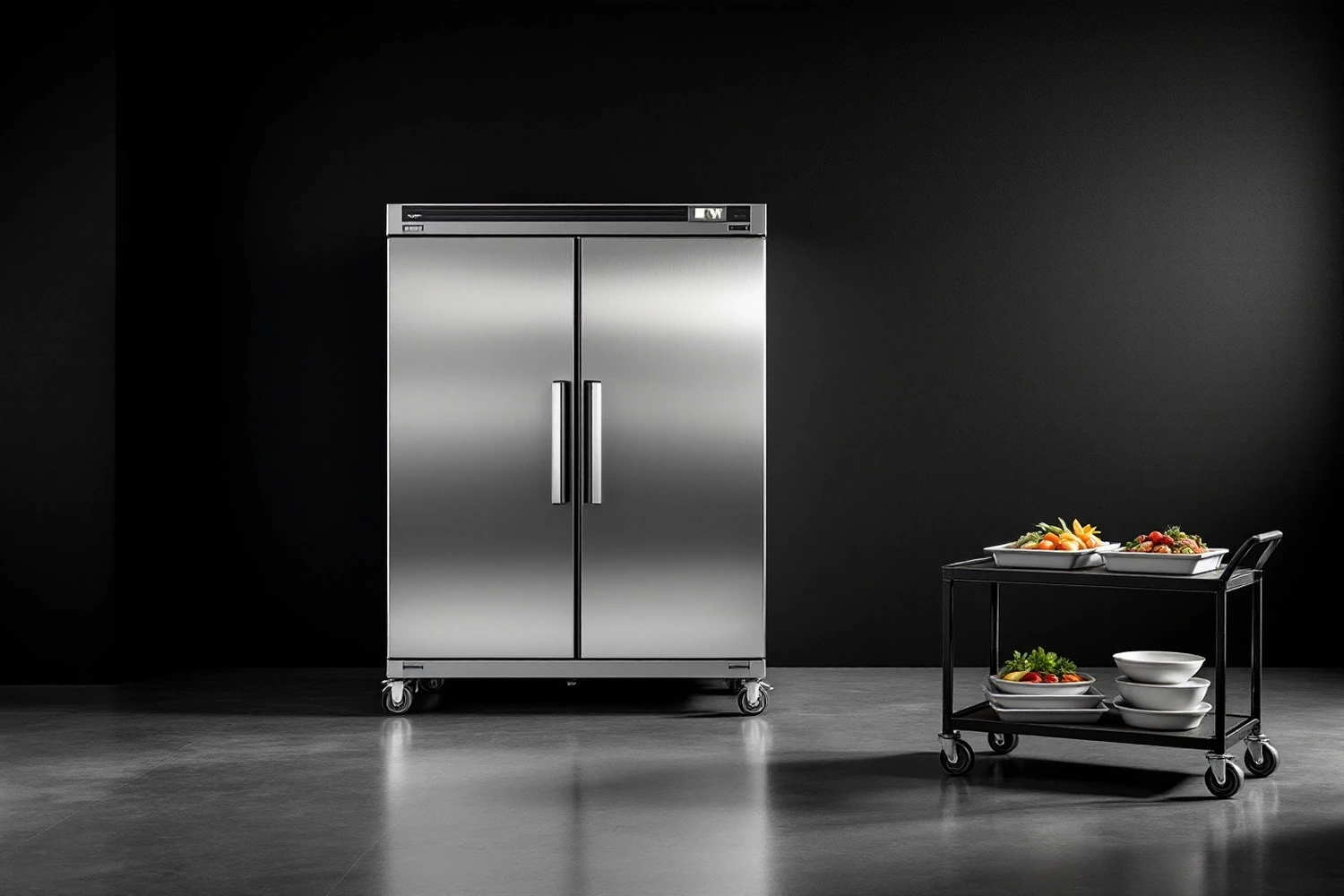
A 500-pax catering contract is not a bigger dinner service. It is a food manufacturing operation with restaurant-level deadlines.
The combi oven is the cooking half of this workflow; our commercial combi oven guide covers choosing and running one.
That single shift in framing is where most interstate expansions either hold together or quietly fall apart. A kitchen that turns out beautiful plates for 80 covers a night is built around one principle: cook to order, serve immediately, respond to the room. A kitchen feeding 500 to 1,000 people a day off a fixed contract is built around the opposite principle: produce in advance, cool safely, store, regenerate, dispatch. Same chefs, same brands of equipment, completely different physics. The operators scaling north for the Brisbane 2032 build-out who try to stretch the first model into the second are the ones who lose money before their first service.
This is the guide to the architecture that actually carries volume: Cook and Chill, built around combi ovens and blast chillers, and the supporting systems that turn a pile of expensive machines into a production line that survives an audit. It covers when a kitchen genuinely needs to make this jump, what the cooling law requires, where the money is won and lost, and the questions worth answering before a central-kitchen lease is signed.
The Verdict Before the Detail
For operators and caterers who want the short version before the working:
- Load 50 kg of hot food straight into a standard walk-in coolroom, and the heat load drags the whole room into the danger zone, putting the new batch and everything already stored there at risk, and breaching the cooling requirements of the Food Standards Code.
- Try to produce 500 portions on a traditional six-burner range, and labour cost and batch-to-batch inconsistency erode the margin before the first tray leaves the kitchen.
- Build to scale legally and reliably, and a properly designed Cook and Chill unit, combi ovens paired with blast chillers, is the only architecture that satisfies both the physics of volume and Australian food safety law.
None of this is about buying bigger machines. It is about building a different kind of kitchen.
When Does a Kitchen Actually Need a Central Production Unit?
Not every growing business needs a central production unit, and overbuilding is its own expensive mistake. The honest trigger is daily output and how that output reaches the customer. The table below is a starting frame rather than a substitute for a proper capacity calculation, but it sorts most operators quickly.
| Daily output | What the kitchen realistically needs |
|---|---|
| Under 100 covers or portions a day, served on site | A conventional line kitchen is appropriate. Cook to order works. |
| Roughly 100 to 300 portions a day | Volume pressure begins. A small Cook and Chill capability, at least one combi and a blast chiller, starts to pay for itself. |
| Roughly 300 to 700 portions a day | Combi ovens and blast chilling become structural, not optional. Passive cooling cannot keep up safely. |
| 700 to 1,000 or more portions a day | A full central production unit with cold-chain storage and dispatch is the only model that holds. |
| Any multi-site distribution or external catering contract | Single-site, cook-to-serve logic no longer applies, regardless of headcount. Production and service have to be decoupled. |
The last row is the one operators miss. The moment food is cooked in one place and eaten in another, or cooked on one day and served on the next, the kitchen has become a production facility whether or not anyone planned it that way. The contract requirements of a 2032 venue or a large catering tender assume exactly this kind of production: high volume, consistent, traceable and able to survive an inspection.
The 500-Pax Collapse: When Line-Kitchen Thinking Meets Volume
How a profitable restaurant can lose a contract in its first week without a single piece of equipment breaking.
Picture a well-regarded single-site restaurant that wins a 500-person daily catering contract for early venue works. The food is good and the team is capable, so they keep doing what has always worked: cook on the day, serve fresh. To get ahead of the morning, the kitchen cooks 80 litres of curry in large stockpots the night before, and pushes the near-boiling pots straight into the existing walk-in coolroom to cool overnight.
Here is what the drawing never accounted for. A walk-in coolroom is designed to hold food that is already cold. It is not designed to pull a large heat load out of near-boiling liquid. The thermal mass of 80 litres at close to 100°C overwhelms the refrigeration system. The room temperature climbs, sits well inside the 5°C to 60°C danger zone for hours, and does not recover overnight. By morning the curry has spent the whole night at temperatures where bacteria multiply fastest, and the premium seafood and dairy stored in the same room has been dragged through the same temperature ride.
The curry is gone. So is the stock that was sharing the room. But the write-off is the smallest part of the bill. A new venue that draws a compliance notice in its opening weeks carries that into every future tender. The contract has penalty clauses. The insurer takes note. The local Environmental Health Officer now has a reason to look closely at every subsequent inspection. Lost product is a number you can absorb once. A damaged reputation during the exact window you were trying to win work in is the cost that compounds.
This is not a freak event. It is the predictable result of running a responsive single-site kitchen at production volume, and it traces back to one misunderstanding about what a coolroom can physically do.
Why a Coolroom Cannot Cool: The Holding Trap
The mistake at the centre of that collapse is treating a coolroom as a cooling device. It is a holding device. Its refrigeration system is sized to remove the modest, steady heat that leaks in through walls and open doors, and to keep already-cold product at temperature. It is not sized to extract the enormous, concentrated heat sitting inside a deep container of hot food.
Hot food in a coolroom creates a second problem on top of the first. The heat radiating off it lifts the temperature of everything nearby, so a single bad decision compromises the safety of the whole room. And the deeper the container, the slower the centre cools, because the cold can only reach the core by working inward through the mass. A large pot of stew can sit above safe temperature at its centre for many hours while the surface already feels cold to the touch. Stirring helps a little. Shallower containers help more. Neither is a reliable answer at the volumes a contract kitchen runs. The reliable answer is a machine built specifically to extract heat fast, which is where the law and the physics meet.
The Cooling Law You Cannot Argue With
Australian food safety law is specific about cooling, and it is the hardest line in this entire guide. Standard 3.2.2, Clause 7(3) of the Australia New Zealand Food Standards Code requires that cooked potentially hazardous food be cooled from 60°C to 21°C within two hours, and then from 21°C to 5°C within a further four hours. That is a six-hour window in total, and it applies unless the business can demonstrate that an alternative process keeps the food just as safe.
Read that again with a stockpot in mind. A large volume of hot food cooling passively in a coolroom will not clear that window, and the regulators say so directly. The guidance from Food Standards Australia New Zealand names rapid-cooling equipment, a blast chiller, as the way to cool food safely at volume, and state food authorities note that large cooked masses cannot meet the six-hour requirement unless their volume is broken down or a validated alternative is in place. For a kitchen producing in batches measured in tens of kilograms, passive cooling is not a slower option. It is a non-compliant one.
This is the legal floor beneath the whole Cook and Chill argument. You are not buying a blast chiller for speed or for convenience. You are buying it because at production volume there is no lawful way to cool food without one.
The Blast Chiller: A Heat-Extraction Engine, Not a Fast Fridge
A blast chiller is not a colder, quicker refrigerator. It is a different machine doing a different job. Where a fridge holds a temperature, a blast chiller drives a high volume of sub-zero air across the food at speed, stripping heat out through the surface and pulling the core temperature down through the danger zone before bacteria get the hours they need to multiply.
The performance figure to know, and to specify, is the rated cycle. A standard commercial blast chiller is rated to bring food from a core temperature of +70°C down to +3°C in 90 minutes. That single figure clears the entire six-hour cooling window with room to spare. Higher-grade units accept a hotter starting point, taking food from +90°C to +3°C in the same 90 minutes, and a blast freezer pushes further, to a core of -18°C in around 240 minutes for longer storage.
That distinction matters at the purchase order. If your process puts genuinely near-boiling product into the machine, a unit rated only from +70°C will not hold its 90-minute promise on that load. The question to put to a supplier is the starting temperature the rated cycle assumes, set against the temperature your food actually enters at. A figure quoted for a gentle starting point and the same figure for boiling stock are not the same machine.
There is a second feature that earns its place in a contract kitchen, and it is the one that satisfies an auditor rather than a chef. A commercial blast chiller carries a core temperature probe and logs the cooling cycle. That record, time and temperature, batch by batch, is exactly the evidence a food safety auditor or an Environmental Health Officer asks for. At the scale of a 2032 venue contract, being able to prove the food was cooled correctly is worth nearly as much as cooling it correctly.
The Engine Room: Combi Ovens Against Traditional Burners
The cooling side of Cook and Chill gets the attention, but the production side is where the line kitchen really runs out of room. A traditional gas range has a hard ceiling that has nothing to do with how good the chef is. One cook can realistically watch four pans at once. Past that, food sits, doneness drifts, and quality becomes a function of how many hands are on the line rather than a property of the process. At 500 portions, that ceiling is reached before lunch.
A combi oven removes the ceiling in two ways. The first is sheer batch output: a single large roll-in combi can hold and cook well over a hundred portions to an even, repeatable result in one cycle, with one operator loading and unloading rather than tending every pan. The second is consistency. Because the combi controls temperature, humidity and time precisely, the two-hundredth portion comes out like the first, which is the entire point when a contract specifies a standard and an inspector can sample any tray. Add the range of a single machine, roast, steam, combination and gentle low-temperature holding, and a great deal of separate equipment and separate labour collapses into one controlled box.
There is also a direct financial reason the combi pays for itself, and it is the one most operators underestimate, because it never appears on an invoice.
The Hidden Profit in Yield Retention
When you roast high-value protein in a dry conventional oven, a meaningful share of the weight leaves as evaporated moisture. Precise steam injection in a combi oven holds much of that moisture in the product. The difference shows up on the scale, and at volume it shows up on the profit line.
The arithmetic is worth walking through, with the figures stated as an illustration rather than a guarantee, because the real numbers depend on your product, your cuts and your prices. Take a 100 kg batch of a high-value protein. In a dry oven, a moisture loss of around 25 per cent leaves roughly 75 kg of sellable, plated weight. In a combi with steam, a loss closer to 10 to 12 per cent leaves roughly 88 to 90 kg. That is 13 to 15 kg of additional sellable weight from the same raw input, on every batch.
Put a cost against it. At an illustrative 12 dollars a kilogram, that retained weight is worth somewhere around 156 to 180 dollars a batch. Three batches a day sits in the order of 468 to 540 dollars. Across 26 trading days, that is roughly 12,000 to 14,000 dollars a month in product that would otherwise have evaporated. The exact figure will move with every input, and a serious operator should run it on their own numbers rather than these. But the direction is the point. The yield a combi retains is not a soft benefit. Set against the price of the equipment, a gap of this size is what makes the payback arithmetic work in months rather than years for a high-throughput kitchen.
The One-Touch Production Line: Trolley Workflow
At production scale, food should stop being carried by hand. The architecture that ties the combi and the blast chiller together is the roll-in trolley, and the goal is a flow where a single loaded rack moves through the whole process with the fewest possible touches.
The standard flow runs like this. Raw or prepared product is loaded onto gastronorm trays on a mobile rack. The rack rolls directly into a roll-in combi oven and cooks. The same rack rolls straight out and into a roll-in blast chiller, where the food is pulled down to a safe core temperature. A cover goes on, and the rack rolls into the coolroom or blast freezer for storage. Later, at the venue or a satellite site, the food is regenerated in a combi or a water bath and served. Nothing is decanted, re-trayed or hand-carried between stages.
That matters for more than labour, though the labour saving is real. Every manual transfer is a chance to contaminate food and a chance to add minutes in the danger zone. A one-touch trolley flow strips both risks out of the process by design. It also imposes requirements on the building, which is where the difference between a pile of equipment and an actual production unit becomes clear.
A Central Production Unit Is Not a Shopping List
The most expensive misunderstanding in this whole space is the belief that buying a combi and a blast chiller turns a kitchen into a central production unit. It does not. A central production unit is a controlled system, and the equipment is only the part of it that arrives on a pallet. Specify the machines without the system around them and you have bought two very capable appliances that cannot legally or practically do the job you bought them for.
The system that has to exist around the equipment includes, at a minimum:
- Separated raw and cooked zones, so the flow of food never crosses back on itself and cross-contamination is designed out rather than managed by hope.
- A documented HACCP flow, with the cooling validation pathway worked out in advance, not improvised after the first inspection.
- Temperature records, captured by probe at the cooling step and retained, because at this scale you have to prove compliance, not assert it.
- Drainage and flooring rated for heavy roll-in traffic, with floor wastes positioned for the volume of water a production kitchen sheds.
- Electrical capacity, which for equipment of this size almost always means three-phase power, and often a switchboard upgrade.
- Mechanical ventilation and exhaust designed to standard, handling both the heat and the moisture load a bank of combis throws off.
- Warewashing capacity sized for a flood of trays and racks, which a domestic-logic dishwasher cannot absorb.
- Cold-chain dispatch, the refrigerated transport that carries food to the venue or satellite without breaking the cold chain you spent all that money to maintain.
- Trained staff, because a production system run by people who do not understand the cooling discipline behind it fails in exactly the same way an unequipped kitchen does.
Leave any one of these out and the others cannot carry the load. This is the line that separates an equipment purchase from an engineering decision, and it is the reason the right question before signing a lease is not which combi to buy, but whether the site can support the system the combi belongs to.
The Power and Ventilation Reality
Two of the items on that list quietly decide project timelines and budgets, and both tend to surface late, when they are most expensive to fix.
The first is power. Commercial combi ovens and blast chillers of any meaningful size are three-phase machines. A building wired for a cafe will not run them, and discovering that after the lease is signed means a switchboard upgrade and, sometimes, a wait on the network provider. This is worth confirming before anything else, because no amount of good equipment selection survives a site that cannot power it. Our guide to single-phase against three-phase power and switchboard upgrades covers what to check and what an upgrade involves.
The second is ventilation. Commercial kitchen exhaust in Australia is governed by AS 1668.2, with AS 1668.1 covering the fire-rating of the ductwork, and the exhaust system is not something to resolve after the fit-out. It drives ceiling heights, roof penetrations and the make-up air supply that replaces the air the hood pulls out. There is a current trap worth knowing: AS 1668.2 was substantially revised in late 2024, and a system designed to the older edition can be knocked back by a certifier working to the version the National Construction Code now calls up. Lock the edition in writing at the start. A combi-heavy production kitchen also throws off a serious moisture load alongside the heat, and in a humid climate that load compounds. Why southern kitchen designs fail in Queensland's heat and humidity covers the make-up air and condensation problem in detail. The ventilation here has to be designed for both heat and moisture, or the kitchen fights internal condensation on top of everything else.
Labour Economics: Decoupling Production From Service
The argument that finally makes the numbers work for a central production unit is not about equipment at all. It is about when the work happens. A traditional line kitchen chains skilled, expensive labour directly to the service peak: the busier the night, the more chefs on the pass, the more overtime and penalty rates the roster absorbs. Production and service happen at the same moment, so the kitchen is overstaffed when it is quiet and stretched thin when it is full.
Cook and Chill breaks that chain. Because food is produced in advance and regenerated later, production can be level-loaded across the quieter early-week days, when labour is cheaper and the kitchen is calm. The peak event days then become mostly regeneration and service, tasks that need fewer highly skilled hands. In a market where skilled chefs are hard to find and penalty rates are a real line on every roster, shifting the heavy production away from the peak is often the difference between taking a large contract profitably and taking it at a loss. The equipment makes the decoupling possible. The decoupling is what makes the money.
Regeneration: The Step That Gets Forgotten
Cook and Chill is a cycle, not a one-way trip, and the final stage is the one operators plan for least. Food that has been cooked, chilled and stored has to be brought back up to serving temperature safely before it reaches a plate, and that regeneration step is a food safety control point in its own right, not an afterthought handled at the venue.
The discipline is the mirror image of cooling. Where chilling has to move food down through the danger zone fast, regeneration has to move it back up through the same zone fast. The regulator's guidance is to reheat potentially hazardous food rapidly to a core of 60°C, ideally within two hours, then hold it at 60°C or above through service. Slow reheating in an undersized unit, or holding food in the gap between warm and properly hot, gives back the safety the blast chiller bought in the first place.
This has a direct equipment consequence at the satellite end. The combi or water bath doing the regeneration has to have the capacity to bring whole racks up to temperature inside that window, and the holding equipment at the pass has to keep it there. A central production unit that invests heavily in cooking and chilling, then regenerates through a couple of undersized units at the venue, has built a bottleneck at the one stage the customer actually experiences. The regeneration capacity has to be sized to the same volume as everything upstream of it.
The Questions Worth Answering Before You Sign the Lease
Most of the failures in this guide were not equipment failures. They were planning failures, locked in before a single machine was ordered, when a site was committed to without testing whether it could carry a production system. Run these before the lease is signed, not after.
- What is the realistic peak daily output, in portions, that this kitchen has to produce, and does that number sit in line-kitchen or central-production territory?
- What is the cooling validation pathway, and does the blast chilling capacity clear the Food Standards Code window for the batch sizes actually being cooked?
- Does the building have three-phase power of sufficient capacity, or is a switchboard upgrade required before anything is installed?
- Can the floor and drainage carry heavy roll-in equipment and the water volume of a production kitchen?
- Does the exhaust and make-up air design meet the current edition of the ventilation standard, and does it handle the moisture load as well as the heat?
- Is there warewashing capacity for the volume of trays and racks the production line generates?
- Is refrigerated dispatch in place to carry food to the venue or satellite sites without breaking the cold chain?
Every one of these is cheaper to answer on paper than to discover on site. A wrong answer found before signing is a different lease. A wrong answer found after is a rework bill.
Questions Operators Actually Ask
What is the difference between a blast chiller and a commercial freezer?
A freezer holds food that is already frozen. A blast chiller rapidly extracts heat from hot, cooked food to pull it through the danger zone quickly, typically from a core of +70°C to +3°C in around 90 minutes. A freezer is for storage; a blast chiller is for safe, fast cooling. Putting hot food in a standard freezer does neither job well and risks the rest of its contents.
How many portions can a combi oven produce per cycle?
It depends heavily on the product, the tray depth and how the oven is loaded, but a large roll-in combi commonly produces well over a hundred portions per cycle, and bigger configurations more. The output figure matters less than the consistency: the real advantage at volume is that the whole batch comes out the same.
Do I need three-phase power for a central production kitchen?
Almost always, yes. Commercial combi ovens and blast chillers of meaningful size are three-phase equipment, and many existing buildings need a switchboard upgrade to run them. Confirm the power supply before committing to a site, because it is one of the most expensive things to fix after the fact.
Can I cool hot food in a normal walk-in coolroom?
Not at volume. A coolroom is designed to hold cold food, not to extract a large heat load. Pushing hot food into it raises the temperature of everything stored there and will not meet the legal cooling window for large batches. Rapid-cooling equipment is the correct tool, and the food regulator names it as such.
When does a restaurant need to move from a line kitchen to a central production unit?
The trigger is daily output and how food reaches the customer. Broadly, sustained production above a few hundred portions a day, or any move into multi-site distribution or external catering contracts, is the point where cook-to-serve logic stops working and a Cook and Chill production system becomes necessary.
What does Cook and Chill actually mean?
It is a production method where food is cooked in batches in advance, rapidly chilled to a safe storage temperature, held, and then regenerated and served later. It separates the moment of production from the moment of service, which is what lets a kitchen produce at high volume without cooking everything to order on the day.
The KW Central Kitchen Readiness Review
Olympic-scale and large catering contracts do not forgive a kitchen that was worked out on site. They assume a production system that is proven, consistent and able to survive an audit, and the operators who win them are the ones who planned the system before they committed to the building.
KW Commercial Kitchen operates from a Sydney base with Australia-wide delivery, and supplies the heavy assets a central production unit is built on: roll-in combi ovens, blast chillers and freezers, and heavy-duty 304 stainless benches and trolleys. Before you sign a lease on a central kitchen, we review the whole system against what your contract actually demands:
- Production volume and the architecture tier it requires
- Cooling capacity and the blast chiller sizing to meet it
- Combi oven sizing for the batch output
- Three-phase power and switchboard requirements
- Ventilation and exhaust against the current standard
- Floor loading and drainage for roll-in equipment
- Warewashing capacity for the production line
- Cold storage and refrigerated dispatch
The point of the review is not to sell a longer equipment list. It is to make sure the site can carry the system before the money is committed, so the difference between a profitable contract and a costly one is settled on paper rather than discovered in the first week of service. Australia-wide delivery means the equipment reaches a Brisbane, Gold Coast or Sunshine Coast site on the build schedule, not after it.
Talk to us about a Central Kitchen Readiness Review before your next production-kitchen fit-out.