
Commercial Dishwasher Buyer’s Guide: Build the Washline Brief Before Comparing Models
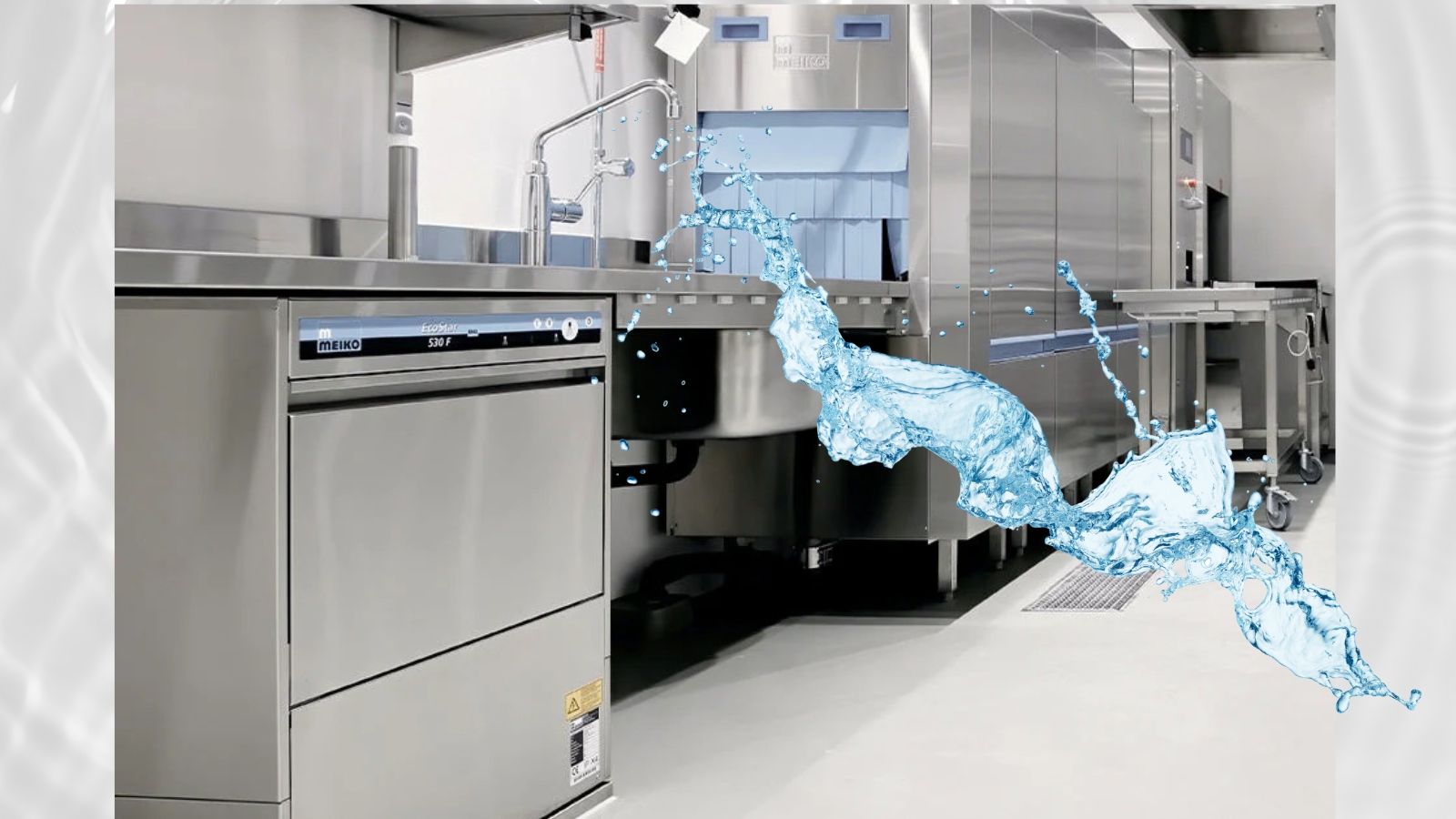
A commercial dishwasher should be chosen from the work it must clear, not from its shortest published cycle. Before comparing models, record what reaches the wash area during the peak, how it is racked, where each rack waits, which program the ware needs, and what the site can actually support. That evidence becomes the buying brief.
This distinction matters because the machine is only one part of the result. Food Standards Australia New Zealand separates cleaning from sanitising and tells businesses to pre-clean items, load them so water can reach every surface, follow the manufacturer’s instructions, use the appropriate sanitation program, and check that items finish clean and dry. A fast machine cannot compensate for a blocked spray pattern, an unworkable rack path or a process that has no clean landing space.
The practical buying question is therefore not “Which dishwasher is best?” It is: which complete washline can repeatedly turn this venue’s dirty-ware arrival into clean, dry, available ware under the exact program and site conditions?
Build the Rack Journey Brief before you ask for a model
The Rack Journey Brief is the reasoning tool for this guide. It follows one rack from the moment dirty ware arrives until clean ware is available again. Each observation changes a different part of the purchase; none can be replaced by a generic covers-per-hour claim.
| Record at the venue | How to make it evidence | What it changes |
|---|---|---|
| Dirty-ware arrival | Count actual plates, bowls, glasses, trays, utensils and cookware arriving across the busiest service window. Keep bar and kitchen streams separate. | The peak clearance demand and whether one mixed stream is sensible. |
| Tested rack loading | Load representative ware into the rack format being considered. Record how many pieces fit without nesting or blocking water access. | Pieces-per-rack input and rack type; not a universal rack constant. |
| Soil and program | Group normal and difficult loads, then identify the exact manufacturer program intended for each. | The relevant cycle/program evidence. The shortest program may not be the applicable one. |
| Handling path | Time scraping, sorting, pre-cleaning, racking, loading, unloading and clean-ware removal during a representative peak. | Whether labour and bench flow, rather than wash time, set sustained throughput. |
| Queue and clean landing | Mark where dirty racks accumulate and how long clean racks occupy the outlet while drying or awaiting removal. | Inlet/outlet benching, rack buffer and crossover control. |
| Site evidence | Attach the exact water, waste, electrical, ventilation, access and water-treatment information verified for the site. | Which exact configurations can proceed to quote and which require specialist resolution. |
The brief deliberately uses observable inputs. “Busy restaurant”, “high volume” and “rapid cycle” are descriptions, not measurements. A supplier cannot resolve a queue it has not been shown, and a buyer cannot compare two offers fairly if each has been quoted against a different assumption.
Measure the queue the washline must clear
Start with the busiest defensible service window in your own records. Count wash items as they arrive, not just covers sold. A single cover may create very different wash demand depending on courses, shared plates, bar service, trays, kitchen utensils and the degree to which cookware enters the same stream.
Then test representative rack loads. Food Standards Australia New Zealand’s loading guidance gives the essential boundary: water must be able to reach all surfaces. If the trial rack relies on nesting bowls, crowding plates or mixing ware in a way that blocks access, its piece count is not a valid planning input.
A transparent planning calculation is:
Observed peak items ÷ tested items per rack ÷ available clearance hours = required rack clearances per hour.
Run it separately for streams that cannot share the same rack, chemistry, program or handling route. Keep the original counts beside the result. This is a demand calculation, not proof that a machine will sustain that rate: loading time, applicable program, recovery behaviour, tank condition, clean-side clearance and staff availability still have to be reconciled.
Do not add a universal “safety factor” borrowed from another venue. Instead, show the observed variation between representative peaks and agree how much operating headroom the business wants to buy. That keeps contingency visible as a commercial decision rather than hiding it inside a made-up constant.
Find where the rack actually waits
Follow the rack in order. If dirty ware waits to be scraped, a faster wash chamber may simply deliver racks to the same blocked inlet more quickly. If clean racks remain at the outlet because there is nowhere to land or air-dry them, the machine can be idle while its published cycle remains impressive.
- Arrival: Can kitchen, bar and dining ware reach the wash area without colliding with clean traffic?
- Sort and pre-clean: Is there space, water access and labour to prepare the load in the way the selected process requires?
- Rack: Are the right racks available for the actual plates, glasses, trays, utensils and containers?
- Wash and sanitise: Which exact program applies, and what operating conditions does its manual require?
- Unload and dry: Can clean ware leave the machine without being touched by dirty ware, stacked wet or trapped in a full landing area?
- Return: Does the rack and ware get back to service before the next demand pulse?
The slowest recurring step is the first redesign target. Sometimes that changes machine family. Sometimes it changes a bench, rack inventory, sorting rule or staffing position. That is why the buying unit is the washline, not merely the cabinet with a cycle button.
Choose the machine family after the ware and flow are known
Machine-family names are useful routing labels, but they are not recommendations. Use the evidence above to decide which family deserves an exact-model comparison.
| Family to investigate | Evidence that makes it relevant | Question that remains open |
|---|---|---|
| Undercounter dishwasher | A bounded rack queue, compatible ware and a workflow where front loading/unloading does not create the peak wait. | Can the exact program and site configuration sustain the measured rack journey? |
| Dedicated glasswasher | A distinct glass stream whose rack, chemistry, presentation and return-to-bar needs should not be merged into the kitchen queue. | Is a separate bar process justified? Use the glasswasher versus commercial dishwasher comparison. |
| Passthrough dishwasher | A rack flow that benefits from a continuous dirty-side to clean-side bench path and hood operation. | Do the full bench, site and handling conditions fit? Continue with the passthrough dishwasher selection guide. |
| Utensil washer | Bulky trays, containers, pots or production utensils that do not fit or wash appropriately in the plate/glass stream. | Which exact chamber, rack and program are documented for the real load? |
| Rack conveyor or flight system | A sustained, measured flow that exceeds the workable rack handling pattern of batch machines and justifies a planned washroom system. | Which configuration, transport rate, zones, inlet/outlet equipment and operating plan support the demand? |
Manufacturer evidence reinforces this conditional approach. Winterhalter publishes different rack formats and programs within its passthrough family, while its rack-conveyor range spans multiple configurations. HOBART’s Australian pages likewise bind nominal capacity to an exact product and, in one undercounter example, to a double-rack arrangement. Those figures are useful only with their conditions intact.
Translate brochure capacity into venue throughput
A cycle time is the time assigned to part of the machine process. Venue throughput is the rate at which the whole rack journey returns usable ware. They are related, but they are not interchangeable.
For every shortlisted model, ask the supplier to identify the exact program used for the stated capacity, the rack format, relevant configuration, inlet conditions and any operating mode that changes the rate. Then place the venue’s measured handling time around it. If staff need longer to prepare or clear each rack than the machine needs to wash it, the handling path governs sustained output.
Also ask what happens when the chosen program, incoming services or machine controls do not support the headline rate. One exact HOBART conveyor model publishes several rack-rate settings; that alone is enough to show why “racks per hour” must not be detached from the selected operating condition. It does not prove what any other model or venue will achieve.
This is the key editorial judgement of the guide: use nominal capacity to open a verification question, never to close the purchase decision. A credible quote should make the configuration and assumptions inspectable.
Attach site evidence before the shortlist hardens
Do not choose a machine and ask the site to adapt later. Give the supplier a current site sheet and require the exact-model document to be reconciled against it. The sheet should cover the available electrical service, water supply, waste route, ventilation or room-load constraints, access path, proposed bench arrangement, water condition and chemical setup—without the buyer inventing the required values.
Fixed water and waste questions belong to the commercial dishwasher plumbing requirements guide and the responsible licensed owner. If steam, space or ventilation is constraining the choice, use the dishwasher sizing and ventless site audit. These pages define their specialist decisions; this buyer guide only requires their evidence to be present before purchase.
Stop when an exact-model requirement and the verified site condition disagree. Do not resolve it by assuming a pump, booster, adapter, circuit, drain arrangement, heat-recovery option or ventilation exception is standard. Ask the supplier and the relevant qualified professional to document the accepted configuration.
Make hygiene acceptance part of the purchase
The buyer is not purchasing a claim of “hygienic washing”; the venue needs a process it can operate and verify. FSANZ guidance says to follow the manufacturer’s instructions, use the right detergent or sanitising chemical, pre-clean, load for water access, use the program designed for sanitation, and check that items are clean and dry. For businesses within the relevant scope, Standard 3.2.2A may also require substantiation of prescribed controls. Venue classification belongs to the business’s food-safety owner and regulator.
Before acceptance, require the exact operating instructions, program identification, rack setup, chemical/water-treatment proposal, commissioning record, staff handover and the agreed way the venue will verify results. A manufacturer describes commercial warewashing as a system of machine, water treatment, chemicals and racks; use that statement as a scope prompt, not as proof that a particular package is compliant or economical.
If an existing machine drains normally but ware is not clean, use the poor wash-result checks. If the current incident is retained water or a failed drain event, preserve the evidence and follow the commercial dishwasher drain-fault guide. Neither symptom should be converted into a replacement recommendation until its owner has done the relevant work.
Compare quotes against the same evidence
Once the Rack Journey Brief and site sheet are stable, compare every offer line by line. Price without scope parity is not a useful comparison.
| Require in each offer | Why it matters | Evidence to retain |
|---|---|---|
| Exact model and configuration | Options can change rack format, program, services and stated capacity. | Current specification sheet, manual and configuration schedule. |
| Applicable program and capacity basis | The shortest cycle may not suit the ware or required process. | Program name, cycle conditions and manufacturer-stated rate with assumptions. |
| Rack and handling package | Wrong racks or missing inlet/outlet capacity can move the bottleneck outside the chamber. | Rack types/counts and the proposed dirty-to-clean layout. |
| Services and site responsibility | Unresolved electrical, water, waste, ventilation or access work can stop installation. | Site reconciliation, exclusions and named responsibility for each action. |
| Chemistry and water treatment | The operating system extends beyond the washer cabinet. | Proposed products/settings, water evidence and commissioning responsibility. |
| Commissioning, training and service path | The venue needs an operable process and a clear owner when evidence changes. | Handover scope, service contact, response terms and exact warranty documents. |
| Whole commercial scope | Current price, availability, freight and finance terms can change independently of technical fit. | Dated written quote and the live commercial owner’s terms. |
Only now is a product shortlist useful. Take the completed brief to the current commercial dishwasher range or send it with a quote request. KW can then compare current models against a defined rack journey and site boundary instead of guessing from venue labels.
The buying decision is ready to advance when every shortlisted offer answers the same measured demand, exact program, rack path, site evidence and acceptance requirement—and when every unresolved specialist item has a named owner.
Primary guidance: Food Standards Australia New Zealand — Cleaning and sanitising and Standard 3.2.2A overview. Manufacturer configuration context: Winterhalter Australia warewashing system, passthrough series, rack-conveyor series, HOBART FP and HOBART CP-L-A-DS. Exact-model documents and site advice govern the final configuration.