Commercial catering equipment includes compact benchtop appliances used for fast cooking, heating, holding and prep across cafés, restaurants, school
canteens and mobile catering. These units outperform domestic appliances—domestic models overheat and fail quickly in commercial service.
As part of your W4 Hotline & Quick-Service Zone (high-speed cooking & holding), catering equipment supports rapid workflows in spaces where
speed, plug-and-play power and minimal ventilation matter most.




Buying Guide: Commercial Catering Equipment
Catering equipment is designed for speed, portability and efficiency. These benchtop units enhance front-of-house service, satellite prep areas and compact kitchens without major installation or ventilation requirements.
Quick start for new operators: Most cafés begin with a microwave, grill, rice cooker and bain marie—a simple, fast and reliable core setup.
1. What Defines “Catering Equipment”?
- Benchtop operation: Designed for cafés, canteens and mobile setups.
- Plug-and-play: Most units run on 10A or 15A sockets (10A = standard plug; 15A = round earth pin socket).
- Minimal ventilation: Induction, microwaves and bain maries often need no canopy.
- Quick tasks, not heavy production: Benchtop units support the cookline—they do not replace it.
2. Power, Ventilation & Safety
- Power loading: Avoid running multiple 10A appliances on the same circuit—this can trip breakers.
- Ventilation: Many benchtop units are canopy-free, but grills and high-heat appliances may require local extraction.
- Airflow clearance: Leave ventilation space around microwaves, induction cookers and warmers.
- Auto-shutoff: Useful for safety and unattended cooking tasks.
3. Key Equipment Categories
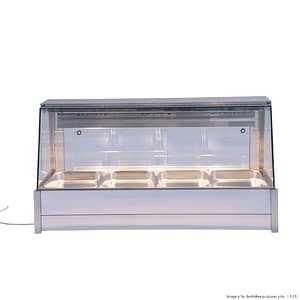
- Bain maries & hot food warmers: For holding only—not for cooking (must maintain 60°C+).
- Benchtop toasters & grills: Rapid heating for sandwiches and finishing.
- Food processors: Chopping and mixing for efficient prep.
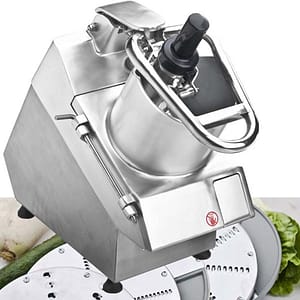
- Vegetable processors: High-volume cutting for canteens and aged care.
- Induction cookers: Fast, safe and flame-free.
- Commercial microwaves: Heavy-duty reheating for service kitchens.
- Rice cookers: Batch rice for cafés, schools and Asian venues.
- Soup kettles: FOH-friendly soup and sauce holding.
- Sous-vide circulators: Precise temperature cooking for batch prep.
- Vacuum sealers: Storage, portioning and sous-vide workflow integration.
4. Where Catering Equipment Is Commonly Used
- Cafés & coffee shops: Microwaves, grills, kettles, rice cookers.
- Restaurants: Secondary prep or holding stations.
- School canteens: High-volume rice, veg processors, bain maries.
- Aged care: Safe reheating and pureeing.
- Mobile catering / food trucks: Induction cookers, compact warmers and 10A microwaves.
Flame-free appliances like induction, soup kettles and bain maries are FOH-friendly and safe for customer-facing service.
5. Mobile Catering & Food Truck Essentials
For food trucks and portable setups, operators typically rely on:
- 10A commercial microwaves
- Portable induction cookers
- Soup kettles and compact warmers
- Small toasters / grills (check ventilation rules)
- Lightweight bain maries for hot holding
6. Commercial-Duty vs Domestic Motors
Food processors, blenders and slicers must use commercial-duty motors. Domestic units overheat or wear out quickly under continuous use and are not designed for commercial duty cycles.
7. Why Catering Equipment Matters
- Fast service: Perfect for peak periods and grab-and-go menus.
- Lower installation cost: No 3-phase wiring or canopy in many cases.
- Improved workflow: Relieves pressure on the main cookline.
- High ROI: Many appliances pay back within weeks via labour savings.
8. Leading Catering Equipment Brands We Supply
Choose premium brands for daily high-volume service; choose budget lines for low-volume or school canteen use.
- Apuro: High-value cooking & warming appliances.
- Anvil: Durable toasters, grills & kettles.
- Birko: Australian-made boilers & hot water equipment.
- Benchtar / Matador: Reliable light-duty options.
- Brice: Professional slicers.
- Dito Sama: European veg processing.
- Robot Coupe: Global leader in food processors.
- Caterlite / RFE / Elementry: Budget choices for schools.
- Ceado: Premium juicers.
- Cookrite / Gasmax: Entry-level cooking units.
- Hamilton Beach: Drink & food prep mixers.
- Orved: Vacuum sealing & sous-vide.
- Panasonic: Heavy-duty microwaves.
- Woodson: Proven Australian benchtop equipment.
- Scotsman / Brema: Ice makers for service stations.
9. Common Mistakes to Avoid
- Running multiple 10A appliances off one power circuit.
- Using domestic appliances in commercial service.
- Placing grills or toasters where there is no ventilation.
- Using bain maries to cook instead of hold food.
- Blocking airflow around induction or microwaves.
Frequently Asked Questions
What catering equipment does a café usually need?
Common essentials include a microwave, grill, rice cooker, bain marie and a small food processor.
Do these appliances need ventilation?
Most do not, but grills and high-heat appliances may require local extraction depending on regulations.
Can I use domestic appliances?
No—domestic units are not built for continuous service and may void insurance.
Are these safe for front-of-house?
Yes—flame-free appliances like induction, soup kettles and bain maries are FOH-friendly.
What equipment is best for food trucks?
10A microwaves, induction cookers, compact warmers and small grills are ideal for mobile setups.
Need help choosing catering equipment?
Call 1300 001 366 for menu-based recommendations and benchtop workflow planning.
Specs and catering workflow guidance validated by KW Commercial Kitchen.