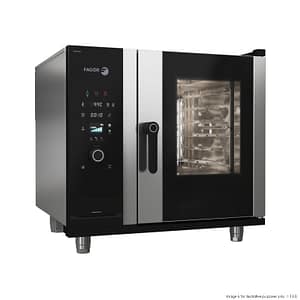
Commercial ovens are the heat engine of every professional kitchen, bakery and café. The right platform
keeps trays moving, protects food quality and stabilises your W4 hot line during peak service.
Use the oven families below to narrow your choice, then follow the planning guide on this page to confirm
capacity, utilities and W-Zone layout for your kitchen.


Commercial Oven Planning Guide for Australian Kitchens
Choosing the right commercial oven shapes how efficiently your kitchen operates. Instead of comparing brands first, start with your menu type, service volume, utilities and overall W-Zone layout. Once these are clear, selecting an oven family becomes much simpler.
Why Plan Your Commercial Oven Line with KW Commercial Kitchen?
KW Commercial Kitchen works with cafés, bakeries and restaurants across Australia to build oven lines that survive real peak demand. We look at your menu, trays, power or gas supply, and hot-line flow before recommending any model.
Our signature strength is whole-line thinking – coordinating ovens, cooktops, fryers and refrigeration into one compliant, high-efficiency W4 cookline rather than treating each unit in isolation.
- Menu-based oven selection for different business types and service speeds.
- Support across key oven families and budget levels, from bakery ovens to hot-line combis.
- Guidance aligned with FSANZ for safe cooking and reheating practices.
- Planning that leaves room to add pizza, conveyor or speed ovens as your menu grows.
View all commercial bakery equipment at KW Commercial Kitchen
1. Match Your Business Type to the Right Oven Family
The oven family you choose has more impact than any single feature. As a quick guide:
- Cafés: A convection-style baking oven for pastries plus a compact high-speed platform for toasties and snacks.
- Pizzerias: Pizza or conveyor-style ovens focused on base colour, deck temperature and slices per hour.
- Restaurants and hotels: Multi-function ovens that handle roasting, steaming and regeneration in one footprint.
- Bakeries: Bakery-format convection or deck ovens matched to 600×400mm trays and dough recipes.
- QSR and chains: Conveyor and rapid-cook platforms that standardise timing and colour across multiple stores.
- Rotisserie sites: Rotisserie ovens that combine consistent cooking with front-of-house display.
If you are unsure where to start, list your top 10 menu items and estimate how many portions you must send in a 15–30 minute peak window. This usually points clearly to one or two oven families.
2. Capacity, Tray Format and Workflow
Capacity is more than “how many trays fit inside the chamber”. Consider:
- Tray format: GN 1/1 is common for combi and restaurant ovens, while 600×400mm trays dominate bakery lines.
- Number of levels: Smaller venues may be comfortable with 4–6 levels. Bakeries and production kitchens often need 10–20+ levels across one or more stacked ovens.
- Service style: Batch cooking allows you to work with fewer, larger ovens; cook-to-order menus often benefit from multiple smaller units to avoid bottlenecks.
- Footprint and loading: Countertop ovens are ideal for tight kitchens, while floor-standing and roll-in ovens match trolley-based production.
3. Power, Gas, Water and Ventilation
An oven that your site cannot power or ventilate will cost time and money. Always confirm utilities before you purchase:
- Electrical supply: Compact ovens can run on 10A or 15A single-phase power, while higher-output or stacked ovens often require dedicated 3-phase circuits. Ask your electrician to confirm spare capacity on your switchboard.
- Gas supply: Gas ovens need correctly sized pipework, isolation valves and commissioning by a licensed gas fitter, especially where several appliances share the same gas line.
- Water quality: Steam-capable ovens require cold water and drainage. In hard-water areas, the right filtration or softening system is essential to limit scale and protect internal components.
- Ventilation: High-heat roasting, baking and pizza production usually require a mechanical canopy sized to suit heat and grease load. Always confirm requirements with your certifier or mechanical contractor.
4. KW W-Zone System · Oven Placement in W4 Cookline Zone
In the KW W-Zone System, all commercial oven families sit in W4 — Cookline Zone(热厨区). This keeps heat and steam in a controlled zone and supports a smooth flow from goods-in to service and dishwashing.
- W1–W3: Goods-in, cold storage and prep move ingredients toward the cookline.
- W4: Ovens, ranges, woks, fryers and grills form the main heat engine of the kitchen.
- W5: Service and pass receive finished dishes ready for handover to front-of-house.
- W7: Dishwash and hygiene manage the dirty-to-clean flow in a separate zone.
Keeping ovens clearly within W4 concentrates extraction, gas and power services in one corridor and reduces heat spill into W3 prep or W7 dishwashing. It also makes it easier to extend your cookline later with additional pizza, conveyor or combi units.
5. Food Safety and FSANZ Compliance
Under FSANZ Standards 3.2.2 and 3.2.2A, your oven line plays a central role in managing food safety risks:
- Reaching safe core temperatures for poultry, minced meats and other high-risk foods.
- Reheating food quickly and evenly as part of your 2-hour / 4-hour rule procedures.
- Using timers, probes and where available digital logging to record critical temperatures for HACCP and audits.
- Balancing temperature and humidity to reduce shrinkage and overcooking while staying well within safe limits.
Many modern ovens offer core temperature probes and programmable recipes, making it easier for rotating staff to repeat safe settings every day.
6. Energy Use, Cleaning and Lifecycle Cost
The price tag is only one part of an oven’s cost. Over its life, energy consumption, cleaning time and service support can have a bigger impact:
- Insulation and door design: Better insulation reduces heat leak into the kitchen and lowers energy use.
- Eco and standby modes: Intelligent controls reduce idle consumption between rush periods without slowing recovery.
- Cleaning systems: Self-clean or assisted-clean programs save labour and keep glass and chambers in good condition.
- Brand and service network: Established brands with strong parts and service support deliver better uptime and more predictable maintenance costs.
7. A Simple 3-Step Path to Choosing Your Commercial Oven
- Define your menu and peak volume: List your hero dishes and estimate portions per hour at peak.
- Confirm site utilities: Check available power, gas, water and ventilation now and for future expansion.
- Choose the oven family: Decide whether a combi, convection, pizza, conveyor, rotisserie or high-speed platform best supports your menu and service style, then compare models within that family.
Once these three steps are clear, comparing individual oven models becomes faster, more objective and easier to document for your fit-out.
Commercial Oven FAQs
Do I need 3-phase power for a commercial oven?
Not always. Many compact ovens run on single-phase outlets, but larger or stacked units often require dedicated 3-phase circuits. Ask your electrician to confirm switchboard capacity, especially if you also operate fryers, dishwashers and other heavy loads on the same line.
Do all ovens require a canopy or exhaust hood?
High-fat roasting, pizza and heavy baking commonly require a mechanical canopy, while some compact rapid-cook platforms have specific venting allowances in their manuals. Always confirm ventilation requirements with your certifier or mechanical contractor before installation.
Can one oven handle everything on my menu?
A versatile combi or high-performance convection oven can cover a large portion of most menus, but busy sites often work best with more than one oven type – for example a combi for roasts and vegetables, plus a dedicated pizza or conveyor oven for bases and a high-speed unit for snacks.
Can KW help design my whole cookline, not just the oven?
Yes. We can help map your entire W4 cookline, including ovens, cooktops, fryers, grills and refrigeration, so workflow, utilities and FSANZ obligations align from day one. This is especially valuable when you are building a new site or upgrading several pieces of equipment at once.
Need help planning a complete commercial oven line?
Call 1300 001 336 and the KW Commercial Kitchen team can recommend
commercial ovens tailored to your menu, services per hour and W-Zone layout.
Specs validated by KW Commercial Kitchen.