

Butcher Shops

Cold Display Cabinets
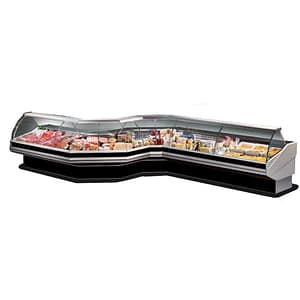
Tecnodom by FHE TDMR-I Series MR Black Corner Deli Display w/ Storage & Castors

Cold Display Cabinets
Tecnodom TDMR-E Corner Deli Display – 0–4°C, LED, Storage, Castors


Buying Guide: Deli Display Fridges
A deli display fridge is a purpose-built chilled showcase designed for presenting ready-to-serve meats, cheeses, salads, antipasti and prepared dishes at safe and consistent 2°C–8°C temperatures. Unlike standard upright fridges or cake displays, deli cabinets are engineered with serve-over visibility, wide food deck space, humidity-friendly airflow and angled product presentation to maximise both safety and merchandising impact. They are essential for cafés, delicatessens, supermarkets, sandwich shops and grocery retailers who rely on attractive chilled presentation to increase sales.
1. Serve-Over vs Self-Serve: Which Deli Display Do You Need?
Deli displays fall into two major categories:
- Serve-Over Deli Fridges: Curved-glass counters where customers view from the front while staff access and serve from the rear. Ideal for sliced meats, salads, antipasti and high-interaction service areas.
- Self-Serve Deli Merchandisers: Flat-glass or multi-deck units designed for packaged deli items and retail environments where customers select products directly.
Choosing the correct format ensures a smooth workflow and proper temperature stability throughout service hours.
2. Food-Safe Temperature Range: 2°C–8°C
Deli foods are sensitive to temperature changes. Stable cooling between 2°C and 8°C helps maintain safe conditions for:
- Cured and sliced meats
- Cheddar, brie, camembert and soft cheeses
- Fresh salads and antipasti
- Prepared dips, marinated vegetables and specialty items
3. Refrigerated Well (Cold Well) Stability
The refrigerated well anchors cold air at the base of the cabinet, ensuring consistent temperatures across the deck. It prevents front-zone warming caused by customer proximity, warm ambient conditions or display lighting.
4. Airflow Engineering: Not a Cake Display, Not a Beverage Fridge
Deli displays use medium-velocity airflow optimised for high-moisture foods:
- Deli Display: Medium airflow + humidity retention to prevent drying.
- Cake Display: Gentle airflow to protect delicate toppings.
- Beverage Display: Strong airflow for rapid cooling and recovery.
5. Front Zone vs Rear Zone Temperature
Because the glass front is exposed to ambient heat, the front zone naturally runs slightly warmer. The rear zone provides greater temperature stability and is preferred for storing higher-risk foods.
6. Curved Glass vs Flat Glass
Choose glass shape based on service style:
- Curved Glass: Classic serve-over deli style, better viewing angles and reduced glare.
- Flat Glass: Modern, retail-oriented look; suitable for self-serve or packaged items.
7. Under-Shelf Cooling
Premium deli displays include under-shelf cooling vents to eliminate warmer top tiers, ensuring cheese, meats and salads stay uniformly chilled across all display levels.
8. Lighting for Professional Merchandising
Lighting affects perceived freshness and colour accuracy.
- 3500K–4500K LED enhances natural deli tones.
- CRI 90+ maintains true colour of meats and cheeses.
- Directional lights reduce shadows and improve contrast.
9. Night Blind / Night Curtain
Many deli cabinets include night blinds, which reduce energy consumption overnight and improve temperature stability before morning trade.
10. Deck Size & Access Height
Wide decks accommodate deli trays, pans and platters. Counter height influences FOH usability:
- Lower counters: Better visibility for customers.
- Taller counters: Increased under-storage capacity.
11. Cleaning & Drainage
Deli displays require frequent cleaning for hygiene and odour control:
- Clear drainage channels
- Keep sliding door tracks free of crumbs and oil
- Clean the glass daily
- Vacuum condenser vents
12. Deli Display vs Bain-Marie
Deli displays are chilled cabinets. They are not suitable for hot foods and should not be confused with bain-marie hot displays.
13. Placement: Heat & Sunlight Risks
Avoid placing deli displays near:
- Ovens or grills
- Dishwasher steam vents
- Direct sunlight
- Unventilated corners
14. Not a General Display Cabinet
Deli displays are not suitable for:
- Beverages
- Raw meat or seafood
- High-risk prep-line food
- Cakes or mousse-based desserts
15. Food Safety
Maintaining 2°C–8°C is essential for preserving deli food quality, preventing bacterial growth and maintaining product texture.
16. Maintenance Requirements
- Clean the glass daily
- Check lighting for brightness
- Vacuum compressor vents
- Keep drainage channels clear
- Inspect gaskets for tight sealing
Brand Box: ANVIL Deli Display Cabinets
Brand Identity
ANVIL is a respected commercial food equipment brand known for reliable chilled display solutions trusted by Australian cafés, delis and supermarkets.
Signature Strength
- Stable 2°C–8°C performance
- Wide display decks with strong visibility
- Curved or flat glass configurations
- Energy-efficient airflow systems
Extended Benefits
- Ideal for meats, cheeses, salads and antipasti
- Durable construction for long service hours
- Easy rear access for fast service
- Reliable performance in Australian environments
Brand Link:

Related Categories
- Cold Display Cabinets
- Cake Display Fridges
- Retail Display Fridges
- Open Display Fridges
- Glass Door Fridges
Need Help Choosing a Deli Display?
Call our chilled display specialists on 1300 001 366 for help choosing the right deli display fridge for your store layout, menu and service flow.