
Commercial waffle and crepe makers deliver fast, consistent cooking for breakfast and dessert service in professional commercial kitchens. With powerful heating elements and precise thermostatic control, they produce golden waffles or thin, even crepes across cafés, hotels, food trucks and dessert kiosks.
Waffle makers use patterned moulded plates for deep Belgian or shallower American-style waffles, while crepe makers rely on flat heated plates for smooth batter spreading. Choose single units for compact counters or double, high-output machines for busy venues.
Commercial Kitchen Equipment
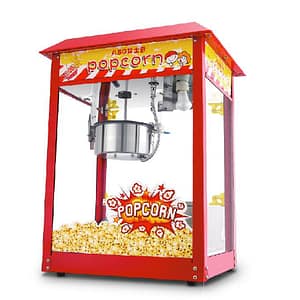
Kitchen Knock 392846 Popcorn Machine – 560mm, 1.5kW with Lighting

Catering Equipment
Apuro CT931-A Electric Crepe Maker – 400mm, 3kW Stainless Steel

Catering Equipment

Commercial Kitchen Equipment

Commercial Kitchen Equipment

Commercial Kitchen Equipment

Commercial Kitchen Equipment
Waring Commercial Mini Belgian Waffle Maker WMB400XNNA ( CH996)

Catering Equipment
Waring Commercial Belgian Waffle Maker Replacement Plates (FD469)

Catering Equipment
Benchstar DE-1E Crepe Maker – 1 Plate, 400mm | KW Commercial Kitchen

Catering Equipment
Waring DK079 Bubble Waffle Maker – Rotary Plates, 25 Waffles/Hour, 240V

Commercial Waffle Makers & Crepe Makers

Cafe Equipment
Waring DM874-A Double Waffle Maker – 50 Waffles/hr, Rotary Plates, Made in UK | 1.4kW

Commercial Kitchen Equipment


Catering Equipment

Catering Equipment
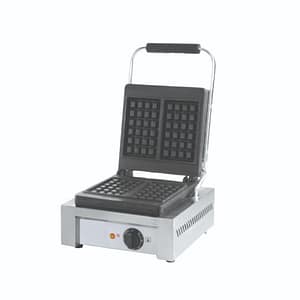
Benchstar UWB-2H Double Heart-Shaped Waffle Maker – Cast Iron, 2 x 21cm Plates, 240V


Catering Equipment
Apuro DB170-A Professional Waffle Maker – High Output Commercial Waffle Iron
Buying Guide: Commercial Waffle & Crepe Makers
Commercial waffle and crepe makers are purpose-built appliances used in cafés, hotels, food trucks and dessert venues for high-volume breakfast and service. Unlike domestic appliances, commercial units deliver durable, consistent heating through thicker plates, stable thermostats, faster recovery rates and continuous-duty components. Waffle makers use patterned moulds to create waffles with structured pockets, while crepe makers rely on a completely flat, evenly heated plate to spread batter smoothly. These two appliances cannot replace each other: waffles require cavities to rise and crisp, whereas crepes need a level, unobstructed surface to form thin, uniform discs.
1. Waffle Maker vs Crepe Maker: Core Functional Differences
Waffle makers include patterned plates for two profiles:
- Belgian waffles – deep pockets and thick batter; crisp exterior with soft interior.
- American waffles – shallower pockets, thinner batter, quicker cycle times.
Crepe makers use smooth, circular plates in 330mm, 400mm or 450mm diameters, required for even spreading. Plate flatness and warp resistance are critical: uneven plates cause crepe thickness inconsistencies. Waffle units must manage hinge alignment, plate depth and uniform pressure, while crepe makers must maintain perfect levelness and consistent temperature across the surface.
2. Plate Materials & Thermal Performance
Plate material determines heat retention, recovery speed and cooking quality:
- Cast iron plates – Highest thermal mass; excellent crisping; best for Belgian waffles. Require seasoning if uncoated.
- Aluminium plates – Fast heat-up and recovery; ideal for food trucks and fast-paced environments.
- Stainless steel plates – Very durable but slower to stabilise; often paired with advanced heating technology.
Commercial crepe plates must resist thermal warping, especially under long shifts. Thick, dense plates perform best as they retain even heat from centre to edge.
3. Coating Types & Non-Stick Behaviour
Commercial plates use several coating types:
- PTFE non-stick – Smooth release; common in commercial units.
- Ceramic coatings – Hard, durable surface with improved heat tolerance.
- Bare cast plates – Require seasoning but last decades in heavy service.
All coatings must comply with international food-contact standards (FDA / EU / LFGB). Even with non-stick surfaces, incorrect heat, batter viscosity or insufficient oiling still causes sticking.
4. Heat Control, Overshoot & Recovery
Commercial appliances use thermostats or advanced control systems to maintain stability. Heat overshoot (rapid temperature spikes) is a common issue in cheaper units and may burn waffles or brown crepes unevenly. Good commercial machines maintain stable temperature during back-to-back cycles. Outdoor food trucks face wind and ambient temperature fluctuations, slowing recovery speed; aluminium plates help counteract this.
5. Preheat Time, Cycle Time & Output
Preheat and cycle speeds determine total output:
- Waffles: 3–5 minutes per batch depending on plate depth and batter type.
- Crepes: 1–2 minutes depending on plate size, batter viscosity and temperature.
Double waffle irons experience greater heat drop, requiring strong thermal mass and well-spaced heating elements. For hotels or dessert bars, consistent output is more valuable than maximum speed.
6. Power Requirements & Electrical Considerations
Most waffle and crepe makers run on 10A or 15A circuits, with larger dual-plate units requiring more power. Higher watt density supports faster cycles and stable performance. Cable length, exit direction and strain-relief design affect counter layout—especially in crowded dessert stations or mobile setups. When running from generators or inverters, voltage fluctuation can affect thermostat accuracy.
7. Hinge Design, Alignment & Pressure
Waffle machines rely on hinge stability to maintain plate alignment. Weak hinges cause uneven waffle thickness or batter leakage. Flip-style waffle makers distribute batter more evenly but require sturdier hinge systems. Crepe makers do not use hinged plates but require perfectly level plates to allow smooth batter spreading.
8. Batter Viscosity, Portioning & Tools
Batter viscosity significantly affects results. Thick waffle batter needs deeper moulds to avoid overflow; thin crepe batter requires rapid spreading using a T-spreader. Portion-control ladles or batter bottles help maintain consistent thickness and cycle timing. High-sugar batters caramelise faster and may stick if the plate is too hot.
9. Allergen Management & Cross-Contamination
Switching between gluten-free and regular batter requires strict cleaning procedures, especially on flat crepe plates. Non-stick wear, surface scratches or residue buildup affect food safety and must be inspected regularly.
10. Cleaning, Maintenance & Durability
Commercial units include spill rings (crepe makers), drip trays and smooth surfaces for easy wipe-down. Plates should cool before cleaning to avoid thermal shock. Common failure modes include:
- Hinge fatigue (waffle irons)
- Thermal fuse tripping
- Element hotspots
- Non-stick degradation
Choose units with accessible elements and serviceable housings to simplify maintenance.
11. Application Types & Service Environments
Waffle and crepe makers serve various business types:
- Low volume: Single-plate units for small cafés.
- Medium volume: Double waffle irons or 400mm crepe plates for brunch venues.
- High volume: Heavy-duty 450mm plates and dual waffle stations for hotels, buffets and event catering.
These appliances differ significantly from pancake, taiyaki or bubble-waffle machines; plate geometry, batter thickness and heat behaviour are not interchangeable.
FAQ
Why does batter sometimes stick?
Improper temperature, worn coatings, unseasoned cast plates or low-viscosity batter can cause sticking.
Can one machine make both waffles and crepes?
No—waffles require moulded plates and crepes require flat plates. Only specialised interchangeable systems can do both.
Are these suitable for food trucks?
Yes—choose fast-recovery aluminium plates and ensure generator stability for accurate thermostat performance.
How long does cooking take?
Waffles take 3–5 minutes; crepes typically take 1–2 minutes depending on plate size and heat distribution.
Can they make bubble waffles?
No—bubble waffles require deep bubble moulded plates.
Brand Overview
We supply commercial waffle and crepe makers selected for durable plates, consistent heat output, strong hinge assemblies and long operating life in Australian cafés, dessert bars and hotel buffet stations.
Common Mistakes
- Using home units for commercial workloads.
- Choosing incorrect plate depth for waffle type.
- Ignoring plate material and thermal mass.
- Not accounting for preheat and cycle times.
- Using crepe makers for bubble waffles.
- Cleaning plates while hot, causing thermal damage.
Related Categories
Find the Right Waffle or Crepe Maker
Explore our full range of commercial waffle and crepe makers to match your service volume, batter style and workflow—ideal for cafés, hotels and mobile dessert operations.