Cold display cabinets keep food chilled while showcasing it attractively in cafés, bakeries, restaurants and retail counters.
Designed for front-of-house environments, they combine stable cooling, clear visibility and LED presentation to enhance product appeal and support reliable ready-to-serve merchandising.
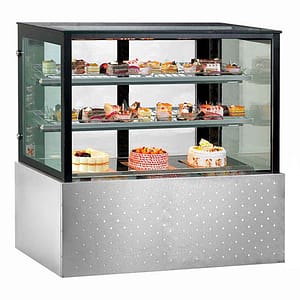


Buying Guide: Cold Display Cabinets
A cold display cabinet is a refrigerated merchandising unit designed to keep food chilled while showcasing it attractively in front-of-house environments. Unlike storage fridges that focus on back-of-house stability, cold display cabinets prioritise visibility, accessibility and consistent short-term holding conditions for ready-to-serve items. They must manage external heat loads, frequent door openings and ambient customer-side airflow without compromising product presentation.
When choosing a cabinet, consider display style (curved vs flat glass), cooling system type, ambient rating and available space. The right configuration will balance temperature stability, product visibility and running costs for your café, bakery or retail counter.
Engineering Deep Dive: How Cold Display Cabinets Actually Perform
1. High-Ambient FOH Conditions
Front-of-house areas typically run hotter than kitchen prep zones. Customer movement, open spaces and warm lighting increase thermal load—especially on the front glass. Commercial cold display cabinets should therefore be rated for 32°C or 38°C ambient class; units without tropical or sub-tropical ratings will struggle with stability, condensation and performance in FOH conditions.
2. Curved Glass vs Flat Glass Engineering
Glass geometry directly affects heat gain and visibility. Curved glass reduces glare, improves viewing angles and slightly lowers heat absorption by redirecting reflections. Flat glass suits modern designs but absorbs more heat and is more prone to condensation under strong lighting. The choice influences energy consumption, temperature uniformity and merchandising quality.
3. Air Stratification & Temperature Uniformity
Cold air settles at the base, while warmer air rises towards the top and front glass. Display cabinets counter this stratification with fan-assisted airflow, balanced evaporator placement and correct shelf spacing. Without engineered airflow, top-shelf items can run significantly warmer than products near the base, affecting appearance and holding quality.
4. Fan-Assisted vs Static Cooling
Cooling system type has a major impact on product behaviour:
- Fan-assisted cooling: more uniform temperatures and faster recovery after door opening; ideal for packaged or high-turnover items but lowers humidity and can dry exposed foods.
- Static cooling: retains moisture and benefits pastries and cakes, but tends to develop stronger temperature gradients between shelves.
5. Heat Gain Through Glass & Lighting
The front glass panel absorbs radiant heat from ambient lighting and customer-area air. Internal LED strips introduce additional, though small, heat load. High-quality cabinets use insulated or Low-E glass and strategic lighting placement to reduce heat gain and maintain consistent temperatures across display levels.
6. Condensation & Anti-Fog Management
When warm, humid air meets chilled glass, condensation forms. Display cabinets mitigate this using heated glass frames, anti-fog coatings and Low-E glass. Open-style displays may also rely on air curtains to shield the chilled zone. Effective condensation control preserves clear visibility and reduces water streaking on viewing panels.
7. Humidity & Food Presentation
Humidity levels influence texture and visual appeal. Fan-assisted systems run drier, ideal for packaged products but less suited to exposed pastries. Static systems maintain moisture for cakes and bakery items but may increase condensation risk. Matching system type to the food category prevents drying, frosting and loss of gloss on products.
8. Refrigerants & Energy Behaviour
Most modern cold display cabinets use R290 for high efficiency in warm environments. Larger deli-style units may use blends such as R513A. Refrigerant choice affects pull-down performance, running costs and stability in FOH ambient conditions.
Application Scenarios: Where Cold Display Cabinets Fit Best
- Cafés & coffee bars: display pastries, cakes and ready-to-serve desserts at eye level near the service counter.
- Bakeries & patisseries: create multi-shelf merchandising for tarts, slices and chilled bakery items with curved or flat glass styling.
- Quick-service & takeaway outlets: showcase sandwiches, wraps and light meals for grab-and-go customers at the front of house.
- Retail counters & convenience: present chilled snacks, packaged foods and small dairy items in a compact display footprint.
Frequently Asked Questions
Are cold display cabinets suitable for long-term storage?
No. Cold display cabinets are designed for short-term chilled presentation. Long-term storage should be handled by dedicated storage fridges or freezers, with products rotated into the display during service hours.
Do curved and flat glass affect performance?
Yes. Curved glass typically reduces glare and marginally lowers heat gain, while flat glass offers a modern aesthetic but can experience more heat and condensation. The difference is most noticeable in high-light or high-ambient environments.
What cooling system is better for cakes and pastries?
Static or low-airflow systems generally preserve moisture and appearance better for pastries and cakes. Fan-assisted systems are preferred for packaged or higher-turnover items where uniform temperature matters most.
Where should I position a cold display cabinet?
Place the cabinet away from direct sunlight, door drafts and air-conditioning vents. Proper placement reduces thermal load, condensation and temperature swings at the front of the cabinet.
Common Mistakes to Avoid
- Using a cold display cabinet as a long-term storage fridge instead of a short-term presentation unit.
- Placing the cabinet in direct sunlight, under air-conditioning outlets or near doorways.
- Overloading shelves or pressing items against the glass, blocking airflow and causing uneven cooling.
- Assuming all cabinets perform equally in 32°C–38°C FOH environments without checking ambient rating.
- Ignoring regular cleaning of condensers and seals, leading to reduced efficiency and shortened lifespan.
Brand Box: Bonvue
Brand Identity
Bonvue specialises in premium cold display solutions designed for cafés, bakeries and retail counters requiring strong visual presentation and stable chilled performance.
Signature Strength
- Clear visibility with curved- or flat-glass designs
- Tropical-rated performance for Australian FOH environments
- Uniform airflow and balanced temperature control
- LED lighting optimised for food presentation
Extended Benefits
- Durable build suited for all-day display
- Multiple cabinet sizes for different counter layouts
- Low-maintenance interiors and adjustable shelving
- Efficient refrigeration using modern refrigerants
Brand Link: Bonvue
Related Categories
Specs & display-cooling workflow validated by KW Commercial Kitchen.