
Commercial hand wash basins provide a dedicated, food-safe handwashing point required by
FSANZ 3.2.2A. These basins must be separate from food prep, dishwashing and cleaning sinks to prevent
cross-contamination and ensure staff hygiene.
Our 304-grade stainless steel hand basins include wall-mounted, knee-operated and compact corner models,
ideal for kitchens, bars, service counters, healthcare and any space requiring a compliant hygiene station.
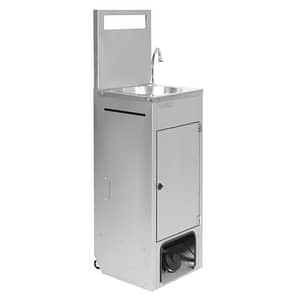

Hand Basin


Stainless Steel Kitchen Equipment
Kitchen Knock 631195 Wall-Mounted Hand Basin – Compact Stainless Steel

Stainless Steel Kitchen Equipment
Kitchen Knock 631193 Knee Operated Hand Basin – Wall-Mounted SUS304 Stainless Steel
Buying Guide: Commercial Hand Wash Basins
Hand wash basins are one of the most important fixtures in a commercial kitchen. Under FSANZ 3.2.2 and 3.2.2A, every food business must provide a dedicated handwashing station that is not used for washing food, dishes or equipment. This separation is essential for preventing cross-contamination and maintaining staff hygiene.
1. Why Hand Basins Must Be Separate
Handwashing must occur at its own sink—never where food or dishes are washed. A compliant hand basin provides:
- Exclusive use: Staff handwashing only. No utensils, no food, no mop water.
- Immediate access: Located near prep, cookline or service areas.
- Zero cross-contamination: Prevents raw food and dirty dishwater from coming near clean hands.
- Council compliance: Mandatory for all food businesses and regularly checked during inspections.
2. Choosing the Right Type
- Wall-Mounted Basins: Space-efficient and ideal for kitchens, bars and staff access points.
- Knee- or Elbow-Operated Basins: Touchless operation reduces contamination and supports HACCP.
- Corner Hand Basins: Perfect for tight BOH corridors or small service areas.
- Models with Splashbacks: Protect walls from water and soap residue.
3. Essential FSANZ & Council Requirements
- Dedicated use: Must be labelled for handwashing only.
- Warm running water: Required for proper hand cleaning.
- Soap & paper towel dispensers: Must be accessible and stocked.
- Clear access: Cannot be blocked by equipment or storage.
- Proximity: Must be close to where food is handled.
- Easy drainage: Basin and trap must be easy to clean and service.
4. Construction Standards: Why 304 Stainless Steel Matters
- 304 food-grade stainless steel: Corrosion-resistant and hygienic.
- Pressed bowls with smooth corners: Reduce grime buildup and speed up cleaning.
- Reinforced wall brackets: Keep the basin stable during high-traffic use.
- Compact footprint: Fits tight spaces without compromising compliance.
5. Basin Size, Shape & Splash Control
A hand basin does not need to be large, but it does need to be deep enough and shaped correctly to control splashing in a tight kitchen or bar space:
- Compact bowl footprint: Fits into narrow corridors and between equipment without becoming an obstacle.
- Enough depth: Reduces water splashing onto floors, walls and staff clothing during fast washing.
- Curved internal corners: Easier to wipe clean and less likely to harbour dirt or soap scum.
- Optional side and rear upstands: Help keep water off adjacent benches and electrical equipment.
6. Mounting Height & Accessibility
For hand basins to be used properly, they must be mounted at a comfortable working height and kept easy to reach:
- Consistent height: Similar to bench height so staff can wash hands quickly without bending or stretching.
- Unobstructed access: No racks, bins or boxes stored underneath or in front of the basin.
- Clear signage: “Hand wash only” labels help prevent misuse for dishes or food.
- Accessibility considerations: In some venues, an additional basin at a modified height may be needed to support staff with limited mobility.
7. Where to Install Hand Basins
Hand basins belong in W3 Prep Zones, W4 Cookline Zones and sometimes in W6 Service Areas.
- Next to prep tables or ingredient areas
- Near cooklines for chefs and line cooks
- In bar or beverage stations
- At public-facing food counters
- Inside staff-only access corridors
8. Real-World Installation Mistakes to Avoid
Hand wash basins are one of the most frequently failed items during council inspections. Beyond FSANZ rules, several practical installation details can cause your kitchen to fall out of compliance or require costly rework:
- Incorrect height (too low or too high): Basins installed below ~880mm or above ~1020mm are considered “not readily usable” and may fail inspection. A working height around 900–1000mm is standard in commercial kitchens.
- Cold water only: FSANZ requires warm running water. Cold-only hand basins are routinely rejected by inspectors, especially in NSW, VIC and QLD.
- Blocked access: The basin must be accessible at all times. Placing bins, crates, trolleys or milk crates in front of the basin is a common reason for non-compliance.
- No “Hand Wash Only” signage: Every hand basin must display clear signage. Missing, obscured or side-mounted labels may be marked as non-compliant.
- No soap or towel dispensers: Liquid soap on the bench is not acceptable. FSANZ expects wall-mounted soap dispensers and single-use paper towels.
- Wrong drainage or grease trap connection: In most regions, hand basins should not connect into a grease trap unless specifically required by local plumbing rules. Incorrect plumbing can cause smells, blockages and hygiene issues.
- Splash risk to food: Hand basins positioned too close to open food, prep sinks or equipment may require side or rear splashbacks to prevent contamination.
- Insufficient under-basin clearance: The trap and pipework must remain accessible for cleaning. Storing crates or boxes underneath is not permitted.
- Wrong stainless steel grade: Cheaper 430-grade basins can pit or rust quickly with disinfectants. Only 304-grade stainless steel provides long-term resistance required in hygiene stations.
Frequently Asked Questions
Can I wash dishes in a hand basin?
Never. Hand basins are for staff handwashing only and cannot be used for dishes or food.
Do I need more than one hand basin?
Most commercial kitchens need multiple handwashing points—one near prep, one near cookline, sometimes one in the bar. Requirement depends on layout and council expectations.
Can a cleaning sink replace a hand basin?
No. Cleaning sinks (mop sinks) are for chemicals and dirty water. They are not food-safe and cannot replace a hand basin.
Do hand basins need warm water?
Yes. FSANZ requires warm running water and soap for proper staff hygiene. Cold-only basins are non-compliant.
Need help placing your hand basins?
Call 1300 001 366 and our team can map compliant handwashing points to your prep, cookline and dish zones.
Where hand wash basins fit in your kitchen
Hand basins belong in the Prep (W3), Cookline (W4) and Service (W6) zones. They must remain completely separate from sinks used for food washing, pot washing or mop cleaning to maintain FSANZ-compliant hygiene separation.
To complete a compliant hygiene station, pair your hand basin with:
- Commercial soap dispensers – required by FSANZ for proper handwashing with warm water and soap.
- Cleaning & hygiene supplies – sanitiser, paper towels and hygiene accessories for staff use.
- Single sink benches – for food prep rinsing only (kept separate from handwashing).
- Double sink benches – for pot & utensil washing, not for handwashing.
- Cleaning / mop sinks – for mop buckets and chemical use; must stay away from handwash and food zones.