
Commercial vegetable processors automate slicing, shredding, peeling and drying in W3 prep kitchens. Choose the right vegetable cutter or peeler & salad dryer for your volume and workflow.
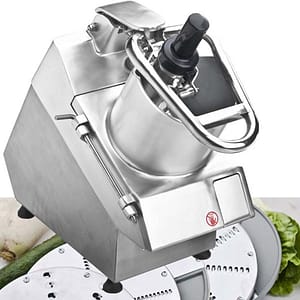

Commercial Vegetable Processor Buying Guide
In the KW system, commercial vegetable processors cover two prep categories: vegetable cutters for slicing and shredding, and peelers & salad dryers for peeling and water removal. These machines sit in the W3 Prep Zone and replace hours of manual knife work with consistent, high-speed output.
1. The Vegetable Prep Workflow
Receive → Wash → Peel → Cut / Shred / Dice → Dry → Store / Serve
Vegetable cutters handle cutting, while peelers & salad dryers manage peeling and moisture removal. Most high-volume prep kitchens use both to maintain smooth W3 workflow.
2. Cutters vs Peelers & Salad Dryers
Vegetable cutters (continuous-feed): slice, grate and julienne vegetables directly into a container—ideal for coleslaw, salad bars, pizza toppings and bulk mise-en-place.
Peelers: abrasive-drum systems that remove potato and root vegetable skins in minutes, reducing repetitive manual labour.
Salad dryers: centrifugal spinners that remove excess water from washed greens so dressings adhere better and shelf life improves.
3. Choosing the Right Disc or Grid
Disc selection determines final cut quality:
- Slicing discs: potatoes, cucumbers, tomatoes and zucchini.
- Grating discs: carrots, cheese and coleslaw mixes.
- Julienne discs: matchsticks for salads and garnishes.
- Dicing kits: grid + disc combinations for uniform cubes.
Tip: The disc controls the cut style; the grid controls cube size.
4. Capacity, Output & RPM
Match the machine to your daily volume:
- Compact units: cafés, bistros, small canteens.
- 100–300 kg/hour: busy restaurants, pizzerias and school kitchens.
- 300–600+ kg/hour: central kitchens or contract catering.
Stable RPM under load ensures consistent cut size from start to finish.
5. FSANZ Safety & Cleaning
Under FSANZ Standards 3.2.2 & 3.2.3, vegetable processors must remain separate from raw meat areas:
- Never use vegetable equipment for raw meat.
- Use colour-coded discs if processing allergens.
- Fully disassemble hoppers, pushers and discs for cleaning.
- Clean salad dryers frequently to prevent microbial build-up.
6. Safety Features
- Magnetic or mechanical interlocks to prevent unsafe operation.
- Guarded feed chutes to keep hands clear of blades.
- Non-slip feet and stable frames for wet prep areas.
- Overload protection for motor safety.
7. Real-World Prep Examples
- Pizzeria: shred 20–40 kg/week of vegetables.
- Restaurant: prep 10–25 kg/day for salads and fry stations.
- School canteen: process large batches fast during service periods.
- Central kitchen: 300–600 kg/hr with continuous-feed cutters.
8. Brands We Supply
| Brand | Strengths | Best For |
|---|---|---|
| Robot Coupe | Industry-leading discs & stable RPM | High-volume kitchens & hospitals |
| Dito Sama | Precision European veg prep | Hotels & institutions |
| Nemco | Durable manual & powered prep tools | Cafés & small venues |
| Brice | Reliable cutting systems & local support | Delis & restaurants |
| Tre Spade | Specialist peelers | Fish & chip shops |
| Kitchen Knock | Value-focused veg prep units | Cafés & school kitchens |
Frequently Asked Questions – Vegetable Processors
Which machine should I buy first?
If unsure, start with a vegetable cutter. It handles the widest range of daily prep tasks.
Why does RPM matter?
Stable RPM under load gives consistent slices across the entire batch.
Can I use the same machine for raw meat?
No—FSANZ requires strict separation. Veg processors must stay in the W3 zone only.
Are discs dishwasher safe?
Most stainless/aluminium discs are dishwasher safe—check brand manuals for limits.
Need help choosing the right vegetable processor?
Call 1300 001 366 for matched recommendations.
Specs validated by KW Commercial Kitchen.