
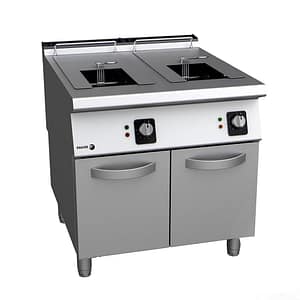
Commercial Cooking Equipment

Commercial Cooking Equipment
Fagor F-G9215 Gas Deep Fat Fryer – 2x15L / 108MJ High-Performance

Benchtop Fryers

Commercial Fryers

Commercial Kitchen Equipment
Frymax RC400TE Superfast Twin Vat Gas Tube Fryer | 120MJ, AGA Approved


Commercial Fryers

Commercial Cooking Equipment

Commercial Cooking Equipment

Commercial Cooking Equipment

Commercial Fryers
Frymax RC400TELPG Superfast Twin Vat Gas Tube Fryer – 110MJ/h
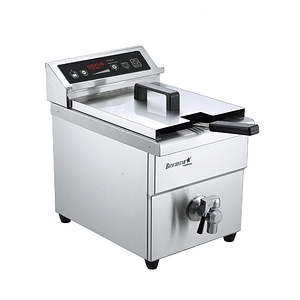

Commercial Fryers
Frymax AS-BOILOUT5KG Fryer Boil Out Powder – 5kg Tub / 20 Cleans


Commercial Kitchen Equipment
Frymax LG-20E Electric Oil Filter Cart – 10 L/min Filtration


Commercial Kitchen Equipment
Engineering Guide: Commercial Fryers in the W4 Hot Zone
A commercial fryer is one of the hardest-working and highest-risk appliances in a professional kitchen. It sits in the W4 cookline where ambient temperatures are high, traffic is heavy and baskets move constantly. Correct fryer selection and layout protect staff, control oil costs and keep food consistently crisp.
W-Zone Placement
- W4 – Hot Line (primary): Floor-model gas and electric fryers, pressure fryers and twin-pan systems.
- W3 – Prep / Light Duty: Small benchtop fryers for lower-volume snack work.
- W7 – Dishwash & Hygiene: Oil containers, baskets and filtration equipment cleaned and stored safely.
Gas vs Electric Fryers & Heating Systems
Both gas fryers and electric fryers can deliver excellent results. The key is to match the heating system to your throughput, menu and available utilities.
- Open-pot gas fryers: Burners sit beneath the frypot. Easier to clean, suited to lightly crumbed products.
- Tube-type gas fryers: Gas tubes run through the oil, delivering very fast heat-up and recovery for high-volume chip and chicken work.
- Electric tubular elements: Robust submerged elements with strong recovery and simple service access.
- Electric ribbon elements: Flat elements that heat quickly and suit lighter-duty applications.
- Utilities check: Confirm gas line capacity (total MJ/h load), electrical phase and available canopy extraction before choosing a fryer type.
Oil Capacity, Turnover & Production Rate
Fryer capacity is measured by oil volume and kg/hour output – but bigger is not always better. The goal is to balance peak demand, oil turnover and energy use.
- Single-tank fryers: Ideal for single-product menus or lower volumes.
- Twin-tank fryers: Separate seafood from chips, or run one tank during quiet periods to save oil and power.
- Oil turnover: Busy fryers keep oil fresher for longer; oversized tanks at low volume can shorten oil life.
- Pressure fryers: Used for high-volume chicken programs where fast cook times and juicier results are critical.
Heat Recovery, Oil Temperature & Product Quality
Recovery time is the key performance measure for commercial fryers. When frozen product is dropped, oil temperature must return to set point quickly.
- Working oil range: Typically 160–190 °C depending on product and crumb level.
- Fast recovery: Keeps chips and chicken crisp instead of oily and soft.
- Slow recovery: Oil spends too long in the low-temperature band, increasing absorption and breakdown.
- Thermostat accuracy: Tight control avoids scorched product and premature oil damage.
Oil Management, Filtration & Running Costs
- Cool-zone design: A cooler area at the bottom of the tank where crumbs settle without burning, extending oil life.
- Built-in filtration: Onboard pump and filter systems encourage daily filtration and safer oil changes.
- External filter machines: Mobile units that service multiple fryers across the kitchen.
- Best practice: Skim debris regularly, filter at least once per day in busy sites and discard oil once it darkens, smokes early or affects flavour.
Safety, Fire Risk & Compliance
Fryers combine very hot oil with gas or high electrical loads. Many commercial kitchen fires start at the fryer station. Best practice includes:
- High-limit protection: Independent over-temperature cut-outs shut the fryer down if oil exceeds safe levels.
- Fire class: Oil fires are Class F. Use wet chemical extinguishers or fire blankets – never water.
- Ventilation: Fryers are heavy grease-load appliances and must be positioned under compliant canopies with adequate airflow.
- Fire suppression: Some high-risk sites or pressure fryer installations require dedicated hood suppression systems.
- Staff training: Clear procedures for basket loading, shaking and landing zones reduce burn incidents.
Fitout Mistakes to Avoid
- Fryers hard against refrigeration: Heat spill pushes fridge temperatures up and shortens compressor life.
- Placing fryers in walkways: Increases the chance of collisions and hot oil spills.
- Oil containers on the floor: Trip hazards and spill risk; store in racks or under-bench trolleys.
- Poor canopy capture: Undersized hoods allow vapour and grease to escape into the kitchen.
- No landing space: Nowhere safe to rest baskets after lifting, forcing staff into awkward movements.
Browse Commercial Fryer Categories
- Benchtop Fryers – compact units for cafés, bars and light-duty frying.
- Freestanding Electric Fryers – precise temperature control and even heat distribution.
- Fryer Accessories – baskets, oil filters and tools to keep the fryer line running safely.
- Gas Deep Fryers – high-output gas fryers for busy W4 cooklines.
FAQ – Commercial Fryers
How do I size a commercial fryer for my venue?
Start with your busiest hour and estimate how many portions you need to produce. From there, choose oil capacity and number of tanks to handle peak demand with some headroom. Our team can recommend models based on your menu and ticket volume.
Are gas fryers always better than electric?
Not always. Gas fryers usually offer strong recovery and can be economical where gas is available. Electric fryers provide very even heat and precise control, and may be easier to install in some buildings. Utilities, tariffs and ventilation all factor into the final choice.
How often should I change frying oil?
It depends on volume, product type and temperature control. Daily filtration, correct loading and using a cool-zone fryer can significantly extend oil life. Once oil smokes at normal temperature, darkens or affects flavour, it should be replaced.
Do I need a separate fryer for gluten-free or allergen-friendly items?
Yes, if you want to minimise cross-contamination. Shared oil carries crumbs and allergens between products, so many venues use a dedicated fryer for gluten-free or allergen-sensitive menu lines.
Need help choosing between gas fryers and electric fryers, or sizing a system for your W4 hot line? Call 1300 001 366 and the KW Commercial Kitchen team can help specify a commercial fryer configuration matched to your venue, volume and ventilation.
Specs and frying workflow logic validated by KW Commercial Kitchen.