Commercial kitchen shelving is part of your hygiene system, not just storage. Correctly engineered shelving keeps food, tools and
chemicals off the floor, protects cold airflow and supports clean, efficient workflow in busy professional kitchens.
KW supplies stainless steel commercial-grade shelving for W1/W2/W3/W6/W7 zones – from cool room racks to wall shelves
and workbench overshelves – so your kitchen stays organised, compliant and easy to clean.


Engineering Guide: Commercial Kitchen Shelving by Zone
In a professional kitchen, shelving has a direct impact on food safety, workflow and equipment life. KW designs shelving layouts around a zone-based system so every shelf has a clear purpose:
- W1 – Goods In & Dry Store: Bulk ingredients, packaging and chemicals on heavy-duty racks.
- W2 – Cool Storage: Coolroom shelves that protect airflow and keep food safely chilled.
- W3 – Prep Zone: Wall shelves above benches for containers, utensils and ingredients.
- W6 – Pass & Service: Workbench overshelves for plates, garnishes and quick-grab items.
- W7 – Dishwash & Hygiene: Shelving for clean storage, detergents and drying racks.
Materials, Construction & Load Engineering
For most Australian venues, 304-grade stainless steel is the benchmark for kitchen shelving. It delivers corrosion resistance, food-safe surfaces and long-term strength in high-moisture, chemical-prone environments.
- Frame & posts: Welded or rigid bolted construction for reduced sway under full load.
- Shelf design: Solid stainless for small items and containers; wired or slatted shelves for cool rooms and wet goods to maintain airflow and drainage.
- Load ratings: Always check per-tier ratings. Heavy dry store or carton storage often needs 120–200 kg per shelf.
- Fixings: Wall shelves should be fixed into studs, brick or concrete using appropriate anchors – never into plasterboard only.
- Adjustable feet: Help level racks on falls-to-drain floors and maintain full contact with the surface.
Layout & Clearance Rules (Best Practice)
Well-planned shelving protects airflow, cleaning access and staff safety. KW applies the following best-practice guidelines when planning commercial kitchen shelving:
- Off-floor storage: Food and packaging should sit at least 150 mm above floor level to meet common council expectations and allow mopping underneath.
- Wall clearance: Leave a small gap behind racks so walls can be cleaned and moisture does not trap.
- Coolroom airflow: Do not push shelves hard against evaporator faces or block air returns; leave clear “chimneys” for air to circulate.
- Walkways: Keep aisles wide enough for staff with boxes or trolleys to pass safely without brushing food product.
- Head height: Wall shelves and overshelves should sit above eye line but below safe reach so staff are not stretching with heavy containers.
Compliance & Safety for Australian Kitchens
Correctly specified shelving helps venues meet FSANZ Food Safety Standards, AS 4674 design requirements and WHS obligations.
- Hygienic surfaces: Shelves should be smooth, impervious and easy to wipe down, with minimal crevices where food and grease can accumulate.
- Corrosion control: Rusted or flaking shelves are difficult to clean and can lead to contamination – they are a common cause of inspection notices.
- Segregation: Use separate shelving for chemicals, cleaning agents and food to prevent cross-contamination in W1 and W7 zones.
- Manual handling: Shelf heights and loads should reflect WHS guidelines so staff are not lifting heavy items above shoulder height.
- Slip and trip risks: Keep lower shelves clear of floor edges and walkways to reduce the chance of kicking or tripping on stored product.
Critical Fitout Mistakes (Real-World Failure Modes)
- Mounting into plasterboard only: Wall shelves loaded with plates or tins can tear straight out and cause injury. Always fix into structural framing or masonry.
- Blocking coolroom airflow: Racks stacked tight against fans or walls can cause icing, temperature drift and compressor failures.
- Using non-food-grade or painted mild steel: Once the coating chips, rust spreads quickly, creating hygiene and compliance issues.
- Overshelves too low over cooklines: Restricting visibility and hood capture, leading to poor extraction and heavy grease build-up.
- Random chemical storage: Placing sanitisers or degreasers above open food containers or prep benches is a direct contamination risk.
Choosing the Right Shelving Type
Each shelving style is designed for a different W-zone and workload. Building the right mix keeps the kitchen organised and reduces wasted movement.
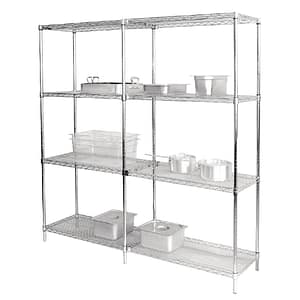
- Cool Room Shelves (W1/W2): Modular, adjustable wire or polymer shelves for chilled and frozen storage. Designed for high loads, easy wash-down and strong airflow around boxed and open products.
- Stainless Steel Wall Shelves (W3/W6/W7): Bench-mounted storage above prep benches, passes and sinks. Ideal for containers, condiments, gastronorm pans and lightweight appliances that must stay off work surfaces.
- Workbench Overshelves (W3/W6): Single- or double-tier shelves fixed to bench tops or legs. Turn a simple workbench into a vertical storage station for plates, trays, smallwares and ticket rails at the pass.
Navigate Commercial Kitchen Shelving Categories
Use the sub-categories below to select shelving engineered for each part of your kitchen:
- Cool Room Shelves – rust-resistant racks for W1/W2 cold storage.
- Stainless Steel Wall Shelves – hygienic wall-mounted storage for prep and wash zones.
- Workbench Overshelves – add-on shelves to maximise vertical space above benches.
FAQ
How high should commercial kitchen shelving be installed?
As a guide, lower shelves should keep product at least 150 mm off the floor, with upper shelves positioned so staff can reach items without lifting heavy loads above shoulder height. Exact heights depend on your staff and site.
Can I use the same shelving in dry stores and cool rooms?
Many wired and polymer systems are rated for both dry and cold use, but check temperature range, corrosion resistance and load ratings before installing racks in coolrooms or freezers.
Do you help plan shelving layouts for new kitchens?
Yes. KW can review your plans or existing kitchen and recommend a shelving mix for W1–W2–W3–W6–W7 zones, including coolroom, prep and dishwash areas. Call 1300 001 366 for project support.
Specs validated by KW Commercial Kitchen