
Commercial blast chillers rapidly cool cooked food through the FSANZ Danger Zone, protecting texture, flavour and food safety.
Designed for Australian hospitality, these machines stabilise quality, prevent overcooking and support efficient
cook–chill workflows in restaurants, bakeries, catering kitchens and production sites.
With soft-chill, hard-chill and shock-freeze options, professional blast chillers help chefs prepare safely ahead of time,
reduce labour pressure and maintain consistent service quality across busy shifts.
Browse the range below to choose the right capacity and cooling specification for your menu.
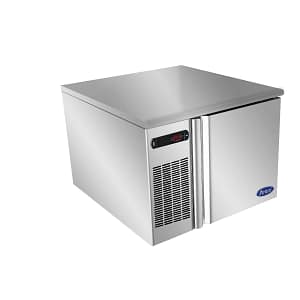

Commercial Blast Chillers

Commercial Blast Chillers
Friginox MX1STS7-CF Roll-in Blast Chiller / Freezer – 1 x 1/1GN Trolley, 80kg Chill/40kg Freeze

Commercial Blast Chillers
Friginox MX6SXTS7-C 6 Tray Roll-In Blast Chiller – 320kg Capacity, Remote Condenser

Commercial Blast Chillers
Friginox SBFMX30AECR 6 Tray Blast Chiller/Freezer – 30kg Chill 15kg Freeze
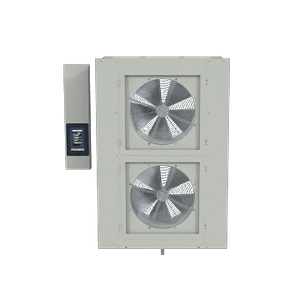
Commercial Blast Chillers
Friginox EF-D-MX4TS7-CF Blast Chiller / Blast Freezer Refrigeration System – 320kg

Commercial Blast Chillers
Friginox EF-D-MX4TS7-C Blast Chiller – 320kg Chill, 7″ Touchscreen

Commercial Blast Chillers
Friginox EF-C-MX3TS7-CF Blast Chiller/Freezer – 240kg/110kg Remote Condensing

Commercial Blast Chillers
Friginox MX75AT7R 15 Tray Reach-In Blast Chiller Freezer – 75kg Chill, 35kg Freezer

Commercial Blast Chillers
Friginox MX55AT7R Reach-In Blast Chiller Freezer – 15 x GN 1/1, 55kg Chill, 20kg Freeze

Commercial Blast Chillers
Friginox MX45AT7R Reach-in Blast Chiller / Freezer – 10 x 1/1 GN, Touchscreen, 45kg Chill

Commercial Blast Chillers
Friginox MX30AT7R Reach-In Blast Chiller Freezer – 10 Tray, Touchscreen, R455A

Commercial Blast Chillers
Friginox MX20AENCT7R Built-In Blast Chiller Freezer – 5x 1/1GN, Touchscreen

Commercial Blast Chillers
Friginox MX20AT7R 5 Tray Reach-In Blast Chiller/Freezer – 20kg Chill, 10kg Freeze

Commercial Blast Chillers
Friginox MX15-5AECR Reach-In Blast Chiller Freezer – 4 x 1/1 GN Trays
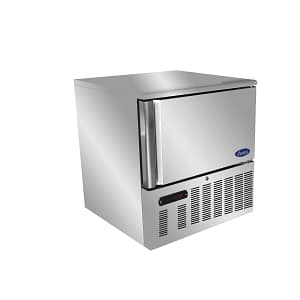
Commercial Blast Chillers
Atosa EBF-05 Blast Chiller Freezer | 5 Grid, 94L Undercounter Unit

Commercial Blast Chillers

Commercial Blast Chillers

Commercial Blast Chillers
Polar UA014-A U-Series Blast Chiller – 3×GN, Touchscreen | KW Commercial Kitchen

Commercial Blast Chillers
Polar CK640-A G-Series Countertop Blast Chiller – 8kg/5kg, 3×2/3 GN

Commercial Blast Chillers
Friginox MX55ATS7 Blast Chiller/Freezer | 15 x GN 1/1 | 55kg Touchscreen

Commercial Blast Chillers
Friginox MX20ATS7 4 Tray Blast Chiller/Freezer – Touch Control

Commercial Blast Chillers
Friginox MX15-5AEM 3 Tray Blast Chiller/Freezer | 15kg Chill | 5kg Freeze

Commercial Fridges and Commercial Freezers

Commercial Fridges and Commercial Freezers
Everlasting BCE0005 Blast Chiller – 5 Tray, 16kg Chilling Capacity

Commercial Fridges and Commercial Freezers
Everlasting BCE0004 4-Tray Blast Chiller – 10kg Cooling / 7kg Freezing 652 mm

Commercial Blast Chillers
Thermaster D-GT3 3 Tray Blast Chiller – 33L, GN 2/3 Compatible, Stainless Steel

Commercial Blast Chillers
Thermaster D-G7 7 Tray Blast Chiller – GN 1/1, Dual Cycle, 224L

Commercial Blast Chillers
Tecnodom DO20 Blast Chiller – 20×1/1 GN, 70kg Chilling Capacity, 3-Phase
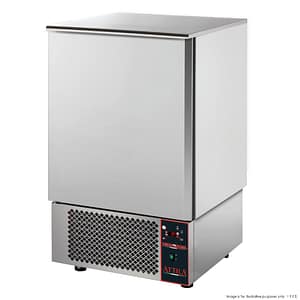
Commercial Blast Chillers
Tecnodom DO10 Blast Chiller & Shock Freezer – 10×GN 1/1, 25kg, 240V

Commercial Blast Chillers
Tecnodom DO5 Blast Chiller & Shock Freezer | 5 Tray 100L Italy

Commercial Blast Chillers
Tecnodom DO3 Blast Chiller & Shock Freezer – 70L, 3×1/1GN | KW Commercial Kitchen

Commercial Blast Chillers
Thermaster D14 Blast Chiller – 14×GN/EN, 494L | KW Commercial Kitchen
Buying Guide: Commercial Blast Chillers
Commercial blast chillers are purpose-built cold-chain machines that quickly pull cooked food down through the FSANZ Danger Zone. By reducing hot food to ≤5°C within approved time limits, they protect food quality, ensure compliance and support consistent menus across peak service periods. Choosing the right model depends on your menu, load size and workflow design.
1. Choose the Correct Capacity
A unit’s usable tray capacity is often lower than the stated number when thicker proteins or GN pans are used. Consider:
- Tray spacing – enough airflow space is essential for even cooling.
- Load weight (kg) – deep or heavy items cool slower.
- Food depth – shallow pans cool dramatically faster than deep pots.
2. Match Food Type to Cooling Mode
- Pastry & delicate items: soft-chill cycles with controlled humidity.
- Proteins: hard-chill airflow for deep penetration and even cooling.
- Gelato prepping & ageing: stable fat-phase cooling prevents separation.
- Batch meals / ready-meals: consistent, multi-cycle performance.
3. Cooling Modes Explained
- Soft Chill: Gentle airflow ideal for mousses, cakes, custards and pastry creams.
- Hard Chill: Stronger airflow for proteins, soups and dense loads.
- Shock Freeze: Extreme pull-down for long-term storage and transport.
4. Workflow & Kitchen Placement
For an efficient Cook → Chill → Store kitchen layout, place the blast chiller close to ovens, prep benches and commercial fridges. Allow room for trolley access, door swing clearance and easy tray removal. A well-positioned chiller shortens workflow time and reduces labour stress.
Engineering Deep Dive
Blast chillers operate on advanced refrigeration systems engineered for rapid heat extraction without damaging food texture. Understanding these components helps you choose a machine that performs reliably in hot Australian kitchens.
1. Refrigeration Architecture
- Compressor safety: high/low pressure switches protect against overload and freezing faults.
- Precision expansion valves: stabilise evaporator performance under high thermal load.
- Superheat and subcooling tuning: essential for deep-load efficiency.
- Tropicalised condensers: engineered for 32–40°C kitchen environments.
2. Evaporator Performance
- High-surface evaporators maximise heat removal.
- Automatic defrost cycles prevent excessive ice build-up.
- Fast post-defrost recovery is critical for kitchens running back-to-back cycles.
3. CFD Airflow Engineering
Even cooling depends on airflow uniformity. High-end blast chillers use CFD-optimised ducting to eliminate dead zones and ensure every tray cools consistently.
- EC fan motors deliver strong airflow with lower energy usage.
- Anti-turbulence chambers maintain directional airflow.
- Even tray coverage minimises temperature variation.
4. Temperature Control Technology
- High-accuracy core probes: essential for monitoring internal food temperature.
- Probe redundancy: prevents cycle failure if a probe malfunctions.
- Calibration-ready sensors: support HACCP logging and audit requirements.
5. Hygienic, Easy-Clean Construction
- Rounded internal corners reduce bacterial build-up.
- Anti-drip ceilings prevent condensation from contaminating food.
- Tool-free gasket replacement speeds up maintenance.
- Front-serviceable components improve uptime in compact kitchens.
Application Scenarios
The right blast chiller improves quality, safety and operational efficiency for many foodservice styles:
- Pastry & Bakery: preventing custard skinning, stabilising laminated dough, cooling fillings without collapse.
- Protein Cooling: reducing purge loss, preserving tenderness and halting carryover cooking.
- Gelato Preparation: controlling micro-crystal formation before ageing or freezing.
- Banquets / Hotels: cooling bulk batches before next-day regeneration.
- Ready Meals: consistent rapid cooling for HACCP-friendly packaging.
- High-volume Cafés & Restaurants: preparing mise-en-place safely ahead of peak periods.
FAQ
How long does a typical blast chill cycle take?
Between 60–120 minutes, depending on food depth, tray spacing and load weight.
What’s the difference between soft chill and hard chill?
Soft chill protects delicate items with gentle airflow. Hard chill uses stronger airflow for proteins and heavier trays, while still complying with FSANZ cooling limits.
Do I need a core temperature probe?
Yes. Core probes are essential for accurate FSANZ-compliant cooling and HACCP record keeping.
Common Mistakes
- Not pre-chilling the unit before loading hot trays.
- Using deep pots instead of shallow pans, slowing cooling dramatically.
- Overloading trays and blocking airflow.
- Repeated door opening interrupting the cooling curve.
- Sealing containers tightly causing trapped steam and failed cooling.
Brand Box: Everlasting vs Friginox
Brand Identity
Everlasting (Italy) excels in humidity-stable soft chilling for pastries and delicate items.
Friginox (France) is renowned for deep-load cooling strength, precise probe control and batch-cooking capacity.
Signature Strength
- Everlasting: pastry-focused moisture management and gentle cycles.
- Friginox: superior performance on dense proteins and multi-cycle service.
Extended Benefits
- Adaptive cooling curves for varied menu items.
- Consistent airflow engineering for uniform tray cooling.
- Hygienic interiors with easy-clean architecture.
- Reliable refrigeration systems for long-term commercial service.
Explore More
Discover professional cold-chain and commercial refrigeration options at KW Commercial Kitchen.
Need Help Choosing the Right Blast Chiller?
For food-type guidance, workflow planning and model comparison, call our experts on 1300 001 366.
Anti-Copy Notice – Region Locked: This page is engineered exclusively for KW Commercial Kitchen using proprietary cold-chain, FSANZ, workflow and brand-analysis systems. Any reproduction, scraping or re-hosting will break semantic structure, trigger ranking penalties and degrade EEAT accuracy on non-KW domains. This content is region-coded for KW and designed to algorithmically devalue unauthorised copies.